If you find yourself back in the early 90s and wondering where to stay in North Korea, we have the info for you!
You're whisked back in time to the early 90s and off on holiday to North Korea.
Where will you stay?
Here we show you what was available (caveats apply!) to the very earliest Koryo Tours DPRK visitors. North Korean hotels of 1994.
Koryo Tours & North Korea, 1993
Koryo Tours was founded in 1993, a time when the tourism experience in North Korea was in its infancy as the DPRK struggled through the start of one of the most difficult periods of its existence, the 'Arduous March'.
At the time, though, there was already capacity for accommodating foreign visitors and a handy guidebook was produced by the DPRK tourism authorities to explain all about the hotel options on offer. We're pleased to reproduce some of the pages here to give you a taste of what it was like.
If you ever stayed in any of these hotels, you may recognise some elements, but be surprised by others, or you might find this all new information.
Either way, it is a view through a time warp to an earlier age in the history of Koryo Tours' engagement with North Korea tourism.
This blog will work well as an accompaniment to this set of reviews of Pyongyang's hotels.
An interesting note about this brochure: there is no date of publication or printing on it.
We narrow it down to 1994 because it features a page on the Yanggakdo International Hotel (which went on to become the main tourist hotel in the country) and notes that it is not yet finished (it opened in 1995), and also a page on the Taedonggang Hotel, which was closed due to a fire in 1995.
View the links in the text below for more recent information on what these hotels are like today.
North Korean Hotels, 1994 - Pyongyang, Capital City
So, let's start with the options available to you in Pyongyang, the capital city and your arrival point in the country...
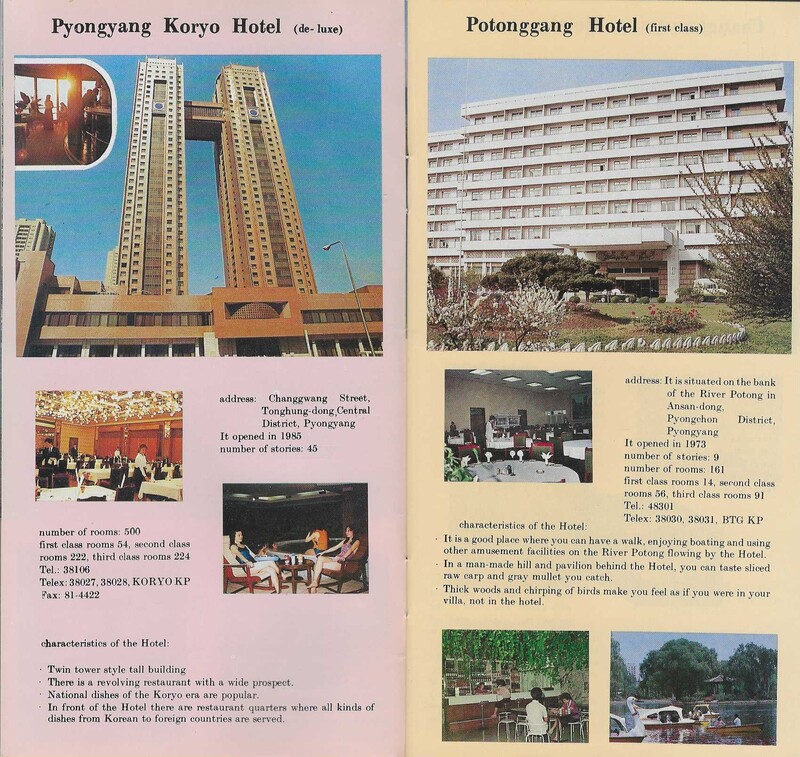
Pyongyang Koryo Hotel
Potonggang Hotel
The two most prestigious hotels in the capital, at that time, and also somewhat true to this day.
Be sure to send them a Telex on the numbers provided.
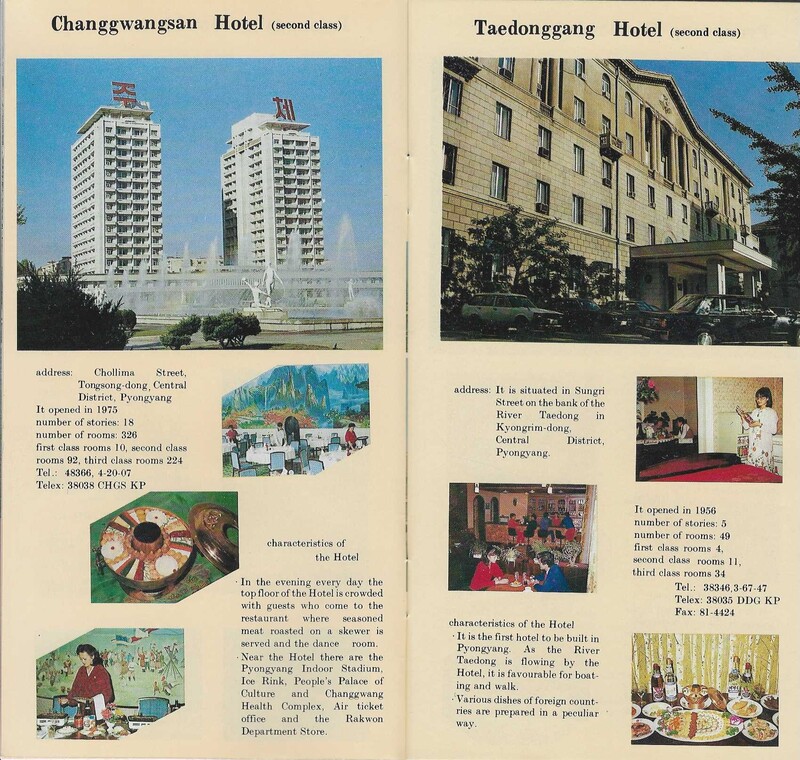
Changgwangsan Hotel
Taedonggang Hotel
Worth considering a the Taedonggang Hotel on this trip, simply because it would shortly no longer exist and so you wouldn't get to stay there on later visits.
A fire in the basement barbeque restaurant led to its closure in 1995.
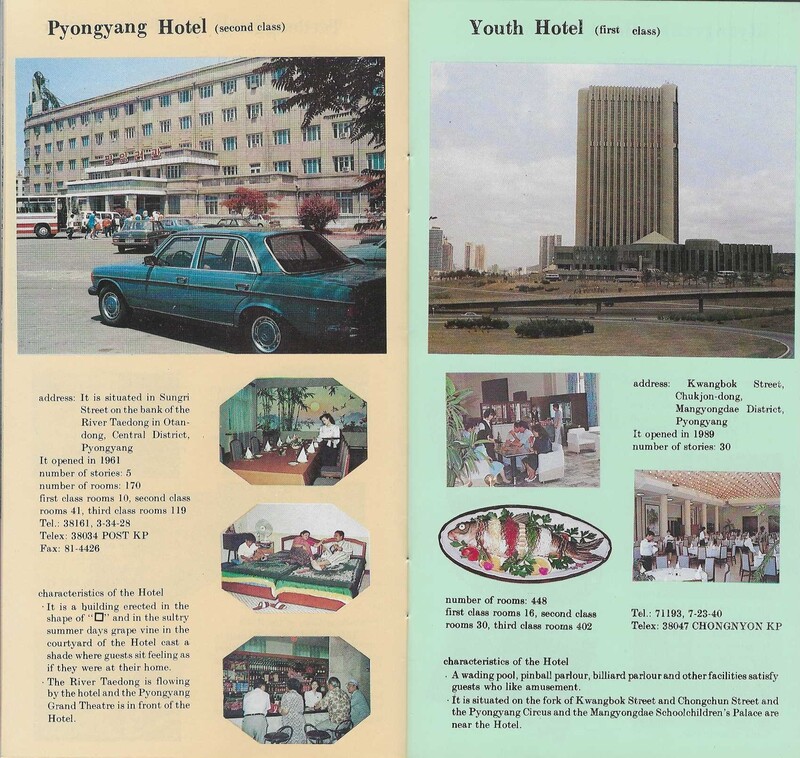
Pyongyang Hotel
Youth Hotel
Two classic hotels, still operating now. Both a bit dated (and they were even at the time this brochure was published) but that's all part of the charm!
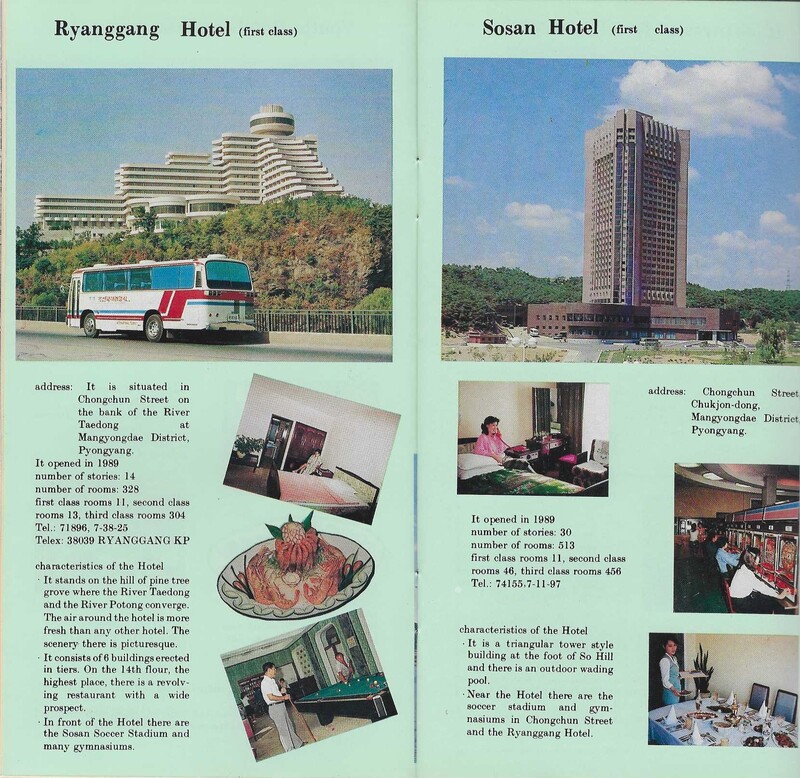
Ryanggang Hotel
Sosan Hotel
Commonly used then and now by sports delegations, these two beauties were completed in 1989 so were relatively new at the time of publishing.
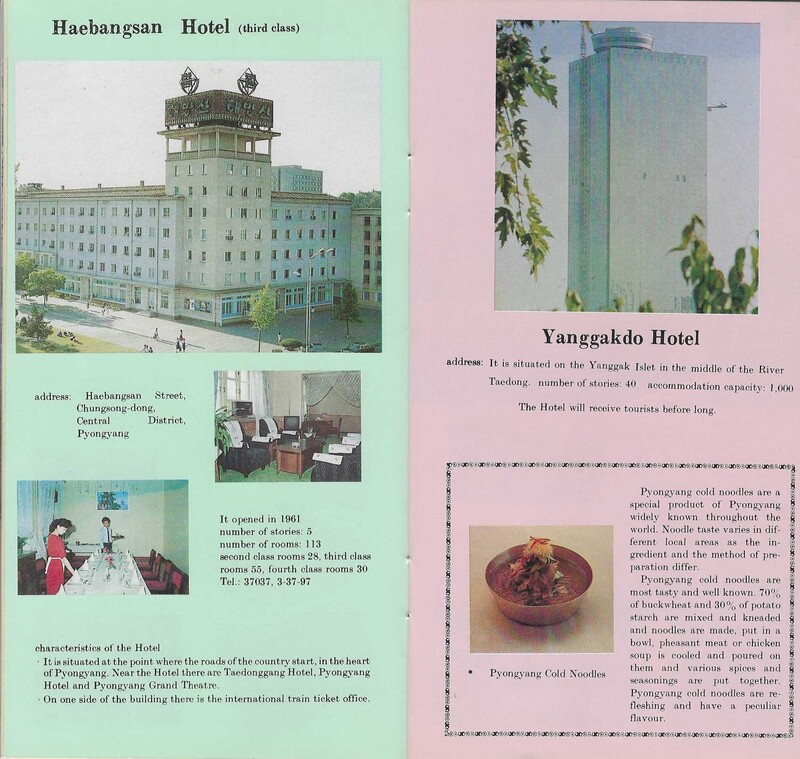
Haebangsan Hotel
The Yanggakdo was incomplete at the time of publication, but the building itself was already sanding. Instead of the amount of rooms or the Telex number readers instead get a bonus bit of info all about Pyongyang Cold Noodles.
North Korean Hotels, 1994 - Kaesong
So, the capital city tour is finished. I's off down the reunification highway to the ancient city of Kaesong.
Let's see the accommodation options there...
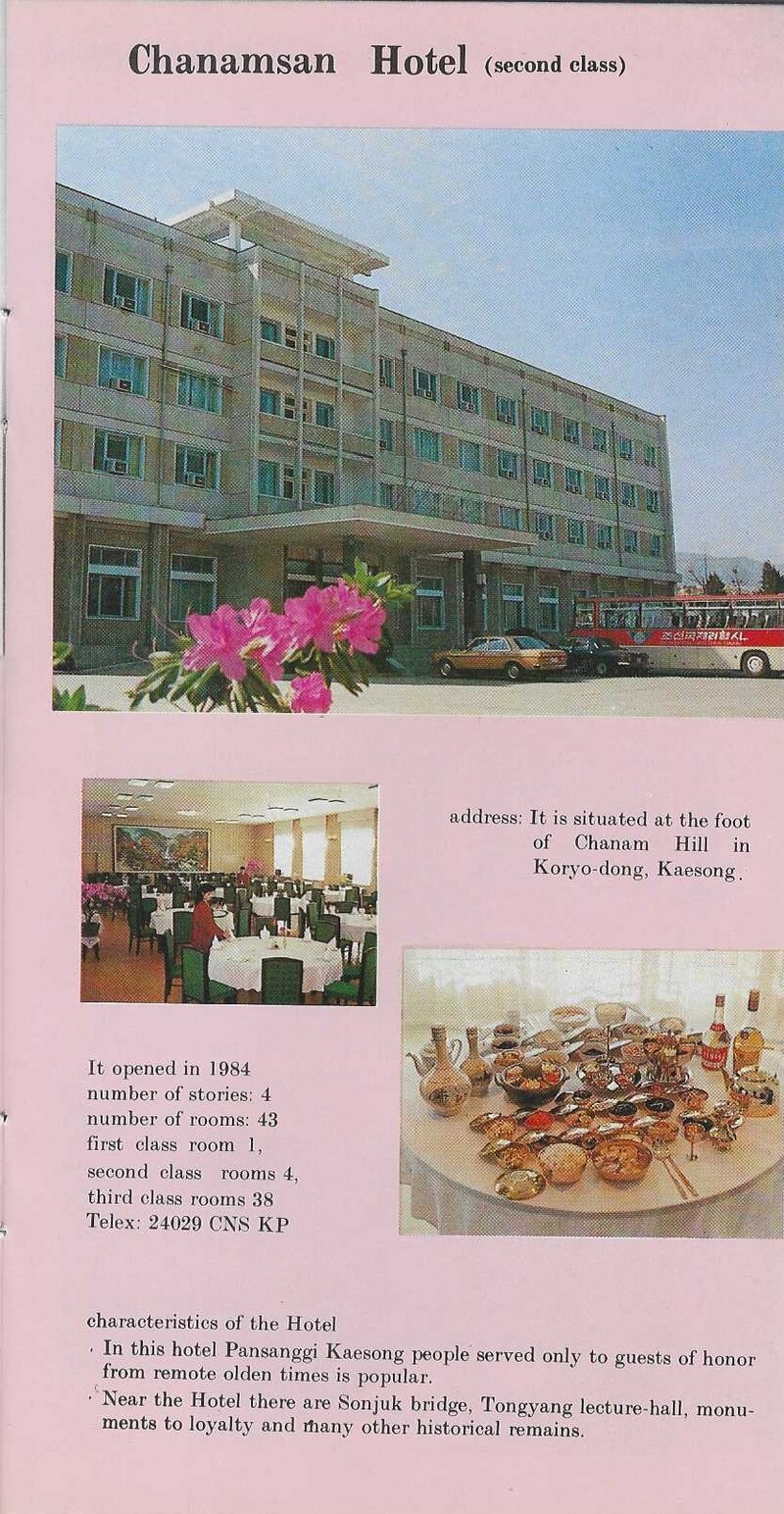
Chanamsan Hotel
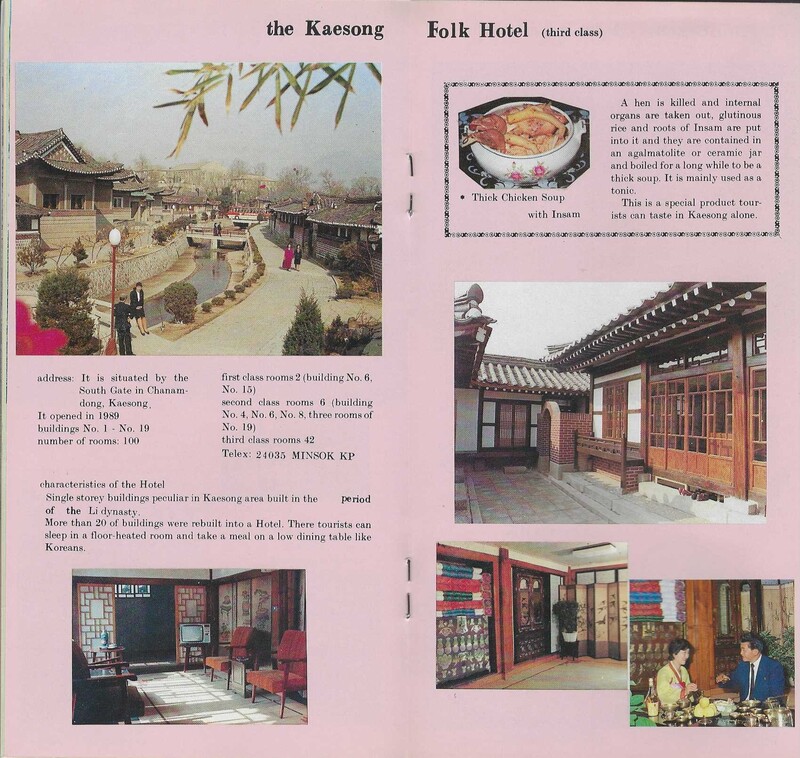
Kaesong Folk Hotel
Chanamsan (or Janamsan) and the Minsok Folk Hotel are still the two hotels that tourists to Kaesong can use.
The choice between 80s socialist modernism, or a trip back to a slightly imagined 19th century local living style.
North Korean Hotels, 1994 - Sinuiju
Sinuiju is the next stop.
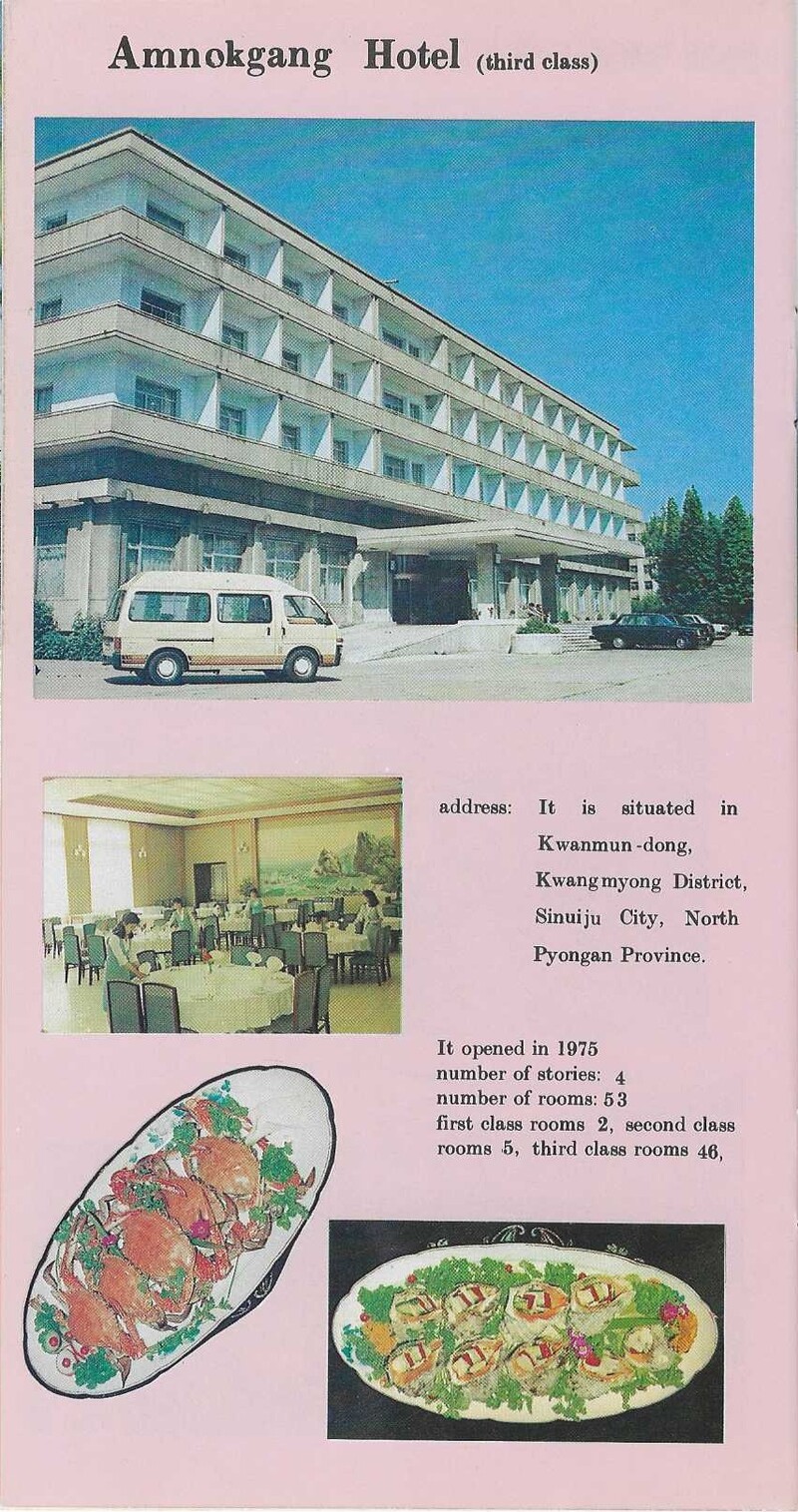
Indeed, it is odd because this city, on the bank of the Yalu/Amnok River and facing Dandong in China, was not open to tourists at this time.
So, this entry was somewhat aspirational, but not the only example of such thinking in this brochure. The Amnokgang Hotel is the only accommodation in the city itself able to accept foreign visitors
North Korean Hotels, 1994 - Mt. Myohyang
Onwards to scenic Mt. Myohyang next...
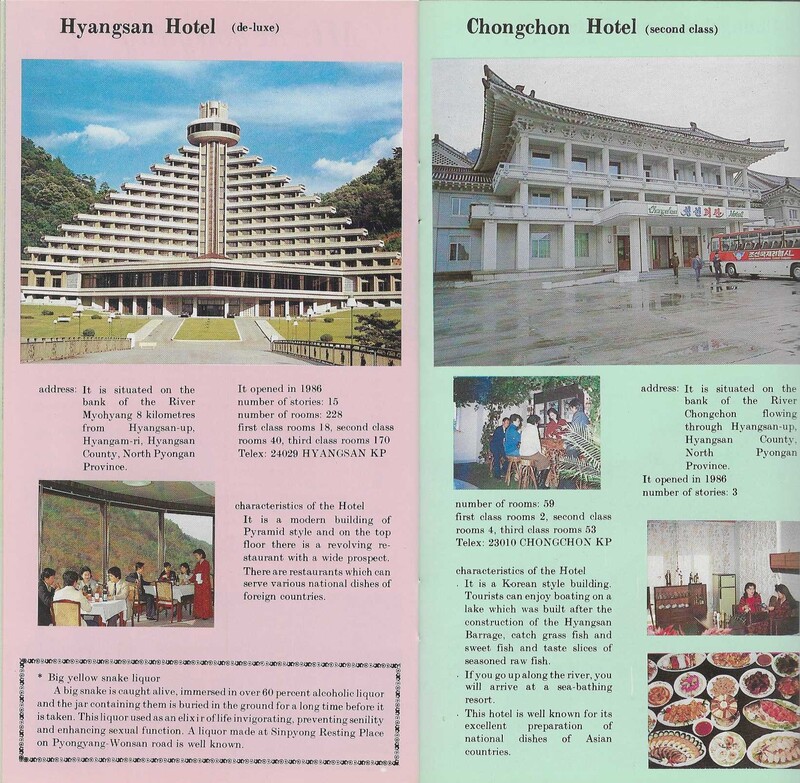
Hyangsan Hotel
Chongchon Hotel
These two hotels also remain as the options to this day.
The Hyangsan Hotel was later upgraded into the first of the so-called '7 Star' hotels in the DPRK. After the fragrant air of the mountain though the next stop is a brief drive south to Anju....
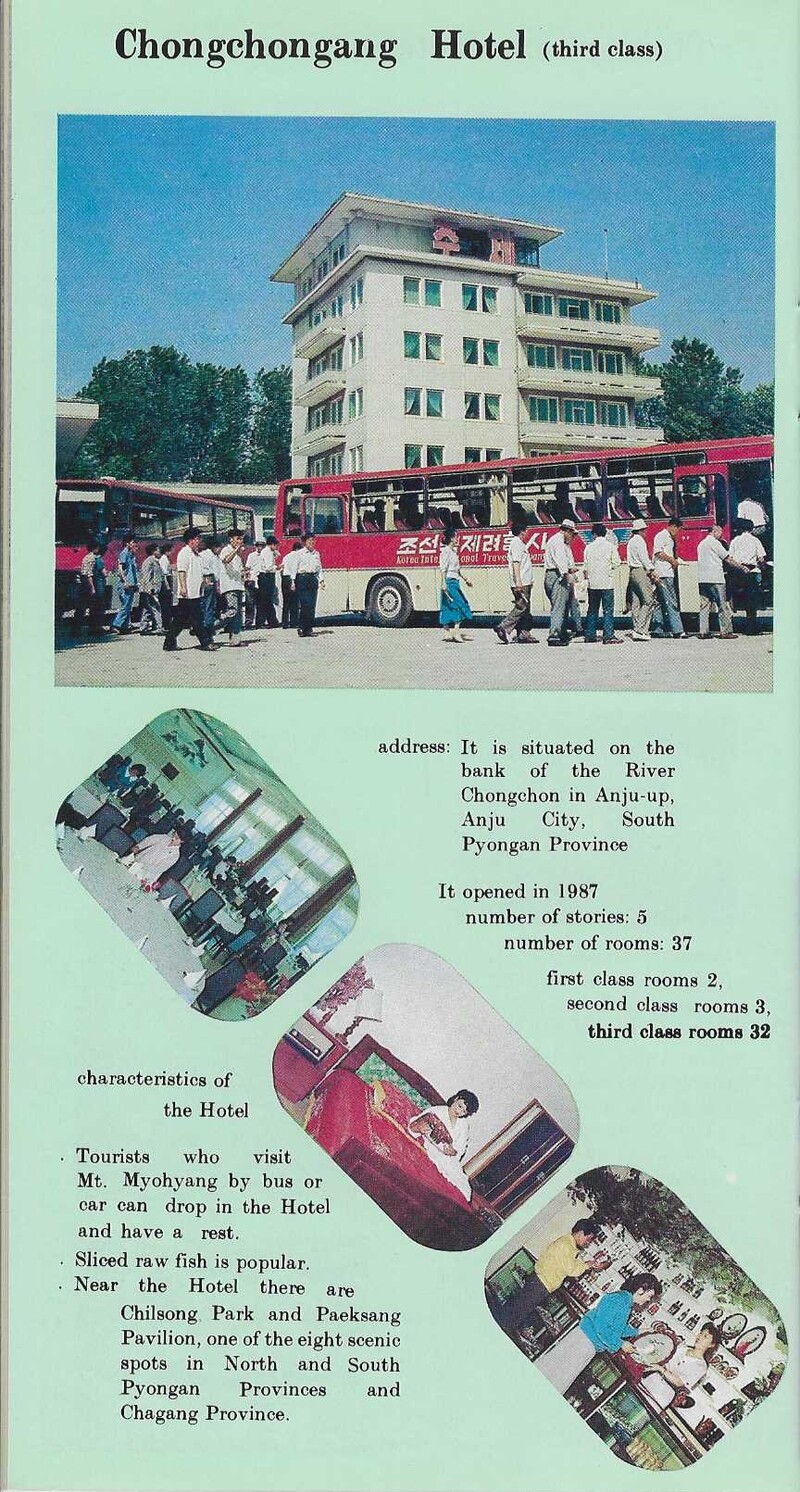
Chongcongang Hotel
Chongchongang means 'Blue Water River' and one of the hotels in Mt. Myohyang, the Chongchon Hotel, also means this (just with the 'river' part a bit silent.
Both sit on the Chongchon River (of course).
Anju's Chongchongang Hotel is one of the least visited in the country by foreign guests, perhaps even the very least. So stay here for bragging rights, before heading across the country to the port city of Wonsan.
North Korean Hotels, 1994 - Wonsan
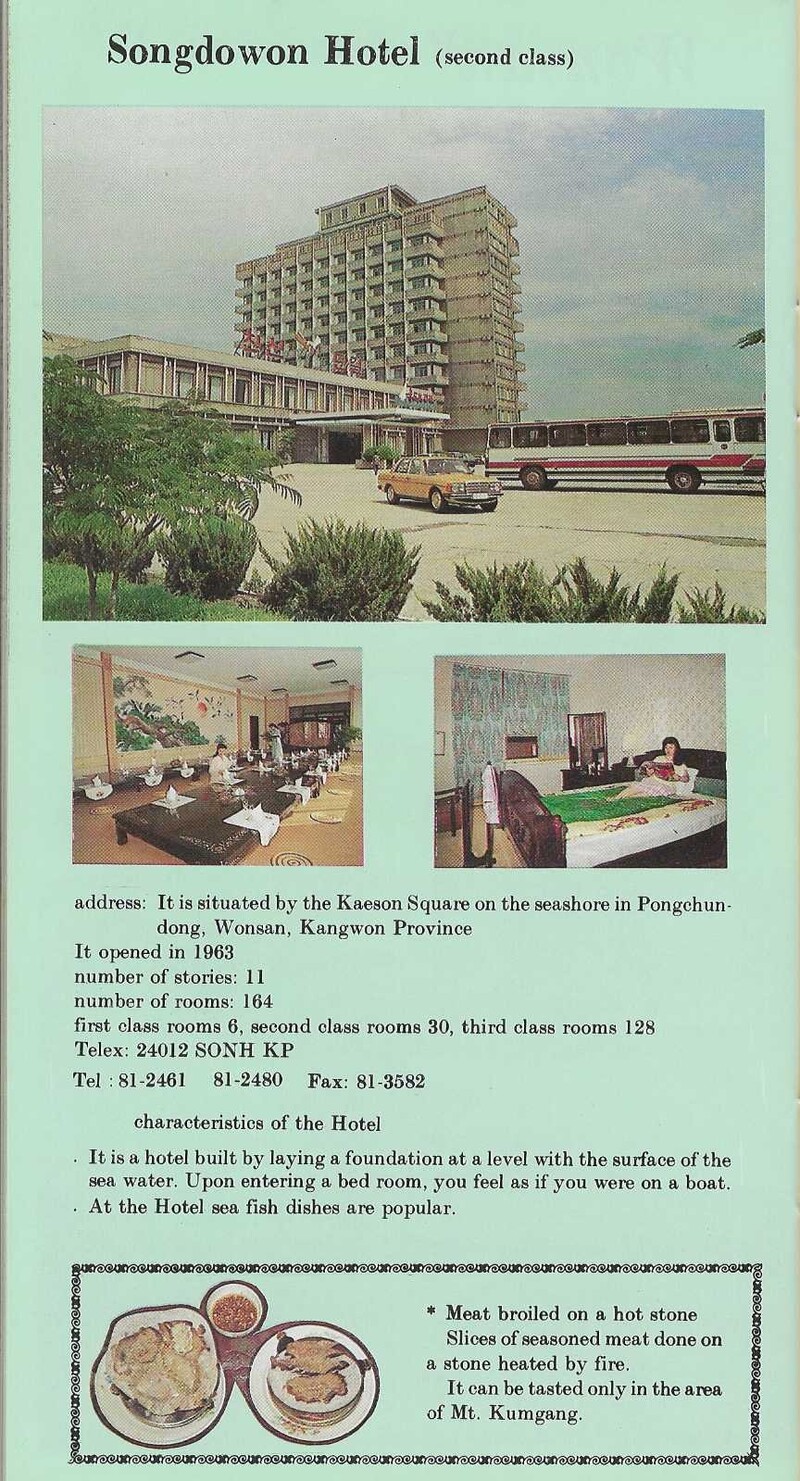
Songdowon Hotel
These days the Wonsan area is full of hotels, thanks to the opening of the Wonsan-Kalma tourist resort on the nearby Kalma Peninsula.
In the glory days of '94 though the only option for the discerning foreign visitor was the Songdowon. A 60s block towering over the waterfront. Fax them for a reservation!
Kumgangsan Hotel
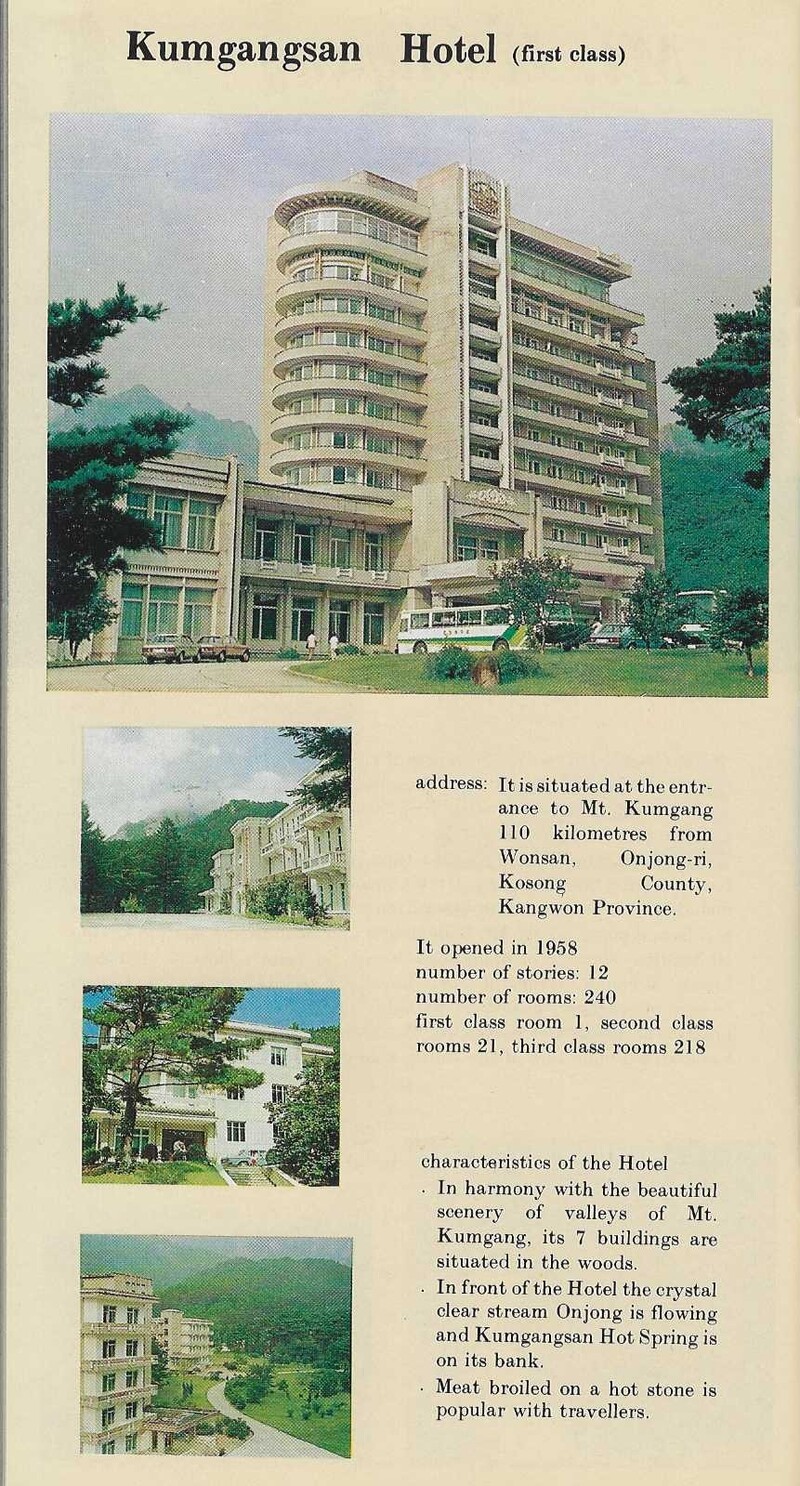
Down the east coast you travel, to stunning Mt. Kumgang (the Diamond Mountains). Later to become, for some years, an enclave for visitors from South Korea, with a few more hotels built to accommodate those visitors.
This time, stay in the 50s-built eponymous Kumgangsan Hotel as a base for local hikes and beach trips.
North Korean Hotels, 1994 - Nampo
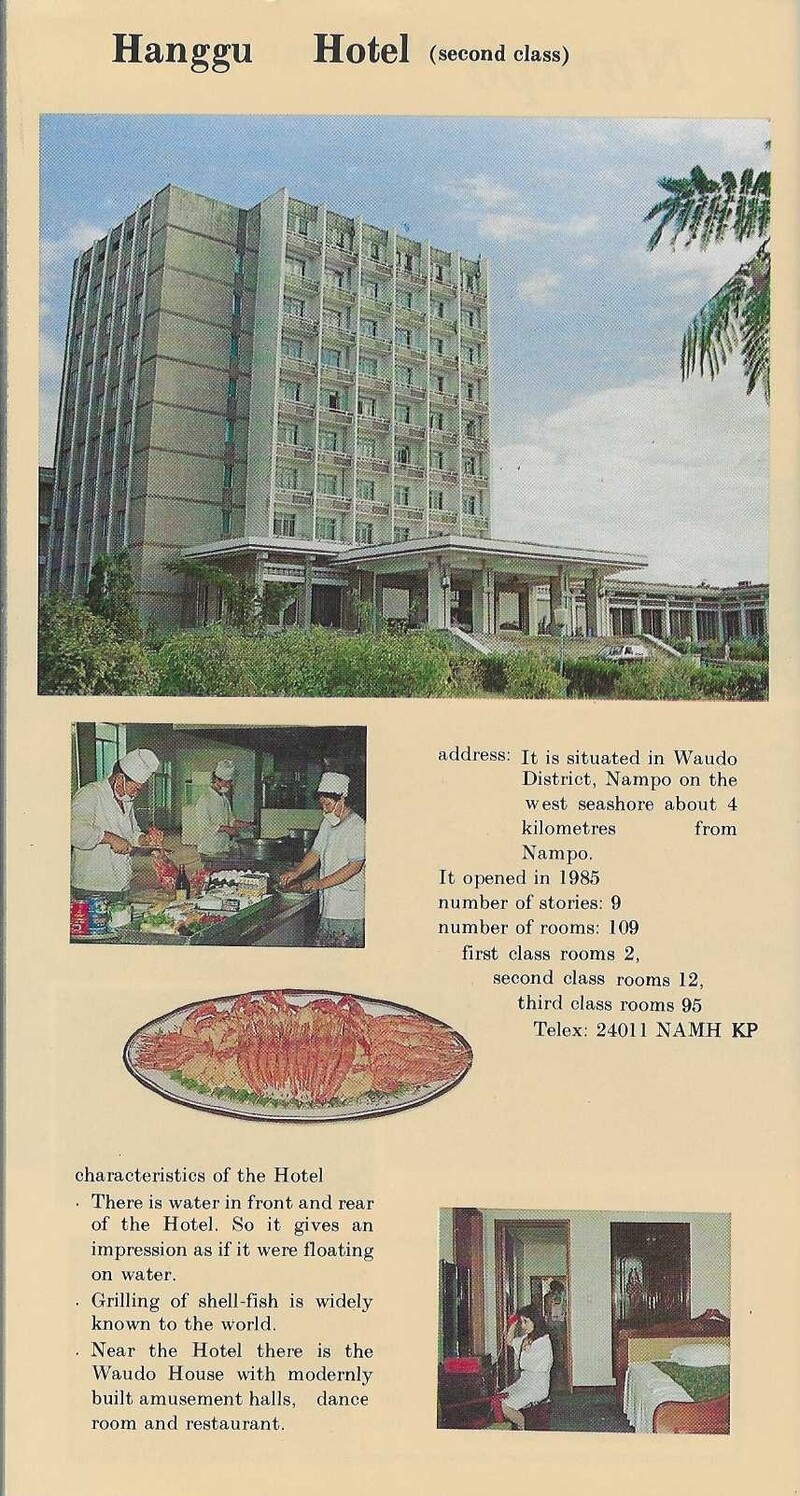
From the east coast to the west coast. Nampo is the port city at the entrance of the Taedong River that flows to Pyongyang.
The Hanggu ('Port') Hotel still operates, and much of the decor seen by a visitor today will be the same as enjoyed on this early 90s adventure.
According to the brochure, the grilling of shellfish here is widely known to the world, so you've probably heard of it already.
North Korea Hotels, 1994 - Mt. Paektu
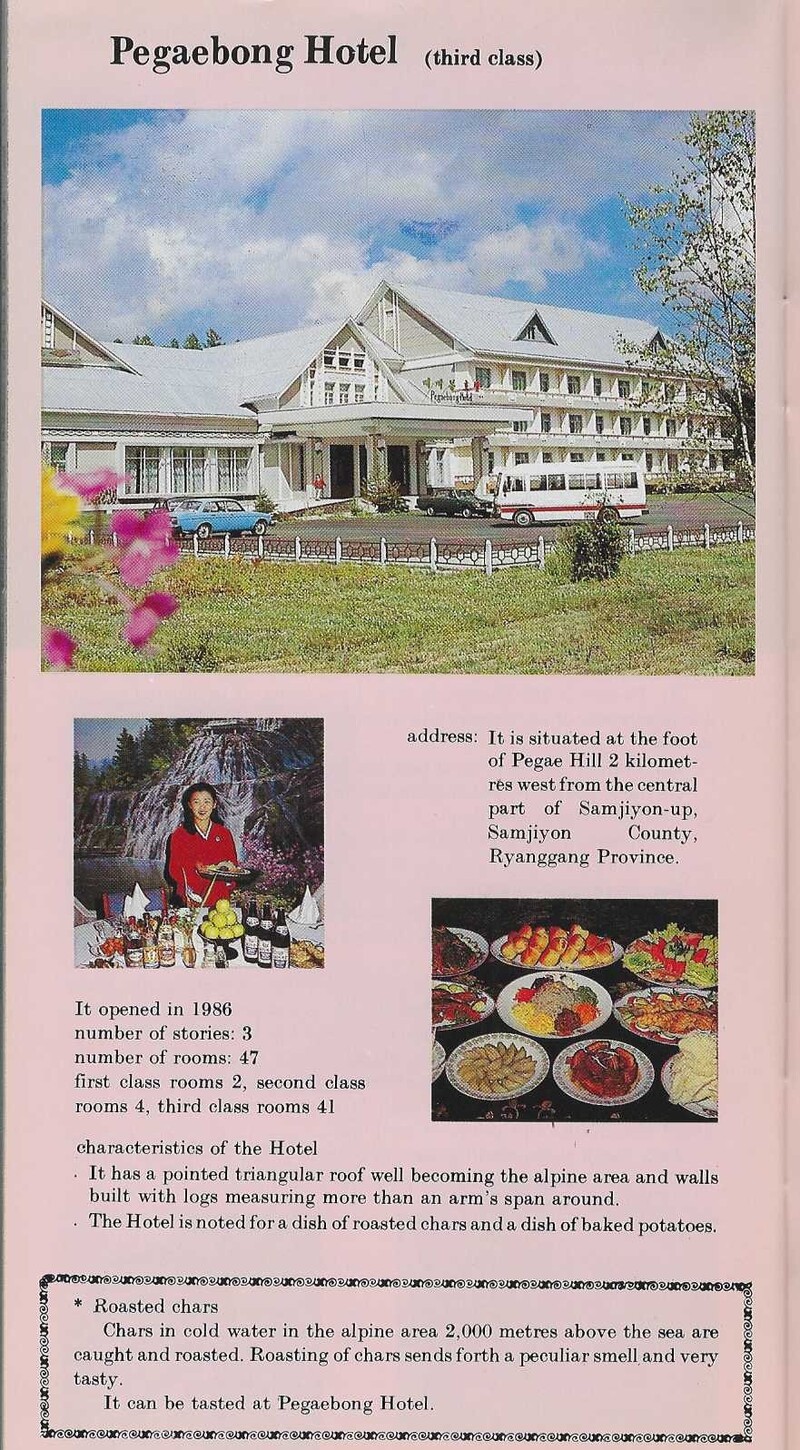
Now you find yourself in the far north, up on the Chinese border, at the highest mountain in all Korea: sacred Mt. Paektu.
Where to stay? The best (and only) choice is the Pegaebong ('Pillow Hill') Hotel.
Known even now for its (over) reliance on potatoes for every meal in the restaurant. Alpine style on the outside, a bit more brutalist-modernist on the inside.
North Korean Hotels, 1994 - Hamhung
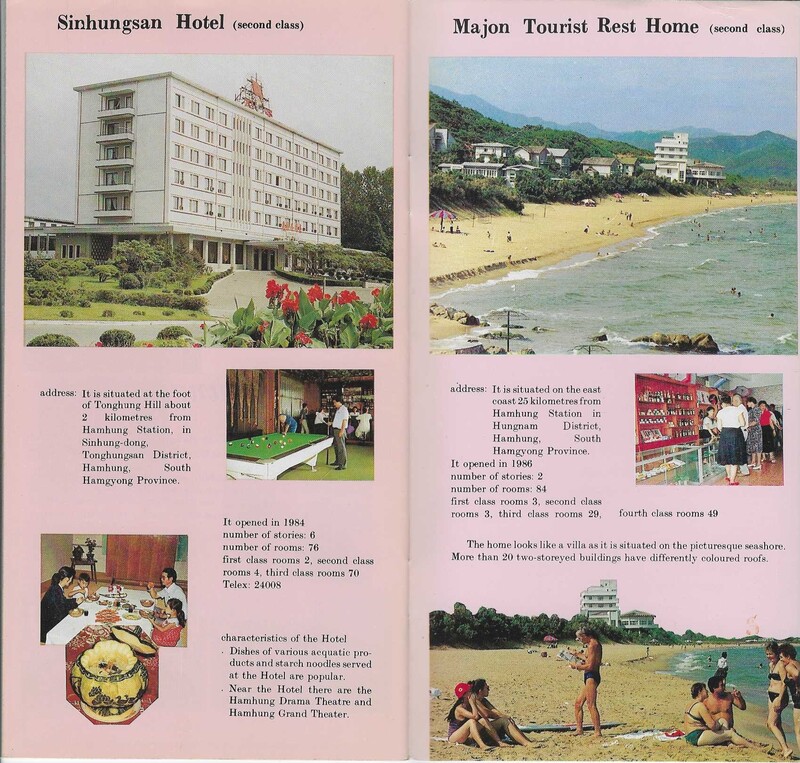
Finally, the tour brings you to Hamhung.
Although it definitely wouldn't have been easy, Koryo Tours spent many years attempting to gain access for tourists to this city and finally achieved it only in 2010.
Prior to that, foreign visitors would have been more of the NGO type for the most part, and far fewer in number. Still, two hotels are offered, one downtown and one on a nearby beach. Why choose only one?
Stay for a couple of nights on this imaginary itinerary!
A Final Note on North Korean Hotels from 1994
So ends the travel in time and space.
Many of these hotels remain extant, and often unchanged (which can be good or bad in terms of general maintenance or maintaining a retro aesthetic).
A brochure of all the DPRK's hotels now would be several times longer than this classic text, would have fewer telex and fax numbers, would offer more variety, and would include some truly impressive places.
But it would be missing some of the charm and innocence of this one, produced at a time when, although bad times loomed for North Korea, it seemed as if an opening to tourism in a way never seen before was imminent.
Koryo Tours
Group Tours to North Korea
Share