-
15th May | Saturday
Arrival in Dili
Dili
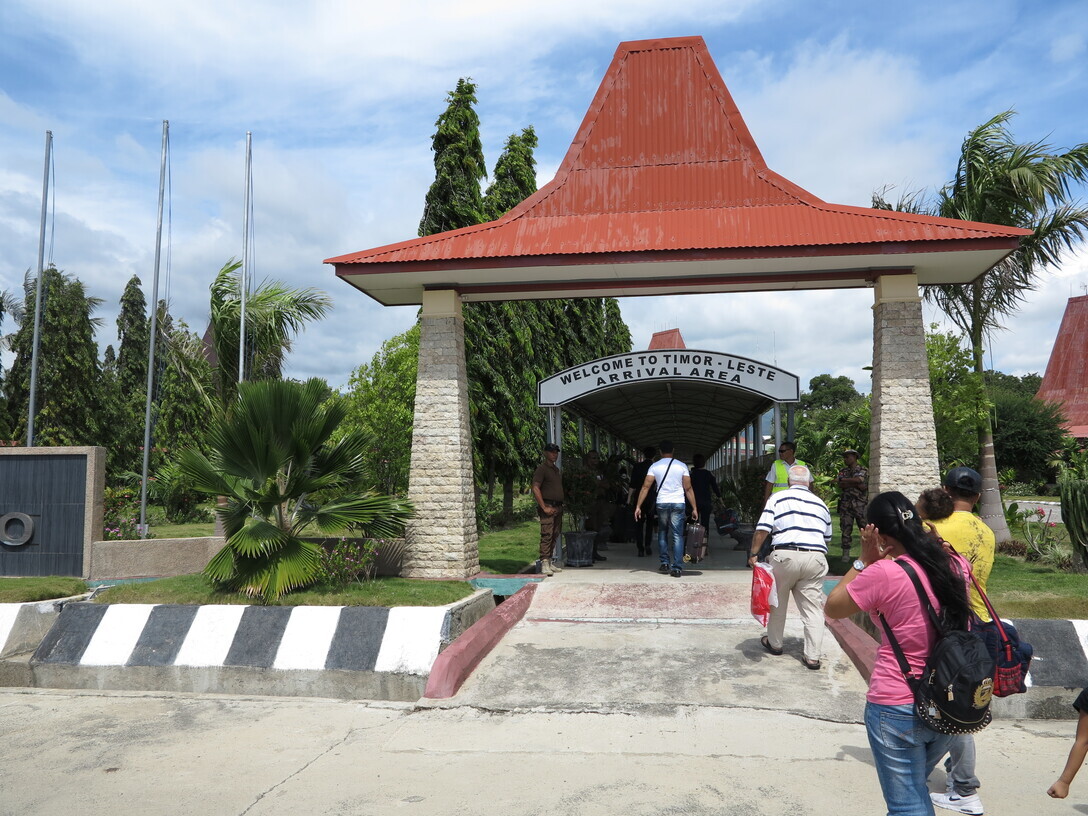
We fly into Dili independently, and we're picked up from Dili International Airport and taken straight to the hotel to settle in and meet the rest of the group. The mandatory briefing follows tonight after dinner.
The latest recommended arrival time is 4 pm.
- Hotel Check-In, Welcome Dinner and Briefing | We transfer to the group's beachfront hotel, checking in and meeting our tour leader and fellow travellers. We finish the day with a welcome dinner, followed by the tour briefing.
Accommodation | Hotel Esplanada (or equivalent), Dili
Meals | Dinner
-
16th May | Sunday
Dili — Cristo Rei and the Road to Independence
Dili
We start above the city at sunrise, escape the afternoon heat in the hills at Dare, then follow the route of the 1991 march in the cool of the late afternoon.
- Cristo Rei Hike | We set off early to hike up to Cristo Rei, Dili’s defining landmark. It’s 570 steps up the hill to the 27-metre-high Christ statue, roughly 45 minutes each way, and we reach the top soon after sunrise, before the heat sets in. From the top, we’re rewarded with panoramic views over the Banda Sea and the city we’ll spend the next few days exploring. Back down by 08:00 for breakfast.
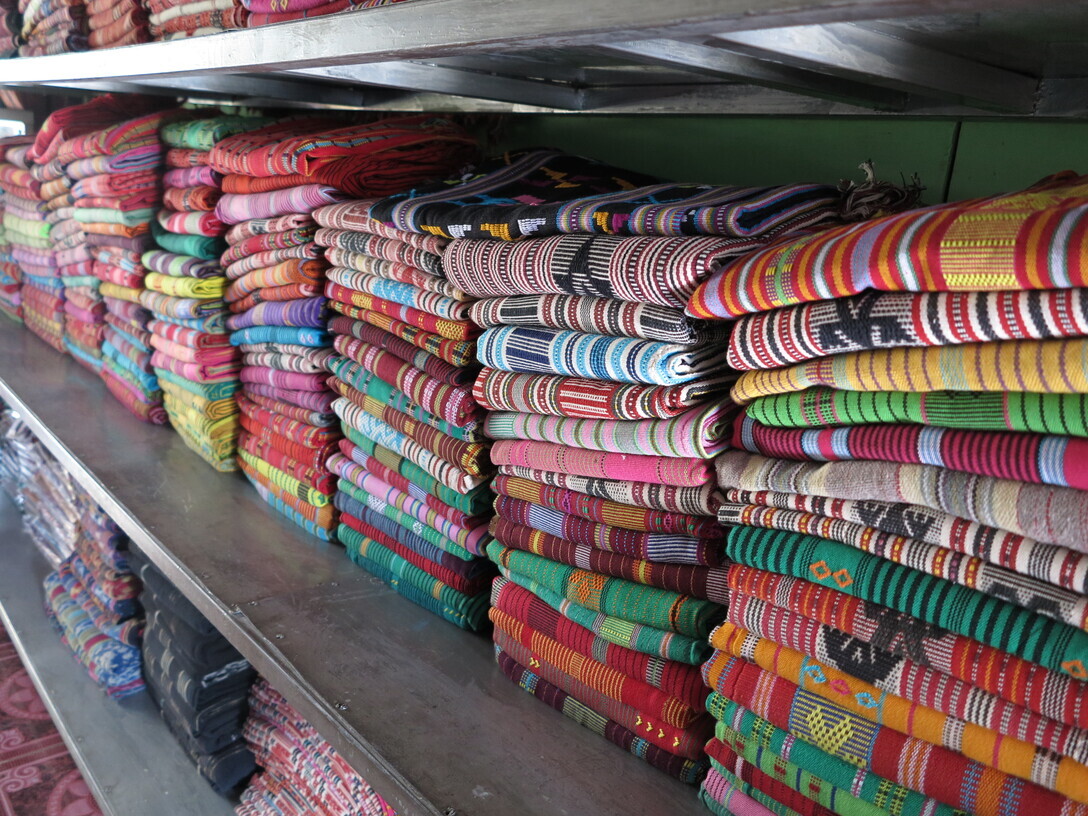
- Tais Market | After breakfast, we browse the hand-woven tais textiles that are central to Timorese identity, a good place to buy directly from the weavers.
Lunch, then rest at the hotel through peak heat.
- Dare Memorial | In the mid-afternoon, we drive up into the cooler hills above Dili to the Dare Memorial, which honours the Timorese who supported Australian soldiers against the Japanese occupation in the Second World War, with views back over the city and the sea.
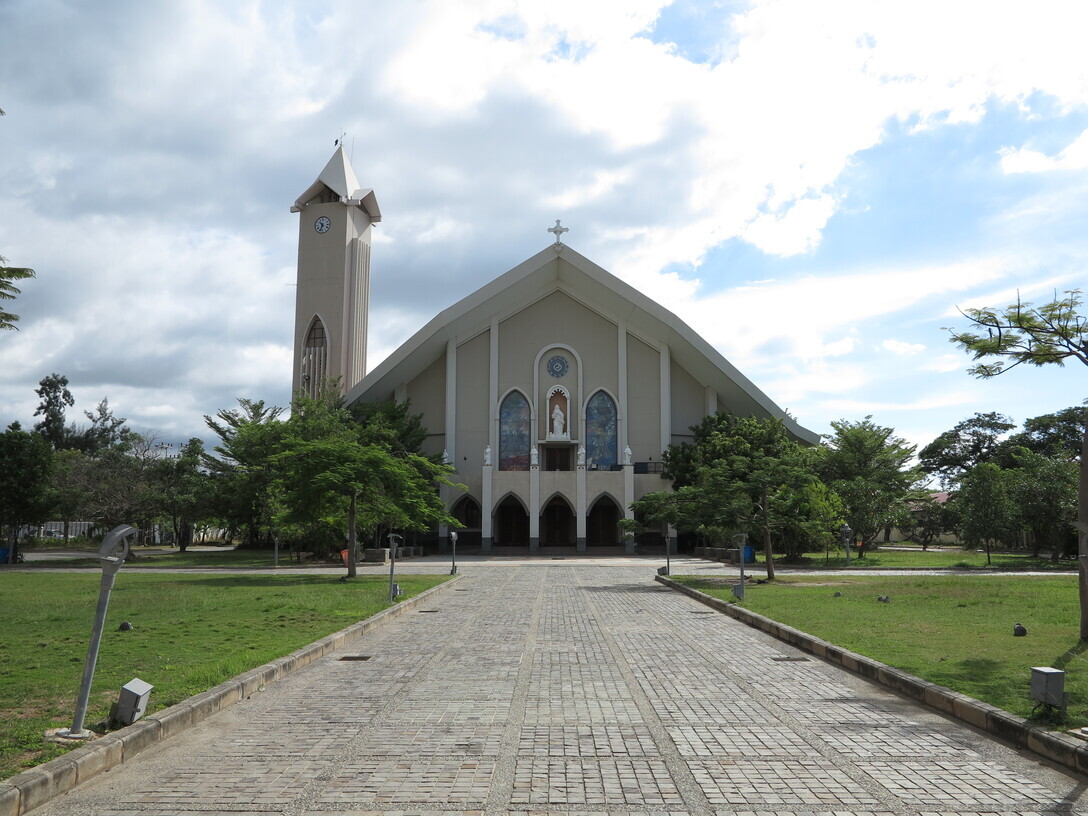
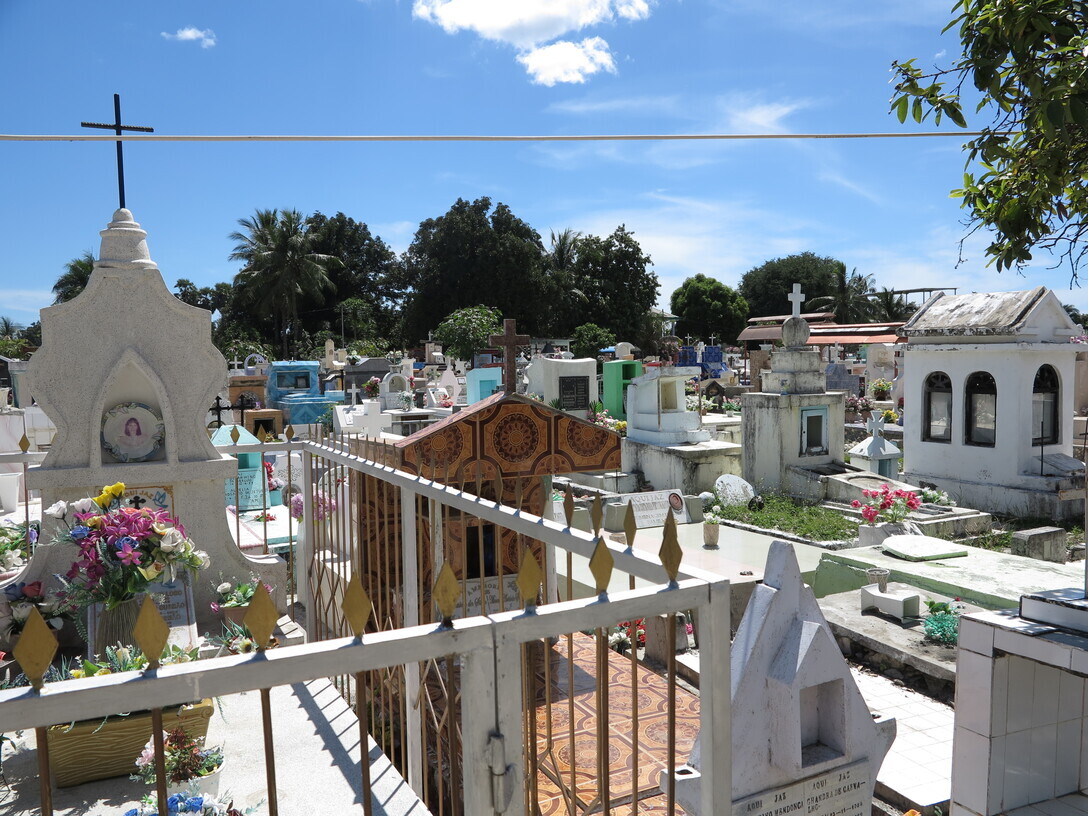
- Motael Church & Santa Cruz Cemetery | In the late afternoon, we visit Motael Church, the oldest church in Dili and the site where a young independence activist was shot in 1991, an event that triggered the march to Santa Cruz Cemetery. We then follow the route of that march to Santa Cruz, where it ended in the massacre of 12 November 1991.
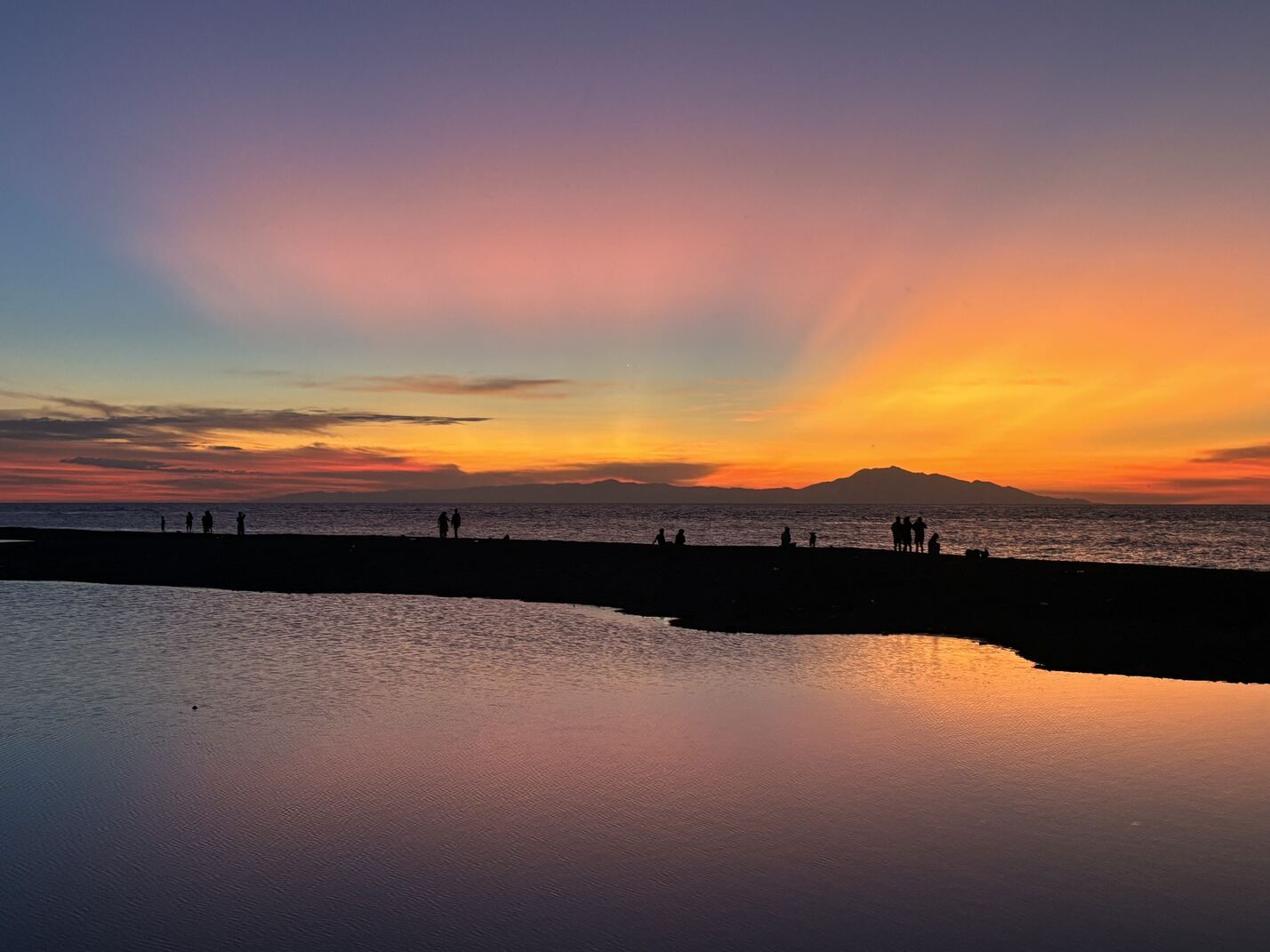
- Sunset walk | We close the day with a sunset walk along the Dili waterfront, taking in the coastal scenery and soaking up a local favourite pastime, hanging out by the water. Dinner option of local street food with locals.
Accommodation | Hotel Esplanada (or equivalent), Dili
Meals | Breakfast, Lunch
-
17th May | Monday
Dili — The Resistance and Community Visits
Dili
A morning with the history of the resistance, heard first from someone who lived through it, then Chega! and two of the most important community visits on the whole tour.
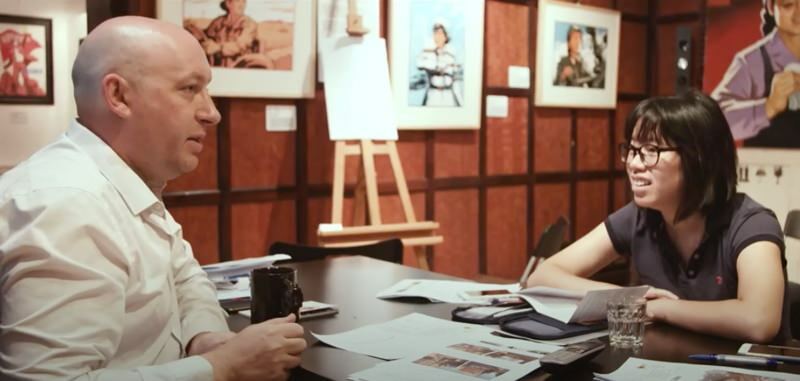
- Xanana Gusmão Reading Room | We take part in a 75-minute structured dialogue with a documented resistance survivor, held in the very room where the independence movement was once coordinated, a rare and direct way to hear this history firsthand.
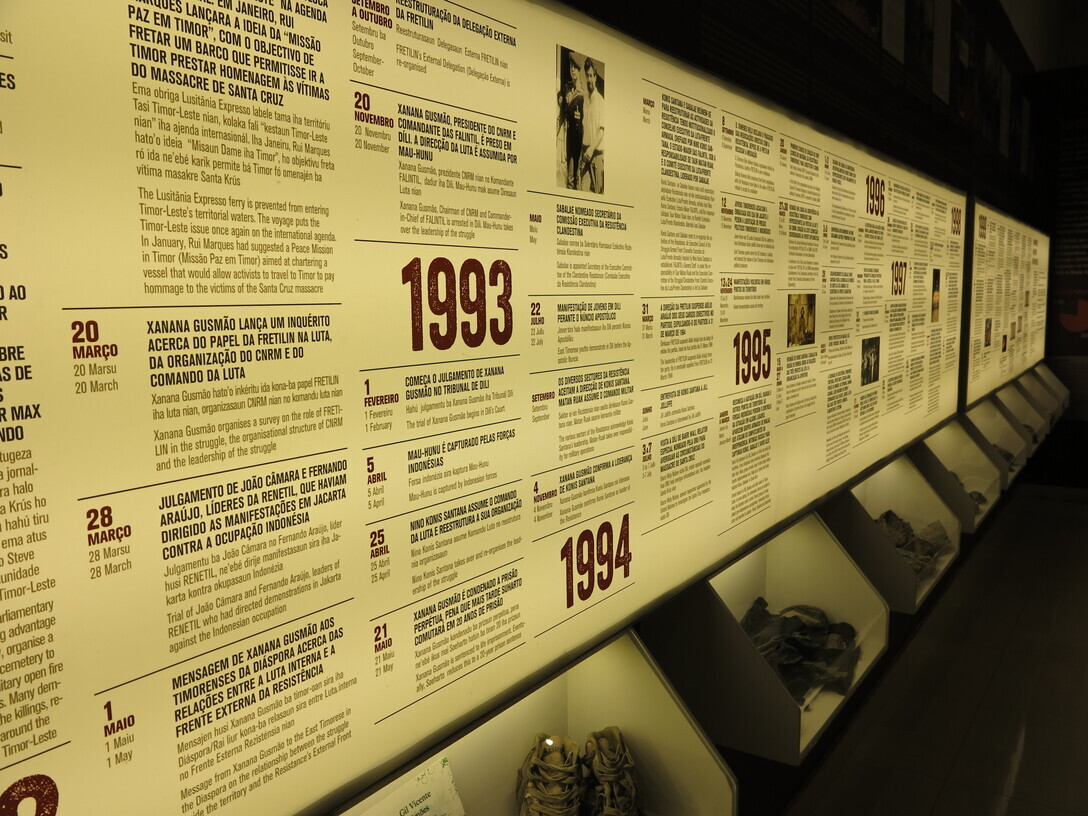
- Timorese Resistance Archive & Museum | We continue indoors through the late morning at the Timorese Resistance Archive and Museum, which documents the clandestine Timorese resistance movement through personal testimonies, photographs, objects and documents from the occupation period.
Rest at the hotel through peak heat.
- Chega! Exhibition | After the midday rest, we visit the Chega! Exhibition at the former Balide prison to learn about the country’s path through occupation and resistance in raw detail.
- Alola Foundation | Next, we visit the Alola Foundation for a 45-minute programme briefing. It is one of Timor-Leste's most important women's organisations, working across women's economic empowerment, tais weaving cooperatives, and maternal health advocacy. They also run the Alola Esperansa craft shop on site, a good place to pick up local souvenirs while supporting the organisation's work directly.
- Ba Futuru | We finish the day at Ba Futuru, a peacebuilding organisation working with at-risk youth through theatre, film, and photography. Creative tools are used to help process trauma and build practical skills. A chance to see the work up close and hear directly from some of the young people involved.
An early night is recommended, as tomorrow requires port departure for the 09:00 barge boat to Atauro Island.
Accommodation | Hotel Esplanada (or equivalent), Dili
Meals | Breakfast
-
18th May | Tuesday
Atauro Island
Dili · Atauro Island
We catch the 09:00 barge boat from Dili port to Atauro Island, a crossing of up to three hours, depending on the weather, to one of the most biodiverse reef systems anywhere in the world.
- Barge Boat to Atauro Island | The barge departs Dili port at 09:00 and arrives at Atauro around midday, depending on the weather.
- Conservation International Reef Briefing | After settling in at the local homestay and lunch, a marine scientist from Conservation International joins us for a briefing on the island's coral biodiversity and tara bandu, the traditional marine law protecting these waters, preparing us for tomorrow's snorkelling.
Rest at the homestay through peak heat.
- Atauro Village - Tuk-Tuk Tour and Social Enterprise Visit | In the late afternoon (around 15:30), we take a tuk-tuk through the village, stopping at two women's cooperatives that produce some of the most distinctive craft work in Timor-Leste. Biojoia de Atauro is run by a group of hearing-impaired women who make jewellery from local materials including coconut shells, seeds and wood. Boneca de Atauro produces handmade embroidery and textile products, from dolls to bags to homeware. Both cooperatives are worth supporting directly, and the work is simply beautiful.
- Beach BBQ Dinner | We close the evening with a proper beach BBQ, fresh seafood on the grill, cold drinks, and the sunset settling in over the water.
Accommodation | Homestay, Atauro Island
Meals | Breakfast, Lunch, Dinner
-
19th May | Wednesday
Atauro Island — Reef, Market and Return to Dili
Atauro Island · Dili
A full morning on the reef, followed by the local market and a village walk, then the return ferry to Dili in time for the Independence Eve mass and a group dinner.
- Dawn Snorkelling | We head out at dawn for a guided snorkelling tour across Atauro's reefs, home to over 400 coral species and some of the calmest water and best visibility of the day. Marine life here is at its most active in these early hours, and the guides know the reefs well enough to put us in the right spot at the right time. What turns up is never guaranteed; dugongs, dolphins, reef sharks, and whale sharks all pass through these waters, and on the right morning, whales too.
Atauro is regarded as one of the world's great marine biodiversity destinations, and its reputation isn't overstated. For anyone keen to go further than snorkelling, a scuba diving half-day trip can be arranged separately today, not included as part of the tour.
- Local Seafood and Vegetable Market | Back on land, we visit the local market: a small, lively gathering of fishermen and farmers selling the morning's catch alongside fresh vegetables and local produce. A good 30 minutes to wander, buy, and get a sense of the everyday economy of the island.
- Village Walk | Before the heat builds, we detour out to the old airstrip north of Vila Maumeta, built during the Indonesian occupation and unused since, a quiet, overgrown stretch of tarmac tied to the island's history as a detention site for thousands of Timorese families. From there, a local guide leads us into the village itself, a relaxed walk that gives a proper sense of daily life on Atauro away from the reefs.
We rest at the homestay on Atauro Island. Lunch is prepared by the host family.
- 15:00 - Return Ferry to Dili | The ferry departs Atauro at 15:00 and arrives back in Dili by around 18:00, depending on the weather. We check into the hotel for the night
- Independence Eve Mass | Tonight is Independence Eve, marked with masses across Dili's churches. We walk from the hotel to one of the evening services, at the Cathedral of the Immaculate Conception or Motael Church, depending on the official programme, which we confirm in advance. Services are conducted in Tetum and Portuguese, with thousands in attendance.
- Group Dinner and Independence Day Briefing | After mass, we sit down together for a group dinner, where our tour leader runs through what to expect tomorrow: the flag-raising ceremony, the parade, the crowds, and how the day will run.
Accommodation | Hotel Esplanada (or equivalent), Dili
Meals | Breakfast, Lunch, Dinner
-
20th May | Thursday
INDEPENDENCE DAY
Dili
Today, 20 May 2027, is the 25th anniversary of Timor-Leste's formal restoration of independence.
- Flag-Raising Ceremony and Military Parade | The national flag-raising ceremony has been held at Tasi-Tolu Square for recent anniversaries, though the exact location for 2027 will be confirmed closer to the date and communicated in the pre-departure booklet. We join the public to watch the FALINTIL veterans stand alongside the national defence forces in a formal ceremony. The President and Prime Minister both deliver speeches. We view the military parade and other activities as scheduled.
Rest at the hotel through peak heat.
- The Streets of Dili | The formal ceremonies give way to the city in the late afternoon. Traditional dance performances fill the squares, including likurai, historically performed by women welcoming home warriors returning from conflict. Tais weavings are on display, food stalls sell traditional Timorese dishes, and the national flag is on everything and everyone, worn, waved, and painted onto faces. Music and community gatherings run into the evening across the city.
- Celebration Dinner | After the full day of Independence Day celebrations in Dili, we close the evening with a celebratory dinner, doubling as a farewell for those on the short tour, whose Timor-Leste experience concludes here. For everyone continuing on the long tour, the trip picks up again in the morning.
Accommodation | Hotel Esplanada (or equivalent), Dili
Meals | Breakfast, Dinner
-
21st May | Friday
Dili → Oecusse Enclave
Dili · Oecusse, Timor-Leste
This morning, we fly to the enclave of Oecusse on a charter flight from Dili, and spend the rest of the day in Pante Makassar, the main town in Oecusse.
- Charter Flight Dili → Oecusse | We fly early this morning from Dili International Airport on a 45-minute charter flight to Oecusse, the pocket of Timor-Leste surrounded by Indonesian territory. Depending on group size, we fly in one or two small aircraft, departing between around 07:30 and 08:30. Luggage is limited to 20 kg per person on this flight (see Notes).
Lunch at a waterfront restaurant in Pante Makassar, then rest through the peak heat.
- Lifau Monument | We visit Lifau, the site where the Portuguese first landed on the island of Timor in 1515. A monument marks the spot, the starting point of nearly five centuries of Portuguese presence on the island.
- Colonial Quarter Walk and Waterfront | We explore Oecusse's colonial quarter to take in the legacy of the Portuguese era. The waterfront is just beyond, where we may catch the sunset as the evening sets in.
Accommodation | Royal Rao Hotel (or equivalent), Pante Makassar, Oecusse
Meals | Breakfast, Lunch, Dinner
-
22nd May | Saturday
Oecusse — Full Day in the Enclave
Oecusse Enclave
We spend a full day exploring the enclave, one of the least-visited corners of Southeast Asia. The road infrastructure is basic, rough and unpaved in stretches, but the landscape more than makes up for it, extraordinary, rugged, and largely untouched.
- Oesilo Mud Volcanoes | We depart early for Oesilo, around an hour and a half south of Pante Makassar on rough roads through the hills, close to the Indonesian border. Just outside the town, mud and gas bubble up from a cluster of small mud volcanoes in a strange grey landscape dotted with casuarina trees. It’s a rough, remote spot, and well worth the early start. We’re back in Pante Makassar by late morning.
Lunch, then rest at the hotel through peak heat.
- Pante Makassar Beach and ZEESM Buildings | The beach here makes for good swimming. Nearby, we take a detour through the abandoned buildings from the ZEESM (Zona Especial de Economia Social de Mercado, or Special Zone of Social Market Economy in English) era, the remnants of a special economic zone project that was announced with great ambition and never completed. Half-built structures now sit empty and overgrown, an eerie, faintly surreal counterpoint to the beach just down the road.
Accommodation | Royal Rao Hotel (or equivalent), Pante Makassar, Oecusse
Meals | Breakfast, Lunch, Dinner
-
23rd May | Sunday
Overland to West Timor and Boti Village
Oecusse → Wini Border (Indonesia) → Kefamenanu → Niki Niki → Boti Village
We leave Pante Makassar early, cross overland at Wini into Indonesian West Timor, and drive through the highlands of South Central Timor to Boti, where we spend the night in the village.
- Wini Border Crossing, Indonesia | This morning we cross from Timor-Leste into Indonesia at the Wini border post, roughly 20km east of Pante Makassar. Our local partner handles the exit paperwork on our behalf. On the Indonesian side, most nationalities obtain a Visa on Arrival (IDR 500,000 / approximately USD $35) at the crossing, and all guests are required to complete the All Indonesia Arrival Card, a digital customs and immigration form, before entering Indonesia. We recommend filling this in the evening before.
- Drive to Niki Niki | From the border, we drive south through Kefamenanu to Niki Niki for lunch.
- Into Boti Village | After lunch, we continue by 4WD through Oinlasi and up into the hills to Boti, just over four hours' driving from Wini in total. Often called the last kingdom of Timor, Boti is led by its king and still follows Halaika, the Timorese ancestral belief that most of the island left behind.
- Evening in Boti | We present a traditional gift to the king and settle into the village homestay, where our hosts cook a simple dinner of rice, vegetables and meat.
Accommodation | Homestay, Boti Village (basic, shared facilities)
Meals | Breakfast, Lunch, Dinner
-
24th May | Monday
Boti Village to Kupang
Boti Village → Niki Niki → Soe → Kupang
A morning in Boti, then the drive down from the highlands to Kupang, with a couple of stops along the way.
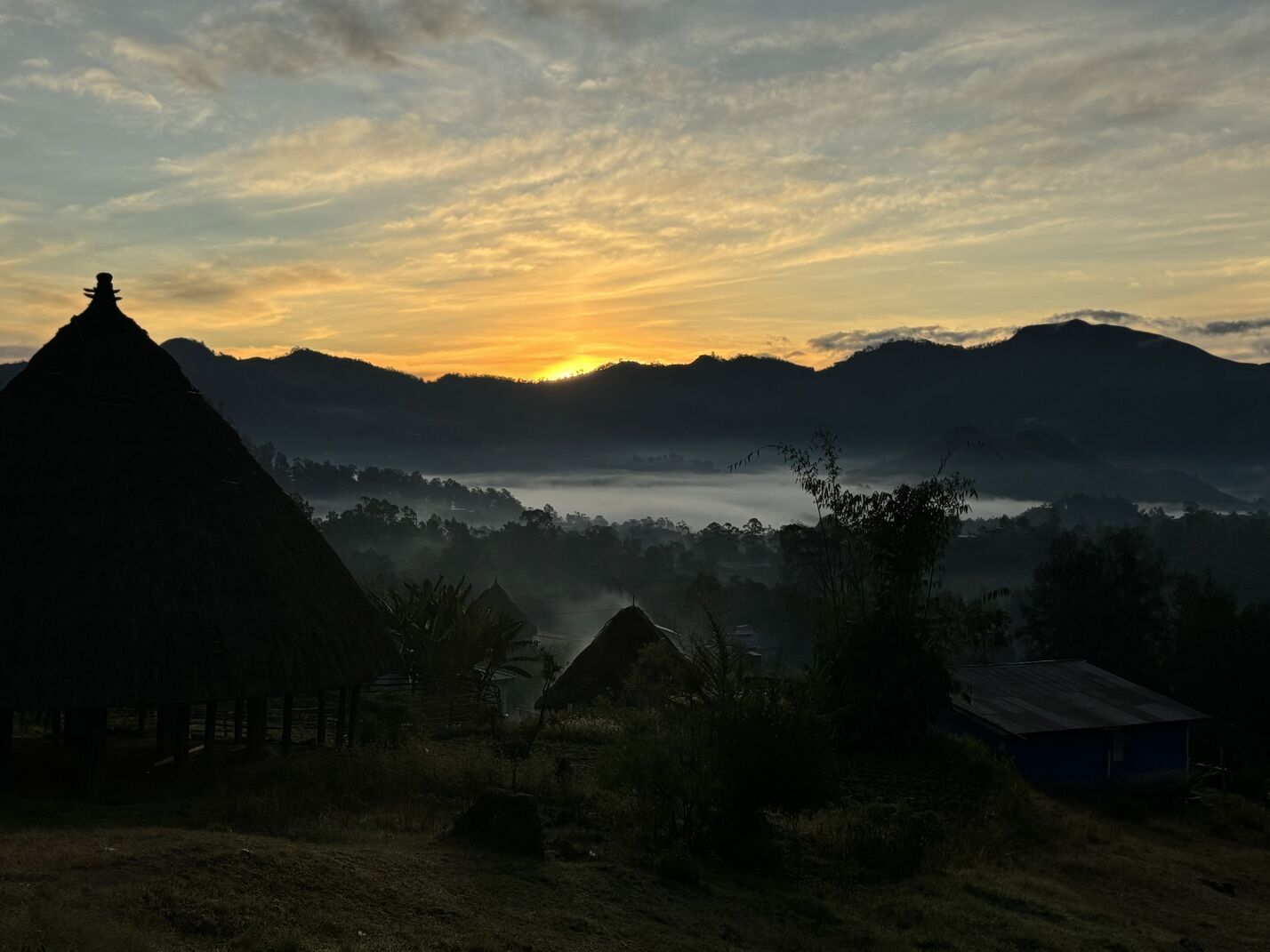
- Boti Village | After a village breakfast, in the cool of the early morning, we meet the king and walk through the inner village, with its thatched ume kbubu houses and the royal compound at its centre. Boti's weavers still colour their cloth with plant dyes, and there is usually a chance to buy directly.
- Drive to Soe | We leave Boti by 4WD and drive back through Niki Niki to Soe for lunch.
- Camplong and Oebelo | On the way to Kupang, we stop at Camplong's shaded spring pool, then at Oebelo, where local families make and play the sasando, a string instrument made from lontar palm leaves.
- Arrival in Kupang | We reach Kupang in the late afternoon and check in to settle in after two days on the road.
- Night Market, Dinner on Your Own | Tonight we have dinner at Kupang's waterfront night market, with stalls selling grilled fish, prawns, squid, and crab cooked to order over charcoal. Try local delicacies such as se'i, meat slow-smoked over coconut husks, alongside jagung bose, a corn and bean porridge. Dinner comes to around $3 to $6 per person.
Accommodation | Swiss-Belcourt Hotel (or equivalent), Kupang
Meals | Breakfast, Lunch
-
25th May | Tuesday
Kupang
Kupang
We spend a full day in the city that was once the administrative capital of Dutch Timor.
- Crystal Cave (Goa Kristal) | We start the day with a visit to a freshwater cave pool roughly 30 minutes south of Kupang, timed for the morning light. Natural light filters down into the cave from above, catching the water in a way that makes the whole pool glow. Swimming here is possible.
- Kupang Museum | We spend the late morning at the provincial museum, a good excuse to get out of the heat and into the air conditioning for a while. The collection covers East Nusa Tenggara's cultural history in some depth, with ikat textiles from across the province, colonial-era fossils, and a blue whale skeleton among the highlights.
Rest at the hotel at midday. Lunch is independent, with plenty of good local Indonesian food near the waterfront.
- Roslin Orphanage | A short drive from the city, Roslin Orphanage was founded in the aftermath of the East Timorese refugee crisis of 1999, when thousands of families fled across the border into West Timor. If you would like to bring a small gift for the children, we will advise in the pre-departure booklet.
- Fort Concordia | As the afternoon cools, we visit the ruins of Fort Concordia, the Dutch VOC fort built in 1653 and the oldest European building on the island of Timor, built more than a century after the Portuguese had established themselves at Oecusse.
- Cafe Inklusi, Farewell Dinner | Dinner at Cafe Inklusi, a social enterprise restaurant run entirely by Kupang's deaf community, including deaf baristas, deaf cooks and deaf hosts.
Accommodation | Swiss-Belcourt Hotel (or equivalent), Kupang
Meals | Breakfast, Dinner
-
26th May | Wednesday
Tour Ends
Kupang
The tour ends today. El Tari Airport connects to Jakarta, Surabaya, Bali, and beyond. Airport transfers are available throughout the day. Where you go next is entirely your own. Koryo is happy to advise on onward options if needed.
Accommodation | N/A
Meals | Breakfast
[end of tour]