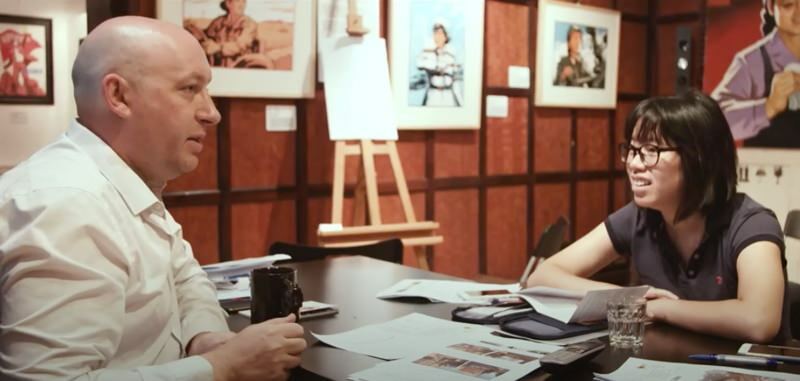
Why should you choose Koryo Tours?
Choosing to travel to unusual destinations such as North Korea is a big decision, and choosing the right people to take you is an incredibly important part of that. Learn about how we facilitate tourism responsibly in some of the most interesting and unique destinations on our planet, and at the same time ensure you get the most out of your once-in-a-lifetime experience.
View the video
Tours to Libya travelling both east and west. Starting in Tripoli, ending in Benghazi, and exploring some of the world's most incredible ancient Greek and Roman cities in between.
With over 30 years of experience in the adventure travel industry, Koryo Tours prioritises safe and ethical group travel to all of our unusual destinations. Explore our group tours to Libya below!
Sign up for the mailing list to be the first to hear about new Libya tours.
We go in-depth to tackle the questions of is Libya safe to travel and give you an honest answer.
Read morePompeii. Ephesus. Jerash. Petra. What almost none of them know is that Libya contains Roman ruins that rival every single one of those sites. In scale. In preservation. And in sheer dramatic power.
Read moreEastern Libya has a strong Greek background, whilst the western side developed by the Romans. The Cyrenaica coast is lush, dramatic, and almost entirely unvisited. Start in Benghazi to explore the ancient cities to Cyrene and its partially submerged port of Apollonia, this is one of the great overlooked stretches of the ancient world.
Read more
9 nights Libya in the Roman west, where
marble cities rise from the Mediterranean
shore.
From 3095 EUR per person
Please apply by 15th November, 2026.
9 nights Libya in the Roman
west, where marble cities
rise from the Mediterranean
shore.
From 3095 EUR per person
Roman theatres rising from the Mediterranean shore, a UNESCO desert oasis at the edge of the Sahara, Berber granaries built into clifftops, and troglodyte homes carved into the earth. Libya is one of the most extraordinary countries in the world, and almost no one has been there.
Libya's western region holds a concentration of history that is genuinely difficult to believe until you are standing in it. Three UNESCO World Heritage Sites within a few hours of each other. Roman cities that rival anything in Italy or Tunisia. A desert oasis town whose covered alleyways and rooftop networks have remained largely unchanged since the medieval period.
And at almost every site, you will have the place to yourself.
The tour begins in Tripoli. We then head out along the Mediterranean coast to Sabratha, one of the three ancient cities that gave the region its name (Tripolis).
Its Roman theatre, the largest in Africa, rises three storeys against the sea sky, its stage wall reconstructed by Italian archaeologists in the 1930s and still standing almost entirely intact. From Sabratha, the tour moves inland, climbing into the Jebel Nafusa mountains, where Berber communities built their fortified granaries into the clifftops and their villages on the edge of escarpments that fall away to the Jeffara Plain below.
The night is spent in Ghadames, the most remarkable desert town in Libya, a UNESCO-listed oasis city near the point where Libya meets Algeria and Tunisia.
Its architecture is unlike anything else in North Africa: an underground network of covered passages and interconnected rooftops designed for a community living in extreme heat. In the evening, we will enjoy a Tuareg music performance beside the Sahara dunes. For the women in the group, Al-Mourin, a traditional women's cultural performance unique to Ghadames, is arranged separately.
From Ghadames, the tour loops back through Nalut and its fortified granary, where lunch is taken in a traditional cave house, before returning to Tripoli for the centrepiece of your tour - Leptis Magna.
Founded by Phoenician traders and transformed into one of the most magnificent cities in the Roman Empire by the emperor Septimius Severus, who was born here, Leptis Magna is simply one of the greatest archaeological sites in the world. You will almost certainly be the only tourists there. A Zokra traditional band performs during the visit.
The final days bring Gharyan's underground troglodyte houses and pottery workshops, the Berber old city of Yafren, and a proper circuit of Tripoli itself. The old medinas and mosques, a cooking workshop in a traditional house, the newly opened Libya National Museum*, and a farewell dinner by the Arch of Marcus Aurelius.
Don't want the journey to be over so soon?
How about joining our 12-night Libya tour that visits the recently opened Eastern part of Libya to visit one of the most marvellous ancient Greek ruins the World has to offer, while no other travellers are in sight?
Check out our Travel Libya, East and West Tour here.
INCLUDED
NOT INCLUDED
You must apply for an electronic visa through the official government website. Koryo Tours will provide you with the necessary sponsor documents. The eVisa fee is $63 USD. Further details will be provided upon booking the tour with us.
Tripoli is served by Tripoli Mitiga International Airport (MJI).
The most reliable ways to fly there are currently through Istanbul with Turkish Airlines or through Cairo with Egyptair.
ITA Airways also plans to resume its flights from Rome-Fiumicino starting in September 2026. However, tickets for these upcoming ITA Airways flights are not yet available for booking.
Koryo Tours requires all participants to maintain comprehensive travel insurance for Libya. We recommend International Medical Group (IMG), as their policies cover our specific destinations.
Please note: The National Museum's opening in December 2025 is still currently delayed. We anticipate the museum being open for the trip, but participants should note this may not be possible on the day.
Please email Zoe Stephens, the tour manager for this tour.
Please apply by 15th November, 2026.
12 nights in Libya. Two Libyas in one journey. The Roman west, where marble cities rise
from the Mediterranean shore. And the Greek east, where ancient Cyrene earned its name
as the Athens of Africa.
From 4495 EUR per person
Please apply by 15th November, 2026.
12 nights in Libya. Two Libyas in one journey. The Roman
west, where marble cities rise from the Mediterranean shore.
And the Greek east, where ancient Cyrene earned its name
as the Athens of Africa.
From 4495 EUR per person
Libya holds one of the greatest concentrations of ancient ruins in the world. UNESCO World Heritage Sites. Roman cities that rival Pompeii in their scale and state of preservation. Greek temples older than the Parthenon. A desert oasis whose mud-brick architecture has been continuously inhabited for thousands of years.
And almost no tourists.
This thirteen-day itinerary combines two distinct but equally unique areas of Libya.
We start the trip taking in the Roman cities of Sabratha and Leptis Magna, the Berber mountains of Jebel Nafusa, and the Saharan oasis of Ghadames.
Take a full-day excursion west along the Mediterranean coast to Sabratha, one of three ancient cities that gave the region its name; Tripolis, meaning 'three cities’, and home to the incredible Roman Theatre.
We also spend a night near the desert, where Libya meets both Algeria and Tunisia. Here we’ll visit Ghadames and another of Libya’s UNESCO World Heritage Sites, as well as being invited to an exclusive women’s-only event & music event (for the men).
We then visit Leptis Magna, one of the greatest Roman sites in the world – and one where you’ll likely be the only tourist around. It’s truly a spectacular site to experience.
Before heading east by domestic flight (included), we enjoy a city tour of Tripoli, including the old city and its multiple sites and souqs, as well as the newly opened Libya National Museum*.
Only recently opened to tourism, the east of Libya offers a journey through Cyrenaica. If western Libya is the Roman story, eastern Libya is the Greek one.
Beginning in Benghazi and moving along the Mediterranean coast through a succession of ancient Greek and Roman sites, culminating at Cyrene itself, one of the most important cities of the classical world.
This region is almost entirely off the tourist map, which means the sites are effectively yours alone. The coastal route from Benghazi west through Tocra, Tolmeita, and Qasr Libya to Cyrene and its port of Apollonia passes through a succession of Greek and Roman ruins in various states of preservation – many of them dramatically positioned above the Mediterranean.
Together, visiting both east and west gives a complete picture of Libya's extraordinary layered history. From Phoenician trading posts to Greek colonies to Roman imperial ambition to Berber desert ingenuity.
Please note: The National Museum's opening in December 2025 is still currently delayed. We anticipate the museum being open for the trip, but participants should note this may not be possible on the day.
INCLUDED
NOT INCLUDED
You must apply for an electronic visa through the official government website. Koryo Tours will provide you with the necessary sponsor documents. The eVisa fee is $63 USD. Further details will be provided upon booking the tour with us.
Tripoli is served by Tripoli Mitiga International Airport (MJI).
Benghazi is served by Benghazi Benina International Airport (BEN).
The most reliable ways to fly there are currently through Istanbul with Turkish Airlines or through Cairo with Egyptair.
ITA Airways also plans to resume its flights to Tripoli from Rome-Fiumicino starting in September 2026. However, tickets for these upcoming ITA Airways flights are not yet available for booking.
Koryo Tours requires all participants to maintain comprehensive travel insurance for Libya. We recommend International Medical Group (IMG), as their policies cover our specific destinations.
Please email Zoe Stephens, the tour manager for this tour.
Please apply by 15th November, 2026.
Yes. Most nationalities require a visa to visit Libya, but the process has become considerably more straightforward since the introduction of Libya's e-visa system in 2024.
Rather than dealing with a Libyan embassy directly, the application works through a licensed local tour operator, who provides the invitation letter and support documentation that form the basis of your submission. Koryo Tours handles this for you as part of the booking process.
You will need a valid passport with at least six months remaining, a passport-size photograph, and the visa fee of approximately $63 USD. Submit your passport to the Libyan embassy in your country of residence two to four weeks before departure to allow sufficient processing time.
This is the question every prospective visitor asks, and it deserves a direct answer. Organised group tourism to specific parts of Libya is currently operating safely. Western Libya, around Tripoli, Leptis Magna and Sabratha has been running without serious incident for several years. Eastern Libya, around Benghazi and the Cyrenaica sites, has more recently become accessible to groups as well.
The 2020 ceasefire continues to hold, and the areas where tours operate are substantially more stable than Libya's overall risk rating might suggest.
That said, Libya is not a risk-free destination.
The UK Foreign Office travel advisory reflects elevated risk, and that should not be dismissed. You will travel with a government-assigned police escort, pass through frequent checkpoints, and follow a fixed itinerary for security reasons. Independent movement is not possible.
If you are comfortable with that framework and you travel with an experienced operator, the risks are substantially manageable. If structured, supervised travel in a country with an elevated risk profile is not something you feel comfortable with, Libya is probably not the right destination for you right now.
October to April is the window most operators recommend. Temperatures along the coast during this period sit between roughly 15 and 25 degrees Celsius, warm but very manageable for long days on your feet at the archaeological sites. If you are visiting desert destinations like Ghadames or the Fezzan, this window matters even more.
Libyan summers are genuinely extreme: temperatures in the interior regularly exceed 45 degrees Celsius, and some parts of the Sahara can go years without meaningful rainfall. A spring visit also has the advantage of better light for photography at the Roman sites.
Most visitors fly into Mitiga International Airport in Tripoli, which handles the majority of international arrivals. Tunis Carthage International Airport in Tunisia is also a common gateway, with direct flights crossing to Tripoli, and many tours stage their first night in Tunis before flying in. From Europe, connections via Istanbul, Cairo and Tunis are the most reliable options.
For tours taking in eastern Libya, Benina International Airport near Benghazi is the relevant arrival point. Your Koryo Tours itinerary will specify which airport to target and pre-departure documentation will cover flight booking guidance in full.
Independent travel to Libya is not currently feasible for foreign visitors.
The visa process itself requires a licensed local operator to provide your invitation letter and support documentation, so there is no way around the operator relationship even before you board a flight. Once in the country, all movement is accompanied by a government-assigned security escort, and the permits required to access heritage sites and travel between regions are managed entirely by your guide and operator. This is more structured than most people are used to, but it is precisely this structure that makes visiting possible and safe at this stage of Libya's opening.
Arabic is the official language and is spoken across the country. Tamazight, the Amazigh language, is also spoken in the Jebel Nafusa region in the west. English is understood in some professional and tourist-facing settings in Tripoli but is not reliable as a general means of communication beyond the capital.
Italian has some residual presence in Tripoli due to the colonial period, and older residents may have some familiarity with it. All Koryo Tours groups travel with English-speaking local guides throughout.
The currency is the Libyan Dinar (LYD). International ATM access is essentially non-existent for foreign cardholders, and credit or debit cards are not accepted in most settings outside of a small number of hotels. Libya operates almost entirely on cash.
You will need to bring all spending money in advance as US Dollars or Euros, which can be exchanged at official exchange offices on arrival. Your tour operator will advise on recommended amounts. Major costs including accommodation, transport and entrance fees are settled through Koryo Tours in advance, so you are not navigating significant cash payments independently while on the ground.
Libya is a Muslim country and modest dress is expected in public spaces throughout.
For women, this means covered shoulders and clothing to the knee or below when visiting markets, heritage sites, medinas and towns. A loose scarf or shawl should be carried at all times for additional cover when needed. For men, long trousers are expected in public settings and at all historical sites. Lightweight, breathable natural fabrics are strongly recommended given the heat. Comfortable walking shoes are essential for the archaeological sites, which involve extended walking on uneven ancient stone surfaces.
In Tripoli, accommodation is in established city hotels offering reliable facilities including air conditioning and private bathrooms.
Standards vary but are generally solid for the level of destination. In smaller towns and at desert sites like Ghadames, accommodation is in locally run guesthouses that are clean and functional but more basic. Staying in a traditional Ghadames guesthouse, with its distinctive whitewashed interiors and rooftop terraces, is for many visitors one of the most memorable parts of the trip. Full accommodation details are included in your trip documentation from Koryo Tours.
Libya's divided political landscape is a background reality of daily life in the country, and you will be aware of it in the form of military presence, checkpoints and the occasional visible sign of factional loyalty in portraits and flags.
Within the areas where tours currently operate, this does not translate into a day-to-day concern for visitors travelling with a well-connected local operator. Your guide and escort understand the landscape and manage movement accordingly. The more realistic daily consideration is logistical rather than security-related. Flexibility and patience are genuinely valuable assets in Libya, as conditions on the ground can occasionally require adjustments to plans. Travellers who come with that mindset consistently have the best experiences.
My next tour will be to:
[email protected] | + 86 10 6416 7544
WhatsApp (message only): +44 7822 014058