Africa

Tours in Africa

Why should you choose Koryo Tours?

Choosing to travel to unusual destinations such as North Korea is a big decision, and choosing the right people to take you is an incredibly important part of that. Learn about how we facilitate tourism responsibly in some of the most interesting and unique destinations on our planet, and at the same time ensure you get the most out of your once-in-a-lifetime experience.

View the video

Koryo Tours in Africa; Exploring Africa's Least Explored Countries

Extraordinary adventures to handpicked destinations that have captivated our hearts, and will yours, too.

Each tour has been inspired by our staff’s personal experiences with the country.

These gems, often nestled in remote corners, are a logistical challenge and often too expensive to arrange independently; Relax as we meticulously handle all the details for you.

With over 30 years of experience of curating tours to rather unusual destinations, Koryo Tours in Africa tours are truly like no other. Helping you to immerse yourself in the captivating landscapes and cultures that define Africa. North, East, and West.

Discover your next journey below. Reach out with any questions, and join us in the joy of introducing you to our friends, family, and the wonders of these incredible places.

Join our mailing list to get alerts on new Africa tours and destinations, early-bird prices, discounts, and much more.

December 2026 — 2 tours

December 1 - December 9 2026

Travel Libya, West Libya Short Tour

Tripoli, Sabratha, Leptis
Magna, & Ghadames

9 nights Libya in the Roman west, where
marble cities rise from the Mediterranean
shore.

From 3095 EUR per person

Please apply by 15th November, 2026.

Travel Libya, West Libya Short Tour

Tripoli, Sabratha, Leptis
Magna, & Ghadames

9 nights Libya in the Roman
west, where marble cities
rise from the Mediterranean
shore.

From 3095 EUR per person

  • Overall

    Roman theatres rising from the Mediterranean shore, a UNESCO desert oasis at the edge of the Sahara, Berber granaries built into clifftops, and troglodyte homes carved into the earth. Libya is one of the most extraordinary countries in the world, and almost no one has been there.

    Libya's western region holds a concentration of history that is genuinely difficult to believe until you are standing in it. Three UNESCO World Heritage Sites within a few hours of each other. Roman cities that rival anything in Italy or Tunisia. A desert oasis town whose covered alleyways and rooftop networks have remained largely unchanged since the medieval period.

    And at almost every site, you will have the place to yourself.

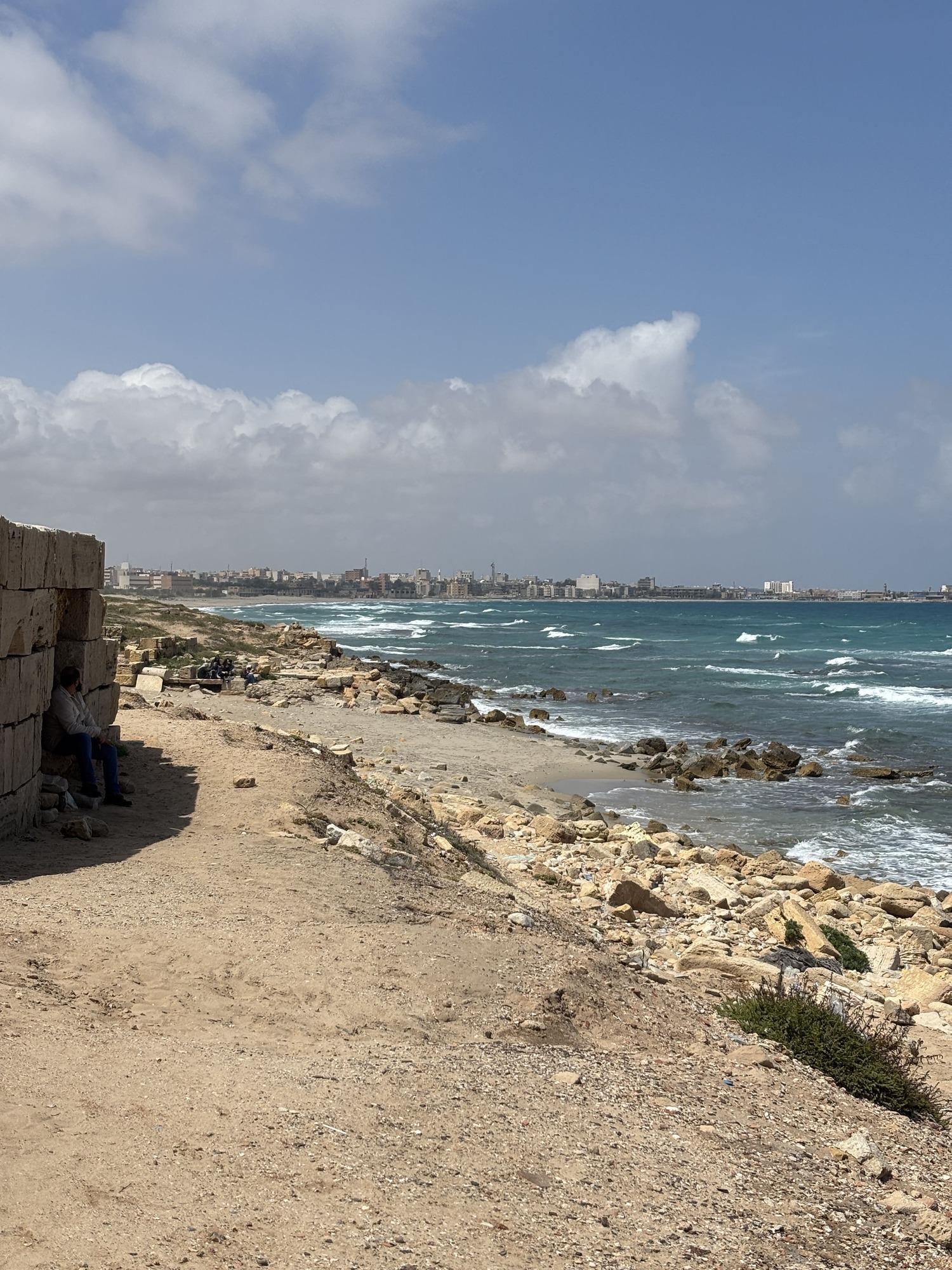
    The tour begins in Tripoli. We then head out along the Mediterranean coast to Sabratha, one of the three ancient cities that gave the region its name (Tripolis).

    Its Roman theatre, the largest in Africa, rises three storeys against the sea sky, its stage wall reconstructed by Italian archaeologists in the 1930s and still standing almost entirely intact. From Sabratha, the tour moves inland, climbing into the Jebel Nafusa mountains, where Berber communities built their fortified granaries into the clifftops and their villages on the edge of escarpments that fall away to the Jeffara Plain below.

    The night is spent in Ghadames, the most remarkable desert town in Libya, a UNESCO-listed oasis city near the point where Libya meets Algeria and Tunisia.

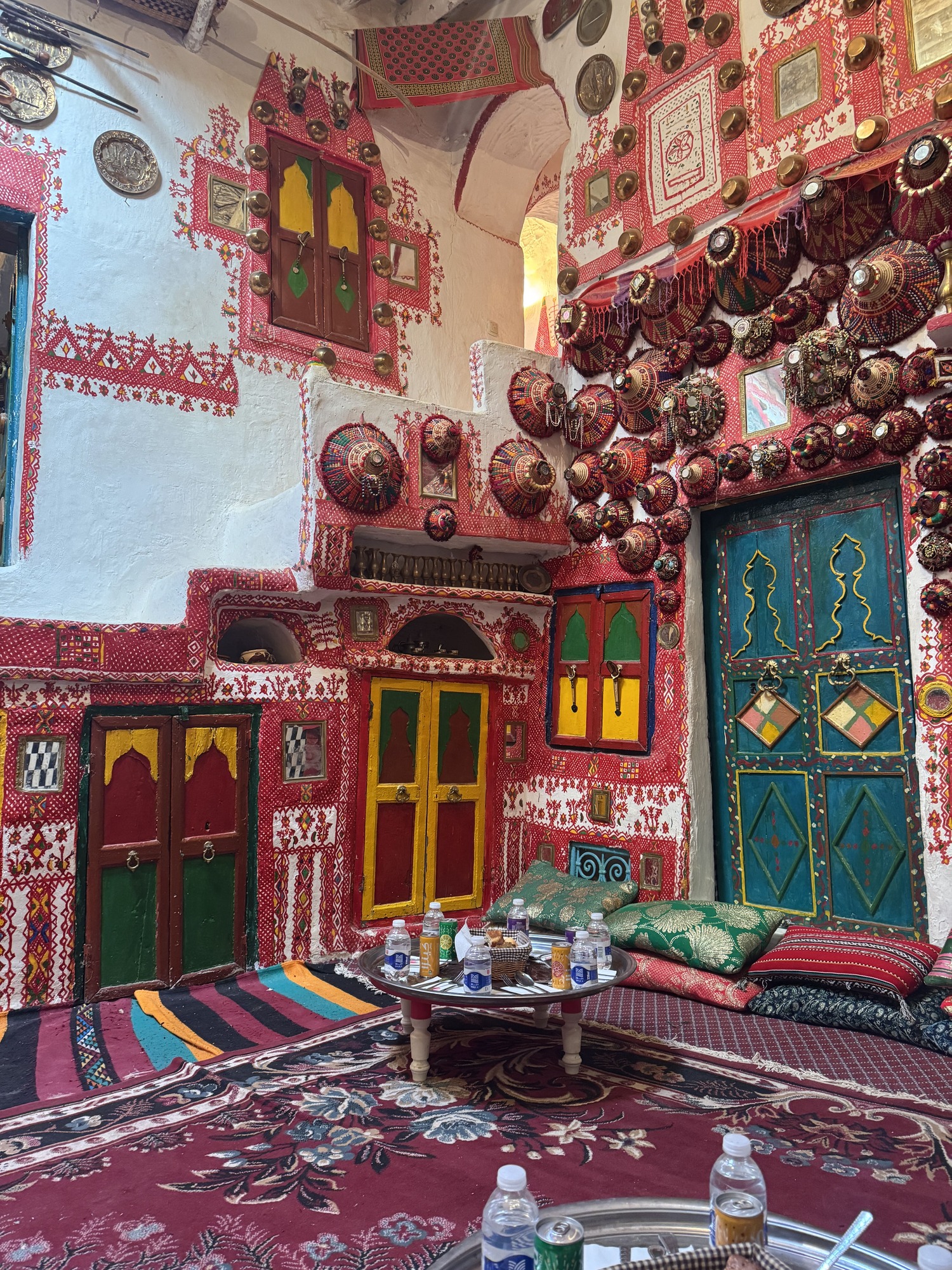
    Its architecture is unlike anything else in North Africa: an underground network of covered passages and interconnected rooftops designed for a community living in extreme heat. In the evening, we will enjoy a Tuareg music performance beside the Sahara dunes. For the women in the group, Al-Mourin, a traditional women's cultural performance unique to Ghadames, is arranged separately.

    From Ghadames, the tour loops back through Nalut and its fortified granary, where lunch is taken in a traditional cave house, before returning to Tripoli for the centrepiece of your tour - Leptis Magna.
     
    Founded by Phoenician traders and transformed into one of the most magnificent cities in the Roman Empire by the emperor Septimius Severus, who was born here, Leptis Magna is simply one of the greatest archaeological sites in the world. You will almost certainly be the only tourists there. A Zokra traditional band performs during the visit.

    The final days bring Gharyan's underground troglodyte houses and pottery workshops, the Berber old city of Yafren, and a proper circuit of Tripoli itself. The old medinas and mosques, a cooking workshop in a traditional house, the newly opened Libya National Museum*, and a farewell dinner by the Arch of Marcus Aurelius.


    Don't want the journey to be over so soon?
    How about joining our 12-night Libya tour that visits the recently opened Eastern part of Libya to visit one of the most marvellous ancient Greek ruins the World has to offer, while no other travellers are in sight?

    Check out our Travel Libya, East and West Tour here

    Highlights

    • Explore Tripoli's Old Medina
    • See the historic 2,000-year-old Arch of Marcus Aurelius
    • Discover the ancient Phoenician and Roman ruins of Sabratha
  • Itinerary

    Day 1 of 9
    1. December 1 | Tuesday

      Arrival in Tripoli

      Independent travel to Tripoli
      • Fly into Tripoli Mitiga International Airport (MJI) in the morning from Istanbul or Cairo.
         
      • You will be met by your guide at the airport and then transferred to the hotel in Tripoli to check in and settle in.

      First Impressions of Tripoli
      • Tripoli Old Medina | A dense, atmospheric maze of souqs, mosques, and Ottoman-era architecture hugging the Mediterranean shore. Wander through souqs where craftspeople and traders have been selling their wares for centuries.
         
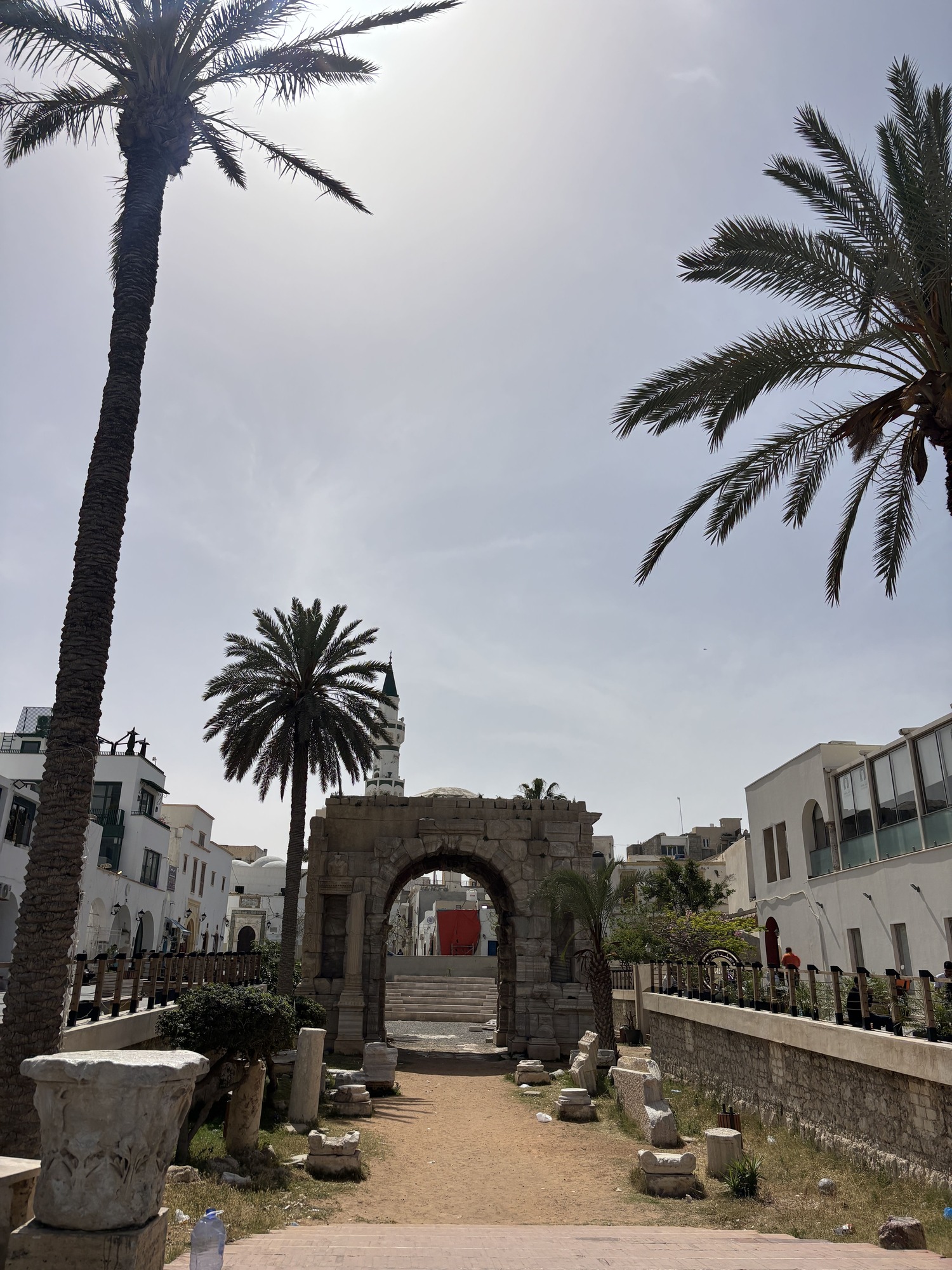
      • The Arch of Marcus Aurelius | The only surviving Roman monument in the old city centre, standing improbably in the middle of the medina, still largely intact after nearly 2,000 years.

      Accommodation | Hotel in Tripoli

      Included Meals | Dinner

    2. December 2 | Wednesday

      Sabratha

      Excursion west along the Mediterranean coast to Sabratha, one of three ancient cities that gave the region its name – Tripolis, meaning 'three cities'.

      • Departure | Early morning departure for a full-day excursion west along the Mediterranean coast to Sabratha (ca. 2-hour drive).
      Exploration of Sabratha
      • Sabratha Archaeological Complex | Began as a Phoenician trading post around 500 BCE, serving as a coastal outlet for goods flowing north from the African interior: ivory, gold, exotic animals. It passed through Numidian and then Roman control, flourishing most spectacularly in the 2nd and 3rd centuries CE during the reign of the Severan dynasty, before earthquakes in the late 4th century caused its eventual decline. The entire archaeological complex was designated a UNESCO World Heritage Site in 1982.
         
      • The Roman Theatre | Sabratha’s theatre is the crown jewel of the site and one of the most breathtaking Roman monuments in Africa. Built between approximately 175 and 200 CE, its three-storey stage wall was largely reconstructed by Italian archaeologists in the 1930s and soars almost intact against the blue Mediterranean sky. It could seat between 5,200 and 6,450 spectators through its 25 entrances. It remains the largest theatre in Roman Africa.
         
      • Ancient Ruins and On-site Museum | Beyond the theatre, the site includes temples dedicated to Liber Pater, Serapis, and Isis; the Byzantine-era Basilica of Justinian; well-preserved mosaic floors in the Forum Baths; and an on-site museum housing statuary and mosaics recovered from the ruins.
      Return to Tripoli
      •  Return to Tripoli in the evening for dinner and rest.

      Accommodation | Hotel in Tripoli

      Included Meals | Breakfast, Lunch, Dinner

    3. December 3 | Thursday

      Jebel Nafusa & Gaser Alhaj

      Tripoli to Ghadames via Jebel Nafusa
      • An early departure from Tripoli heading southwest into the Jebel Nafusa, a long escarpment of mountains rising above the Jeffara Plain, the traditional heartland of Libya's Berber population. The route takes in several remarkable stops before arriving in Ghadames for the night.
      Journey Through the Berber Heartland
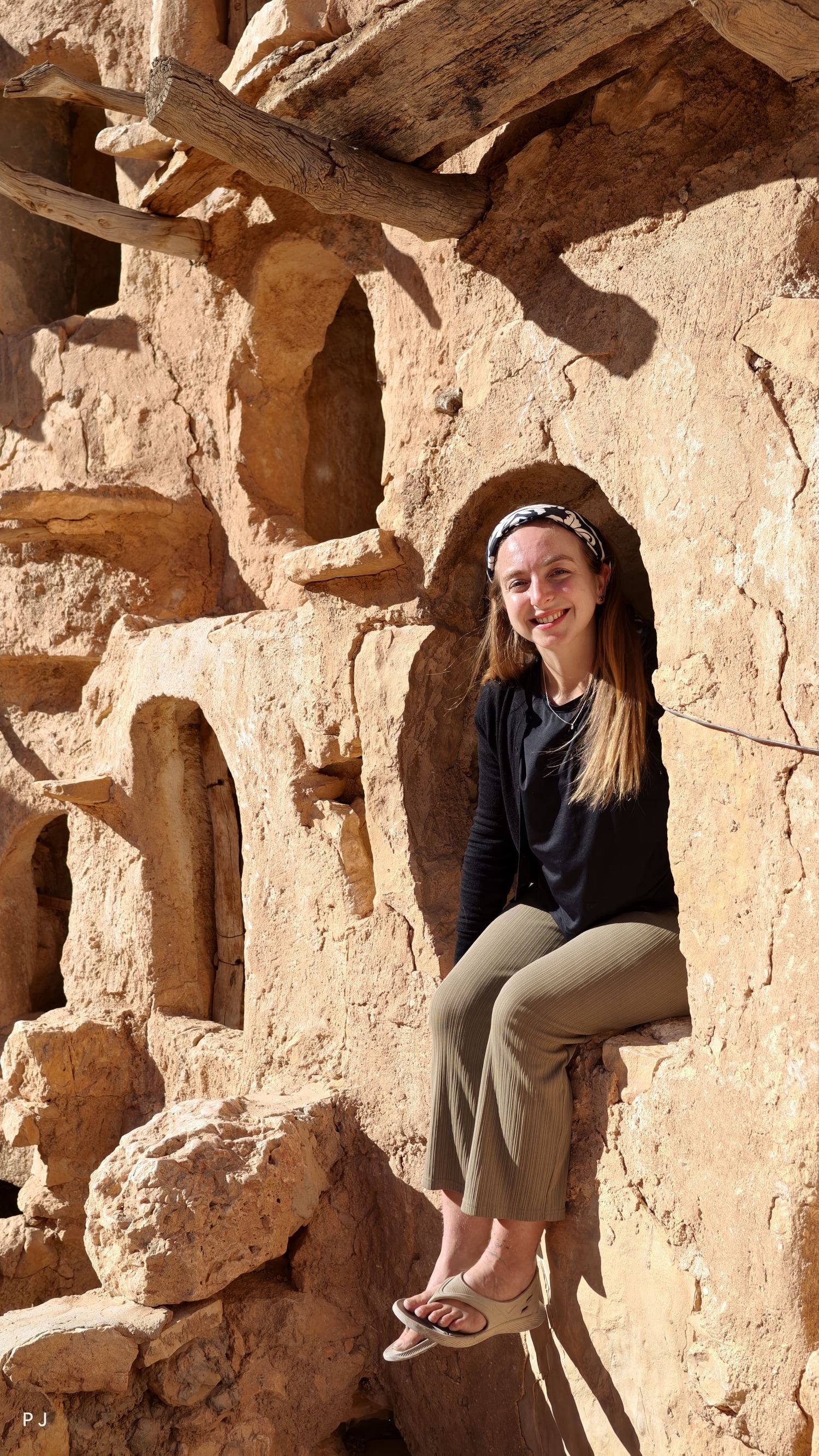
      • Qasr Alhaj | A 13th-century fortified granary, or qasr, built by the Berber communities of the Nafusa mountains as a communal storage facility and place of refuge. The structure is arranged around a central courtyard, with storage cells stacked on multiple levels, connected by external staircases; each cell belongs to a different family and is lockable independently.
         
      • Turmesa and Kabaw | Continue through the mountain villages of Turmesa and Kabaw, ancient Berber settlements perched on the edge of the escarpment with sweeping views across the plains below. These communities have maintained their distinct language, culture and building traditions for centuries.
         
      • Arrive in the oasis town of Ghadames in the evening for dinner and rest.

      Accommodation | Hotel in Ghadames

      Included Meals | Breakfast, Lunch, Dinner

    4. December 4 | Friday

      Ghadames

      • A full day in Ghadames, the most extraordinary desert town in Libya and one of the most remarkable in the Sahara. Ghadames sits roughly 462 km southwest of Tripoli, near the point where Libya meets both Algeria and Tunisia, in an oasis fed by the Ain al-Faras spring.
         
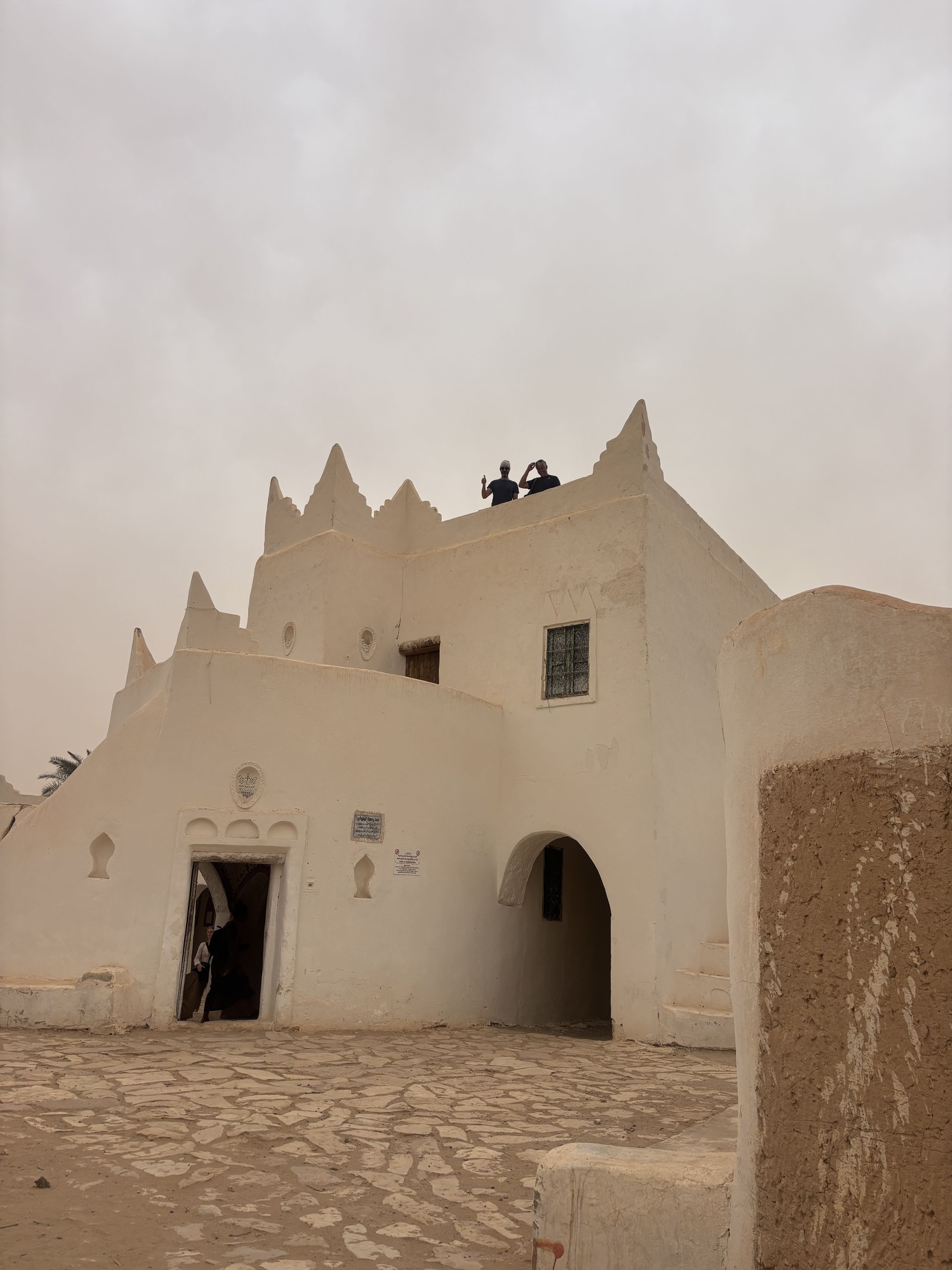
      • Ghadames Old Town | Inscribed as a UNESCO World Heritage Site in 1986. Its architecture is unlike anything else in North Africa—a labyrinth of covered alleys and interconnected passageways creates what amounts to an underground network through the city, shielding inhabitants from the ferocious summer heat.
         
      • Vertical Desert Homes | Houses are arranged vertically, with storage on the ground floor, family rooms above, and open-air rooftop terraces reserved for the women of the household, who had their own separate network of routes across the rooftops. Whitewashed interiors are decorated with geometric patterns and traditional motifs in rich colours, each family's distinctive designs marking their space.
      Sahara Sunset
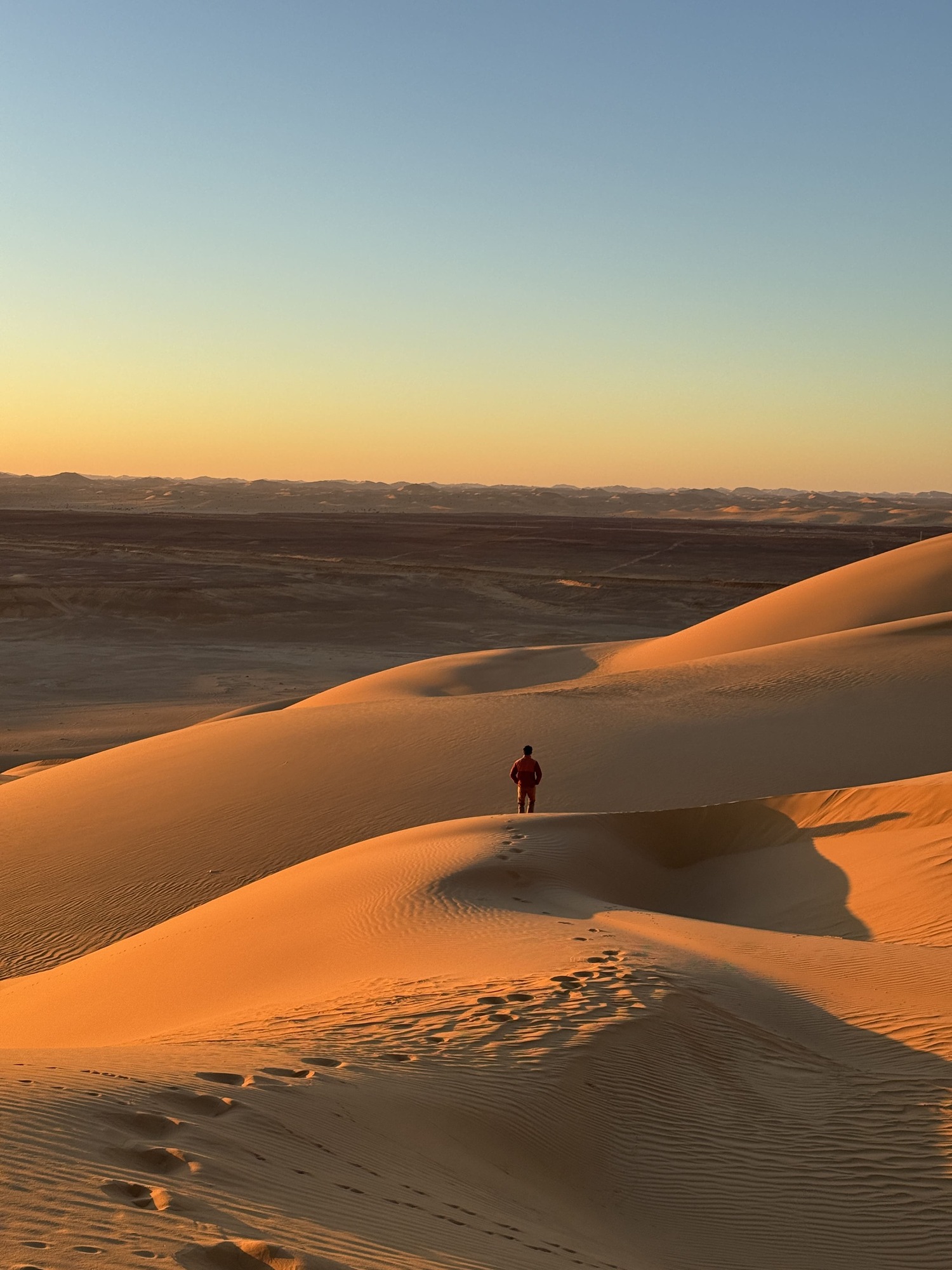
      • The Great Sand Sea | In the late afternoon, we visit the edge of the great sand sea of the Sahara for sunset over the dunes.
         
      • Tuareg Performance | In the evening, a Tuareg music performance accompanies traditional bread baked under the sand, known as khobz al-jamar, alongside a 4x4 desert safari experience.
         
      • Al-Mourin | For the women, Al-Mourin, a special traditional women’s cultural performance unique to Ghadames, is also arranged here. (Women-only event).

      Accommodation | Hotel in Ghadames

      Included Meals | Breakfast, Lunch, Dinner

    5. December 5 | Saturday

      Ghadames, Nalut & Return to Tripoli

      • Today we depart Ghadames in the morning and head back northeast towards Tripoli, with a stop in Nalut.
      Exploration of Nalut
      • Nalut Ancient Berber Town | An ancient Berber town perched on the edge of the Nafusa escarpment, with commanding views across the desert plains. Like Ghadames and Gaser Alhaj, it is built around a fortified granary.
         
      • Qasr Nalut | The Nalut granary, or Qasr Nalut, is one of the finest surviving examples of Berber defensive architecture in Libya. A multi-storey structure of mud brick and stone, it contains over 400 individual storage cells arranged around a courtyard, each belonging to a different local family.
         
      • Cave House Lunch Experience | Lunch nearby Qasr Nalut. Enjoy a traditional fattat meal inside one of the historic cave houses, known locally as a damous.
         
      • Continue the journey back to Tripoli in the afternoon for an overnight stay.

      Accommodation | Hotel in Tripoli

      Included Meals | Breakfast, Lunch, Dinner

    6. December 6 | Sunday

      Leptis Magna

      • A full day excursion east along the coast to Leptis Magna, 130 km from Tripoli. There is no hyperbole in saying this is one of the greatest Roman sites in the world.
         
      • Morning departure for a full-day excursion travelling east along the coast to Leptis Magna (ca. 130 km from Tripoli).
      Leptis Magna Archaeological Site
      • Imperial Roman Legacy | Founded by Phoenician colonists from Tyre in the 7th century BCE. Its golden age came when a local boy, Septimius Severus, became Roman emperor in 193 CE and transformed his hometown into one of the most magnificent cities in the Roman Empire. The city was buried by sand after its eventual abandonment, preserving it until 20th-century excavations. It is now a UNESCO World Heritage Site.
         
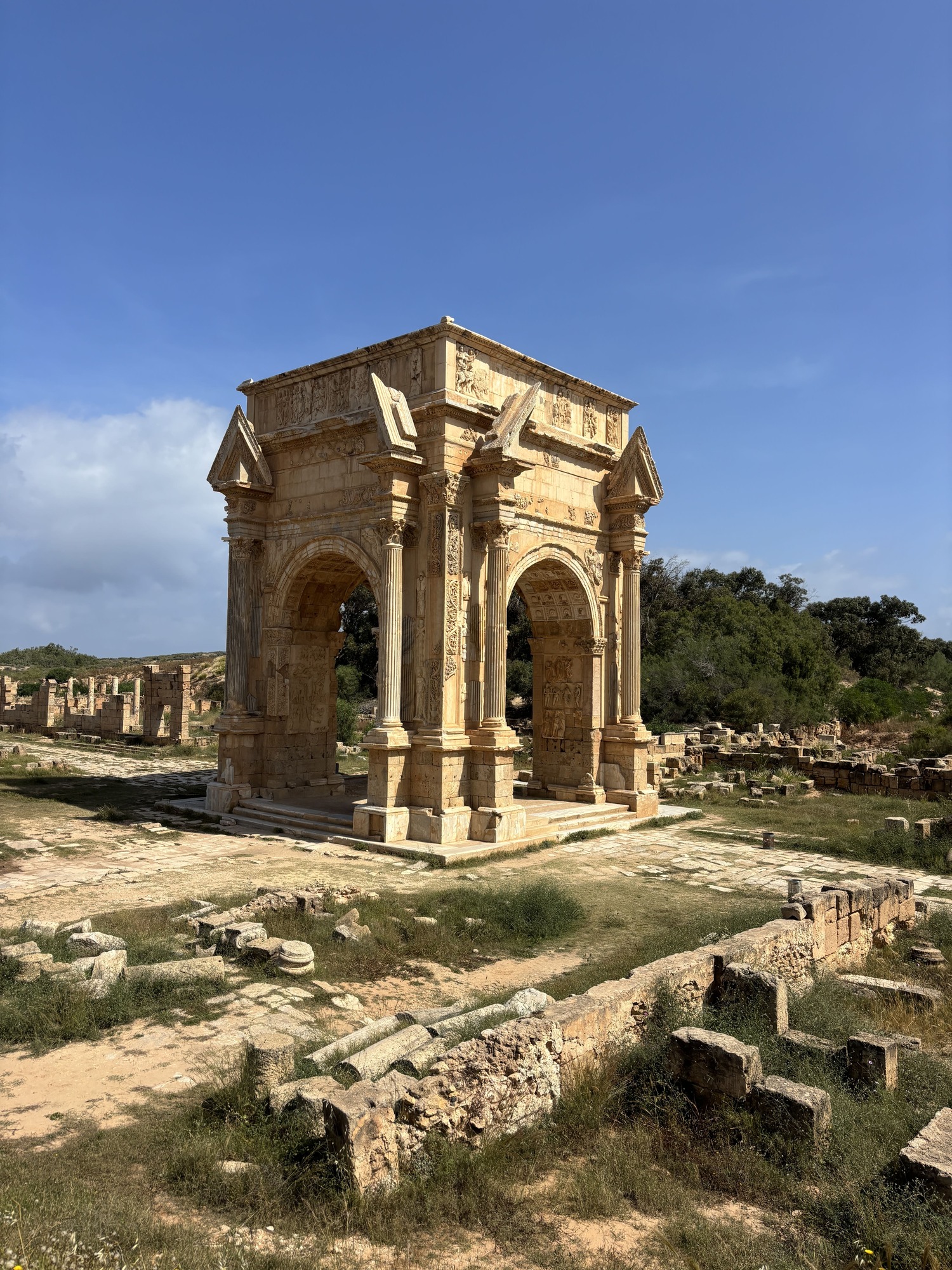
      • The Triumphal Arch of Septimius Severus | This stands at the intersection of the city's two main roads, a four-sided tetrapylon richly decorated with carved reliefs celebrating the emperor's victories.
         
      • The Hadrianic Baths | Among the largest and best-preserved bath complexes in the Roman world, covering an area comparable to the Baths of Caracalla in Rome.
         
      • The Amphitheatre | Partially cut into the hillside, this massive venue once hosted gladiatorial contests and public spectacles for the city's substantial population.
         
      • The Severan Basilica | A vast collonaded hall with pilasters intricately carved with scenes from the Twelve Labours of Hercules and the Life of Dionysus.
         
      • The Severan Forum | A marble-clad statement of imperial power, featuring the old forum at the heart of the original city, along with temples and original market buildings.
         
      • Enjoy an exclusive performance arranged on-site by a Zokra traditional band during the visit.

      Accommodation | Hotel in Tripoli

      Included Meals | Breakfast, Lunch, Dinner

    7. December 7 | Monday

      Gharyan & Yafren

      • A day exploring two more facets of Libya’s extraordinary cultural landscape: underground cave architecture and Berber mountain towns.
         
      • Morning departure south toward the Nafusa mountain region to explore Gharyan and Yafren.
      Cultural Treasures of Gharyan
      • Troglodyte Houses | Gharyan is famous for its troglodyte houses, known locally as hosh. These are underground pit dwellings excavated vertically into the soft rock, with rooms cut horizontally around a central courtyard open to the sky above. They offer remarkable natural insulation against the summer heat. A visit to Hosh Gharyan Damos reveals how ingeniously human beings adapt to extreme climates.
         
      • Gharyan Ceramics | The town has been a vibrant centre of pottery production for centuries. Its active kilns and local workshops continue to produce handmade earthenware using artisanal techniques passed down through generations.
      Heritage of Yafren
      • Ancient Berber Mountain Town | An ancient town in the Nafusa mountains featuring a well-preserved old city of stone architecture. It holds deep historical significance as a prominent centre of Ibadi Islam, the distinctive form of Islam practised by the Berber communities of this region.
         
      • The Old City | Offers a quieter, less-touristed, and deeply authentic version of the Nafusa mountain experience.
         
      • Return to Tripoli in the evening for the final day of the tour.

      Accommodation | Hotel in Tripoli

      Included Meals | Breakfast, Lunch, Dinner

    8. December 8 | Tuesday

      Tripoli City Tour

      • A day in Tripoli for a proper exploration of the capital and surrounding areas before departure from this fascinating and rarely visited country.
      Tripoli Old Medina
      • Historical Old Town | Explore the historic quarters, including the Arch of Marcus Aurelius, Al-Nakah Mosque, Gurgi Mosque, the Old British Consulate, Karamanli House, the fish market, and the dense network of interconnected souqs.
         
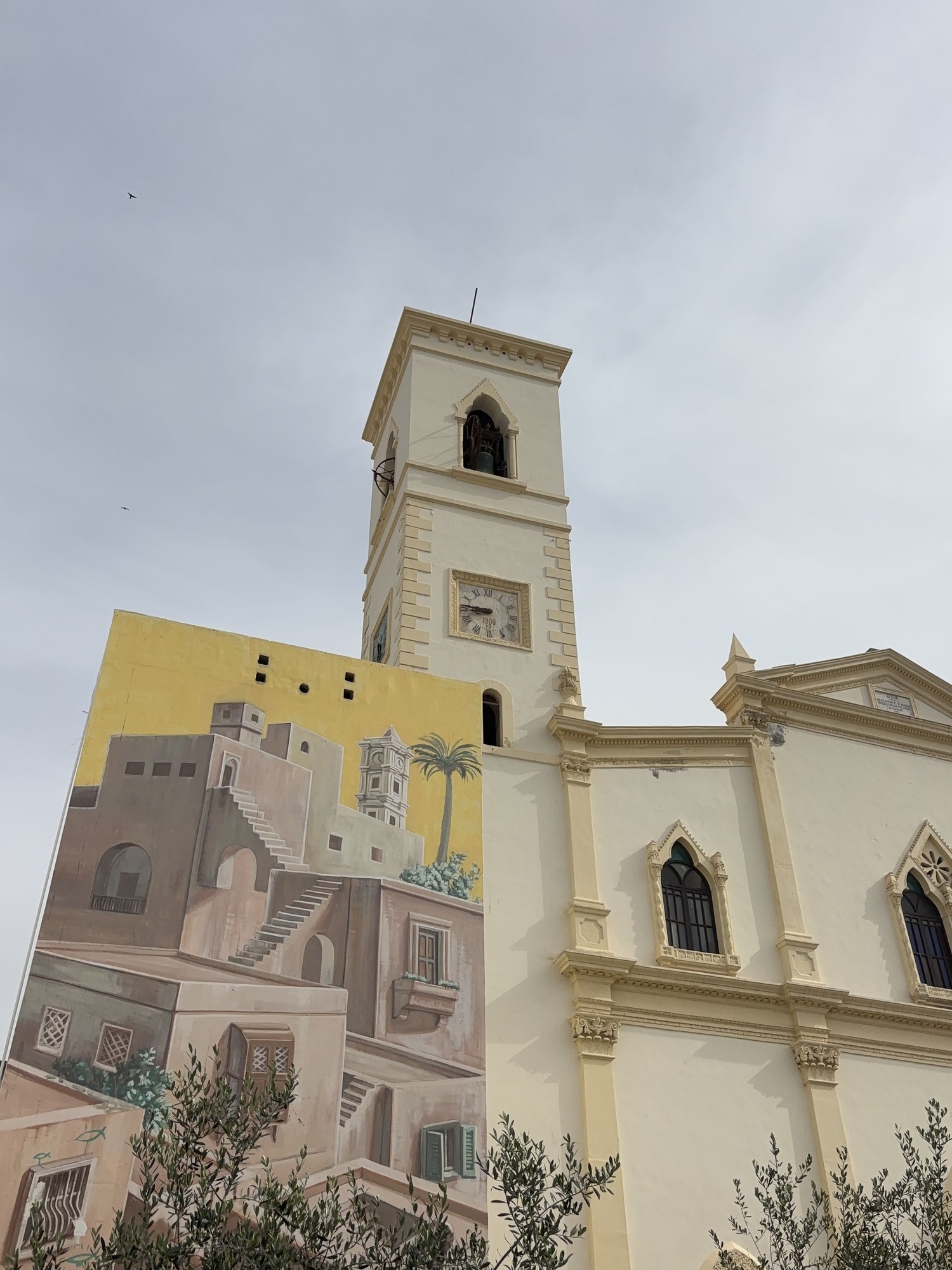
      • Architectural Fusion | The Italian Tripoli Church of Santa Maria and the Abu Lila tower round out the picture of a city that has absorbed and adapted every layer of its complex history without losing its essential Libyan character.
      Afternoon Cultural Highlights
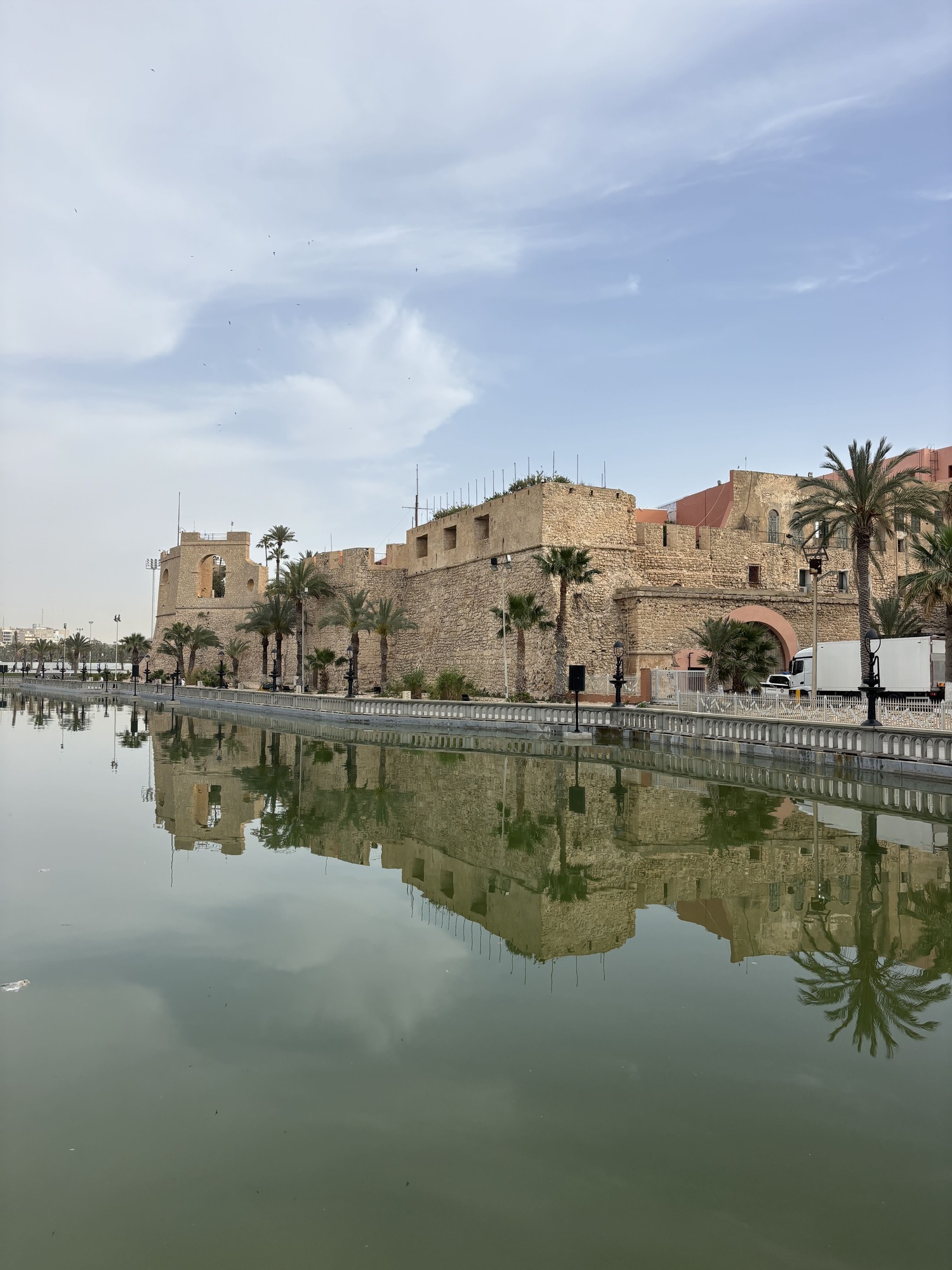
      • Red Castle (Assaraya al-Hamra) | The great red castle rising above the harbour has guarded this coastline for over 2,000 years. It began as a Roman fort, was expanded under the Byzantines, transformed by the Ottomans, and further developed under Karamanli rule in the 18th and 19th centuries.
         
      • Libya National Museum | Located inside the castle, it houses an extensive collection of prehistoric, Phoenician, Greek, Roman, Byzantine, and Islamic artefacts, making it an excellent stop for understanding the profound depth of local history.
         
        • Please note: The National Museum's opening in December 2025 is still currently delayed. We anticipate the museum being open for the trip, but participants should note this may not be possible on the day.
           
      • Cooking Workshop | A cooking workshop hosted inside a traditional old house in the Old City, where you will learn to prepare a traditional Tripolitanian dish.
         
      • Farewell Dinner | A final celebratory dinner at a local scenic restaurant overlooking the Arch of Marcus Aurelius, accompanied by a live traditional music performance.

      Accommodation | Hotel in Tripoli

      Included Meals | Breakfast, Lunch, Dinner

    9. December 9 | Wednesday

      Departure

      • Bid farewell to the historic city of Tripoli as your journey through West Libya draws to a close.
         
      • Departure from Mitiga International Airport (MJI) | Your dedicated driver will meet you in the hotel lobby to facilitate your transfer back to the airport. The best outbound routes offering worldwide connections include Turkish Airlines to Istanbul and EgyptAir to Cairo.

      End of Tour

      Included Meals | Breakfast

  • Extras

    • Upgrade to your own room (international tours)

  • What is / is not included?

    INCLUDED

    • All accommodation 
    • All meals
    • Airport pick-up and drop off, as well as all ground transportation
    • All travel permits and entry fees to tourist sites
    • E-Visa support letter
    • Licensed local English-speaking tour guide
    • Koryo Tours tour leader
    • Security guard

    NOT INCLUDED

    • Flights to and from Tripoli
    • Libya eVisa fee ($63 USD)
    • Single room supplement ($tbc USD per night)
    • Travel insurance (mandatory)
    • Tips for the local guide and driver ($20 USD per day per traveller)
  • Notes

    Visa for Libya

    You must apply for an electronic visa through the official government website. Koryo Tours will provide you with the necessary sponsor documents. The eVisa fee is $63 USD. Further details will be provided upon booking the tour with us.

    Flights to/from Tripoli

    Tripoli is served by Tripoli Mitiga International Airport (MJI).

    The most reliable ways to fly there are currently through Istanbul with Turkish Airlines or through Cairo with Egyptair.

    ITA Airways also plans to resume its flights from Rome-Fiumicino starting in September 2026. However, tickets for these upcoming ITA Airways flights are not yet available for booking.

    Visa

    Koryo Tours requires all participants to maintain comprehensive travel insurance for Libya. We recommend International Medical Group (IMG), as their policies cover our specific destinations.

    *National Museum

    Please note: The National Museum's opening in December 2025 is still currently delayed. We anticipate the museum being open for the trip, but participants should note this may not be possible on the day.

    Got any questions about Koryo's Libya travels?

    Please email Zoe Stephens, the tour manager for this tour.

Please apply by 15th November, 2026.

December 1 - December 13 2026

Travel Libya, East & West

Tripoli, Sabratha, Leptis Magna,
Ghadames, Benghazi, & Cyrenaica

12 nights in Libya. Two Libyas in one journey. The Roman west, where marble cities rise
from the Mediterranean shore. And the Greek east, where ancient Cyrene earned its name
as the Athens of Africa.

From 4495 EUR per person

Please apply by 15th November, 2026.

Travel Libya, East & West

Tripoli, Sabratha, Leptis Magna,
Ghadames, Benghazi, & Cyrenaica

12 nights in Libya. Two Libyas in one journey. The Roman
west, where marble cities rise from the Mediterranean shore.
And the Greek east, where ancient Cyrene earned its name
as the Athens of Africa.

From 4495 EUR per person

  • Overall

    Libya holds one of the greatest concentrations of ancient ruins in the world. UNESCO World Heritage Sites. Roman cities that rival Pompeii in their scale and state of preservation. Greek temples older than the Parthenon. A desert oasis whose mud-brick architecture has been continuously inhabited for thousands of years.

    And almost no tourists.

    This thirteen-day itinerary combines two distinct but equally unique areas of Libya. 

    WESTERN LIBYA

    We start the trip taking in the Roman cities of Sabratha and Leptis Magna, the Berber mountains of Jebel Nafusa, and the Saharan oasis of Ghadames.

    Take a full-day excursion west along the Mediterranean coast to Sabratha, one of three ancient cities that gave the region its name; Tripolis, meaning 'three cities’, and home to the incredible Roman Theatre.

    We also spend a night near the desert, where Libya meets both Algeria and Tunisia. Here we’ll visit Ghadames and another of Libya’s UNESCO World Heritage Sites, as well as being invited to an exclusive women’s-only event & music event (for the men).

    We then visit Leptis Magna, one of the greatest Roman sites in the world – and one where you’ll likely be the only tourist around. It’s truly a spectacular site to experience.

    Before heading east by domestic flight (included), we enjoy a city tour of Tripoli, including the old city and its multiple sites and souqs, as well as the newly opened Libya National Museum*.


    EASTERN LIBYA

    Only recently opened to tourism, the east of Libya offers a journey through Cyrenaica. If western Libya is the Roman story, eastern Libya is the Greek one.

    Beginning in Benghazi and moving along the Mediterranean coast through a succession of ancient Greek and Roman sites, culminating at Cyrene itself, one of the most important cities of the classical world.

    This region is almost entirely off the tourist map, which means the sites are effectively yours alone. The coastal route from Benghazi west through Tocra, Tolmeita, and Qasr Libya to Cyrene and its port of Apollonia passes through a succession of Greek and Roman ruins in various states of preservation – many of them dramatically positioned above the Mediterranean.

    Together, visiting both east and west gives a complete picture of Libya's extraordinary layered history. From Phoenician trading posts to Greek colonies to Roman imperial ambition to Berber desert ingenuity.

    Please note: The National Museum's opening in December 2025 is still currently delayed. We anticipate the museum being open for the trip, but participants should note this may not be possible on the day.

    Highlights

    • Explore world-class ancient Roman ruins along the Mediterranean
    • Journey into deep Saharan dunes and Berber oasis towns
    • Discover East Libya, newly reopened for tourism since 2024
  • Itinerary

    Day 1 of 13
    1. December 1 | Tuesday

      Arrival in Tripoli

      Independent travel to Tripoli
      • Fly into Tripoli Mitiga International Airport (MJI) in the morning from Istanbul or Cairo.
         
      • You will be met by your guide at the airport and then transferred to the hotel in Tripoli to check in and settle in.

      First Impressions of Tripoli
      • Tripoli Old Medina | A dense, atmospheric maze of souqs, mosques, and Ottoman-era architecture hugging the Mediterranean shore. Wander through souqs where craftspeople and traders have been selling their wares for centuries.
         
      • The Arch of Marcus Aurelius | The only surviving Roman monument in the old city centre, standing improbably in the middle of the medina, still largely intact after nearly 2,000 years.

      Accommodation | Hotel in Tripoli

      Included Meals | Dinner

    2. December 2 | Wednesday

      Sabratha

      Excursion west along the Mediterranean coast to Sabratha, one of three ancient cities that gave the region its name – Tripolis, meaning 'three cities'.

      • Departure | Early morning departure for a full-day excursion west along the Mediterranean coast to Sabratha (ca. 2-hour drive).
      Exploration of Sabratha
      • Sabratha Archaeological Complex | Began as a Phoenician trading post around 500 BCE, serving as a coastal outlet for goods flowing north from the African interior: ivory, gold, exotic animals. It passed through Numidian and then Roman control, flourishing most spectacularly in the 2nd and 3rd centuries CE during the reign of the Severan dynasty, before earthquakes in the late 4th century caused its eventual decline. The entire archaeological complex was designated a UNESCO World Heritage Site in 1982.
         
      • The Roman Theatre | Sabratha’s theatre is the crown jewel of the site and one of the most breathtaking Roman monuments in Africa. Built between approximately 175 and 200 CE, its three-storey stage wall was largely reconstructed by Italian archaeologists in the 1930s and soars almost intact against the blue Mediterranean sky. It could seat between 5,200 and 6,450 spectators through its 25 entrances. It remains the largest theatre in Roman Africa.
         
      • Ancient Ruins and On-site Museum | Beyond the theatre, the site includes temples dedicated to Liber Pater, Serapis, and Isis; the Byzantine-era Basilica of Justinian; well-preserved mosaic floors in the Forum Baths; and an on-site museum housing statuary and mosaics recovered from the ruins.
      Return to Tripoli
      •  Return to Tripoli in the evening for dinner and rest.

      Accommodation | Hotel in Tripoli

      Included Meals | Breakfast, Lunch, Dinner

    3. December 3 | Thursday

      Jebel Nafusa & Gaser Alhaj

      Tripoli to Ghadames via Jebel Nafusa
      • An early departure from Tripoli heading southwest into the Jebel Nafusa, a long escarpment of mountains rising above the Jeffara Plain, the traditional heartland of Libya's Berber population. The route takes in several remarkable stops before arriving in Ghadames for the night.
      Journey Through the Berber Heartland
      • Qasr Alhaj | A 13th-century fortified granary, or qasr, built by the Berber communities of the Nafusa mountains as a communal storage facility and place of refuge. The structure is arranged around a central courtyard, with storage cells stacked on multiple levels, connected by external staircases; each cell belongs to a different family and is lockable independently.
         
      • Turmesa and Kabaw | Continue through the mountain villages of Turmesa and Kabaw, ancient Berber settlements perched on the edge of the escarpment with sweeping views across the plains below. These communities have maintained their distinct language, culture and building traditions for centuries.
         
      • Arrive in the oasis town of Ghadames in the evening for dinner and rest.

      Accommodation | Hotel in Ghadames

      Included Meals | Breakfast, Lunch, Dinner

    4. December 4 | Friday

      Ghadames

      • A full day in Ghadames, the most extraordinary desert town in Libya and one of the most remarkable in the Sahara. Ghadames sits roughly 462 km southwest of Tripoli, near the point where Libya meets both Algeria and Tunisia, in an oasis fed by the Ain al-Faras spring.
         
      • Ghadames Old Town | Inscribed as a UNESCO World Heritage Site in 1986. Its architecture is unlike anything else in North Africa—a labyrinth of covered alleys and interconnected passageways creates what amounts to an underground network through the city, shielding inhabitants from the ferocious summer heat.
         
      • Vertical Desert Homes | Houses are arranged vertically, with storage on the ground floor, family rooms above, and open-air rooftop terraces reserved for the women of the household, who had their own separate network of routes across the rooftops. Whitewashed interiors are decorated with geometric patterns and traditional motifs in rich colours, each family's distinctive designs marking their space.
      Sahara Sunset
      • The Great Sand Sea | In the late afternoon, we visit the edge of the great sand sea of the Sahara for sunset over the dunes.
         
      • Tuareg Performance | In the evening, a Tuareg music performance accompanies traditional bread baked under the sand, known as khobz al-jamar, alongside a 4x4 desert safari experience.
         
      • Al-Mourin | For the women, Al-Mourin, a special traditional women’s cultural performance unique to Ghadames, is also arranged here. (Women-only event).

      Accommodation | Hotel in Ghadames

      Included Meals | Breakfast, Lunch, Dinner

    5. December 5 | Saturday

      Ghadames, Nalut & Return to Tripoli

      • Today we depart Ghadames in the morning and head back northeast towards Tripoli, with a stop in Nalut.
      Exploration of Nalut
      • Nalut Ancient Berber Town | An ancient Berber town perched on the edge of the Nafusa escarpment, with commanding views across the desert plains. Like Ghadames and Gaser Alhaj, it is built around a fortified granary.
         
      • Qasr Nalut | The Nalut granary, or Qasr Nalut, is one of the finest surviving examples of Berber defensive architecture in Libya. A multi-storey structure of mud brick and stone, it contains over 400 individual storage cells arranged around a courtyard, each belonging to a different local family.
         
      • Cave House Lunch Experience | Lunch nearby Qasr Nalut. Enjoy a traditional fattat meal inside one of the historic cave houses, known locally as a damous.
         
      • Continue the journey back to Tripoli in the afternoon for an overnight stay.

      Accommodation | Hotel in Tripoli

      Included Meals | Breakfast, Lunch, Dinner

    6. December 6 | Sunday

      Leptis Magna

      • A full day excursion east along the coast to Leptis Magna, 130 km from Tripoli. There is no hyperbole in saying this is one of the greatest Roman sites in the world.
         
      • Morning departure for a full-day excursion travelling east along the coast to Leptis Magna (ca. 130 km from Tripoli).
      Leptis Magna Archaeological Site
      • Imperial Roman Legacy | Founded by Phoenician colonists from Tyre in the 7th century BCE. Its golden age came when a local boy, Septimius Severus, became Roman emperor in 193 CE and transformed his hometown into one of the most magnificent cities in the Roman Empire. The city was buried by sand after its eventual abandonment, preserving it until 20th-century excavations. It is now a UNESCO World Heritage Site.
         
      • The Triumphal Arch of Septimius Severus | This stands at the intersection of the city's two main roads, a four-sided tetrapylon richly decorated with carved reliefs celebrating the emperor's victories.
         
      • The Hadrianic Baths | Among the largest and best-preserved bath complexes in the Roman world, covering an area comparable to the Baths of Caracalla in Rome.
         
      • The Amphitheatre | Partially cut into the hillside, this massive venue once hosted gladiatorial contests and public spectacles for the city's substantial population.
         
      • The Severan Basilica | A vast collonaded hall with pilasters intricately carved with scenes from the Twelve Labours of Hercules and the Life of Dionysus.
         
      • The Severan Forum | A marble-clad statement of imperial power, featuring the old forum at the heart of the original city, along with temples and original market buildings.
         
      • Enjoy an exclusive performance arranged on-site by a Zokra traditional band during the visit.

      Accommodation | Hotel in Tripoli

      Included Meals | Breakfast, Lunch, Dinner

    7. December 7 | Monday

      Gharyan & Yafren

      • A day exploring two more facets of Libya’s extraordinary cultural landscape: underground cave architecture and Berber mountain towns.
         
      • Morning departure south toward the Nafusa mountain region to explore Gharyan and Yafren.
      Cultural Treasures of Gharyan
      • Troglodyte Houses | Gharyan is famous for its troglodyte houses, known locally as hosh. These are underground pit dwellings excavated vertically into the soft rock, with rooms cut horizontally around a central courtyard open to the sky above. They offer remarkable natural insulation against the summer heat. A visit to Hosh Gharyan Damos reveals how ingeniously human beings adapt to extreme climates.
         
      • Gharyan Ceramics | The town has been a vibrant centre of pottery production for centuries. Its active kilns and local workshops continue to produce handmade earthenware using artisanal techniques passed down through generations.
      Heritage of Yafren
      • Ancient Berber Mountain Town | An ancient town in the Nafusa mountains featuring a well-preserved old city of stone architecture. It holds deep historical significance as a prominent centre of Ibadi Islam, the distinctive form of Islam practised by the Berber communities of this region.
         
      • The Old City | Offers a quieter, less-touristed, and deeply authentic version of the Nafusa mountain experience.
         
      • Return to Tripoli in the evening for the final night before heading into eastern Libya.

      Accommodation | Hotel in Tripoli

      Included Meals | Breakfast, Lunch, Dinner

    8. December 8 | Tuesday

      Tripoli City Tour

      • A day in Tripoli for a proper exploration of the capital and surrounding areas before we leave for Benghazi the following day.
      Tripoli Old Medina
      • Historical Old Town | Explore the historic quarters, including the Arch of Marcus Aurelius, Al-Nakah Mosque, Gurgi Mosque, the Old British Consulate, Karamanli House, the fish market, and the dense network of interconnected souqs.
         
      • Architectural Fusion | The Italian Tripoli Church of Santa Maria and the Abu Lila tower round out the picture of a city that has absorbed and adapted every layer of its complex history without losing its essential Libyan character.
      Afternoon Cultural Highlights
      • Red Castle (Assaraya al-Hamra) | The great red castle rising above the harbour has guarded this coastline for over 2,000 years. It began as a Roman fort, was expanded under the Byzantines, transformed by the Ottomans, and further developed under Karamanli rule in the 18th and 19th centuries.
         
      • Libya National Museum | Located inside the castle, it houses an extensive collection of prehistoric, Phoenician, Greek, Roman, Byzantine, and Islamic artefacts, making it an excellent stop for understanding the profound depth of local history.
         
        • Please note: The National Museum's opening in December 2025 is still currently delayed. We anticipate the museum being open for the trip, but participants should note this may not be possible on the day.
           
      • Cooking Workshop | A cooking workshop hosted inside a traditional old house in the Old City, where you will learn to prepare a traditional Tripolitanian dish.
         
      • Dinner at a local scenic restaurant overlooking the Arch of Marcus Aurelius, accompanied by a live traditional music performance.

      Accommodation | Hotel in Tripoli

      Included Meals | Breakfast, Lunch, Dinner

    9. December 9 | Wednesday

      Travel to Benghazi

      • Transfer from the capital to Libya's second city, a historic Mediterranean port with a long and layered past.
      Morning Flight
      • Domestic flight to Benghazi | Morning departure from Tripoli to Benghazi.
      Afternoon Cultural Highlights
      • Arrival & Transfer | Arrival in Benghazi and transfer to the hotel to settle in before exploring.
         
      • Benghazi Lighthouse | An iconic landmark on the seafront. The lighthouse overlooks the harbour and offers the first views of the Mediterranean on this half of the trip.
         
      • Omar al-Mukhtar Shrine | A place of deep national significance. Dedicated to the great Libyan resistance leader, the "Lion of the Desert," who fought Italian colonial occupation until his execution in 1931. His image appears on the Libyan ten-dinar banknote.
         
      • The Corniche | An evening stroll along Benghazi's storefront Corniche, the vibrant heart of the city's social life.

      Accommodation | Hotel in Benghazi

      Included Meals | Breakfast, Lunch, Dinner

    10. December 10 | Thursday

      The Coast and the Mosaics

      • A day moving west along the coast through a remarkable sequence of ancient sites.
      Tocra Exploration
      • Ancient Taucheira | Tocra was one of the five cities of the ancient Greek Pentapolis of Cyrenaica.
         
      • Founded in the 5th century BCE, the city later fell under Ptolemaic and then Roman rule.
      Tolmeita Highlights
      • Ancient Ptolemais | Another of the Pentapolis cities, it was founded under Ptolemaic Egypt and later grew into a major Roman settlement.
         
      • Palace of Columns & Cisterns | Its most striking remains are a grand civic structure with impressive standing columns, alongside massive underground cisterns built to supply the whole city during a siege.
      Qasr Libya Museum
      • A small museum housing one of the most extraordinary collections of Byzantine mosaics in the world. Fifty panels, discovered in the ruins of two 6th-century Byzantine churches, depict an astonishing variety of subjects, including the Lighthouse of Alexandria, the Nile's flooding, mythological figures, fantastical animals, and personifications of seasons and cities.

      Accommodation | Local accommodation

      Included Meals | Breakfast, Lunch, Dinner

    11. December 11 | Friday

      Cyrene

      • A full day at Cyrene, the greatest city of ancient Cyrenaica and one of the most important Greek sites anywhere in the world.
      An Ancient Greek City
      • Cyrene was founded in 631 BCE by Greek colonists from the island of Thera, led by their king, Battus, who established the Battiad dynasty. The city sits on the edge of the Jebel Akhdar, the Green Mountain, in a lush upland valley quite unlike the desert Libya of the popular imagination.
         
      • It grew to become one of the principal cities of the ancient Greek world, with close ties to Athens, a reputation as an intellectual centre, a celebrated school of philosophy founded by the Socratic thinker Aristippus, and a medical school that trained physicians across the Mediterranean.
         
      • It was designated a UNESCO World Heritage Site in 1982, described as one of the most impressive ruin complexes in the world.
      Archaeological Site Exploration
      • Sanctuary of Apollo | The spiritual heart of the city and the oldest part of the site. Named after the spring Kyre, which the Greek settlers consecrated to Apollo, the sanctuary contains temples, altars, and baths dating from the 7th century BCE onwards.
         
      • Agora and Forum | The civic centre of the city. Built above the original Greek agora and surrounded by temples and monuments. Here you can see the base of the Greek Ship Monument, erected to commemorate a naval victory, with the winged goddess Nike on the bow of a stone ship.
         
      • Temple of Zeus | An architectural marvel larger than the Parthenon in Athens, dating from the 6th century BCE and later expanded and modified during the Roman period. The temple was largely destroyed in a Jewish revolt in 115 CE and subsequently rebuilt under Hadrian.
         
      • Cyrene Sculpture Museum | Located on-site, the museum contains an outstanding collection of marble statuary recovered from the ruins, including the famous Venus of Cyrene, a headless Roman copy of a Greek original Aphrodite discovered by Italian soldiers in 1913 and returned from Rome to Libya in 2008.

      Accommodation | Local accommodation near Cyrene

      Included Meals | Breakfast, Lunch, Dinner

    12. December 12 | Saturday

      Apollonia, Lathrun & Ras al-Helal

      • A full day of further exploration of Cyrene's coastal surroundings and natural landscapes.
      Apollonia Port Exploration
      • Ancient Port of Cyrene | Apollonia (Susha) serves as the ancient harbour town sitting directly on the coast below the main mountain city.
         
      • Submerged History | Founded in the 6th century BCE, it became the capital of the Byzantine province of Libya Superior. Sections of the ancient harbour and breakwater are now partially submerged and visible from the shore.
         
      • Coastal Ruins | On land, the deeply atmospheric site features a seaside theatre, several historic churches, and the grand Byzantine Palace of the Duke.
      Lathrun
      • Clifftop Ruins | Two distinct Byzantine basilicas overlook the open sea from the high cliffs at Lathrun.
         
      • Isolated Mosaics | These relatively little-visited structures sit in dramatic isolation with their original mosaic floors and stone walls still largely intact.
      Ras al-Helal
      • A beautiful headland on the Mediterranean coast where a boat trip explores sea caves carved into the limestone cliffs by centuries of wave action. The turquoise water offers a gentler end to an intense program of ancient sites.
         
      • Group Farewell Dinner | Final group farewell dinner to celebrate the end of the journey.

      Accommodation | Benghazi hotel

      Included Meals | Breakfast, Lunch, Dinner

    13. December 13 | Sunday

      Departure

      • A relaxed morning with time for a final coffee on the Corniche or last-minute souvenir shopping, depending on flight time.
         
      • Departure from Benghazi Benina International Airport (BEN) | Your dedicated driver will meet you in the hotel lobby to facilitate your transfer back to the airport. The best outbound routes offering worldwide connections include Turkish Airlines to Istanbul and EgyptAir to Cairo.

      End of Tour

      Included Meals | Breakfast

  • Extras

    • Upgrade to your own room (international tours)

  • What is / is not included?

    INCLUDED

    • All accommodation 
    • All meals
    • Airport pick-up and drop-off, as well as all ground transportation
    • All travel permits and entry fees to tourist sites, including the Benghazi entry permit fee
    • E-Visa support letter
    • Licensed local English-speaking tour guide
    • Koryo Tours tour leader
    • Security guard

    NOT INCLUDED

    • Flights to and from Tripoli
    • Libya eVisa fee ($63 USD)
    • Single room supplement ($tbc USD per night)
    • Travel insurance (mandatory)
    • Tips for the local guide and driver ($20 USD per day per traveller)
  • Notes

    Visa for Libya

    You must apply for an electronic visa through the official government website. Koryo Tours will provide you with the necessary sponsor documents. The eVisa fee is $63 USD. Further details will be provided upon booking the tour with us.

    Flights to Tripoli and from Benghazi

    Tripoli is served by Tripoli Mitiga International Airport (MJI).

    Benghazi is served by Benghazi Benina International Airport (BEN).

    The most reliable ways to fly there are currently through Istanbul with Turkish Airlines or through Cairo with Egyptair.

    ITA Airways also plans to resume its flights to Tripoli from Rome-Fiumicino starting in September 2026. However, tickets for these upcoming ITA Airways flights are not yet available for booking.

    Visa

    Koryo Tours requires all participants to maintain comprehensive travel insurance for Libya. We recommend International Medical Group (IMG), as their policies cover our specific destinations.

    Got any questions about Koryo's Libya travels?

    Please email Zoe Stephens, the tour manager for this tour.

Please apply by 15th November, 2026.

July 2027 — 1 tour

July 31 - August 5 2027

Eastern Libya Solar Eclipse Tour

Short tour to eastern Libya
for the Solar Eclipse 2027

6 minutes of totality over Cyrenaica, + Benghazi, Greek cities
of the Pentapolis, Byzantine mosaics, and a country that almost
no one visits.

From 2435 EUR per person

Eastern Libya Solar Eclipse Tour

Short tour to eastern Libya
for the Solar Eclipse 2027

6 minutes of totality over Cyrenaica, + Benghazi,
Greek cities of the Pentapolis, Byzantine
mosaics, and a country that almost no one
visits.

From 2435 EUR per person

  • Overall

    On 2nd August 2027, the Moon’s shadow will cross North Africa, and the sun will disappear for more than six minutes. Benghazi sits almost exactly on the centreline, under some of the most reliably cloudless skies anywhere on the path.

    This six-day program is built around that morning and around the ancient Greek world that surrounds it.

    The total solar eclipse of 2nd August 2027 has been nicknamed the Eclipse of the Century. Its maximum duration of 6 minutes and 23 seconds makes it the longest total solar eclipse visible from easily accessible land in the entire 21st century, and the longest anywhere until 2114.

    The path of totality sweeps from the Atlantic across southern Spain, Morocco, Algeria and Tunisia before crossing northeastern Libya and continuing on to Luxor. Most of North Africa’s great cities miss out entirely. Tripoli is sliced by the southern edge of the path, Algiers, Tunis and Cairo see only a deep partial eclipse. Benghazi sits directly on the centreline, with roughly six minutes of totality and a near-zero probability of cloud.

    There is arguably no better place on earth to stand that morning.

    And unlike the crowds converging on Andalusia and Luxor, you will be watching it from a country that almost no one visits.

    EASTERN LIBYA

    Only recently opened to tourism, eastern Libya offers a journey through Cyrenaica. If western Libya is the Roman story, eastern Libya is the Greek one.

    Our trip begins in Benghazi, Libya’s second city and a Mediterranean port with a long and layered history, where we visit the shrine of Omar al-Mukhtar, the seafront lighthouse, and the coastal quarters of the city, with a full preparation day and eclipse briefing before the main event.

    After the eclipse, the program moves through the Jebel Akhdar, the Green Mountain, an upland of forest and cliffs quite unlike the desert Libya of the popular imagination.

    Here we find Cyrene, one of the most important cities of the classical world and a UNESCO World Heritage Site, its Temple of Zeus, larger than the Parthenon. Its port at Apollonia, where a Greek theatre sits at the water’s edge and half the ancient harbour lies submerged offshore. The extraordinary Byzantine mosaics of Qasr Libya. And the headland of Ras al-Hilal, where limestone cliffs drop into turquoise water.

    The final full day follows the coast road through two more cities of the ancient Pentapolis - Tocra and Ptolemais - before ending in Shahat, the modern town beside Cyrene.

    At almost every one of these sites, you will have the place to yourself.
    It's possible to add on a private trip to western Libya, including Tripoli, Sabratha, and Leptis Magna. Contact us for details. 

    Highlights

    • Solar Eclipse 2027
    • Cyrene UNESCO World Heritage Site
    • Benghazi & Eastern Libya
  • Itinerary

    Day 1 of 6
    1. Saturday 31st July | Day 1 - Arrival in Benghazi

      Arrival in Benghazi

      Travel to Benghazi
      • You will arrive at Benina International Airport in Benghazi, where you will be met by your guide and transferred to the hotel.
      • The rest of the day is free to rest and recover from the journey.

      PM

      • Optional city walk | Depending on your arrival time, there is the option of a short walk in the city, giving an immediate taste of Benghazi before the program begins properly the following day.
      • The Corniche | An evening stroll along Benghazi’s seafront Corniche, the heart of the city’s social life.


      Accommodation | Benghazi hotel

      Meals | Breakfast, Lunch, Dinner

    2. Sunday 1st August | Day 2 - Benghazi City Tour & Eclipse Briefing

      Benghazi City Tour

      A full day in Libya’s second city, and preparation for the main event.

      AM

      BENGHAZI
      • Benghazi is Libya’s second city, a Mediterranean port with a long and layered history. Founded by Greek settlers from Cyrene as Euesperides and later refounded as Berenice, it has been in turn Greek, Roman, Byzantine, Ottoman and Italian, and it remains the de facto capital of eastern Libya.
      • Omar al-Mukhtar Shrine | Omar al-Mukhtar was the great Libyan resistance leader who fought the Italian colonial occupation until his capture and execution in 1931. Known as the Lion of the Desert, he is the most celebrated national hero in Libyan history and his image appears on the Libyan ten-dinar banknote. The shrine is a place of deep national significance.
      • Benghazi Lighthouse | An iconic landmark on the seafront, the lighthouse overlooks the harbour and offers the first views of the Mediterranean of the trip.
      • Al-Kish | The Al-Kish district, together with the historic and coastal quarters of the city, rounds out the picture of a city that has absorbed every layer of its complex history.

      PM

      • The afternoon is deliberately kept free. The eclipse day begins early, and the heat in Cyrenaica in August is not to be underestimated. Rest, and prepare your camera equipment.
         
      • Eclipse Briefing | An evening briefing session covering the mechanics of the eclipse, the timings for the following morning, what to look for and when - Baily’s beads, the diamond ring, the corona - and above all, eye safety and the correct use of solar filters.
         

      Accommodation | Benghazi hotel

      Meals | Breakfast, Lunch, Dinner

    3. Monday 2nd August | Day 3

      TOTAL SOLAR ECLIPSE

      The reason we are here.
      • Approximately six minutes of totality from the centreline of the Eclipse of the Century.

      AM

      • An early transfer out to the selected viewing site. The area around Benghazi and inland towards the Green Mountain sits on or very close to the centreline of the path of totality, and the final location will be chosen for the combination of clear horizon, access and conditions on the day.
      • The Partial Phases | The group will be in position well before first contact. Over the following hour or so, the Moon takes an increasingly large bite out of the sun. Eclipse glasses on throughout - the light barely changes at first, then begins to go strange and metallic, shadows sharpen, and the temperature starts to fall.
      • Totality | Approximately six minutes. Benghazi sits close enough to the centreline for one of the longest totalities anywhere on land during this eclipse. Baily’s beads break up the last sliver of sunlight, the diamond ring flares and vanishes, and the corona appears around a black sun with Venus and Mercury alongside it. For the duration of totality, and only then, the eclipse is safe to view with the naked eye.
      • Guided explanation of the phenomenon throughout, with time and space for photography.

      PM

      • Post-eclipse relaxation and a group discussion once the shadow has passed - a chance to compare notes, photographs and first impressions.
      • Celebration Dinner | A special Libyan celebration dinner in the evening to mark the event.
         

      Accommodation | Benghazi hotel (or Shahat, subject to the final viewing location)

      Meals | Breakfast, Lunch, Dinner

    4. Tuesday 3rd August | Day 4

      Cyrene, Apollonia & Qasr Libya

      A full day excursion into the Jebel Akhdar, the Green Mountain, and the greatest Greek city of North Africa.

      AM

      CYRENE
      • Cyrene was founded in 631 BC by Greek colonists from the island of Thera, led by their king Battus, who established the dynasty of the Battiads. The city sits on the edge of the Jebel Akhdar in a lush upland valley quite unlike the desert Libya of the popular imagination.
      • It grew to become one of the principal cities of the ancient Greek world, with close ties to Athens, a reputation as an intellectual centre, a celebrated school of philosophy founded by the Socratic thinker Aristippus, and a medical school that trained physicians across the Mediterranean. It was designated a UNESCO World Heritage Site in 1982, described as one of the most impressive ruin complexes in the world.
      • Temple of Zeus | An architectural marvel larger than the Parthenon in Athens, dating from the 6th century BC and later expanded and modified during the Roman period. The temple was largely destroyed in a Jewish revolt in 115 AD and subsequently rebuilt under Hadrian.
      • Sanctuary of Apollo | The spiritual heart of the city and the oldest part of the site. Named after the spring Kyre, which the Greek settlers consecrated to Apollo, the sanctuary contains temples, altars and baths dating from the 7th century BC onwards.
      • Agora and Forum | The civic centre of the city, built above the original Greek agora and surrounded by temples and monuments. Here you can see the base of the Greek Ship Monument, erected to commemorate a naval victory, with the winged goddess Nike on the bow of a stone ship.

      PM

      APOLLONIA
      • Apollonia (Susha) is the ancient port of Cyrene, sitting on the coast below the city it served. Founded in the 6th century BC, it grew into an important city in its own right and later became the capital of the Byzantine province of Libya Superior.
      • The Rock-Cut Theatre | A Greek theatre cut into the rock at the very edge of the sea, with the Mediterranean directly behind the stage. On land the remains also include the Byzantine Palace of the Duke and several churches.
      • The most evocative remains are those partially submerged by the sea - sections of the ancient harbour and breakwater are now underwater, visible from the shore. It is a deeply atmospheric site.
      RAS AL-HILAL
      • A beautiful headland on the Mediterranean coast, where limestone cliffs carved by centuries of wave action drop into turquoise water in shades that require no filter. A scenic stop and a gentler counterpoint to an intense program of ancient sites.
      QASR LIBYA
      • The small museum at Qasr Libya houses one of the most extraordinary collections of Byzantine mosaics in the world. Fifty panels, discovered in the remains of two 6th-century Byzantine churches, depict an astonishing variety of subjects: the Lighthouse of Alexandria, the Nile flooding its banks, mythological figures, animals both real and fantastical, and personifications of seasons and cities.
      • Return to Benghazi in the evening.
         

      Accommodation | Benghazi hotel

      Meals | Breakfast, Lunch, Dinner

    5. Wednesday 4th August | Day 5

      Tocra, Ptolemais & Shahat

      A day moving east along the coast road through a remarkable sequence of ancient sites, ending in the Green Mountain.

      AM

      TOCRA
      • Tocra, otherwise known as ancient Taucheira, was one of the five cities of the ancient Greek Pentapolis of Cyrenaica. Founded in the 5th century BC, it later passed into Ptolemaic and then Roman hands.
      • The Fortress and Museum | The site is dominated by its later fortress, standing directly on the shore, with a small museum holding material recovered from the city and its necropolis.

      PM

      PTOLEMAIS (TOLMEITA)
      • Ancient Ptolemais was another of the Pentapolis cities, founded under Ptolemaic Egypt and later a major Roman settlement.
      • The Palace of Columns | Its most striking remains are the Palace of Columns, a grand civic structure with impressive standing columns, and the massive underground cisterns, which could hold enough water to supply the whole city during a siege.
      • Continue east and up into the Jebel Akhdar to Shahat, the modern town beside Cyrene, for check-in and the final night of the program.
         

      Accommodation | Shahat

      Meals | Breakfast, Lunch, Dinner

    6. Thursday 5th August | Day 6

      TOUR END

      • Check out and transfer from Shahat to Benina International Airport in Benghazi.

      Accommodation | N/A
      Meals | Breakfast

  • Extras

    • Upgrade to your own room (international tours)

  • What is / is not included?

    Inclusions
    • Hotel accommodation throughout the program
    • All meals
    • Benghazi Fee ($600 USD)
    • Special Libyan celebration dinner following the eclipse
    • Airport pick-up and all ground transportation throughout the program
    • Licensed local English-speaking tour guide and all guided touring
    • Full organisation and logistics of the itinerary
    • Dedicated Solar Eclipse viewing experience, including site selection and briefing
    • All travel permits and entry fees to tourist sites
       
    Exclusions
    • International flights
    • Meals other than those listed above
    • Tips and gratuities
    • Personal expenses
    • Anything not listed under Inclusions
       
  • Notes

    Timings on eclipse day are dictated by the eclipse itself. Totality over the Benghazi area falls late in the morning, and the group will be in position well before first contact. The final viewing site will be confirmed closer to the date on the basis of local conditions and access, and the order of days 4 and 5 may be adjusted to suit.
    Never look at the partially eclipsed sun without certified ISO 12312-2 eclipse glasses. 

    This itinerary is based on a short East Libya experience only. If you wish to visit Tripoli and western Libya, this can be arranged through a private trip. 

    The weather in Libya during the summer and August will be very hot. If you do not cope well with heat this trip may not be suitable for you. 

Next tour departure dates

Travel Libya, West Libya Short Tour

View tour

Travel Libya, East & West

View tour

Eastern Libya Solar Eclipse Tour

View tour

[email protected] | + 86 10 6416 7544
WhatsApp (message only): +44 7822 014058