Mongolia is a country of approximately 3.6 million people, sandwiched between China to the south and Russia to the north.
Historically, the heart of the largest contiguous empire the world has ever known, Mongolia today is known by many as ‘The Outdoor Capital of the World’ owing to its vast, untouched natural landscape peppered with incredible and unmissable sites. It’s also known to the world as ‘The Land of the Blue Sky’ given its regular clear, sunny, and warm summers.
Ulaanbaatar is the capital and largest city in Mongolia. The name translates literally to ‘Red Hero’, named for the communist revolutionary Damdin Sukhbaatar who led the 1921 Mongolian revolution and helped achieve Mongolian independence. Historically a nomadic, tented city, it began to set down permanent roots in the early 20th century. It then became a Soviet-style planned city. Many of these older Stalinist-style buildings remain scattered around the city.
Mongolia is perhaps best known as the land of Genghis Khan (Chinggis Khan), the founder of the Mongol Empire, whose boundaries would one day stretch from the coasts of the Korean Peninsula to the waters of the Danube in Europe. His son, Ogdei Khan, established the capital city of Kharkorum, a crossroads of people, trade, and culture. The main monastery of Kharkorum, Erdene-Zuu, still exists as a working Buddhist centre, and is often a highlight of any visit to Central Mongolia.
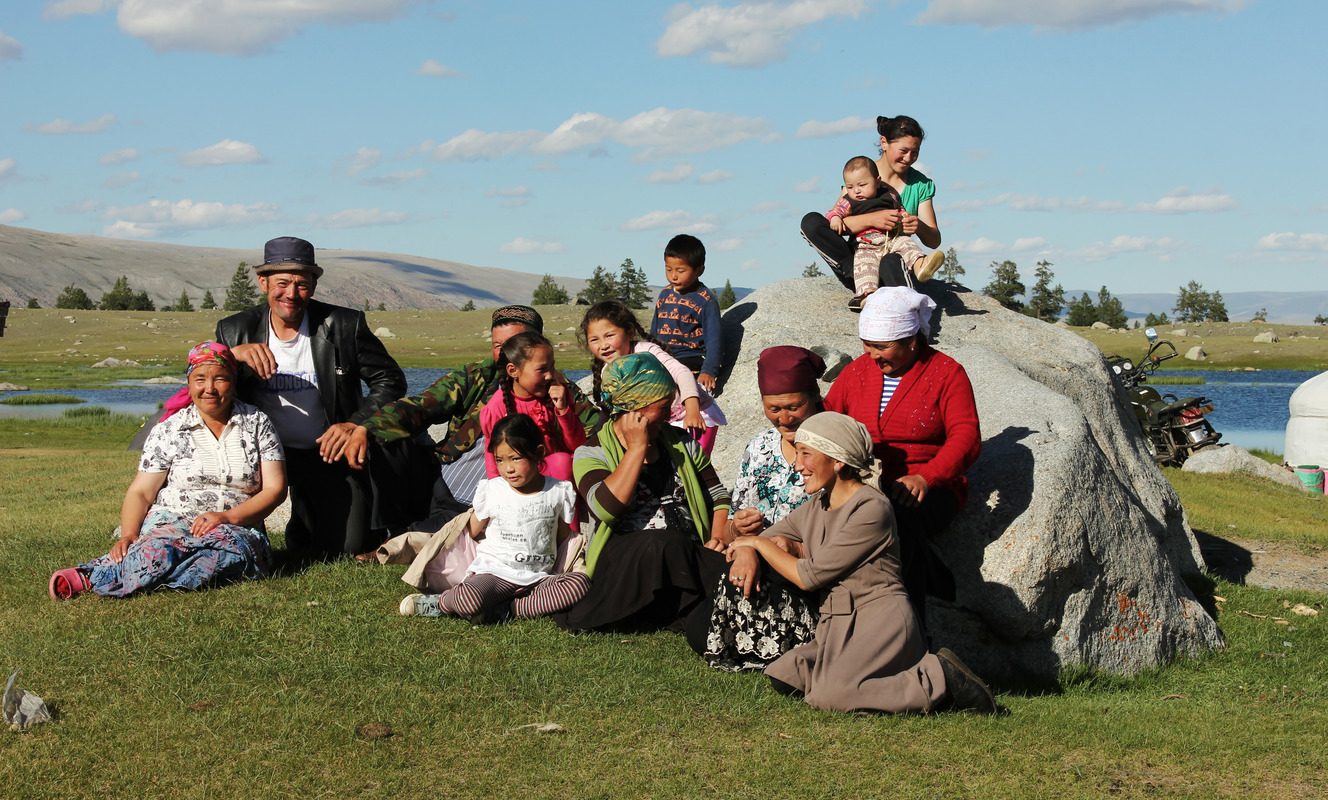
Perhaps the biggest draw to the country, though, is the nomadic lifestyle still practised by local people across Mongolia. Traditional Mongolian nomads still live in gers (a yurt-like dwelling) across the vast plains and deserts of the country, tending their sheep, goats, cows, and yaks the same way their ancestors have done for hundreds of years. No trip to Mongolia is complete without paying a visit to some of these incredible, resilient and hospitable families and trying some of their homemade traditional snacks!
Beyond the history and culture of the country, Mongolia can be split into three regions - the vast Gobi Desert of the south, the lush steppe of Central Mongolia, and the mountains and lakes of the far west.
The Gobi Desert covers most of the southern part of the country. Despite its name, it is less of a traditional sandy desert and more of a gravel and dust desert. However, despite this, there are still incredible sites to be seen there, such as the red sandstone Flaming Cliffs of Bayanzag jutting out of the ground. There are also a few towering sand dune systems across the desert, such as the Singing Dunes of Khongryn Els, which stand in stark contrast to the oasis that is Vulture Gorge, or Yolyn Am.
Outside of the Gobi, you have the vast steppe and green landscapes of Central Mongolia. One of the highlights here is the UNESCO-listed area of outstanding natural beauty known as the Orkhon Valley in the province of Arkhangai. This green valley, peppered with volcanic basalt, is home to many yak herding families. It's a favourite beauty spot for foreign travellers and local people alike!
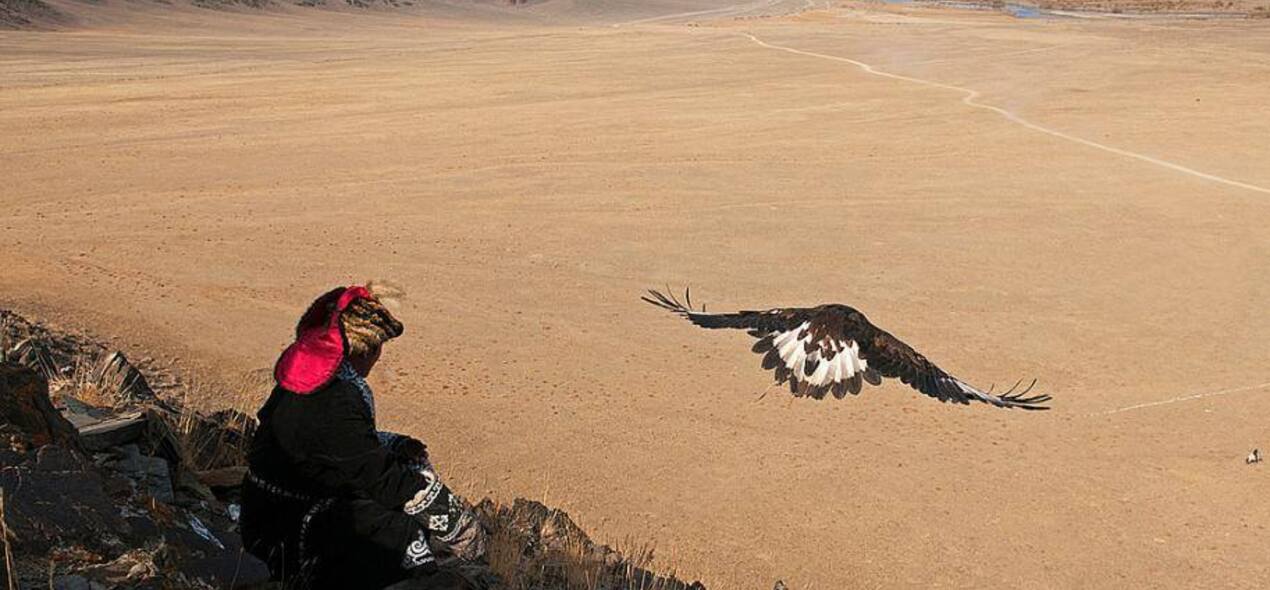
Finally, the far west of Mongolia is perhaps the jewel in the crown. From the great lakes of Khurgan and Khoton, to the gushing rapids of the Tsaagan Gol White River, right up to the mountainous peaks of the Altai and the monstrous Potanin Glacier. Local people consider the far western region to be the most naturally beautiful, not to mention it being home to the mysterious and eclectic Kazakh Eagle Hunters, who gather in the autumn to pit their flying birds against one another in a spectacular competition.
Temujin is declared to be ‘Chinggis Khan’, uniting the disparate tribes of the Mongol steppe into a unifying force that would go on to become the great Mongol Empire.
Chinggis Khan dies during a military campaign against the Western Xia. In 1271, a descendant of Chinggis Khan and current leader of the Mongol Empire, Khublai Khan, declares the Yuan Dynasty, a vast imperial empire which dominates China & Mongolia, with de facto control over Korea and other regional vassal states.
The Yuan Dynasty collapses to the Ming Dynasty, with the royal Mongolian houses retreating back to the steppe of outer Mongolia. This retreat begins the period known as the Northern Yuan.
The Khalka Mongols, the dominant ethnic group of Mongolia, submitted to the Qing Dynasty, beginning over two centuries of domination by the Chinese imperial house, and the oppression of the Mongolian people.
The Mongolian state declares independence from the splintering Qing Dynasty. The spiritual Buddhist leader of the Mongolians, known as the Bogd Khan, is declared the head of state, establishing the Mongolian Bogd Khanate.
Chinese forces reoccupy Mongolia, ending the short-lived period of independence. However, soon after, Mongolia is invaded by the White Russians as they seek to establish a power base against the ever-expanding influence of the Bolsheviks in Russia. The Russian warlord Roman von Ungern-Sternberg begins a seven-month reign over the country, which earns him the nickname ‘The Bloody Baron’.
The Mongolian revolution, led by Damdin Sukhbaatar and his Mongolian People’s Revolutionary Party, defeats the White Russians and declares independence for Mongolia as a socialist state, allied with the newly communist Russia. The Bogd Khan remains as a symbolic head of state and representative of the Mongolian people. In 1924, the Mongolian People’s Republic is declared following the death of the Bogd Khan
The Battle of Khalkin Gol pits the forces of the Mongolian People’s Republic against the expanding Japanese Empire. The battles are commanded by Soviet Marshal Zhukov, who would later command the Battle of Berlin, earning him praise amongst Mongolians to this day.
The democratic uprisings against the communist government in Mongolia led to widespread reforms and the establishment of the Republic of Mongolia as a democratic, multi-party state.
A growing destination for adventure travellers, Mongolia offers not only a unique culture and lifestyle, but also a real chance to get away from civilisation and out into untouched wilderness. From the many natural wonders which grace the desert, steppe, and mountains of the country, to the friendly people, traditional cuisine, and intriguing culture.
Travel to Mongolia can cover many different regions, although almost all trips begin and end in the capital, Ulaanbaatar. There are a few museums here dedicated to the history of the country, and for those interested in the more modern Soviet history, the capital is a treasure trove of Stalinist and later-Soviet architecture. However, the main draw is outside of the city.
During trips to Mongolia, it’s best to travel by car. Public transport is limited outside of the capital, and where it does exist, it often serves as a more pragmatic option for locals than any kind of tourist-driven travel option. Travelling in 4x4s gives a chance to experience the majesty of the landscape we’re traversing, whilst also giving the comfort to enjoy the drives and explore every nook and cranny that the country has to offer.
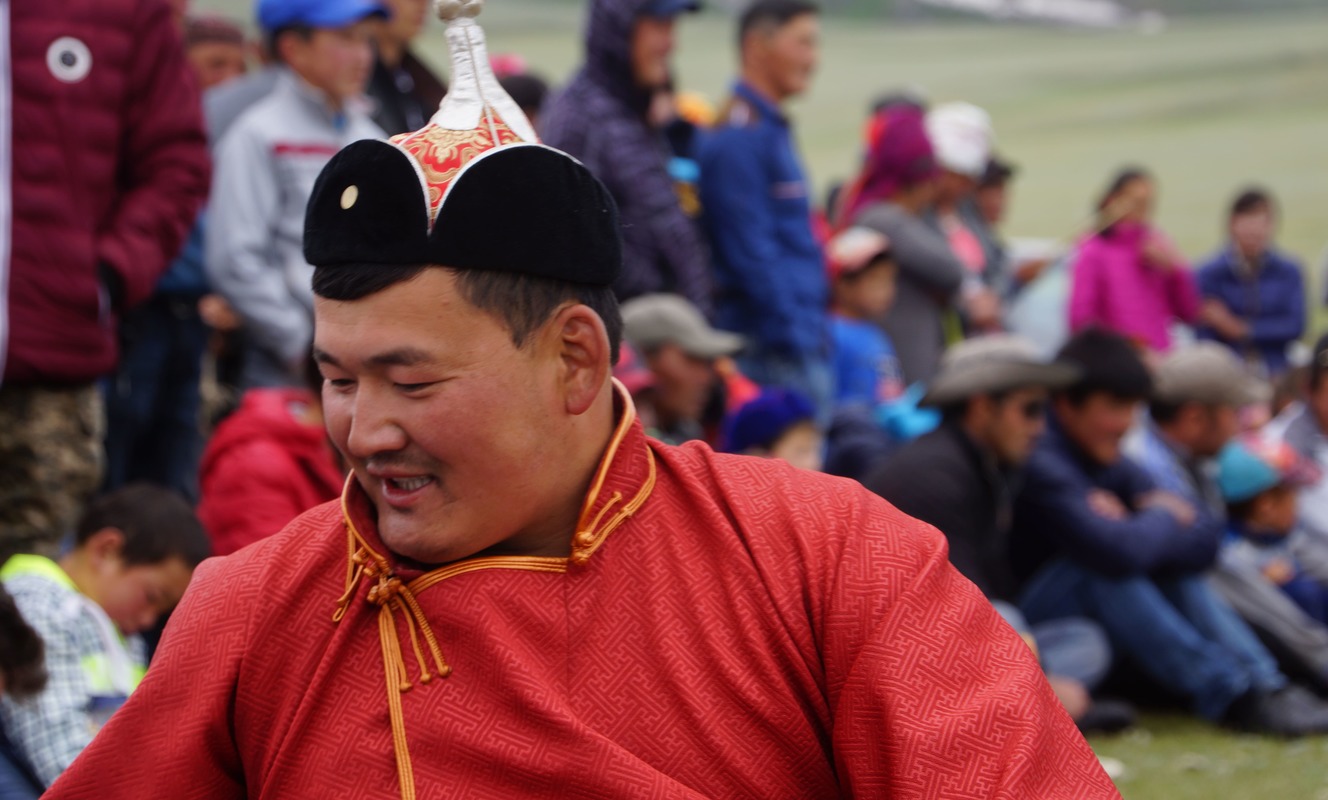
With regards to the food, Mongolian cuisine is heavily meat-based, with traditional Mongolian dumplings, or ‘buuz’ being a staple favourite, alongside the popular ‘Khurshuur’, a popular meal, similar to a Cornish pasty, eaten a lot during the summer festival period known as ‘Naadam’.
Trips to Mongolia can be arranged both for group adventures, and independent travellers. However, for any trip you’ll need your trusty local guide and expert Mongolian driver. The remote nature of the country, and the hidden layers of culture and history mean it’s not one to be tackled alone!
Do I need a visa to visit Mongolia?
When is the best time to visit Mongolia?
Is it safe to travel in Mongolia?
What language is spoken in Mongolia?
What currency is used and how do I access money?
A short introduction to relations between North Korea and Mongolia.
Read full storyLiving in Mongolia, you get used to certain things not going quite to plan. Roads disappear, weather changes without warning, and during summer, rumours start circulating that petrol is about to become very difficult to find. Normally, we manage. This time, my daughter and I spent more than eight hours in a queue, ran out of fuel while waiting for fuel, and were rescued by a stranger with a rope. Here is what happened.
Read full storyI took the bus for 3 days across Mongolia to the far western city of Olgii, in search of the Kazakh eagle hunters people kept telling me I needed to meet. Here is what happened when I found them.
Read full storyKoryo Tours understands that some things don't always go to plan. Our generous refund policy on all Mongolia tours means that you can leave a deposit risk-free and receive 100% refund on the deposit amount if you cancel within 40 days of the trip. We're also happy to hold your deposit for a future trip if you can't make it at the last minute. Your Mongolia tour with Koryo starts the minute you find us here. So, we want you to have the best Koryo Tour possible!
You can read our full Terms and Conditions here.
[email protected] | + 86 10 6416 7544
WhatsApp (message only): +44 7822 014058