Uzbekistan is the most populous of all the ‘Stans’ and its territory has long formed the cultural heartland of the region. It has a rich Silk Road and Islamic history, shown by the many urban centres located here along fertile river valleys at the edge of the nomadic steppeland.
The area that is now Uzbekistan was not only a centre of Islamic scholarship, but at certain points in history, it was also home to some of the finest scientists in the world, like Ibn Sina, the father of modern medicine and Al-Khwarizmi, the father of algebra, whose scholarship and name gave us algorithms.
Tashkent, the capital, is the largest city in Central Asia and home to the region’s first – and till 2011 the only – underground system. Although some traditional architecture can also be found, it is mostly a Soviet city with a rich museum and cultural scene. Samarkand, a UNESCO World Heritage site, is one of the oldest continuously inhabited cities in the region and a crossroads of cultures. The city is also Timur’s – and the late President Islam Karimov’s – resting place, along with spectacular blue-tiled mosques and mausolea. It also has a Tsarist Russian and Soviet part well worth exploring.
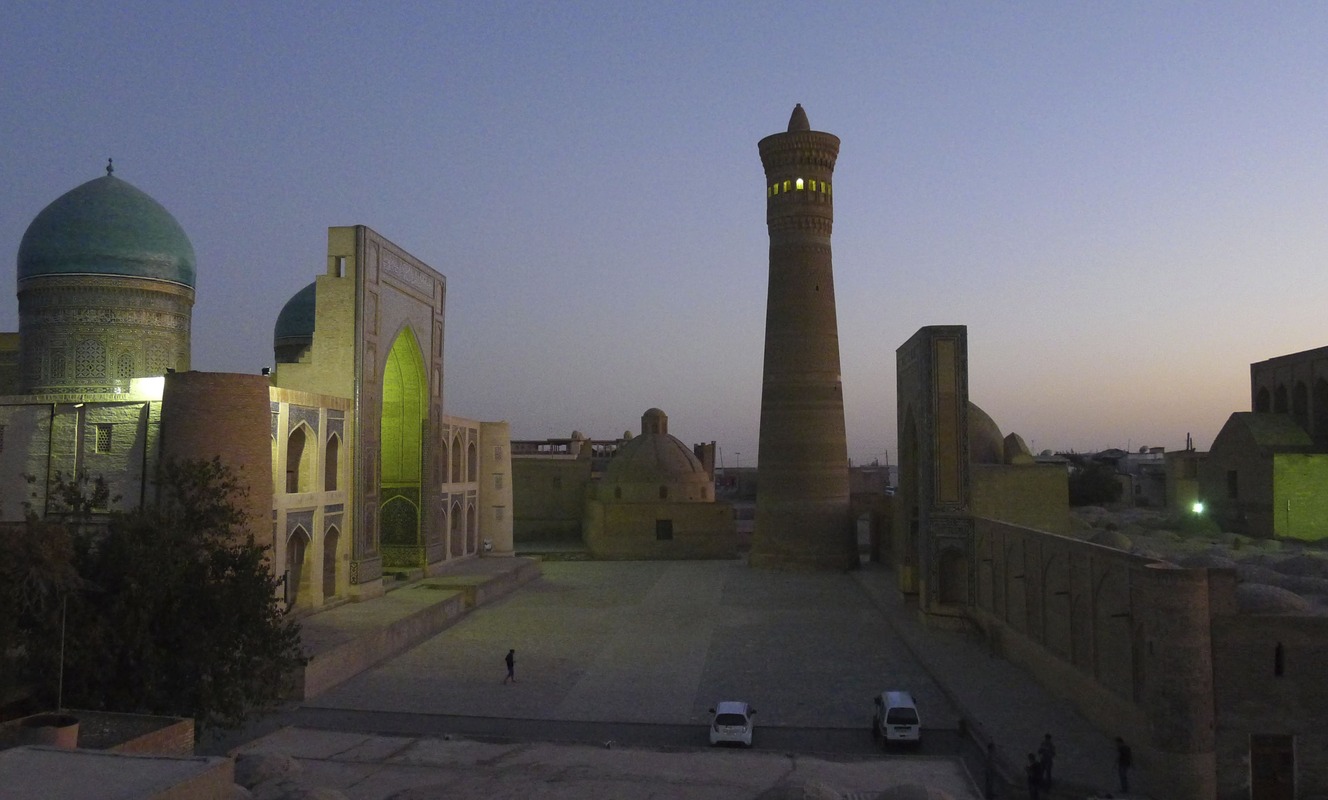
Bukhara, another UNESCO World Heritage site, is home to mud-brick madrassas, bazaars, and fortresses. This holy city is also the origin of one of the world’s oldest diaspora groups, the Bukharan Jews.
Khiva, the first UNESCO World Heritage site in Uzbekistan, is famous for Itchan Kala, an intact, walled city packed with medieval Islamic architecture. It was also infamous for its slave market.
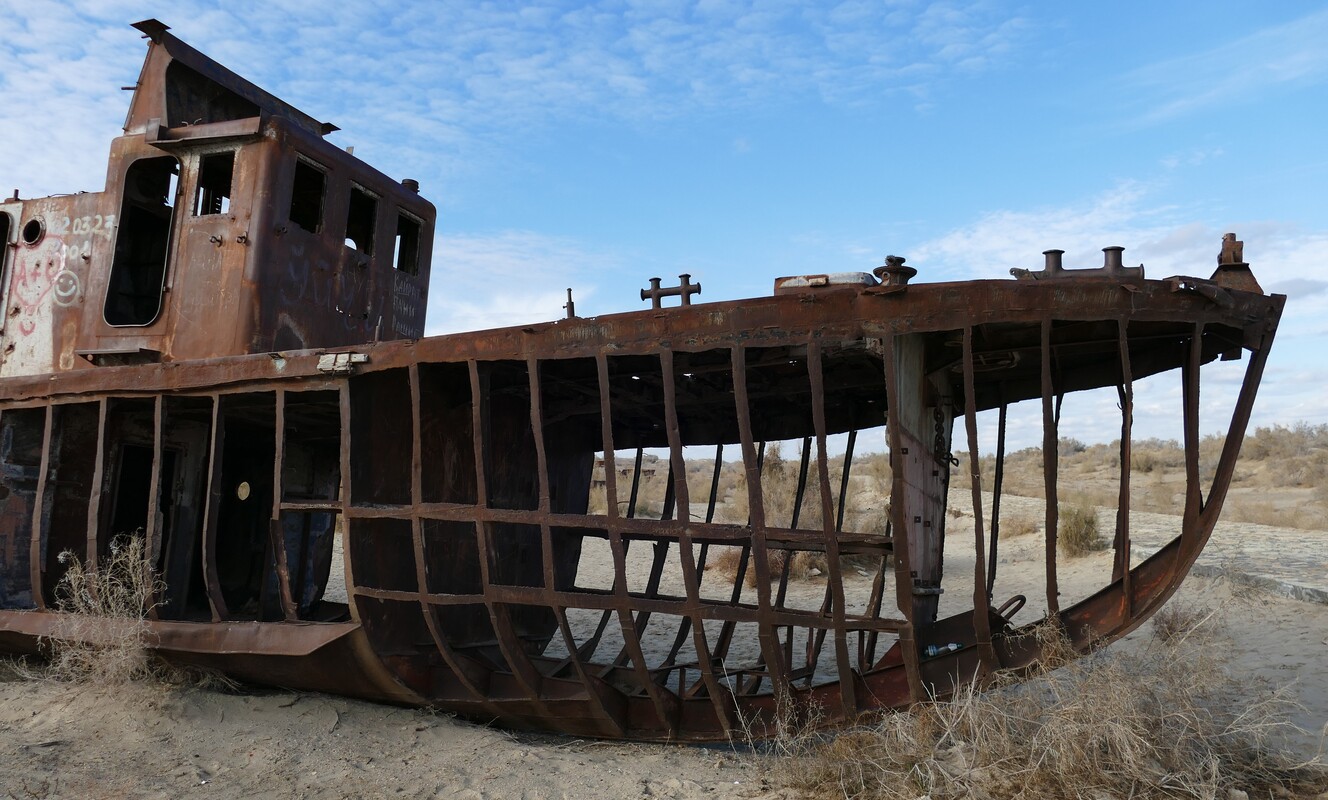
Karakalpakstan is an autonomous republic in Western Uzbekistan taking up over one-third of the country’s territory but only home to 5% of its population. Its desert-girdled capital, Nukus, is the home to the world-famous Savitsky Museum, an impressive collection of rescued avant-garde art from the Soviet era. This is also where the Aral Sea – or rather what little remains of it – is situated, and where once flourishing fishing ports are now ship graveyards.
Nomadic Scythians spread across the Eurasian steppe. Iranian-speaking Sogdians and Bactrians were the brilliant middlemen who built the urban infrastructure and cultural bridges that made possible the continent-connecting Silk Road networks. Zoroastrianism was the main religion, but Buddhism and Christianity were also influential. The 8th Century saw the Arab conquest and Islamization of the region.
Islamic Golden Age and the Samanid Empire period with Bukhara as the capital.
Arrival of the Turkic tribes and the establishment of the Khwarazm Empire. This period also marked a shift from Persian to Turkic linguistic and cultural dominance.
Start of the Mongol period.
Period of the Timurid Empire, when Samarkand was the capital (1370–1405), under Timur (Tamerlane), and later Herat.
Start of the khanate period (the rival powers Bukhara, Khiva, and Kokand), ruled by Uzbek dynasties. These regions were centres of Islamic scholarship, monumental Islamic architecture, covered bazaars, carpet weaving, and silk production.
The Great Game and Russian military colonisation of Central Asia.
The area of Uzbekistan falls under Tsarist Russian control. Russian Turkestan was directly controlled by St Petersburg from Tashkent while the Emirate of Bukhara and the Khanate of Khiva were Russian protectorates.
Russian Revolution, followed by fighting in Central Asia from 1918–24.
The Uzbek Soviet Socialist Republic is created.
The Tajik Autonomous SSR splits from the Uzbek SSR and becomes the Tajik Soviet Socialist Republic. A year afrer, the capital of the Uzbek SSR is moved from Samarkand to Tashkent. In 1936, Karakalpak Autonomous SSR becomes a part of Uzbekistan, ceding from Kazakhstan.
State sovereignty is declared and on 31st August 1991, independence is declared and confirmed by a referendum, with the first presidential elections on 29th December. Islam Karimov, the last First Secretary of the Communist Party of Uzbekistan and President of the Uzbek Soviet Socialist Republic, becomes president. On 21st December, Uzbekistan became a member of the Commonwealth of Independent States. Shortly after in 1992, Uzbekistan is admitted to the United Nations. A new constitution is adopted.
President Islam Karimov dies, and Shavkat Mirziyoyev becomes president. Start of reforms that usher in some degree of liberalisation and lay down the foundation for the tourism boom.
Constitutional reforms, including the increase of the presidential term from 5 to 7 years. Although the presidency is limited to two terms, the constitutional reform reset the counter for President Mirziyoyev.
Now considered to be one of the world’s top emerging destinations, Uzbekistan was even during the Intourist era among one of the most popular tourist destinations in the Soviet Union among international visitors. It boasts knockout attractions and the best tourism infrastructure in Central Asia.
Uzbekistan offers a wide range of Silk Road cities and centres of medieval Islamic culture and learning, with blue-tiled madrasas and mausolea. Bazaars offer a deep dive into local culture, while Tashkent and other major cities offer a glimpse into the Soviet past with brutalist architecture, and a wide range of housing styles from Stalinkas through Krushchevkas to Brezhnevkas.
Travel between the major cities on the tourist path is made easy by high-speed trains connecting the ancient Silk Road cities with Tashkent.
There is a wide range of accommodation available from privately-owned bed and breakfasts to boutique hotels, and a few remnants of the legacy of the Intourist era like Hotel Uzbekistan in Tashkent, a masterpiece of Soviet brutalist architecture.
Food not only tastes good but is very affordable, with many choices of restaurants, teahouses, and cafés. These restaurants offer the national dish, plov, shashlik, the world’s best bread (non), and a wide range of salads along with Russian and Western options.
Major tourist attractions can be rather busy and many of the student rooms in the madrasas now serve as souvenir shops. Uzbekistan is undoubtedly a shopping paradise for a wide range (in type, quality, and aesthetics) of souvenirs. English-speaking tourist police are also heavily present at major sights.
Travelling in Uzbekistan can easily be done independently, but there are so many layers of history to unpack, untold stories and off-the-beaten-path backstreets with hidden treasures that only experts can help you explore.
Do I need a visa to visit Uzbekistan?
When is the best time to visit Uzbekistan?
Is it safe to travel Uzbekistan?
What language is spoken in Uzbekistan?
What currency do they use in Uzbekistan?
The only travel companion you need for Uzbekistan. Plus, travel to Uzbekistan with the author himself!
Read full storyThe Tashkent Metro System is one of the most beautiful and artistic metro systems in the world. Built during the Soviet era and still largely off the radar for many travelers, each station is a unique masterpiece of mosaics, chandeliers, murals, and ornate tilework.
Read full storyThe Hotel Uzbekistan is a centrepiece of the capital, Tashkent.
Read full storyKoryo Tours understands that some things don't always go to plan. Our generous refund policy on all Uzbekistan tours means that you can leave a deposit risk-free and receive 100% refund on the deposit amount if you cancel within 40 days of the trip. We're also happy to hold your deposit for a future trip if you can't make it at the last minute. Your Uzbekistan tour with Koryo starts the minute you find us here. So, we want you to have the best Koryo Tour possible!
You can read our full Terms and Conditions here.
[email protected] | + 86 10 6416 7544
WhatsApp (message only): +44 7822 014058