Turkmenistan is the least-known, least-visited, and least-understood of all the Central Asian countries.
This is both its attraction to many curious visitors, but also something to push against, as the history, sites to visit and see, and the society itself are very much worth developing a deeper knowledge and understanding of.
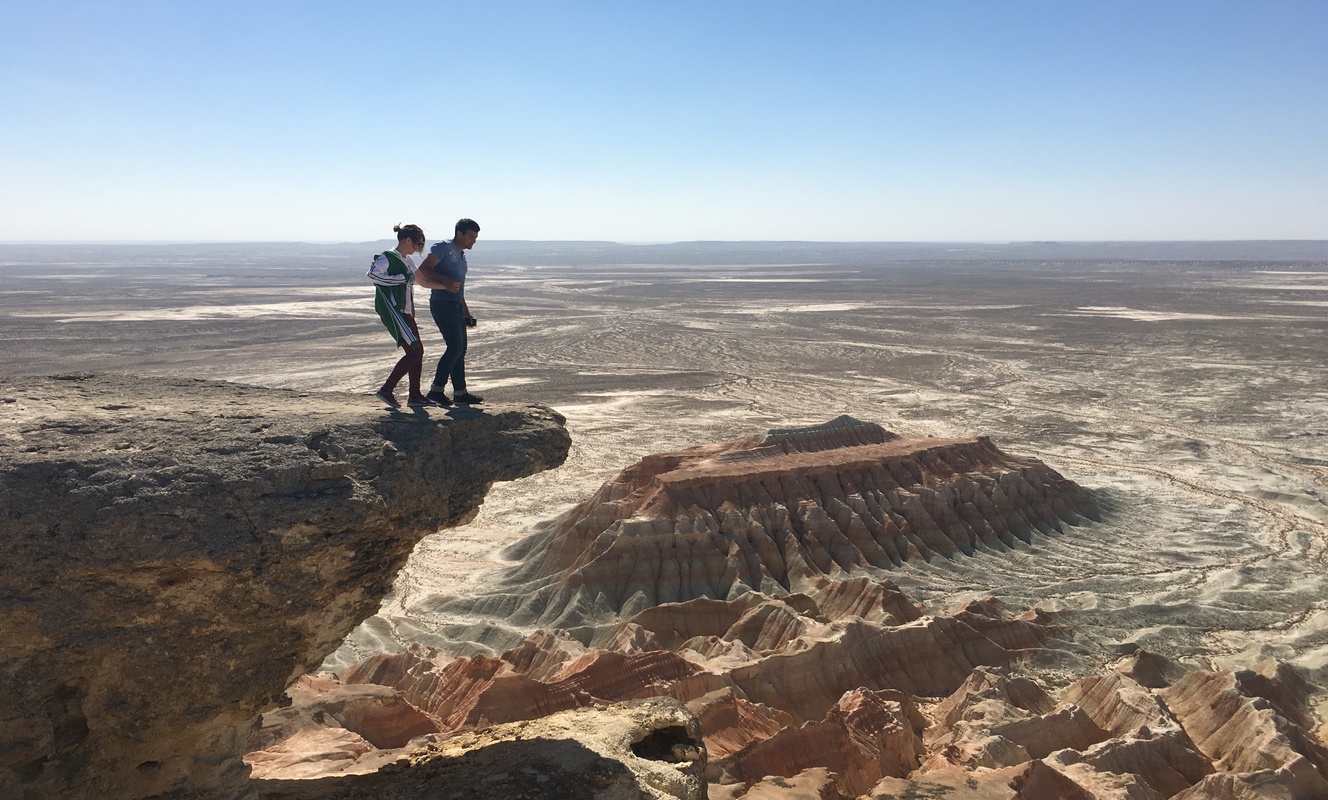
Turkmenistan is made up almost entirely of desert, with fringes of spectacular mountains along some borders, as well as a coast on the Caspian Sea. It has a low population and a lot of empty space.
Traditionally, Turkmen were nomadic, but the population is now mostly urbanised in Ashgabat and a handful of smaller cities. A new governmental and residential city named Arkadag has been built just outside of Ashgabat, and this may become a more important settlement.
Natural gas is Turkmenistan’s economic driver, with the 4th largest deposits in the world paying for all the architectural grandstanding, as well as everything else that the state funds. The government system is one which is openly autocratic, despite the occurrence of a form of elections.
Nobody in the country is unaware of the system they have and how it differs from the systems that others enjoy or endure, but life is resilient in Turkmenistan, and visitors will find more common ground with local people than they often expect.
The territory we now call Turkmenistan has known many names over the millennia, sitting at the crossroads of empires, history, and the ancient Silk Road, too.
It is a new country with ancient roots. There is evidence of sophisticated urban settlements going back more than five thousand years, deep into the Bronze Age.
In the 6th Century BCE, the mighty Persian Achaemenid Empire took control of the region.
This empire, founded by Cyrus the Great, was vast and all-conquering for hundreds of years, but then in 330 BCE it all collapsed under the onslaught of Alexander the Great’s Macedonian Greek forces. After Alexander’s death, Turkmenistan passed to his general Seleucus, whose own Hellenic empire lasted until the Roman Republic. But this particular area was taken by the Parthians, great rivals of Rome and one of the greatest powers in history.
Parthia ruled what is now Turkmenistan from the local capital of Nisa, now an archaeological site just outside of Ashgabat.
Parthia fell in 224 AD, and various players controlled the territory, including the empire of the Sasanian Persians. But in the 7th Century, the invasion of the Arabs deep into Central Asia brought new rulers and a new religion, Islam.
This was accepted widely, but even to this day has local elements of pre-Islamic ritual and belief woven into the local version. Under the Arabs, the city of Merv was one of the world’s largest cities during the height of the Silk Road.
Next to invade and conquer were the armies of Genghis Khan in the 13th Century. Merv was annihilated in 1221, and Turkmenistan was swept up into the Mongolian World.
This eventually faded away rather than being outright conquered, and Turkmen tribal society managed to keep its place, with nomadism and decentralised tribal practices seeing a resurgence as various imperial controls weakened.
In the late 19th century, it was a new form of imperialism whose intrigues were brought to Turkmenistan.
The Great Game, a kind of cold war between Britain and Russia, was played out in Central Asia as the buffer region between British India and the expansionist Russia. In the 1880s, Russia moved to seize Turkmenistan, with an invasion across the Caspian Sea and a brutal battle at Geok Deppe, which snuffed out Turkmen tribal independence with significant brutality. Dragging the region into the European sphere.
Turkmenistan became part of Russian Transcaspia. Modern infrastructure was built, such as railways and urban settlements, and cotton farming was brought in, with the formerly nomadic Turkmens pressed into settling and working in ways hitherto alien to them.
The Russian Revolution brought in new rulers and a whole new system in Moscow. Turkmenistan became a republic of the USSR in 1924.
There was a focus on literacy and the emancipation of women. There was also the suppression of religion, forced collectivisation, removal of nomadism and the discovery and exploitation of the vast natural gas reserves that still define the economic state of the nation.
With the collapse of the USSR in 1991, independence was declared, and rule fell to Saparmurat Niyazov, previously the local general secretary.
Niyazov, a new soviet man whose father had never returned from the Great Patriotic War and whose mother and two brothers had been among hundreds of thousands buried in the 1949 Earthquake that levelled Ashgabat, swiftly threw off the cloak of Marxism-Leninism that he had worn to the top, and took on the mantle of nationalist leader.
Entitling himself ‘Turkmenbashi’ (Leader of Turkmen), he became known for his expensive idiosyncrasies.
Since his death in 2006, the country has been run by first President Gurbanguly Berdimuhammedov and now his son, Serdar Berdimuhammedov.
The future is a complex one for the people of Turkmenistan, and there is more than one direction it could go in.
Known as the complicated one for the Central Asian ‘Stans’ to visit and travel in, the visa system operated by Turkmenistan has always been a bit of a disincentive to make the effort for the less-motivated traveller, and a frustration for those who have fallen foul of the occasional unexplained refusal of entry too.
In brief, a Letter of Invitation from an authorised local company is needed for tourists travelling to Turkmenistan. This LOI is basically a guarantee of a visa, so when the LOI is issued, a visa can then be obtained at a Turkmen Embassy or on entry to the country at any customs point (air, land, or sea).
However, refusals do happen, sometimes more often than other times, and are almost always unexplained.
When in the country, there are rules about being with an authorised guide. You must be with a guide on entry and exit to the country, technically crossing provincial borders (although rarely enforced), but these rules are flexible and change over time in terms of enforcement.
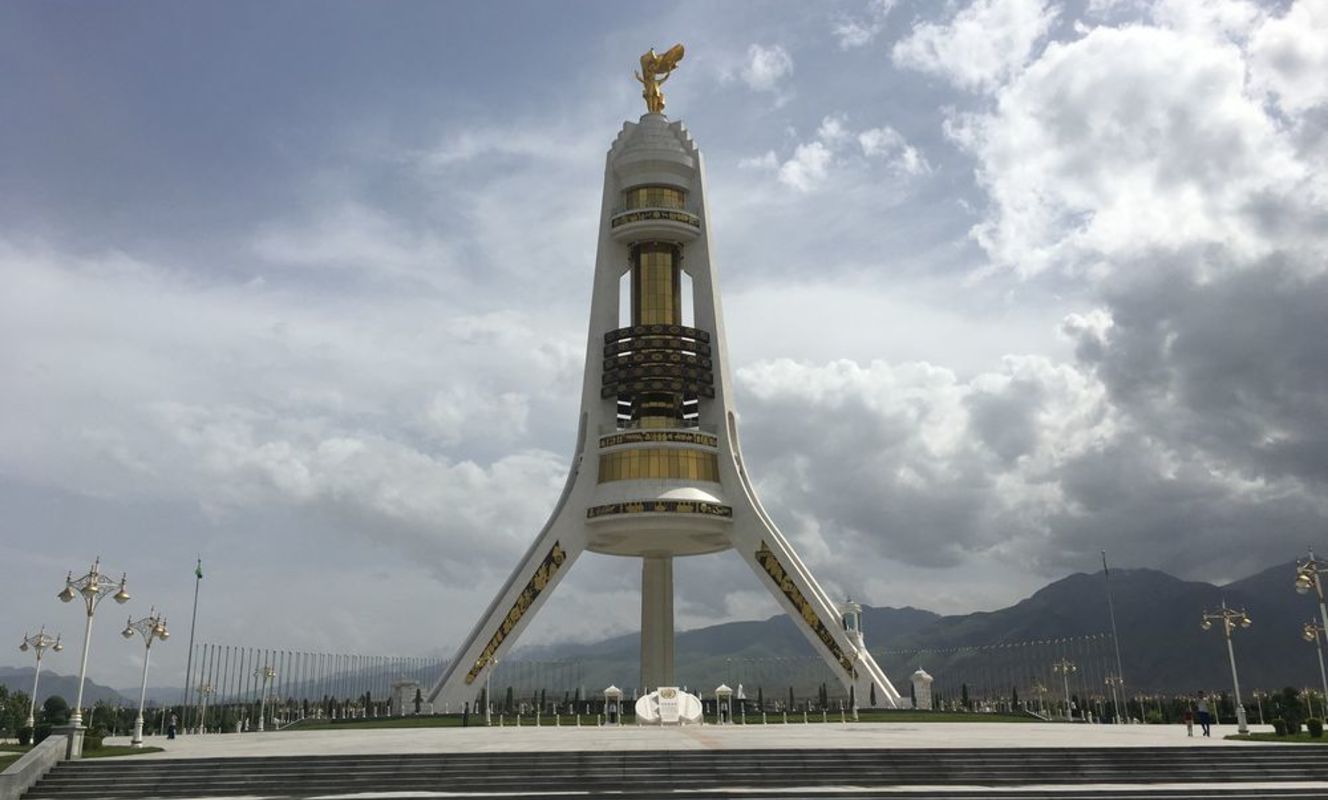
It is common for people to make a bit of fun at Turkmenistan's expense. The statues, the odd national holidays, the (now revoked) renaming of the months and days by the Turkmenbashi, the ban on non-white cars in Ashgabat, the second President’s tendency to be the best jockey, cyclist, musician, etc in the country. But it is a real country with real people, and people who have an interest in their own lives and the lives of others, too.
A trip to Turkmenistan with people who have a deep and long-running interest in the place, as well as connections and relationships cultivated over a long period, gives more back than one focused on mockery and the odder aspects of an undeniably odd place.
Roads in urban areas tend to be in good condition and are often recently renovated. Highways from Ashgabat to some other cities are also well done, even though they often deteriorate in the harsh climate.
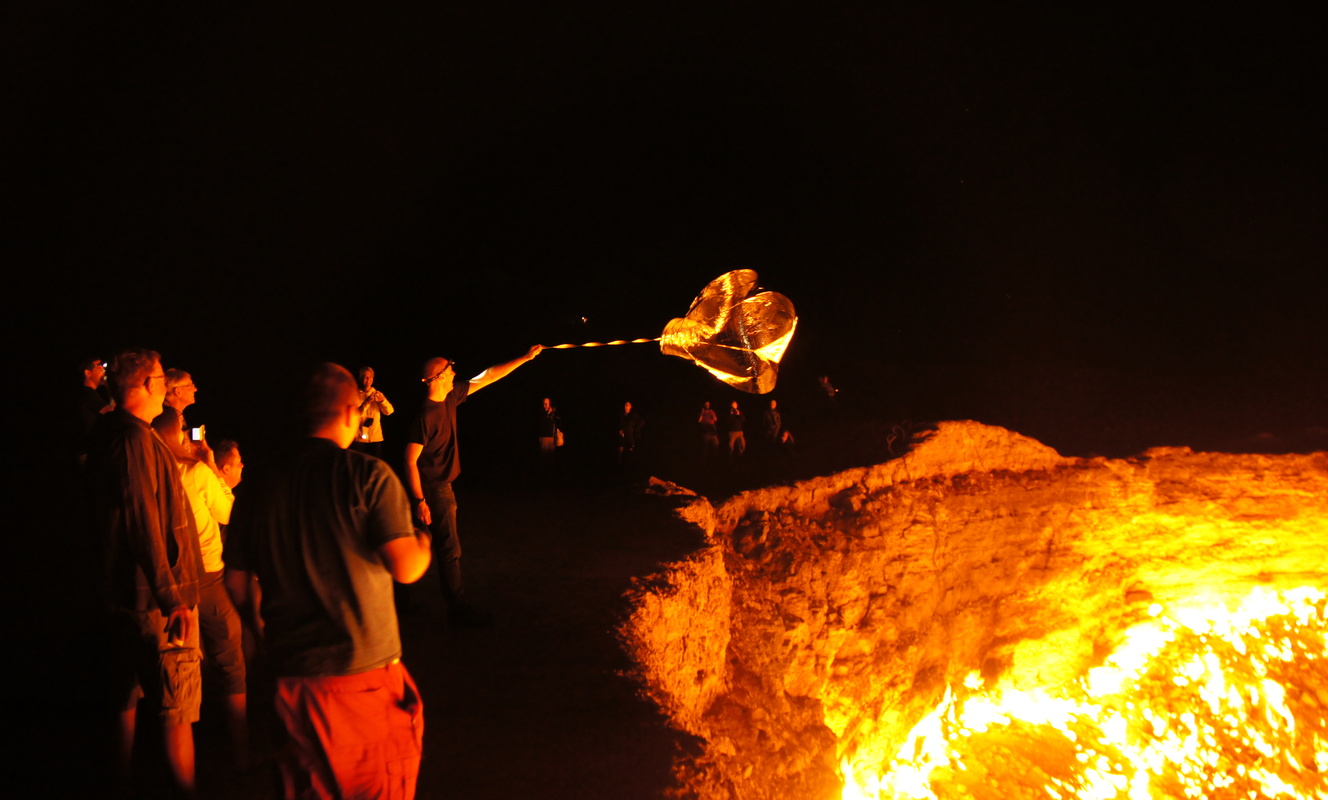
The highway that leads most of the way to the remarkable Darvaza Gas Crater is, at the time of writing, in very poor condition and highly potholed.
While the internet is still a frustration, some decent hotels have good networks and even built-in VPNs. The general internet coverage and accessibility for tourists have gotten worse over the years.
Supply of power is reliable, though (being that they produce enormous amounts of energy) and even though most of the country is a desert, water supply is reliable in all hotels.
One of our very favourite places to visit, and a country with deep history, complex society, and a little-understood modern culture.
Do I need a visa to visit Turkmenistan?
What is the Turkmenistan Letter of Invitation (LOI)? And how do I get it?
Will I be denied the LOI? Is it difficult to get?
Do I need a guide to visit Turkmenistan? Can I walk around alone?
What is the best time to visit Turkmenistan?
Understanding Central Asia's most misunderstood destinations
Read full storyHow did Koryo Tours start the Turkmenistan tourism industry?
Read full storyAn introduction to the Geopolitics of Central Asia and a neutral Turkmenistan. Could Turkmenistan be the answer to global instability (for your holidays)..?
Read full storyKoryo Tours understands that some things don't always go to plan. Our generous refund policy on all Turkmenistan tours means that you can leave a deposit risk-free and receive 100% refund on the deposit amount if you cancel within 40 days of the trip. We're also happy to hold your deposit for a future trip if you can't make it at the last minute. Your Turkmenistan tour with Koryo starts the minute you find us here. So, we want you to have the best Koryo Tour possible!
You can read our full Terms and Conditions here.

[email protected] | + 86 10 6416 7544
WhatsApp (message only): +44 7822 014058