Afghanistan is called the graveyard of empires, and not without reason! Alexander the Great brought his army here in 329 BC and found it difficult terrain. The British tried three times in the 19th century, with results ranging from costly to catastrophic. The Soviet Union invaded in 1979 and left a decade later having changed very little except the body count. The United States and NATO spent twenty years there before withdrawing in August 2021 and watching the Taliban retake the country in eleven days.
The pattern is consistent enough to raise the obvious question - what is it about this place that defeats everyone who tries to control it? And, keeps bringing people back?
Part of the answer is geography. A landlocked country the size of France with some of the most demanding mountain terrain on earth, where determined local forces have always been able to outlast foreign armies. Part of it is history. The Afghan people have been absorbing and outlasting invasions for three thousand years and have considerable practice at both.
And part of it is something harder to define, a fierce attachment to independence and identity that has persisted through everything from the Mongol conquest to the Soviet occupation.
Because that is precisely what makes Afghanistan so extraordinary to visit. And that's exactly what keeps bringing people back here.
This is one of the oldest crossroads of human civilisation. The Silk Road ran through it. Buddhism reached its greatest artistic flowering in the Bamiyan Valley, where gigantic Buddhas carved into cliff faces stood for over a thousand years before the Taliban's first government destroyed them in 2001. Herat, the ancient city in the west, was once a Timurid capital of such refinement that it rivalled Renaissance Florence for cultural sophistication. The city of Balkh, in the north, was called the "mother of cities" in the ancient world, a place so old its ruins contain the ruins of earlier civilisations within them.
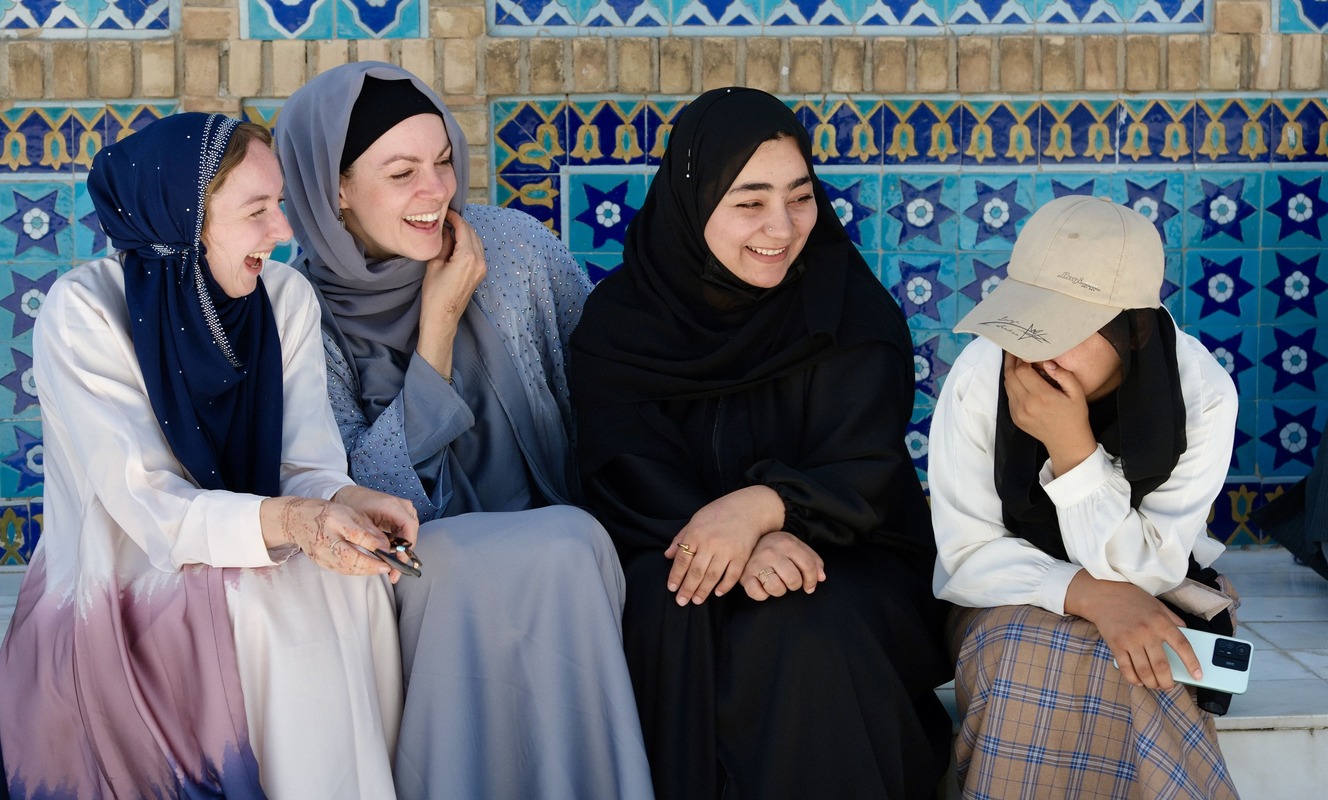
And underneath all of this history, underneath the political complexity and the decades of war, is a country of extraordinary natural beauty and people of exceptional hospitality. Afghan warmth to guests is not a tourist industry product. It is a deep cultural value that has survived everything else. Travellers who come here consistently describe it as one of the most welcoming countries they have ever been to.
Afghanistan has always been where civilisations meet. Its geography, sitting between Persia to the west, Central Asia to the north and India to the east, made it inevitable that every great power moving in any direction would pass through it. What they left behind, layered over thousands of years, is extraordinary.
The earliest significant culture of the region was the Bronze Age Oxus civilisation, flourishing from around 2300 BC in the northern plains. By the time of the Achaemenid Persian Empire, what is now Afghanistan formed its eastern provinces.
Then came Alexander the Great in 329 BC, crossing the Hindu Kush, founding the city of Alexandria of the Oxus and marrying a Bactrian princess named Roxana, briefly making Afghanistan the centre of the known world's largest empire.
The Hellenistic Greco-Bactrian kingdoms that followed fused Greek artistic technique with Central Asian culture in ways still visible in the coins and sculptures that survive.
Most significant for the physical legacy visitors can see today was the Kushan Empire and the Buddhist culture it patronised. From roughly the 1st to the 4th centuries AD, Afghanistan was the heartland of Gandharan Buddhist art - a synthesis of Greek style and Buddhist iconography that produced some of the most sophisticated art in the ancient world.
Its greatest monument was the Buddhas of Bamiyan, the larger of which stood 53 metres tall. They stood for over 1,500 years. In March 2001, the Taliban's first government destroyed them with explosives and artillery over two weeks, in an act of deliberate cultural destruction. The cliff face still holds the caves where they stood. You can enter those caves and stand in the exact space the Buddhas occupied for fifteen centuries.
Islam arrived in what is now Afghanistan in the 7th and 8th centuries, brought by Arab armies sweeping through Persia and Central Asia. Indigenous Islamic dynasties followed. The Samanids, then the Ghaznavids, who made Ghazni one of the great cities of the Islamic world, and then the Ghurids, who controlled much of South Asia.
The Mongols arrived in the 13th century and destroyed most of this. Genghis Khan's campaigns of 1219 to 1221 obliterated the great cities of Balkh, Herat and Bamiyan, massacring their populations. The recovery took centuries.
The Timurid dynasty that flourished in Herat from the 14th to 16th centuries produced a brief cultural renaissance. Miniature painting, poetry, architecture and intellectual culture that genuinely rivalled anything happening in contemporary Europe.
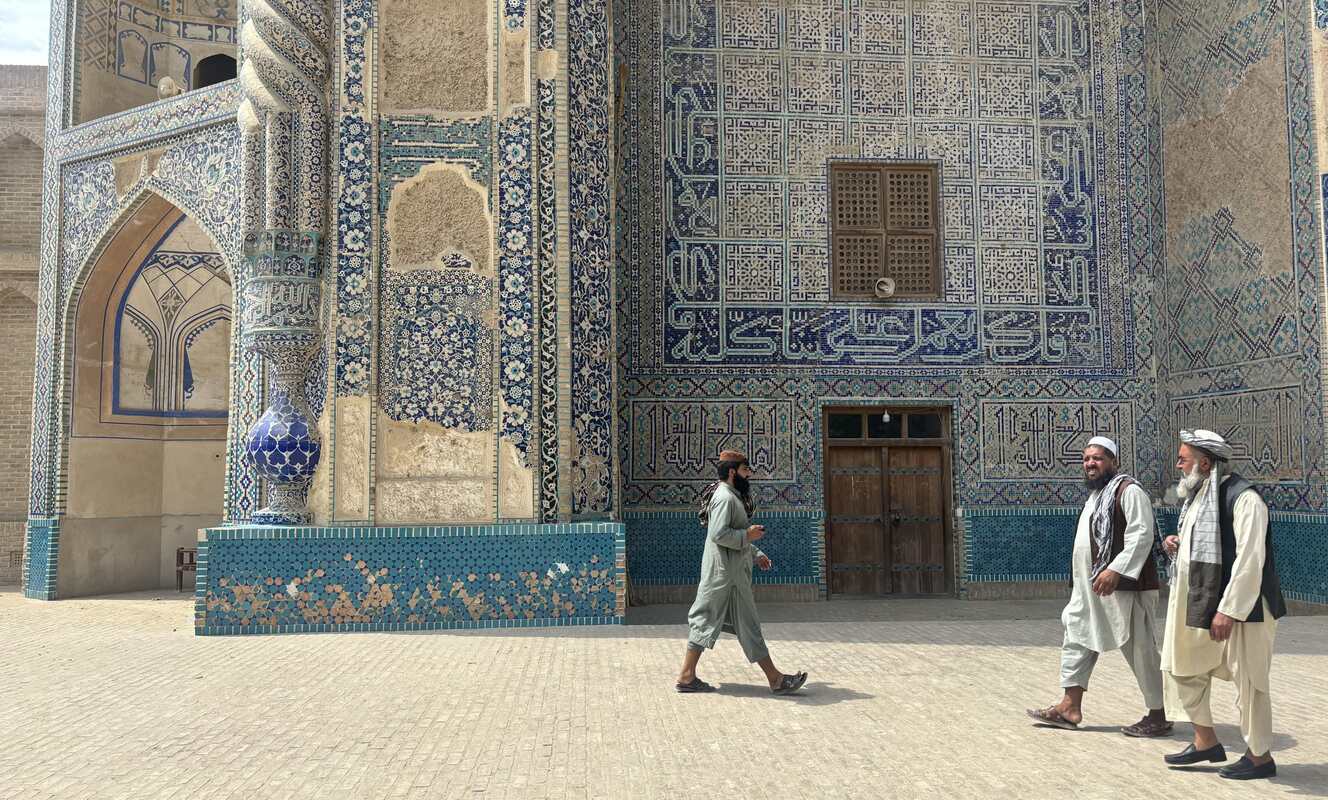
The Minaret of Jam, the Friday Mosque and the mausoleum complex in Herat survive from this period and are among the most beautiful architectural achievements in Central Asia.
Modern Afghanistan as a political entity emerged in 1747, when Ahmad Shah Durrani united the Afghan tribes and founded the Durrani Empire.
Ahmad Shah is considered the father of the Afghan nation, and his shrine in Kandahar remains one of the country's most significant sites.
The 19th century brought the Great Game. A prolonged strategic rivalry between the British Empire and the Russian Empire, with Afghanistan caught between them. Britain fought three Afghan Wars, each time discovering that Afghans were formidable opponents on their own terrain.
The first, from 1839 to 1842, ended with one of the most catastrophic military disasters in British imperial history. Approximately sixteen thousand soldiers and camp followers died attempting a winter withdrawal from Kabul through the mountain passes. One man reached the British garrison at Jalalabad.
The third Anglo-Afghan War, in 1919, ended with Afghan independence, secured in a fight the British found they could not win.
The mid-20th century brought relative peace under a constitutional monarchy. In 1973, a coup ended the monarchy and established a republic. In 1978, a communist coup brought the People's Democratic Party to power. In 1979, the Soviet Union invaded.
Nine years of Soviet occupation proved as disastrous as every other foreign adventure in Afghanistan.
The mujahideen resistance, substantially funded and armed by the United States, Saudi Arabia and Pakistan, made the war unsustainable. Soviet forces withdrew in 1989.
What followed was a catastrophic civil war among mujahideen factions that destroyed Kabul more thoroughly than the Soviet occupation had.
From this chaos, the Taliban emerged in 1994, a Pashtun religious movement that by 1996 controlled most of the country, including Kabul. Their first period in power brought one of the most restrictive governance systems the modern world had seen. Al-Qaeda operated from Afghan territory.
The attacks of 11 September 2001 brought the next invasion.
The US-led coalition toppled the Taliban government in weeks in late 2001. The twenty-year reconstruction project that followed consumed hundreds of billions of dollars and thousands of lives without producing a state capable of surviving the withdrawal of foreign support.
On 15 August 2021, as the last US troops prepared to leave, the Taliban walked into Kabul. The Islamic Emirate of Afghanistan was restored.
The Taliban's second government has brought stability of a specific kind. The violent conflict of the previous forty years has largely ended, and Kabul is more secure from terrorism than it was during much of the American presence.
The cost is borne disproportionately by Afghan women, excluded from secondary and university education, barred from most employment and restricted from many public spaces.
This is the Afghanistan that exists today. A country of breathtaking history and extraordinary beauty, governed in a way that the international community has not and will not recognise.
Travel here is organised, structured and not for everyone. The Taliban government imposes strict conditions on all aspects of life, including conditions that fall most heavily on Afghan women.
What Koryo Tours offers is access to one of the most historically profound and visually extraordinary countries on earth, under conditions that allow meaningful engagement with Afghan people and culture. We do not take people to Afghanistan to endorse its government. We take them because the country and its people deserve to be known, and because the Afghans we work with benefit from the economic activity that responsible, thoughtful tourism brings. A portion of every Koryo Tours Afghanistan booking is donated to the Women's Retreat Centre or the Future Hope Charity Organisation orphanage in Kabul.
Afghanistan is accessible via Kabul's Hamid Karzai International Airport, with connections through Dubai, Istanbul and several Central Asian hubs.
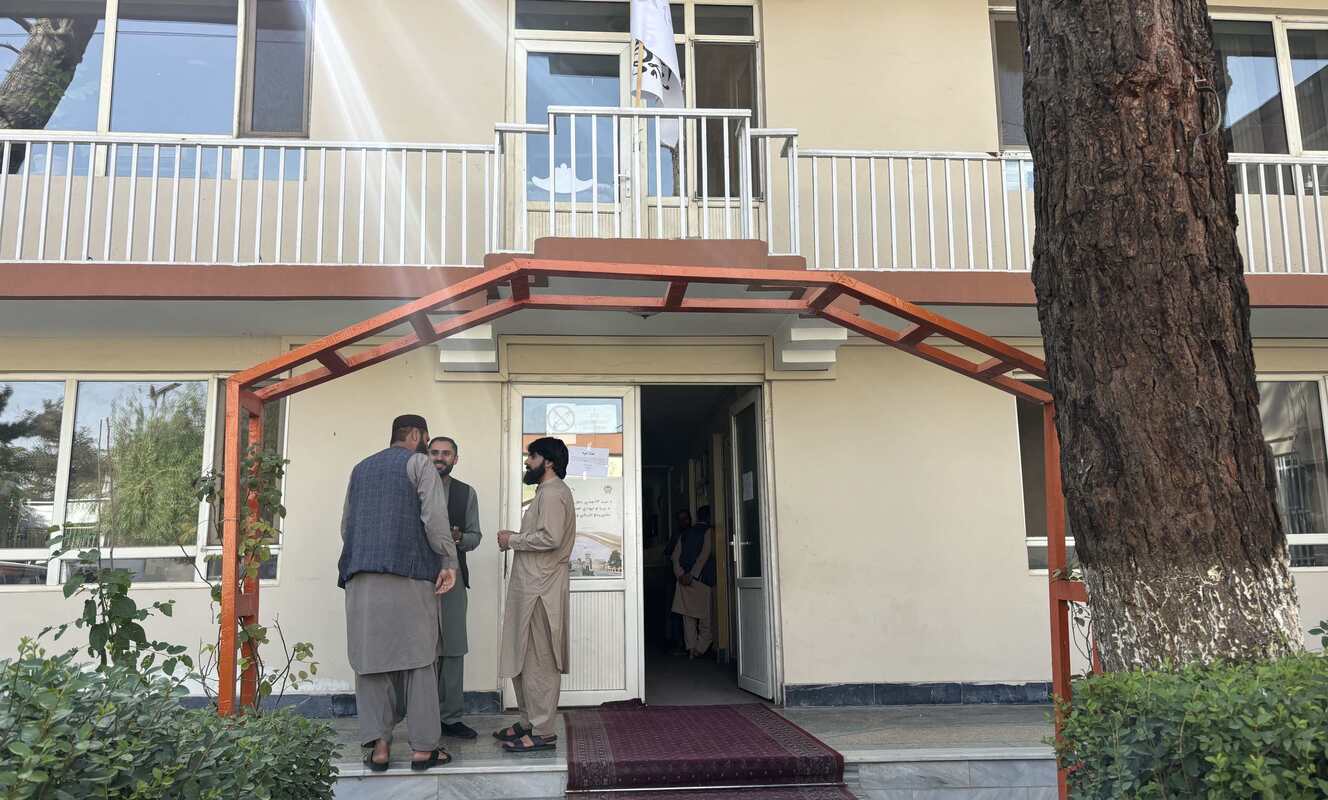
A Ministry of Culture travel permit is required for visiting most sites and travelling between provinces; your tour operator arranges this. All visitors travel with a licensed local guide throughout, and groups must register with the Tourism Department in Kabul on arrival.
Koryo Tours runs several itinerary formats for Afghanistan.
The signature multi-province tour covers Kabul, Bamiyan, Herat, Kandahar and Mazar-i-Sharif over approximately thirteen nights. The Afghan Sisters tours are women-focused itineraries led by local female guides, offering access to experiences not available to mixed groups. Visits to women-run markets, cooking classes with Afghan women, embroidery workshops and overnight stays at the Women's Retreat Centre.
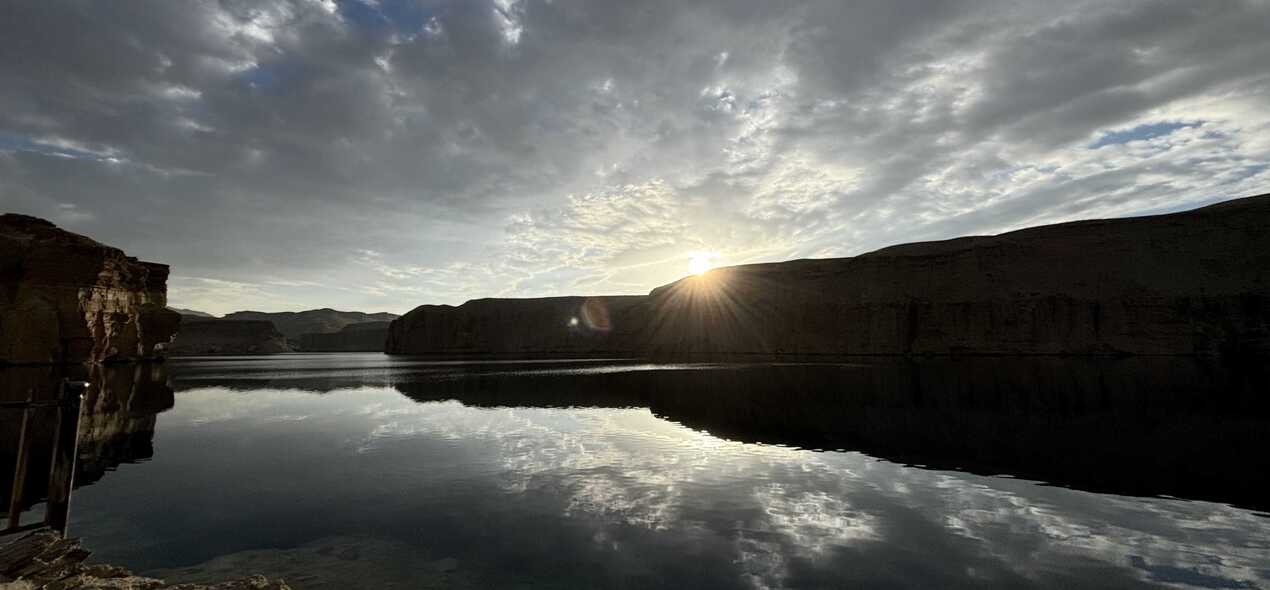
The turquoise lakes of Band-e-Amir, sitting at over 3,000 metres in the central highlands, are among the most beautiful natural sites in Asia. The bazaars of Herat contain the finest examples of traditional Afghan craftsmanship still being made. The Friday Mosque of Herat, with its tiled minarets and vast courtyard, is architecturally extraordinary. The Shrine of Ali in Mazar-i-Sharif, particularly during Nawruz when thousands of pilgrims gather and white doves wheel overhead, is one of the most visually striking Islamic sites on earth.
The restrictions that apply in Afghanistan are real and should be understood clearly. Women visitors must cover their hair and arms and legs in all public settings. Some sites are not accessible to women. The Band-e-Amir National Park lake, for instance, cannot be entered by women visitors; groups visit from the viewpoint above, which is spectacular in its own right. Music, alcohol and photography of women, military personnel and government buildings are prohibited.
The Taliban presence at checkpoints and sites is constant and should be engaged with patience and respect.
How do I get to Afghanistan?
What are the restrictions for women travelling in Afghanistan?
When is the best time to visit Afghanistan?
What currency and money do I need for Afghanistan?
What are the accommodation options?
A look back at Koryo Tour’s first women’s tours to Afghanistan, and an honest discussion on tourism in Afghanistan today.
Read full storyWhat it's like to visit an orphanage in Afghanistan
Read full storyKoryo Tours understands that some things don't always go to plan. Our generous refund policy on all Afghanistan tours means that you can leave a deposit risk-free and receive 100% refund on the deposit amount if you cancel within 40 days of the trip. We're also happy to hold your deposit for a future trip if you can't make it at the last minute. Your Afghanistan tour with Koryo starts the minute you find us here. So, we want you to have the best Koryo Tour possible!
You can read our full Terms and Conditions here.
[email protected] | + 86 10 6416 7544
WhatsApp (message only): +44 7822 014058