8 December 2024 is a date Syrians will mark for the rest of their lives. After more than fifty years of Assad family rule and fourteen years of catastrophic civil war, opposition forces swept into Damascus overnight, and Bashar al-Assad fled to Russia. The most significant political shift in the Arab world in a generation happened with a speed that caught almost everyone by surprise.
Syria was already one of the oldest continuously inhabited places on earth before any of this happened. Damascus is one of the oldest capitals in the world. Its lanes have been busy since at least the 3rd millennium BC. Aleppo traces its settlement even further back. The country was home to Phoenician traders, Greek colonists, Roman legions, and then, in the 7th century AD, became the seat of the first great Islamic empire - the Umayyad Caliphate, which governed the Islamic world from Damascus for nearly a century.
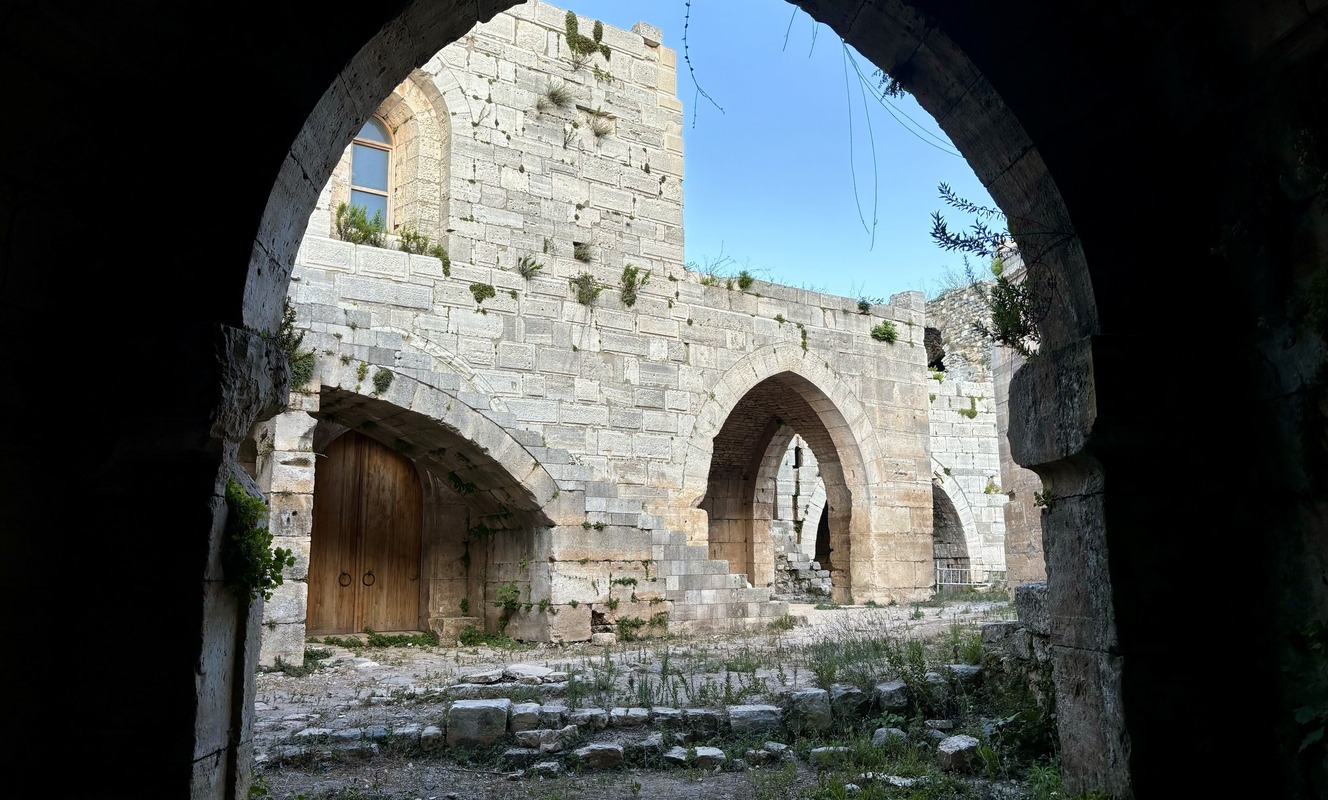
The Silk Road ran through it. Crusader castles still crown its hillsides.
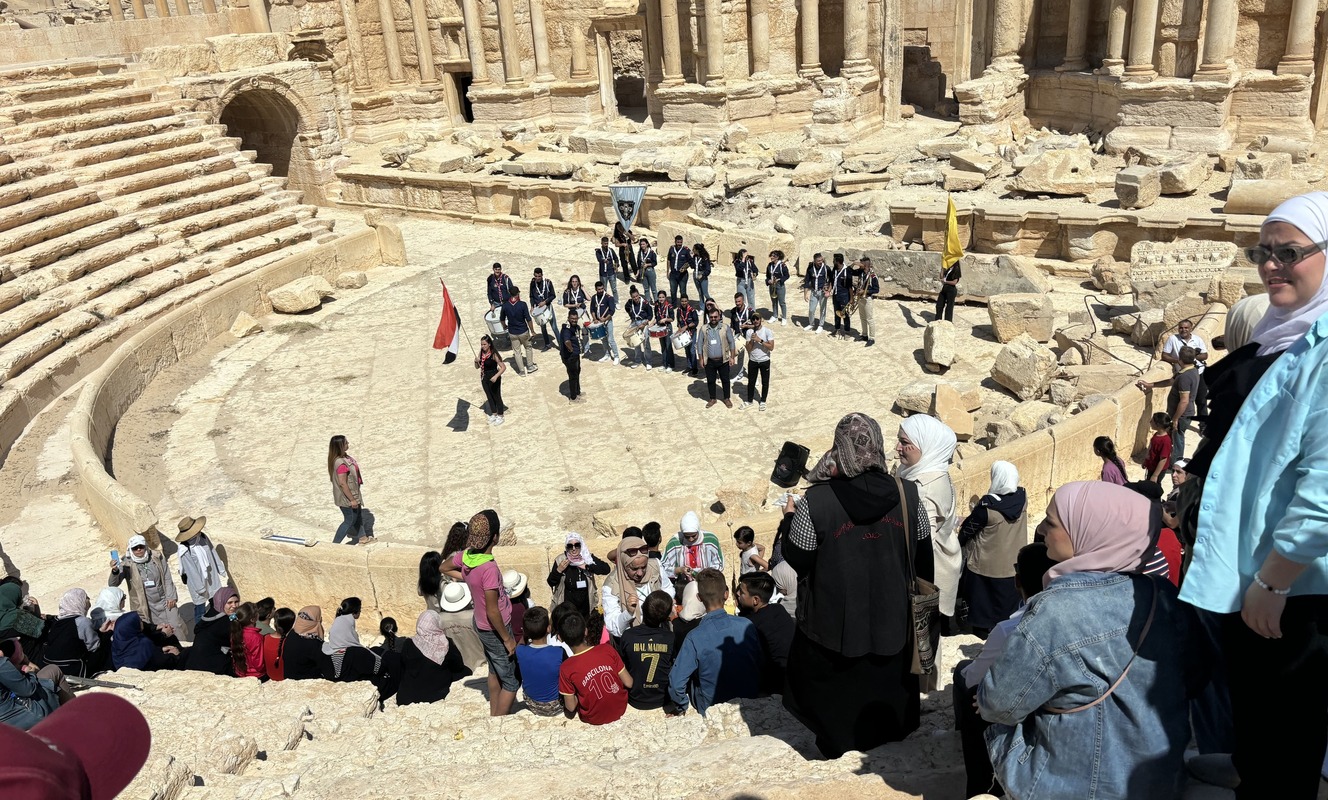
Palmyra, in the desert interior, was briefly an empire in its own right in the 3rd century AD, and its ruins, though badly damaged by ISIS, remain one of the most extraordinary archaeological sites in the Middle East.
And then came the Civil War. For fourteen years, Syria was a country that the world watched being destroyed. Its cities were bombed. Its population was scattered, millions fleeing to Turkey, Lebanon, Jordan and Europe. Its heritage sites were looted and in some cases, deliberately demolished. The human cost was almost incomprehensible.
What Syria is now is something new and still being defined. The transitional government under President Ahmed al-Sharaa is rebuilding institutions, reopening the country to the world and attracting international investment at a rate that reflects just how much pent-up goodwill there was for the country. Airlines absent for over a decade have resumed flights to Damascus and Aleppo. US sanctions have been substantially lifted. The EU has pledged hundreds of millions in reconstruction funding. And tourists, returning in growing numbers since the fall of Assad, are rediscovering what people who visited Syria before 2011 always knew.
One of the most historically rich and culturally generous countries in the Arab world. And Syrian hospitality is a category of its own.
It is not yet a simple destination. The transition brings its own uncertainties. Some areas remain sensitive. Travelling in Syria in 2026 means travelling through a country mid-transformation, with bombed-out streets alongside reopened restaurants, and sobering reminders of the past decade alongside real evidence of recovery.
If you want to understand how old Damascus is, consider this. By the time Rome was founded, Damascus had already been a city for over two thousand years.
The region that became Syria has been inhabited since the Neolithic period, and for most of recorded history, it has been at the centre of things.
Phoenician city-states flourished along the Syrian coast from the 2nd millennium BC, trading purple dye, timber and ideas with Egypt, Greece and the Aegean.
Alexander the Great arrived in 332 BC, and the Hellenistic world absorbed Syria into its cultural orbit, building cities, establishing trade networks and fusing Greek culture with the diverse civilisations already present. Rome followed. Syria was among the most prosperous provinces of the Roman Empire, and its ruins, at Palmyra above all, remain spectacular.
Palmyra deserves a moment. Sitting in the Syrian desert, it grew wealthy as a Silk Road trading hub and by the 3rd century AD had become powerful enough that its queen, Zenobia, declared independence from Rome, conquered Egypt and created a brief empire stretching from Turkey to Sudan.
Rome crushed the rebellion in 273 AD, but the temples, collonaded streets and theatre Zenobia left behind stood magnificently until 2015, when ISIS arrived and spent two years systematically demolishing them. Much of Palmyra is still magnificent. Some of it is gone.
The Arab conquest of Syria came in 636 AD and transformed the region permanently. Damascus became the capital of the Umayyad Caliphate, the first great Islamic empire, governing a realm that stretched from Spain to Central Asia.
The Umayyad Mosque, built on the site of a Byzantine church and before that a Roman temple, is one of the oldest and most significant mosques in the Islamic world and still stands in the heart of the old city of Damascus. The city was the centre of the Islamic world for nearly a century.
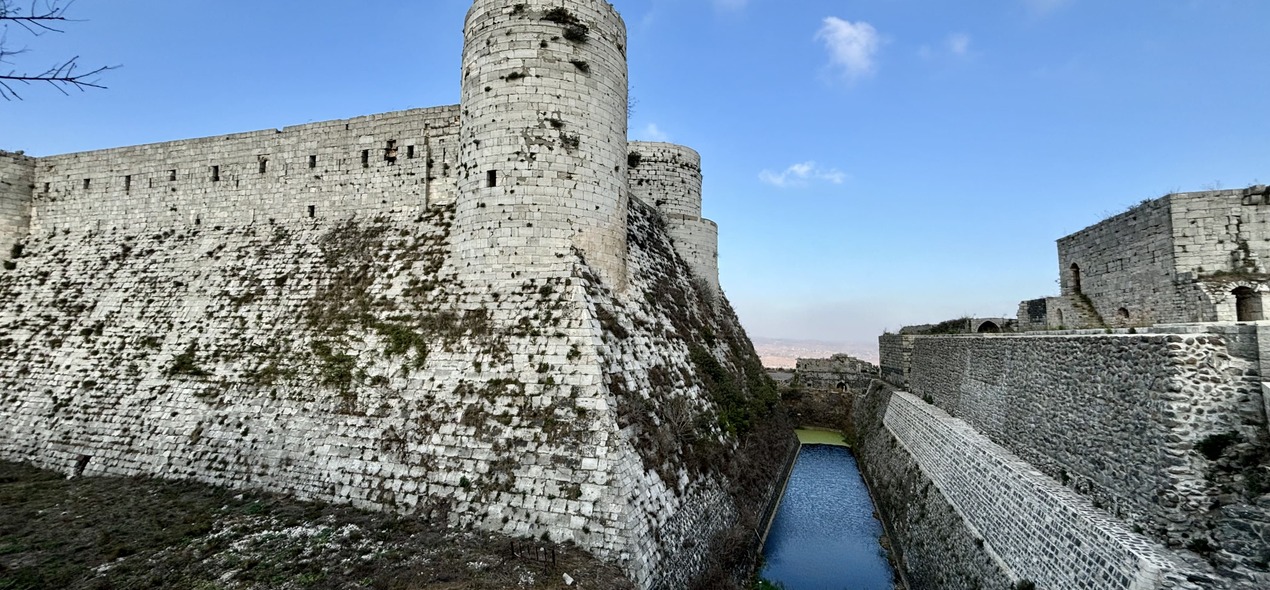
The Crusaders arrived in the 11th century and built some of the finest medieval castles ever constructed, of which Krak des Chevaliers is the greatest example. Saladin drove them from most of Syria by the late 12th century.
The Mongols arrived in 1260 and sacked Aleppo before being defeated by Egyptian forces at the Battle of Ain Jalut in what proved to be the Mongols' first major military reversal. The Mamelukes who defeated them ruled Syria for two centuries until the Ottomans arrived in 1516.
The Ottomans held Syria for four centuries. In many ways, it was a period of stability and commercial prosperity. Aleppo became one of the most important trading cities in the eastern Mediterranean, its bazaars drawing merchants from across Europe and Asia.
Damascus remained a significant city on the pilgrimage route to Mecca, its crafts and textiles famous throughout the region.
Syrian independence, achieved in 1946 after a French Mandate that began after the First World War, was followed by decades of political instability. Multiple coups, competing pan-Arabist movements and governments that none of them lasted long.
In 1970, a military officer named Hafez al-Assad seized power and ended the instability by replacing it with something worse - one of the Arab world's most comprehensive and enduring authoritarian systems.
He built a security state of extraordinary reach, ruled for thirty years. When he died in 2000, his son Bashar inherited the presidency in what was supposed to be a reforming transition. It proved not to be.
When the Arab Spring reached Syria in March 2011, protests calling for political reform were met with a violent crackdown.
The crackdown turned protests into armed resistance and armed resistance into a full civil war that drew in Iran, Russia, Turkey, the United States, Saudi Arabia and dozens of other actors. Islamic State exploited the chaos to establish its self-declared caliphate across large parts of eastern Syria and northern Iraq.
Cities were bombed into rubble. Millions fled. The Syrian government used chemical weapons. By the war's most brutal years, approximately half of Syria's pre-war population had been displaced.
The end came suddenly and dramatically. In late November 2024, Hayat Tahrir al-Sham launched an offensive from its Idlib stronghold.
In eleven days, it took Aleppo. Within two weeks, its forces were in Damascus. On 8 December 2024, Bashar al-Assad boarded a plane to Russia. The Assad dynasty was over.
The Syria that exists now is rebuilding itself from scratch, with a transitional government, massive reconstruction challenges, and ongoing political uncertainty. The coming years will determine what Syria becomes.
Syria is one of the most significant additions to the accessible world in recent years, and things are moving quickly. What travelling Syria offers right now is an honesty and an openness that comes from a people who have been through an extraordinary amount and are still standing.
The fall of Assad in December 2024 removed the main practical barrier to visiting for most Western travellers - the risk of association with his security apparatus and the prohibition on any meaningful engagement with Syrian civil society.
Since early 2025, the visa situation has been substantially simplified, airlines have resumed, and a growing number of operators have been running groups to Damascus, Aleppo and beyond. Many nationalities can now obtain a visa on arrival at Damascus International Airport and at land border crossings from Lebanon and Jordan. The process is straightforward and does not involve the vetting apparatus of the Assad era.
What you can visit is expanding month by month.
Damascus and its UNESCO-listed old city are fully accessible, and the experience of walking the lanes of the old city, past the Umayyad Mosque and through the Hamidiyah Souq, is one of the great urban experiences in the Middle East.
Aleppo is open, its citadel accessible, its ancient souq in the process of reconstruction. Krak des Chevaliers is reachable and magnificent. Palmyra is accessible, though significantly damaged.
The Christian village of Maaloula, where Aramaic, the language of Jesus, is still spoken as a living language, is a short drive from Damascus and an extraordinary place. Idlib, formerly entirely off-limits, is now visitable for the first time in years.
Some areas should currently be avoided. So, it is wise to check with operators beforehand.
Syria asks something of its visitors... an engagement with what happened here, not just a photograph of what survived. And what survived is remarkable. The food is exceptional. The old cities are extraordinary. And the Syrian people, after fourteen years of war and fifty years of dictatorship, deal with foreign visitors with a warmth that is genuinely hard to account for, given everything they have been through. If you have been waiting for a moment to visit Syria, this is as close to the beginning of that moment as it is possible to get.
Is Syria safe to visit?
Do I need a visa for Syria?
What is the best time to visit Syria?
How do I get to Syria?
What currency do I use in Syria?
Damascus is mentioned in the Bible several times, even before Saul's conversion in the New Testament. Here's what the Bible actually says, and what you can still see in the city today.
Read full storyEleven days with Koryo Tours across Syria, one of the most historically rich and misunderstood countries in the world, all happening during the holy month of Ramadan. This is what it looked like: the food, the people, the Roman ruins, and yes, the missiles we definitely didn't have on the itinerary, as well as a surprising ending in Amman, Jordan.
Read full storyKoryo Tours understands that some things don't always go to plan. Our generous refund policy on all Syria tours means that you can leave a deposit risk-free and receive 100% refund on the deposit amount if you cancel within 40 days of the trip. We're also happy to hold your deposit for a future trip if you can't make it at the last minute. Your Syria tour with Koryo starts the minute you find us here. So, we want you to have the best Koryo Tour possible!
You can read our full Terms and Conditions here.
[email protected] | + 86 10 6416 7544
WhatsApp (message only): +44 7822 014058