Tajikistan is a mountainous republic nestled in the heart of Central Asia, home to approximately 10.5 million people. The country is starkly divided between the more populous west, which is home to the capital and the country’s other major cities, whilst the east is dominated by the Pamir Mountains. The Pamiri region is much more isolated, with winding mountain roads and passes connecting distant towns and villages together. The country borders Afghanistan to the south, China to the east, and its Central Asian neighbours Kyrgyzstan and Uzbekistan to the north and west, respectively.
Tajikistan is predominantly mountainous, with 93% of the country covered by mountain ranges; the country is home to the highest peaks outside of the Himalayas. Due to this remote nature, the country is often considered to be the least-visited but perhaps most spectacular destination in the region.
The capital of Tajikistan is Dushanbe, literally meaning ‘Monday’ in Tajik. It is named for a traditional local market which existed centuries ago in the region. As with much of the area, the cities and centres of Tajikistan have been defined by the historical trade routes that made up the Silk Road. With the formation of the Soviet Union, Dushanbe developed rapidly, becoming a modern, planned city characterised by classic Soviet-style architecture, parks and boulevards.
Beyond the Silk Road, Tajikistan is perhaps best defined as a crossroads of Empires. The region has historically been heavily influenced by the Persian Empire, which once stretched to cover the entire area, and the Greek Kingdoms following the conquests of Alexander the Great. With the downfall of Greek control, the area came under the command of various Islamic empires, from the Arab caliphate to the Samanid Empire. With the rise of the Russian Empire during the 1800s, the area controlled by the Emirate of Bukhara came under de facto control by Moscow, expanding the Russian sphere of influence deep into Central Asia. It would later become a core republic of the Soviet Union.
The Samanid Empire, centred around the city of Bukhara, is proclaimed. This period is often considered to be the genesis of Tajik culture and society.
Chinggis Khan and the Mongol Empire began their control over Central Asia following the rapid expansion of their land empire through the Mongol invasions.
Central Asia once again comes under the rule of Bukhara, with the Bukhara Khanate controlling much of the region. This would later become the Emirate of Bukhara.
The ever-expanding control over Central Asia by the Russian Empire brought much of present-day Tajikistan under rule by Moscow. This takeover kick-starts ‘The Great Game’ in which the British and Russian Empires covertly compete for dominance in the regions surrounding Afghanistan.
Following the establishment of the Union of Soviet Socialist Republics in the former Russian Empire, a newly autonomous region was established within the young Uzbek Soviet Socialist Republic. The Tajik Autonomous Soviet Socialist Republic. In 1928, the Tajik Soviet Socialist Republic is proclaimed, formally splitting from the Uzbek republic and becoming a full constituent member republic of the USSR.
As the Soviet Union crumbles, Tajikistan declares independence, but a year after Civil War erupts between the new central government of Tajikistan and various opposition and independence groups.
A peace treaty was signed, formally ending the civil war. ‘The General Agreement on the Establishment of Peace and National Accord in Tajikistan’ creates a nationwide consensus between the warring factions, establishing the political and social contract which continues to exist in Tajikistan.
Tajikistan can be clearly split into three core regions. The Pamir Mountains of the East, the Fann Mountains of the Northwest, and the Western and Central valleys around Dushanbe.
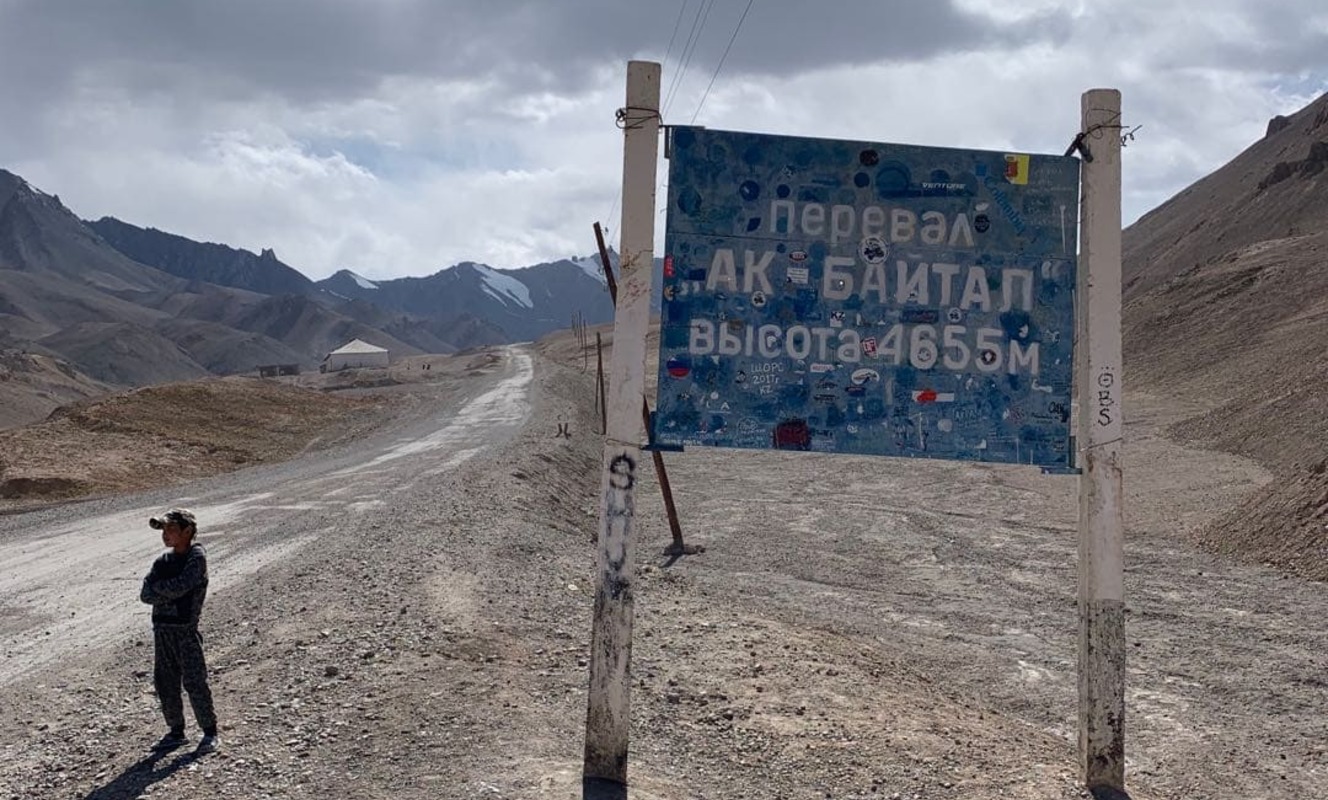
The Pamir Mountains are a particularly popular destination for hiking, cycling, and road trips along the eclectic M41 Pamir Highway. The area has gained the nickname ‘The Rooftop of the World’ due to its incredible scenery and sparse population.
Travelling through the region, you get the chance to explore isolated villages and towns, travel along the Wakhan Valley where the Pamir River marks the Afghan-Tajik border, and visit some stunning natural wonders like Karakul Lake.
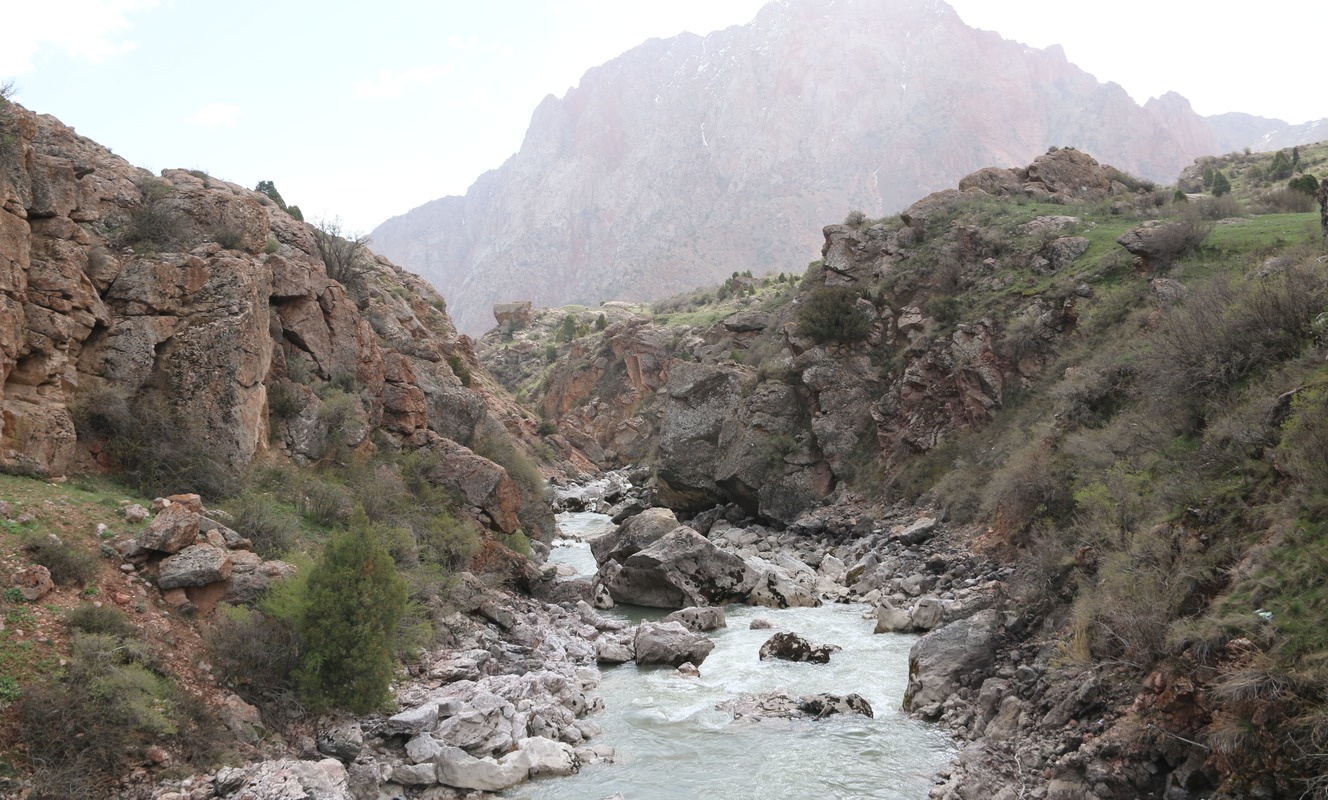
The Fann Mountains of the northwest are similarly wondrous in their natural landscapes, although much more accessible than the Pamirs. These sharp granite peaks hide some of the country’s other major cities, like Khujand and Panjikent.
This region is also home to some hidden treasures, such as the famed Tunnel of Death and the Khoja Obi Garm Health Spa, a Soviet sanitorium built into the side of a mountain.
Finally, the central and western regions of Tajikistan are much more fertile and densely populated compared to the mountain regions. This makes them much more accessible, and certainly gives a more bustling feel, with ancient silk road trading towns having grown into modern farming communities and modest urban centres.
During travel to Tajikistan, it’s best to use 4x4s since the terrain can be rough. Road conditions vary throughout the year. Generally, much of the eastern Pamiri region becomes tricky to access during winter due to heavy snows covering many valleys and mountain passes. However, car travel provides the best access to some of the most remote parts of the country and a chance to sit back and enjoy the majesty of the landscape you’re travelling through.
Food in Tajikistan is heavily influenced by the traditions of Persia and Central Asia. Classic dishes include Plov, the national dish in Tajikistan, which consists of rice cooked with a mix of meat, vegetables and spices. Other famous and popular dishes often include lamb and beef as the most popular meats, and rice as the staple core of most meals.
Tajikistan is well-suited to both independent travel and group tours. Although it’s important to always have a local guide and driver to make sure your adventure goes off without a hitch, and to ensure you don’t miss any of the incredible history, culture and tradition which defines the country.
Do I need a visa to visit Tajikistan?
When is the best time to visit Tajikistan?
Is it safe to travel in Tajikistan?
What language is spoken in Tajikistan?
What currency is used and how do I access money?
Koryo Tours' Rich Beal recounts his first expedition into the Pamir Mountains!
Read full storyBuzkashi is more than just a sport. Here's how to see Buzkashi in Tajikistan - and how to get the most of your experience.
Read full storyKoryo Tours understands that some things don't always go to plan. Our generous refund policy on all Tajikistan tours means that you can leave a deposit risk-free and receive 100% refund on the deposit amount if you cancel within 40 days of the trip. We're also happy to hold your deposit for a future trip if you can't make it at the last minute. Your Tajkistan tour with Koryo starts the minute you find us here. So, we want you to have the best Koryo Tour possible!
You can read our full Terms and Conditions here.
[email protected] | + 86 10 6416 7544
WhatsApp (message only): +44 7822 014058