Kazakhstan is Central Asia’s giant. More massive than all the other ‘stans combined and is the largest landlocked country in the world.
Kazakhstan exists on a scale hard to conceptualise until one is travelling within it, with the geography and topography unfolding across vast snow-capped mountains, stunning canyons, and the enormous grassy steppe that defines the majority of the landmass. With coasts to the west on both the inland Caspian Sea and the shrinking ecological disaster zone of the Aral Sea, Kazakhstan offers range and distance to any visitor.
It is also the most accessible of the Central Asian states. No visa is required for most visitors. Well-developed and linked major cities. And an impressive amount of development in urban areas in the independence era.
This is balanced with harder-to-reach but very rewarding remote areas and sites, which creates an excellent balance for those seeking an unusual adventure along with some periods of comfort on a trip.
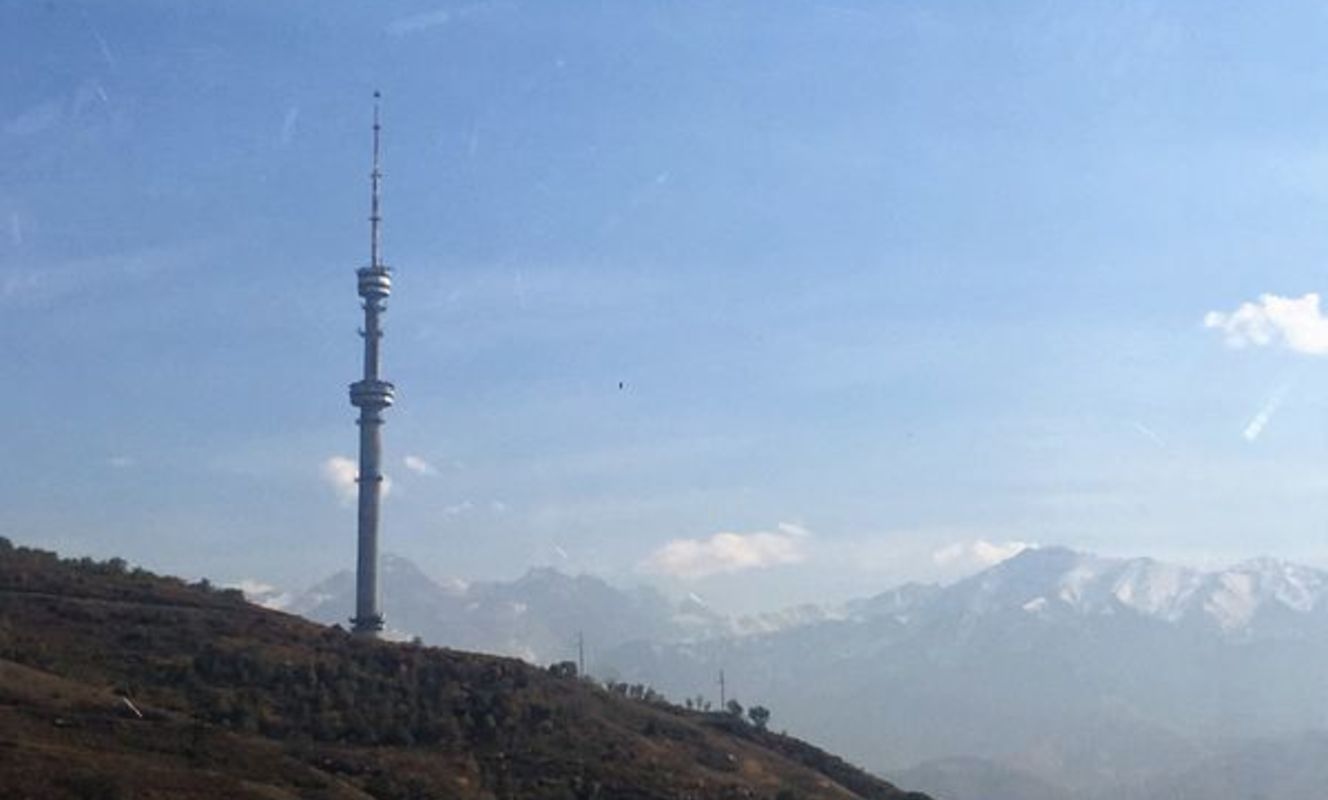
Urban Kazakhstan is booming, with the architecturally stunning capital of Astana exploding in size and population, while the old capital of Almaty remains the most lovely and liveable city in all of Central Asia.
Secondary settlements such as Karaganda, Pavlodar, and Semey are also impressive and lively, while sleepier towns and villages, some of which are semi-abandoned, often demonstrate some of the struggles faced by such places in an age of globalisation and the draw of the larger cities.
Despite this, Kazakhstan’s nomadic pastoralist traditions remain an important part of the culture. This, even though this is not a history shared by a large minority of the population, which is made up of dozens of nationalities, some in large numbers – Russians, Koreans, Volga Germans, Uzbeks, Ukrainians, and so on.
As Kazakhstan was a dumping ground for those on the wrong side of Stalin’s ethnic paranoia in the 1930s and 40s, the mix of people is notable across the country. One of the most interesting and notable tensions in modern Kazakh society is the pull between a modernising country and the nomadic tradition.
Economically, oil and gas from the west are the main assets, even while the development driven by the profits of these industries happens mostly in the east.
Politically, Kazakhstan is in a period of change, with the decades-long rule of strongman Nursultan Nazarbayev coming to an end only in 2019 and a more open regime coming to power. Nazarbayev lives on, though and wields considerable influence still. So, the direction that the state will move in is often guesswork from both within and without.
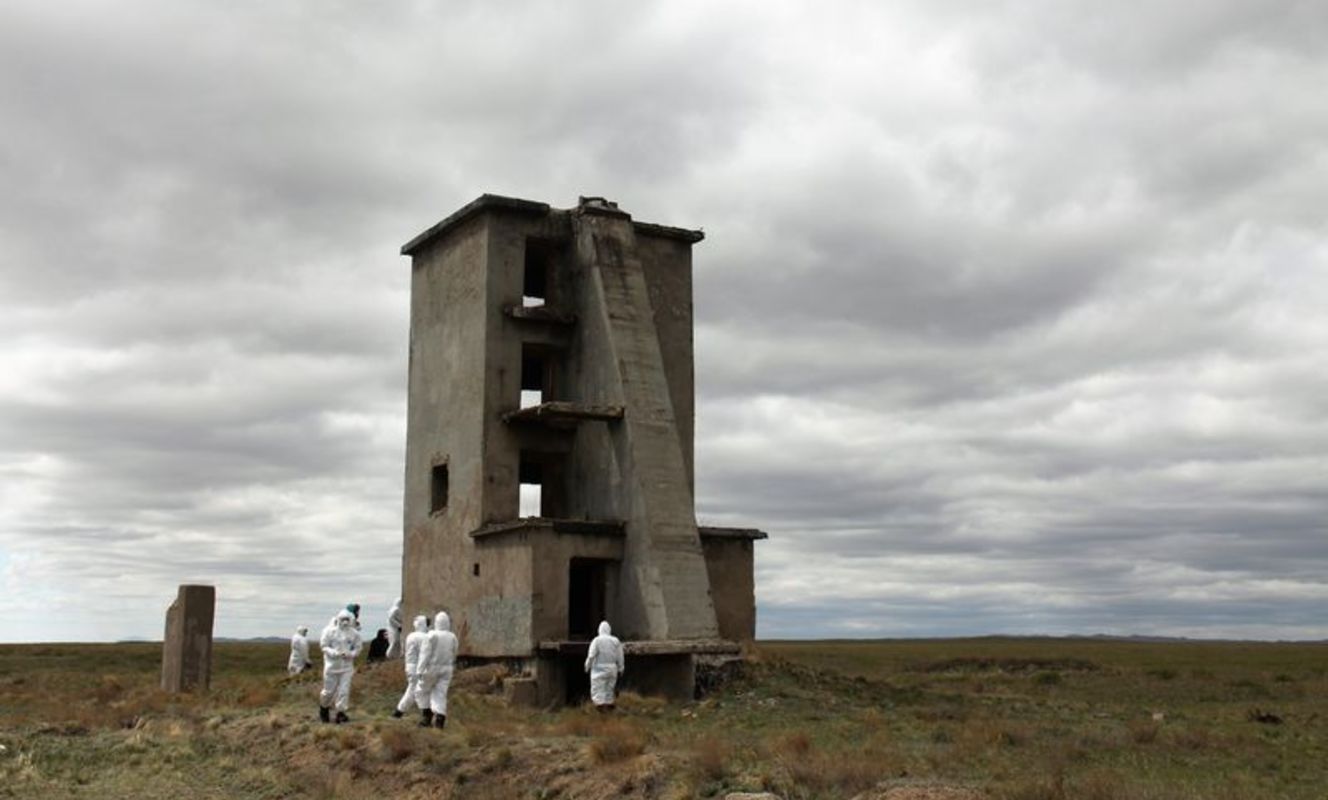
A balance of tradition and modernity. Crumbling and building, busy cities and empty steppe, recognisably globalised yet still possessed of soviet relics and ruins (some radioactive!), Kazakhstan offers a wide range of experiences for any curious and engaged visitor willing to put in the miles and keep their eyes and mind open.
The territory that makes up modern Kazakhstan has been inhabited for tens of thousands of years. By the time of the Bronze Age (roughly 3000-1000 BCE) horses were even domesticated by the Botai Culture.
A series of nomadic confederacies dominated from around 1000BCE. Scythians, Samaritans, Huns, Turkic Khaganates, all made use of the Silk Road and interconnectedness of the far-flung settlements heading both east and west to expand their power, butt up against other states and empires, and mark their names in the history books.
In the 13th century, the Steppe became completely Mongolised as Genghis Khan’s unstoppable forces swept all before them. As this empire settled, Kazakhstan became part of the Golden Horde and then its successor Khanates.
A specific Kazakh Khanate emerged in the 15th century, formed by a merging of Turkic and Mongol peoples, which stands as perhaps the key period in ‘Kazakh’ tradition and history, with practices from this period still being considered as classic traditional Kazakh ways of life.
By the 18th century, though, the days of steppe warriors sweeping west to annihilate and bother the states of the near east and the west itself were over.
New players were in the ascendant, and even though Russia was perhaps the least modern of the modern European powers, it was still the local one and was able to expand rapidly into Central Asia. In Kazakhstan specifically, they played a clever game by exploiting the threat of the expanding Dzungar Khanate to the east by offering the Kazakhs an alliance, which ended with this territory being absorbed into the Russian Empire by the middle of the 19th century.
With Russian rule came a suppression of nomadic life, an influx of Slavic settlers, and an ascendance of Russian culture, which was seen as alien by many ruled by the new masters.
As the USSR succeeded the Russian Empire, and after the bloody Russian civil war, which also touched Kazakhstan too of course, the most devastating period in modern Kazakhstan occurred. The forced collectivisations of the 1920s & 30s led to a terror famine, known as Asharshylyk in Kazakh, that killed or forced into flight up to two million people (around a third of the population), and brought what remained of Kazakh society under the soviet heel.
With industrialisation and urbanisation, a new focus was put on people to work in new fields, and to complete mega projects over the decades.
The Steppe became a testing ground for a wide range of experiments and projects, from the Virgin Lands Campaign to the Baikonur Cosmodrome for space exploration, and of course, the use of Kazakhstan for hundreds of Atomic Weapons tests, with the associated effects and controversies lasting to this day. Kazakhstan was also home to a range of gulags for both criminal and political elements from the 1920s until the dissolution of this system in 1960.
The remnants of this dark history last on in Kazakhstan, and the whole Soviet period remains a complex one. Extremely awful periods and occurrences were endured, while a great modernisation took place, literacy and culture bloomed, and many feudal practices were ended.
It is fair to say that this remains a complex and not-simply-defined era in Kazakhstan.
As the USSR crumbled in 1991, Kazakhstan was the last to leave, declaring itself independent in December of that year.
With Nursultan Nazarbayev taking the reins as a nationalist leader rather than an apparatchik of Moscow, the economy grew thanks to oil revenues. The labour pains of a new society, familiar across the former USSR, rose and settled eventually.
Kazakhstan became a stable state with amiable relations with its major neighbours, China and Russia, and while Nazarbayev did not tolerate opposition, he also headed a more liberal and reliable state than most of his neighbours, and benefited from the comparison.
As power passed to only the second president in independent Kazakhstan, society experienced some unrest in ways that would have been unthinkable previously. Protests and so on, and it is partly this unresolved tension and potential for any number of directions to be taken that make Kazakhstan so worthy of attention and interest today.
Kazakhstan is the most straightforward of the Central Asian countries to visit. With flights to many major airports worldwide, no visa for most people, and easy to navigate major cities, a simple trip here is very easy for most people.
However, the scale of the country makes longer and deeper trips somewhat more complex and the distances are vast and some of the more unusual areas require some planning.
There is a reliable rail network of sleeper trains between major settlements, including some ‘high-speed’ rail, as well as roads linking towns, cities, and stretching deep into the steppe.
Domestic flights are offered by various airlines competitively as well, so infrastructure is decent and usually reliable. Planning is key, and improvising a path to out-of-the-way parts of Kazakhstan is not advised.
Most visitors arrive by plane to either of the two biggest cities - Almaty or Astana. Starting in one and finishing in another is common and advised. Each has good public transport, lively cultural scenes, great food and drink options, and much to see and do in and around the cities.
Secondary cities have not been ignored, but a Soviet-era vibe remains in many industrial areas with identikit apartment buildings and monumental propaganda pieces easily found. In some areas, notably Kurchatov, the former base of the nuclear weapons program, as well as areas around the huge Lake Balkhash, semi-abandoned settlements and a somewhat literal postapocalyptic vibe can be sensed. The range of lives it is possible to glimpse at is unexpected and telling for a complex country in an extended period of change.
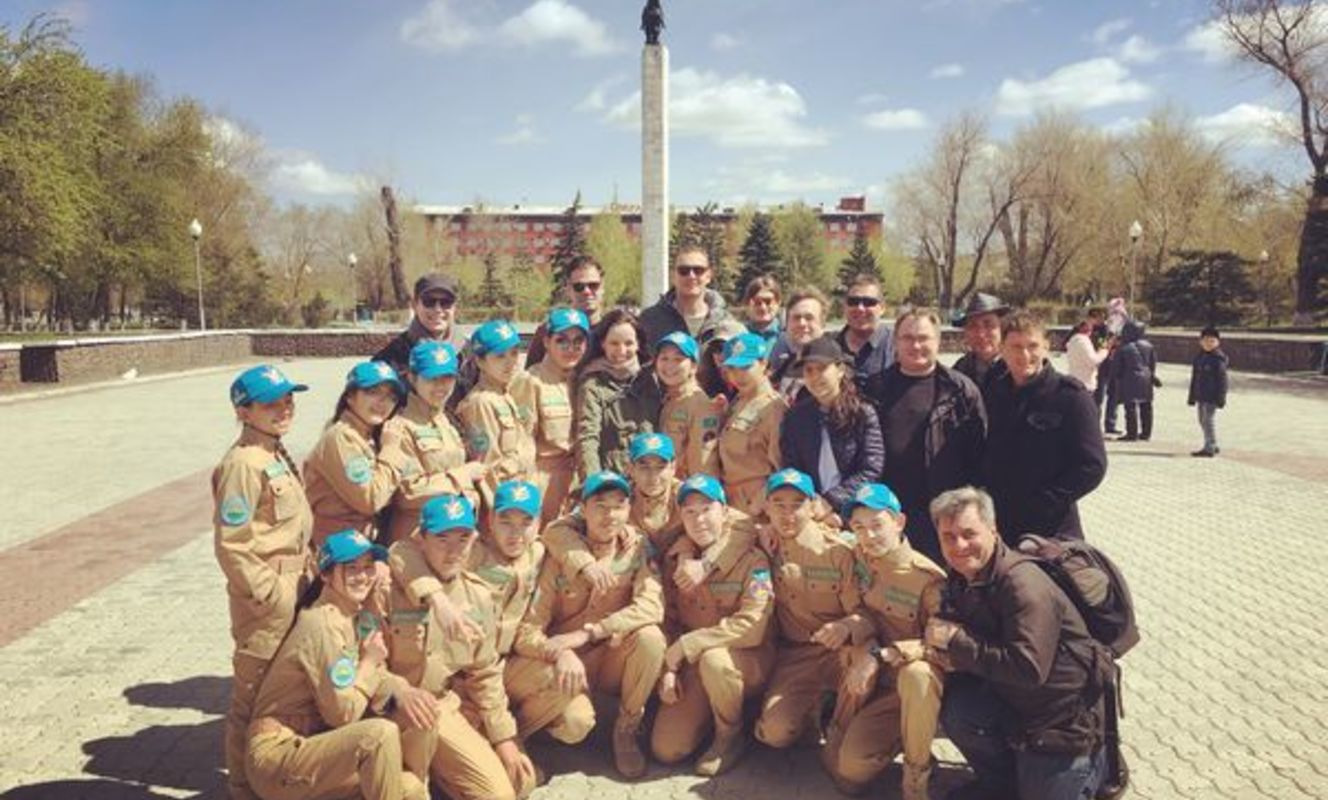
For all that we focus on the scale and variety of Kazakhstan the country and landmass, one of the major reasons to visit is the hospitality of the people. A nomadic tradition kept alive in the post-monadic age.
People are generally welcoming, kind, accommodating to visitors, accepting of differences and making friends, developing contacts, being invited to homes and events by locals, are all far more common than in some neighbouring countries.
Koryo Tours has operated for many years in Kazakhstan, cultivating a relationship with local partners, with those we encounter on every trip, and exploring widely to offer a curated experience in a place that defies easy explanation.
From city to steppe, from ruin to modernity, and all places in between, we offer the best way to see and experience this amazing country.
Do I need a visa to visit Kazakhstan?
Do I need a guided tour of Kazakhstan?
When is the best time to visit Kazakhstan?
Is it safe to visit Kazakhstan?
What language is spoken in Kazakhstan?
Kazakhstan is one of the most exciting destinations in Central Asia, and if you need an explanation on why you would visit Kazakhstan with Koryo Tours, here's why!
Read full storyThe Aral Sea. Once a vast expanse of water, this inland sea has become a haunting reminder of unchecked exploitation and environmental degradation. In this blog, we delve into the tragic tale of the Aral Sea's decline.
Read full storyHow to travel Kazakhstan in 2024? 10 Steps to get you there and make the most of it!
Read full storyKoryo Tours understands that some things don't always go to plan. Our generous refund policy on all Kazakhstan tours means that you can leave a deposit risk-free and receive 100% refund on the deposit amount if you cancel within 40 days of the trip. We're also happy to hold your deposit for a future trip if you can't make it at the last minute. Your Kazakhstan tour with Koryo starts the minute you find us here. So, we want you to have the best Koryo Tour possible!
You can read our full Terms and Conditions here.
[email protected] | + 86 10 6416 7544
WhatsApp (message only): +44 7822 014058