Once one of the richest regions on Earth, Bangladesh is a relatively young nation that gained independence from (West) Pakistan in 1971. In the late 18th century, the British East India Company colonised the territory known today as Bangladesh. This sparked systematic colonial exploitation and the dismantling of its textile industry to favour British manufacturing.
By the time the British left in 1947, this former macroeconomic powerhouse of the textile industry, shipbuilding, and trade, Bangladesh has become one of the poorest and most famine-prone regions of Asia. But at the same time, one of the most incredibly unique and intriguing.
Decolonisation did not bring immediate freedom. The Bengali people were culturally and politically suppressed by the ruling elites of West Pakistan. Following a nine-month liberation war and genocidal suppression by the Pakistani Army, they ultimately gained independence in 1971.
After independence, modern Bangladesh became heavily reliant on a highly exploitative, export-oriented textile industry that produces ready-made garments for global fashion brands. A former textile-producing powerhouse now relies on an industrial sector that offers low wages and creates hazardous working conditions for millions of women.
Climate change affects Bangladesh disproportionately. The nation is continuously hit by an increasing number of severe tropical cyclones, while rising sea levels slowly submerge precious agricultural lands. It is predicted that by 2050, almost a fifth of Bangladesh's territory will be claimed by the Bay of Bengal, creating a domestic climate-refugee crisis.
Dhaka and Central Bengal are the political, cultural, and industrial centre of Bangladesh. It features Mughal, colonial, and modern architecture, the main points of interests are Old Dhaka and Sonargaon.
Southern Bengal is dominated by its extensive river networks and by the symbiosis with the Bay of Bengal. Sundarbans, a UNESCO World Heritage Site, is home to the world’s largest mangrove forest and many animal spices, like the Bengal tiger, river dolphins, saltwater crocodiles, and hundreds of different types of birds.
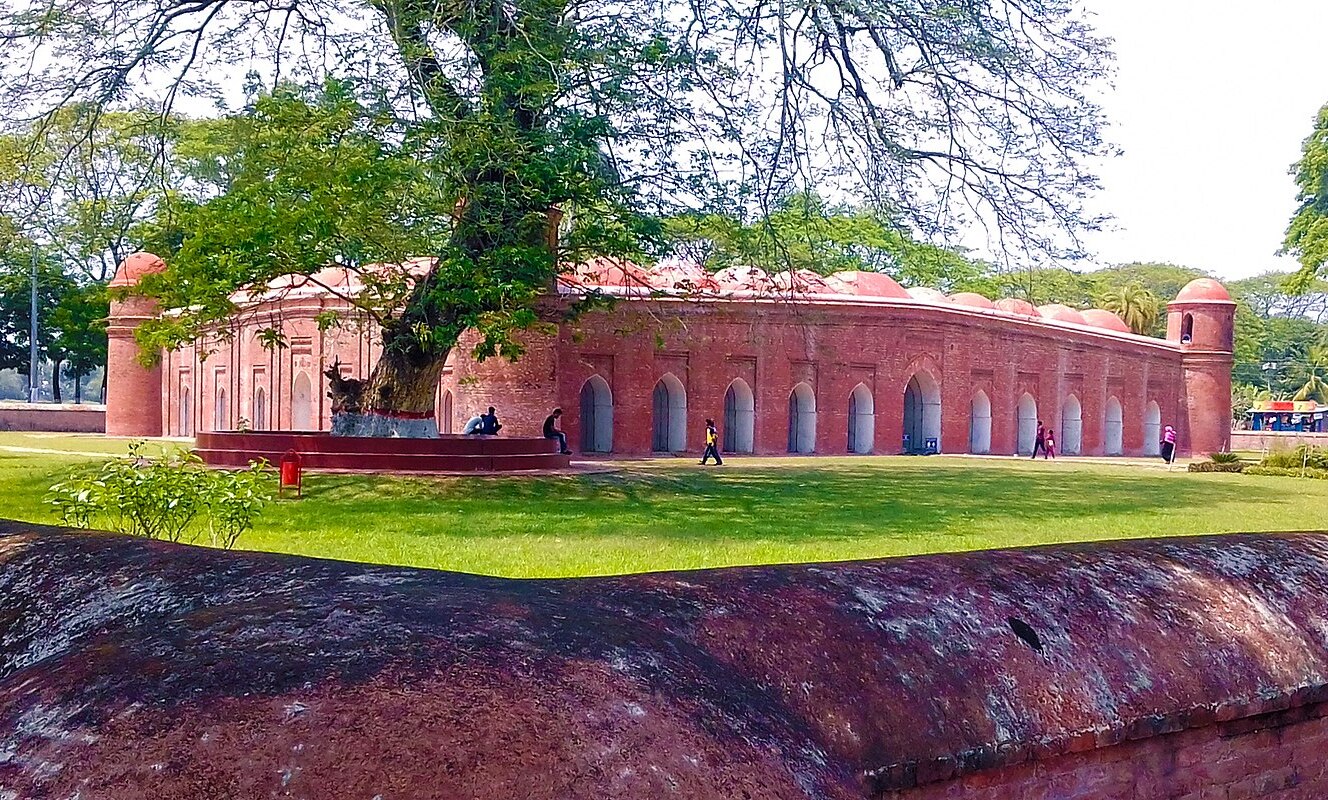
Northern Bengal is the agricultural heartland of Bangladesh and home to Bengal’s ancient silk trade. The region is also rich in history. The main points of interest are the UNESCO World Heritage Site Sompur Mahavihara. One of the most famous ancient Buddhist monasteries, the Hindu city of Puthia, and Mahasthangar, the earliest urban archaeological site in Bangladesh.
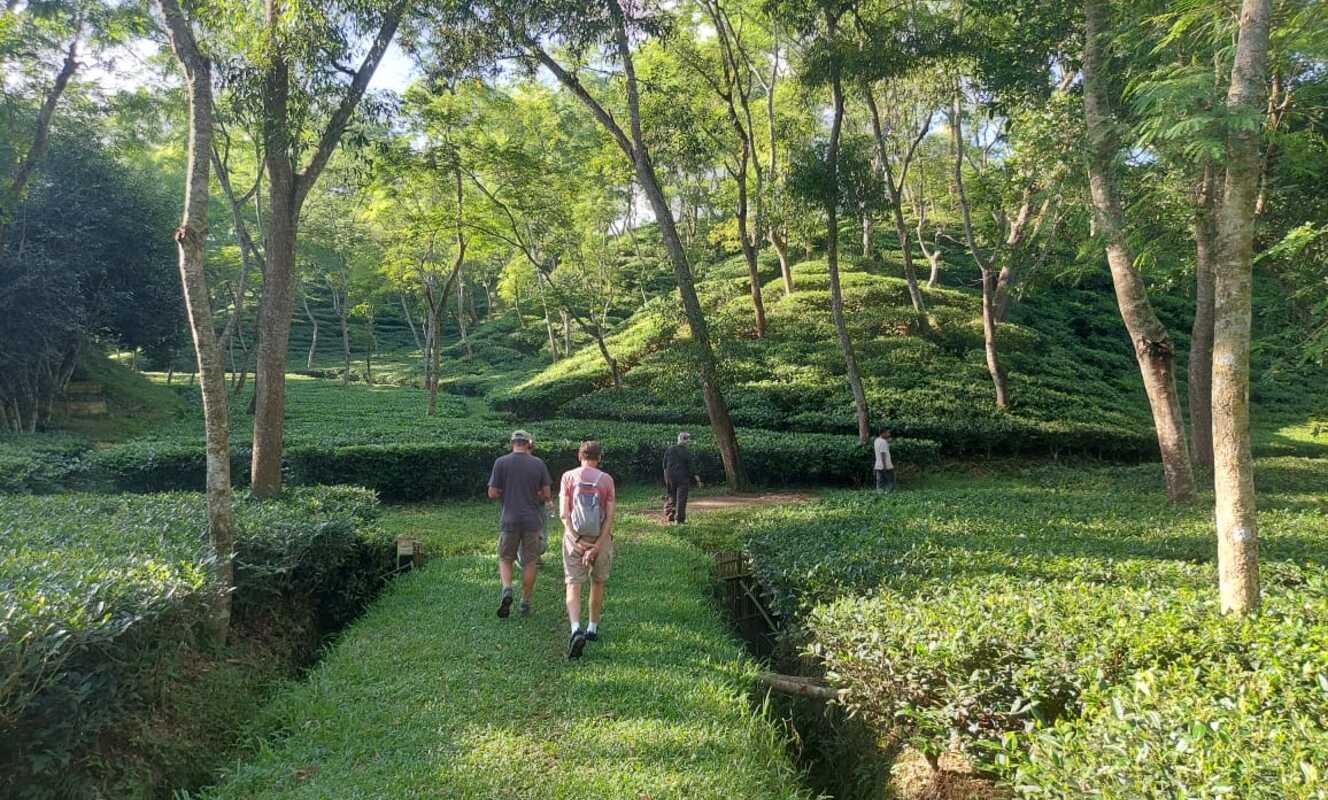
Eastern Bengal offers a combination of rolling hills, tea plantations, wetlands, and beaches. Cox’s Bazar is the world’s longest unbroken sandy beach, while Sylhet is the tea capital of Bangladesh. Chittagong is Bangladesh’s main port and also home to the infamous shipbreaking yards that are normally off limits to visitors.
The first independent and unified kingdom in Bengal, the Gauda Kingdom, emerges. In 750, the Pala Empire is born, turning Bengal into an important center of Buddhist art and learning. The first Bengali texts emerge during this era.
The Sena Dynasty takes power from the Pala Empire, transforming Bengal into an orthodox Hindu territory and reshaping the Bengali society along the caste system and Kulinism.
Start of Islamic rule in Bengal after the defeat of the Hindu king by Bakhtiyar Khalji, a Turko-Afghan military general. After his death in 1206, the Delhi Sultane takes control. Shamsuddin Ilyas Shah unites the regions of Bengal in 1352 and declares independence from the Delhi Sultanate, creating the Bengal Sultanate. Bengal becomes a rich global hub of trade and textile production.
Bengal became a province of the Mughal Empire after the lost Battle of Tukaroi in 1575.
Bengal Subah becomes an independent state ruled by the hereditary ruler known as the Nawab of Bengal.
The British victory in the Battle of Plassey over the Nawab of Bengal laid down the political foundations for the colonisation of India by the British East India Company. In 1765, the Treaty of Allahabad grants Diwani rights to the British East India Company, meaning that the Company had the right to collect land revenues from the population of Bengal. Start of effective British colonial rule. The Great Bengal famine of 1770 claimed the lives of one-third of the population. The famine was caused a continuous drought and the exploitative economic policies of the Brith East India Company.
The establishment of the British Raj marked a transformation in rule over India from the East India Company to the Crown. Queen Victoria becomes the Empress of India.
First partition of Bengal into Hindu-dominated West Bengal and Muslim-dominated East-Bengal as means for Britain’s rule and divide policy. Protests followed the partition, resulting in the reunification of the Bengal Presidency in 1911.
The Bengal famine of 1943 kills between 800,000 and 3.8 million people caused by the colonial wartime policies of Winston Churchill’s War Cabinet.
Following the Partition of British India into an independent Muslim-majority Pakistan and independent Hindu-majority India, the territory of Bangladesh became East Pakistan (known as East Bengal until 1955), separated from West Pakistan by roughly 1,400 kilometres of Indian territory.
Height of the Bengali Language Movement, a political movement advocating for the recognition of Bengali as an equal second language of Pakistan. In 1947, only Urdu, the official language of the West, was recognised as a state language.
Bangladesh Liberation War and Bangladesh genocide. Tensions escalated after the elections of 1970. The East Pakistani politician Sheikh Mujibur Rahman’s party won the election, but the West Pakistani elite refused to hand over the power. The Pakistani army then launched an ethnic cleansing and political reprisal campaign, culminating in the Indo-Pakistani War. On 16 December, Dhaka is liberated and the Pakistani Army surrenders. In 1972, the Indian Army leaves Bangladesh, the Constitution of Bangladesh became effective.
In the first general elections, Bangladesh joined the Non-Aligned Movement. The year after, the Bangladesh famine of 1974, one of the worst in the 20th century claims the life of between 450,000–1.5 million people, according to the experts. The famine was caused by flooding, government mismanagement, and foodgrain smuggling.
The second half of the 1970s and 1980s is characterised by autocracy and military coups that were triggered by the introduction of one-party rule followed by the assassination of Sheikh Mujibur Rahman. The mass pro-democracy protests in 1990 led to democracy but political polarisation led to a military-backed caretaker regime in 2007-2008. In 2009, Sheikh Mujibur Rahman’s daughter, Sheikh Hasina’s party, won the election, starting her 15-year rule over Bangladesh.
July Uprising and Non-Cooperation movement, a Gen Z-led mass uprising that resulted in the resignation of PM Sheikh Hasina ending her 15-year-long rule.
So you might be asking yourself, why visit Bangladesh? And that's the exact reason. Whilst it may have missed the radar of most, it just means that its vast landscapes, hill stations and dense forest remain all to yourself.
What it lacks in its tourism infrastructure, it makes up for in its travel experience. Put down Google Maps and guidebooks and instead turn to the locals. There are no tourist traps here as there are... no tourists! Be prepared to be the only foreigner you see during your time in Bangladesh. And be prepared for a very local experience, allowing you to soak up as much of this incredible culture as well as its beautiful landscapes as possible.
Travelling in Bangladesh can be a bit tricky by yourself. The country is certainly not accustomed to tourists and some areas are incredibly challenging. Bangladesh’s tourism industry mostly caters to domestic tourists and has one of the lowest per capita international tourist arrivals.
Road traffic in Bangladesh in general, and in Dhaka in particular, is one of the most congested and slowest in the world. Even a few kilometres can take hours on a bad day in Dhaka. Due to the traffic conditions, delays are more like a norm than an exception. Travelling by train is equally challenging - although can be quite the experience - and delays are frequent, averaging between half an hour and five hours.
The best way to cover long distances, especially in the Southern regions that is a massive river delta, is by boat. Although this is also a slow way of getting around, the schedules are reliable. These ferries are often massive floating hotels offering various classes of travel.
Outside Dhaka, there are rarely any international hotel chains, but the hotels in the countryside are basic but clean. As the best hotels are often located on or near the main thoroughfare, nights can be rather loud unless one travels with earplugs.
The main staples in Bangladesh are rice, lentils, and fish. Bhorta (smashed boiled vegetables mixed with mustard oil, red chillies, onion, and cilantro) and bhaji (fried vegetables with turmeric and green chillies) often accompany meals.
Museums and historical sites often lack adequate explanations. Therefore, to have a good understanding of the places one visits, expert guidance is necessary. As anywhere else in this part of the world, there is a two-tier pricing system for entry fees, and international visitors often pay a hundredfold more than locals.
Do I need a visa to visit Bangladesh?
What's the best time to visit Bangladesh?
Is it safe to travel Bangladesh?
What language is spoken in Bangladesh?
What currency is used in Bangladesh and how do I access money?
From flying foxes to blind dolphins, and much more.
Read full storyPlanning a trip and wondering what to wear in Bangladesh as a woman? Here is a practical, travel-focused guide with specific tips for cities, rural areas, beaches, religious sites, and different seasons.
Read full storyBangladesh is one of those countries that's really hard to find these days. From the incredibly friendly people to the rich colourful culture, the bustling streets of Dhaka to deep into the forests where the Bengal Tigers lay, it is truly a gem waiting to be discovered.
Read full storyKoryo Tours understands that some things don't always go to plan. Our generous refund policy on all Bangladesh tours means that you can leave a deposit risk-free and receive 100% refund on the deposit amount if you cancel within 40 days of the trip. We're also happy to hold your deposit for a future trip if you can't make it at the last minute. Your Bangladesh tour with Koryo starts the minute you find us here. So, we want you to have the best Koryo Tour possible!
You can read our full Terms and Conditions here.
[email protected] | + 86 10 6416 7544
WhatsApp (message only): +44 7822 014058