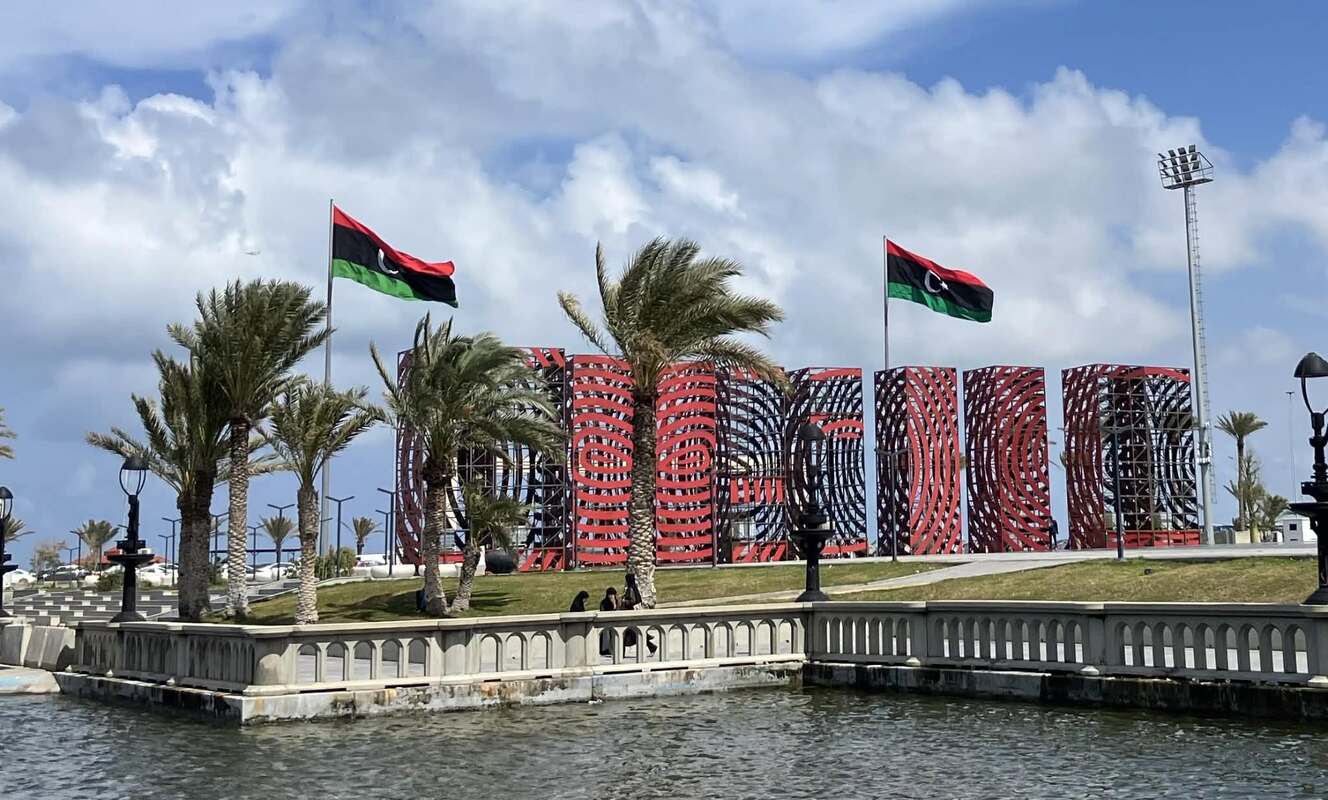
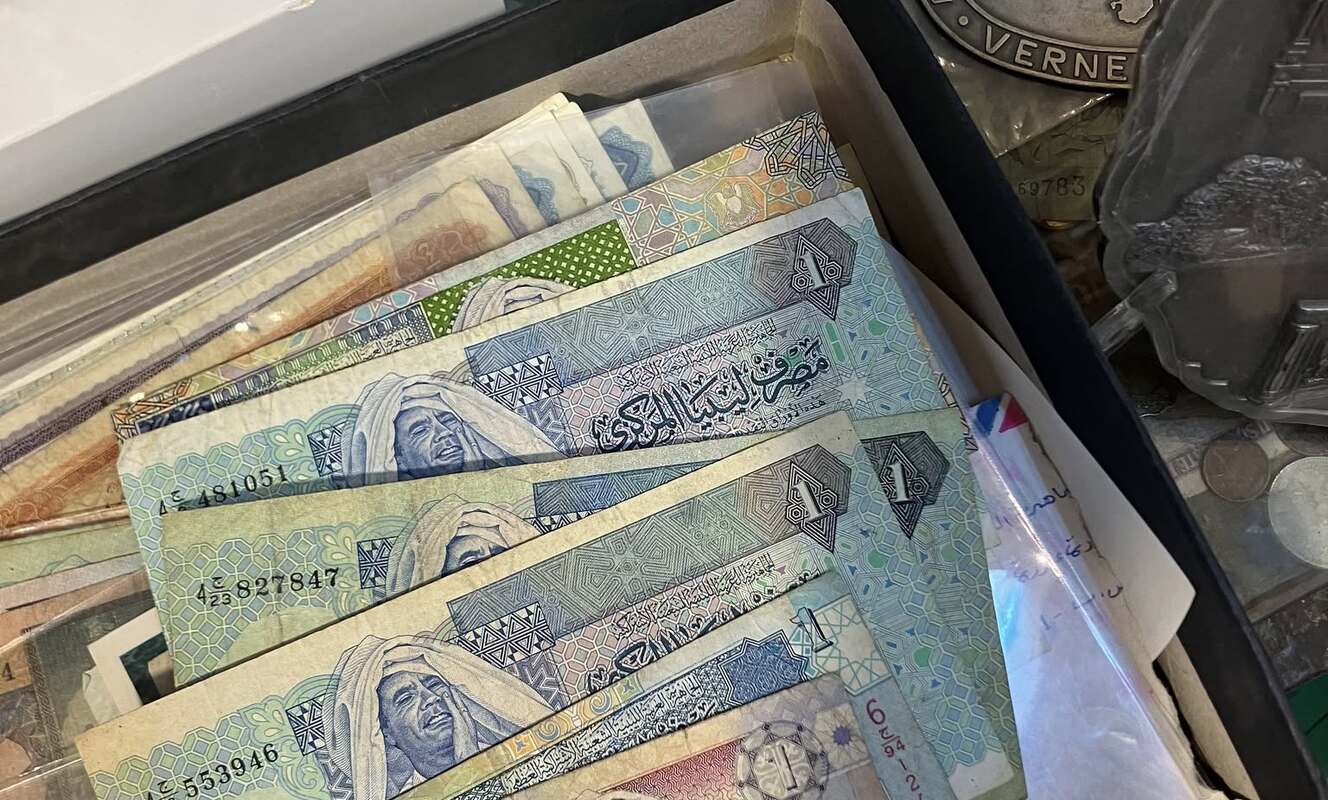
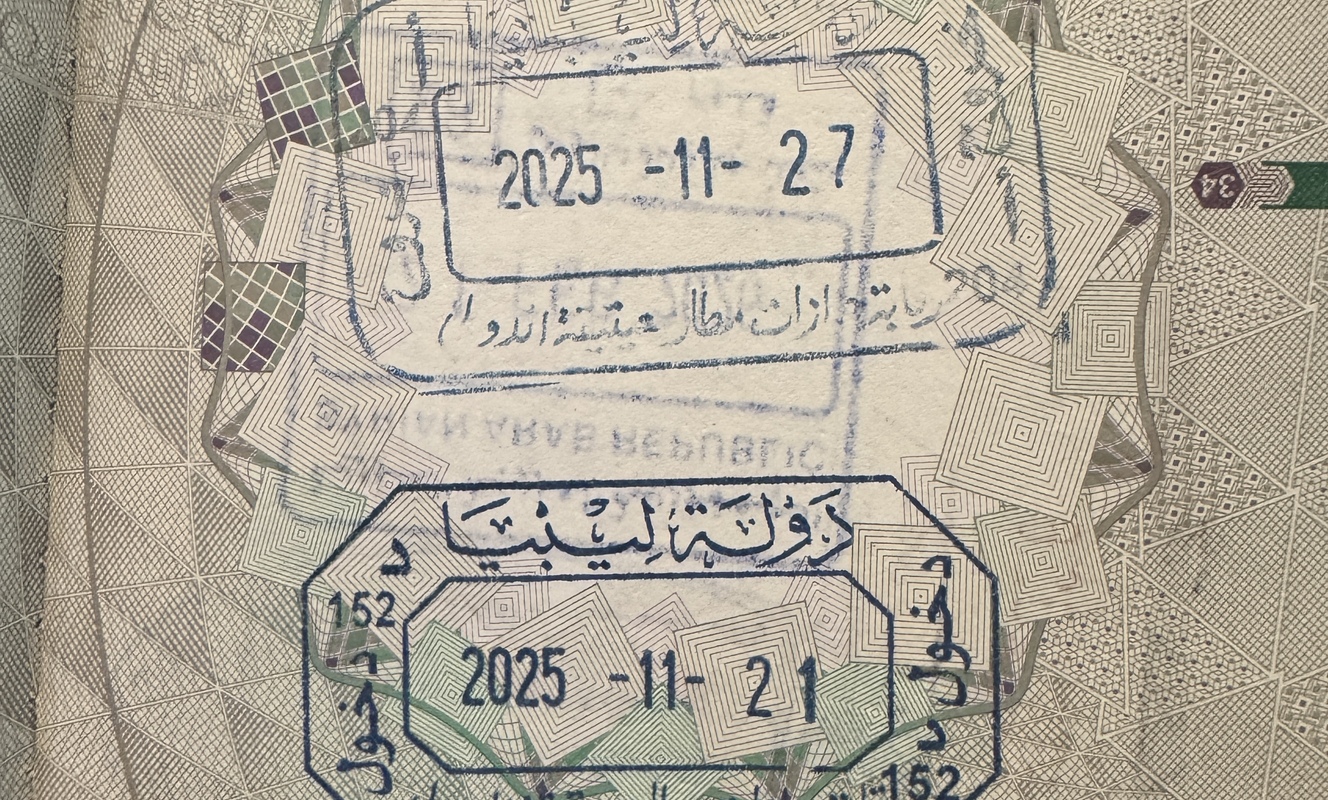
To most people, Libya means one of two things. Muammar Gaddafi or oil.
And both played a very real role in the country's modern story. But that story covers barely fifty years of a history stretching back over three thousand.
Before it was a petrostate, Libya was one of the most important corners of the ancient Mediterranean world. The Romans built here on a scale that left ruins so exceptional they rival anything in Italy or Greece.
Leptis Magna, just east of Tripoli, is by many accounts the best-preserved Roman city on earth, and for now it sits in near-total silence, visited by a comparative handful of travellers each year. The Greeks colonised the east and built Cyrene into one of antiquity's great cities. The Phoenicians laid the foundations of what would become Tripoli. And running behind all of it, shaping trade routes and civilisations alike, is the Sahara, which covers roughly 90% of the country and has defined Libya as much as any ruler or empire ever did.
Libya today is not without its complexity.
The civil conflict that followed Gaddafi's fall in 2011 fractured the country, and the political picture remains divided. But western Libya in particular has stabilised considerably in recent years, organised tours are running successfully, and visitor numbers are growing fast.
For those who come with the right team and realistic expectations, what waits on the other side of that complexity is genuinely unlike anything else on offer in North Africa.
The story of Libya is, in many ways, the story of what everyone else wanted it to be.
The Amazigh people (known in the wider world as Berbers) were here first, occupying the coastal plains and desert interior for thousands of years before anyone else showed up with ambitions. They never really went away either. Their culture, language and presence survived every empire that came after them, and they remain a distinct presence in Libya today.
The Phoenicians arrived in the 7th century BC, establishing trading posts along the coast and laying the foundations of what would eventually become Tripoli. The Greeks came shortly after, founding Cyrene in 631 BC, which grew into one of the most celebrated cities of the ancient world: a centre of philosophy, medicine and athletics that produced some of antiquity's great thinkers. For centuries, eastern and western Libya existed as two parallel civilisations, one Greek, one Phoenician, both flourishing.
Then Rome absorbed them both. And Rome left a mark on Libya unlike almost anywhere else in the world.
For roughly 800 years, Roman engineers and emperors poured ambition into the Libyan coast. The cities they built here, Leptis Magna, Sabratha and the absorbed and expanded Cyrene, are today considered some of the finest Roman ruins anywhere on earth.
After the fall of Rome, Libya passed through Vandal and Byzantine hands before Arab armies arrived in 647 AD and changed the course of Libyan history permanently. The introduction of Islam transformed culture, language and identity in ways that are still visible in every corner of the country today. Tripoli grew into a vital node connecting sub-Saharan trade routes to the Mediterranean, and camel caravans from Timbuktu and Lake Chad brought gold, ivory and goods through here for centuries. The Saharan trade was one of the most lucrative commercial systems in the medieval world, and Libya sat right at its heart.
The Ottomans arrived in 1551 and held the region for the best part of four centuries.
The semi-autonomous Karamanli dynasty ran Libya as its own operation and made a habit of demanding tribute from European merchant ships passing through Mediterranean waters. When the young United States refused to pay, the result was the First Barbary War of 1801 to 1805, the first overseas military engagement in American history.
Italy invaded in 1911, claiming Libya as a colonial possession. The resistance it met was fierce and protracted. The defining figure of that resistance was Omar Mukhtar, a Quranic school teacher who spent two decades leading a guerrilla campaign against one of the most technologically advanced armies in the world. When Mussolini's forces finally captured him in 1931, he was 73 years old. It became a foundational act of martyrdom instead. Today, his face is on the Libyan ten-dinar note, and the name Lion of the Desert belongs to him alone.
Libya became a major theatre in the Second World War, with Rommel's Afrika Korps and the Allied forces fighting back and forth across its desert between 1940 and 1943. After the Allied victory and a period of British and French administration, Libya achieved independence on 24 December 1951 under King Idris I, becoming the first African country to gain independence through the United Nations.
Eight years later, oil was discovered. And everything changed again.
By the late 1960s, oil revenues had made Libya wealthy on paper. But that wealth was not reaching most of the population. In September 1969, a 27-year-old army officer named Muammar Gaddafi launched a bloodless coup while King Idris was abroad for medical treatment. Gaddafi would go on to rule Libya for 42 years.
In February 2011, protests inspired by the Arab Spring uprisings in Tunisia and Egypt broke out in Benghazi. They turned into a full civil war within weeks. NATO intervened. By October 2011, Gaddafi had been captured near his home city of Sirte and killed. Competing factions and militias kept the country divided, and a political stalemate between rival governments in Tripoli and the east has persisted ever since.
A ceasefire brokered in 2020 holds. And in 2026, both governments reached an agreement on a unified national budget for the first time in over a decade.
It is slow progress. But it is progress.
Before 2011, Libya was not widely travelled, but it was visitable.
A small number of determined history enthusiasts made the journey each year, drawn primarily by the Roman sites. The experience was memorable, not just for the archaeology but for the sheer singularity of being a tourist in Gaddafi's Libya. Tight state control, almost zero crime, magnificent sites shared with practically nobody, and a local population that was invariably curious and warm towards the rare visitor.
After 2011, that door essentially closed. The conflict made most of the country inaccessible to organised travel for the better part of a decade, and the few travellers who did enter during those years did so with considerable risk and minimal support infrastructure.
The picture today is genuinely different. Since around 2022, organised group tours have been running safely in western Libya, focused on Tripoli, Leptis Magna, Sabratha and the UNESCO-listed desert city of Ghadames. More recently, eastern Libya around Benghazi and the ancient sites of Cyrene, Ptolemais and Apollonia have become accessible to groups as well. Libya recorded a 60% increase in visitor numbers in the first half of 2025 alone.
Renovation works are underway at key heritage sites, new international flight connections are opening up, and the introduction of an e-visa system has made entry more straightforward than at any point in recent memory.
It is worth being honest about what visiting actually involves at this stage.
Libya is not a destination where you land and wander independently. Every group travels with a licensed local operator, government permits, and a security arrangement that includes a police escort. Checkpoints are frequent, and your movement is coordinated in advance. Itineraries are fixed. In that respect, it has something in common with group travel to places like North Korea: it is structured, supervised, and not suited to those who prioritise freedom to roam.
What that structure delivers in exchange is access to some of the most significant archaeological sites on the planet, shared with almost nobody. The theatre at Sabratha. The marble streets of Leptis Magna. The hilltop ruins of Cyrene look out over the Mediterranean. You will not be sharing these with a crowd. And the Libyan people themselves, consistently described by returning visitors as among the warmest and most hospitable they have ever encountered, are a constant and significant part of what makes the trip worthwhile.
If it is on your list, we would love to take you there.
Do I need a visa to visit Libya?
Is Libya safe to travel in 2026?
When is the best time to visit Libya?
How do I get to Libya?
Can I visit Libya independently, or do I have to join a tour?
On a green mountain plateau in northeastern Libya stands a Greek city whose Temple of Zeus is larger than the Parthenon. UNESCO describes as among the most impressive in the world.
Read full storyIt's the first question anyone asks about Libya, and it deserves a straight answer.
Read full storyWhat very few of them know is that Libya's Mediterranean coast contains Roman ruins that rival all of those, in scale, in preservation, and in atmosphere. The difference is that you'll have them almost entirely to yourself.
Read full storyKoryo Tours understands that some things don't always go to plan. Our generous refund policy on all Libya tours means that you can leave a deposit risk-free and receive 100% refund on the deposit amount if you cancel within 40 days of the trip. We're also happy to hold your deposit for a future trip if you can't make it at the last minute. Your Libya tour with Koryo starts the minute you find us here. So, we want you to have the best Koryo Tour possible!
You can read our full Terms and Conditions here.
[email protected] | + 86 10 6416 7544
WhatsApp (message only): +44 7822 014058