A note on this page. Yemen and Socotra share a country name and a governing authority, at least on paper. They do not share much else. The Info and History sections treat them together, before the page splits into two distinct travel sections - one for mainland Yemen, one for Socotra. The FAQs at the end cover both. If you are here specifically for Socotra, you can skip ahead.
SOCOTRA AT A GLANCE
Area - approx 3,625 sq km (main island)
Population - approx 60,000 to 70,000, with the majority in the capital Hadibo
UNESCO World Heritage Site since 2008
Turn on the news, and you'll find a Yemen defined by aerial bombardments, political chaos and warring factions. But those headlines only tell part of the story, and arguably the least interesting part at that.
To understand how we arrived at the Yemen of today, you have to step back to 1990. At that point, Yemen didn't exist as a single country at all. The north and south had spent decades as two entirely separate states. The Yemen Arab Republic in the north and the People's Democratic Republic of Yemen in the south. Each had its own government, its own ideology and its own way of life.
In 1990, those two countries unified. But unity on paper doesn't always mean unity in practice. Tensions between political and religious factions simmered for years, until 2014, when the Houthi movement advanced on the capital and tipped the country into the civil war that continues today.
It is a turbulent history. But to treat that conflict as the whole of Yemen's story would be to sell the country extraordinarily short.
Because long before any of this, Yemen was one of the most important places on earth.
As far back as the 7th century BC, the Sabean kingdom had turned Yemen's geography into a considerable advantage, sitting at the intersection of trade routes linking Asia, Africa, Europe and the Middle East. Frankincense, myrrh and spices passed through here on their way to Roman temples and Egyptian courts. For centuries, this wasn't a country the world pitied. It was a country the world needed.
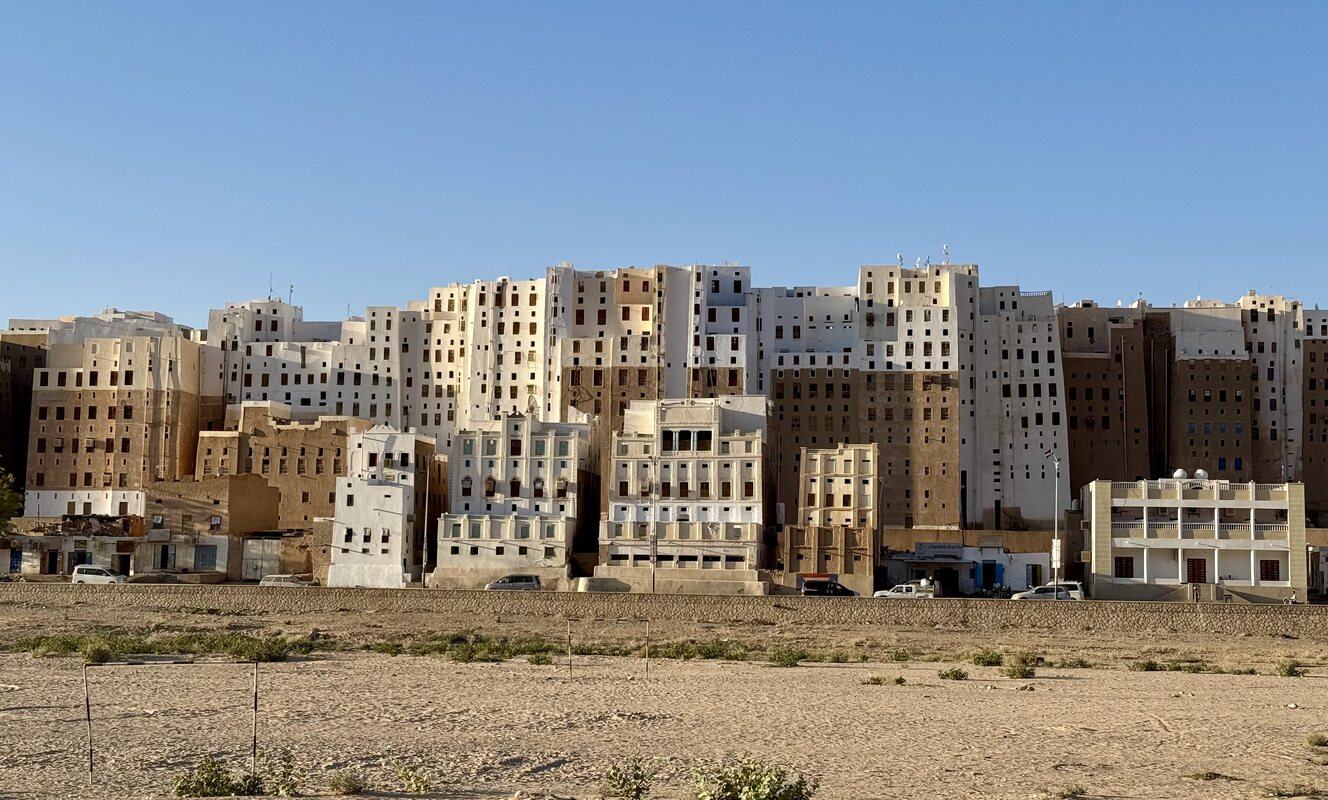
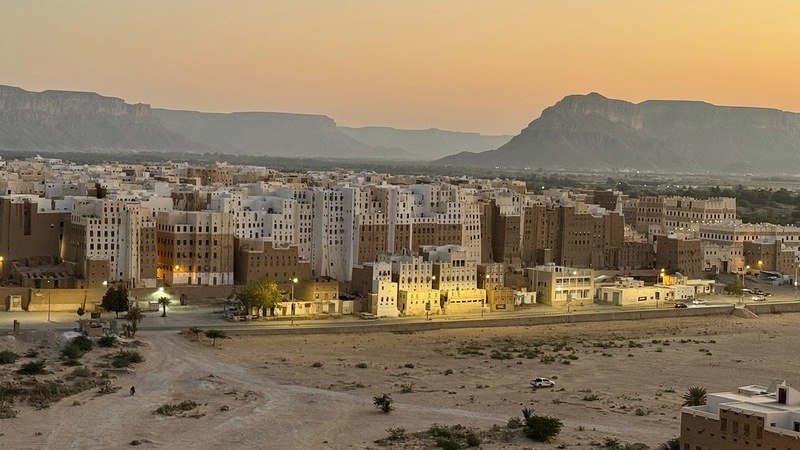
That wealth left its mark in ways you can still see today. Take Shibam, in the Hadhramaut Valley - a walled city where a tight cluster of mud-brick towers, some reaching eight stories high, rises from the flat desert floor. The Manhattan of the Desert is its well-earned nickname, and when you see it, the comparison makes immediate sense. It was an architectural achievement that was centuries ahead of its time. And it's still standing.
Then there is the Old City of Sana'a. One of the oldest continuously inhabited cities on earth, Sana'a became a major hub for the spread of Islam in the 7th and 8th centuries, a legacy still written into its streets. Over 103 mosques, 14 hammams and thousands of mud-brick tower houses that have changed very little in a millennium.
And then, roughly 240 kilometres off the Horn of Africa, floating in the northwest Indian Ocean, is Socotra.
If the mainland's story is one of ancient civilisations, Cold War division and a country mid-conflict, Socotra tells a different story entirely. An island so biologically isolated for so long that roughly 37% of its plant species exist nowhere else on earth. Dragon blood trees that look like something designed for an alien world, their flat-topped canopies spreading blood-red sap that drips like resin from another era. White sand beaches with almost no one on them. Camping under skies so dark and clear they feel like a different atmosphere. Socotra has been called the most alien-looking place on earth, and once you've seen a dragon blood tree in full late-afternoon light, the description makes perfect sense. UNESCO listed it as a World Heritage Site in 2008 for its biodiversity. The Galapagos of the Indian Ocean is the other shorthand people reach for, and it is not far wrong.
Yemen and Socotra are connected by lines on a map. Whether they feel like the same destination is another question entirely.
Long before any modern borders were drawn across Arabia, the land that is now Yemen sat at one of the most strategically valuable positions on the ancient trade map. The Sabean kingdom, at its commercial peak from roughly the 7th century BC, controlled the overland frankincense and spice routes that linked southern Arabia to Egypt, the Mediterranean and, later, Rome.
The ancient world called Yemen "Arabia Felix," the fortunate Arabia, a deliberate contrast to the barren deserts of the north. The Sabeans were so central to the global economy of their time that Roman writers complained their merchants were draining gold from the empire faster than any military defeat could manage.
The centrepiece of the Sabean civilisation was the Marib Dam. Constructed in its earliest form as far back as the 8th century BC and massively expanded over the following centuries, it was one of the greatest feats of civil engineering in the ancient world. At its peak, it irrigated an agricultural system large enough to sustain one of the most densely settled regions in Arabia. Its collapse around 570 AD, after centuries of increasingly costly maintenance, sent shockwaves across the peninsula: tribes dispersed northward into the Hejaz and eastward across Arabia, contributing to the demographic shifts that preceded the rise of Islam.
The dam's collapse is mentioned in the Quran.
The arrival of Islam in Yemen came faster and more peacefully than almost anywhere else. In 628 AD, the Prophet Mohammed sent messengers to Yemen's rulers. Within a short time, and largely without military coercion, Yemen converted.
The country takes genuine pride in this distinction. Within a century, Sana'a had become one of the great centres of early Islamic learning, its mosques, markets and tower houses drawing scholars and merchants from across the expanding Islamic world. The city built during this period is, in its essential character, the city that still stands.
The Zaydi Imamate, a system of Shia Islamic governance rooted in a branch of Islam specific to Yemen's north, took root in 897 AD and proved extraordinarily durable. For over a thousand years, it defined the political and religious character of the northern highlands, creating a distinct Yemeni identity that was always somewhat resistant to the various empires that came and went around it.
Understanding this history is essential to understanding the Houthis' movement today. The Houthis are Zaydis, and their political project is inseparable from a theological and cultural tradition that has shaped the north for eleven centuries.
External powers came and went, each drawn by the same logic - whoever controlled Yemen's coastlines and ports controlled some of the most important shipping lanes in the world. The Ottomans arrived in 1538, were never fully able to subdue the country, and eventually withdrew in 1636.
They returned in 1849 and stayed until the collapse of their empire in 1918, when the north became an independent Mutawakkilite Kingdom under the Zaydi Imam.
The south told a different story. Britain seized Aden in 1839, recognising its value as a coaling station on the route to India. The city grew into one of the busiest and most cosmopolitan ports in the world by the mid-20th century, a prosperous colonial hub that sat somewhat incongruously at the edge of some of Arabia's most remote landscapes.
The British Aden Protectorate gradually extended its influence across the surrounding southern tribal territories over the following decades.
Both pieces of Yemen fell away from their respective masters within a few years of each other. In the north, a 1962 military coup overthrew the Imamate and established the Yemen Arab Republic, though a civil war between royalists and republicans, with Saudi Arabia and Egypt backing opposite sides, dragged on for nearly a decade.
In the south, a Marxist-led independence movement drove the British out in 1967, establishing what became the People's Democratic Republic of Yemen: the only communist state in the Arab world. The two Yemens eyed each other across their shared border with the particular suspicion of ideological opposites forced into proximity.
Unification came on 22 May 1990. Ali Abdullah Saleh, the canny northern leader who had famously described governing Yemen as "dancing on the heads of snakes," became president of the unified country.
Four years later, southern leaders, feeling marginalised by the north, declared independence. A brief civil war followed - the North won decisively.
The fault lines never healed, and the Southern Transitional Council, which today controls much of southern Yemen and continues to push for independence, is in many ways the direct product of those unresolved grievances.
Saleh managed Yemen's overlapping crises with considerable political skill for the next two decades, while the country grew steadily poorer, and a religious revivalist movement in the northern province of Saada grew steadily stronger.
The Arab Spring protests of 2011 finally broke his grip on power. He eventually agreed to hand the presidency to his deputy, Abdrabbuh Mansur Hadi, in 2012.
Two years later, Houthi forces swept south from Saada, took Sana'a in September 2014 and dissolved the government. Hadi fled to Aden.
By March 2015, with Houthi forces advancing on Aden, a Saudi-led military coalition intervened to restore the internationally recognised government. The war that followed has become one of the worst humanitarian catastrophes of the 21st century.
Infrastructure, healthcare, agriculture and the basic economy of one of the Arab world's poorest countries have been devastated.
The political picture today is as fragmented as it has ever been. The Houthis hold the north, including Sana'a; the Presidential Leadership Council controls parts of the south; and the Southern Transitional Council holds much of Aden and the surrounding areas.
Against all of this, the ancient cities, the Hadhramaut desert and the extraordinary warmth of the Yemeni people continue to exist in the spaces in between.
Socotra's history has always run slightly apart from the mainland's, and has always been somewhat detached from it.
Known to ancient Greek and Roman geographers as Dioscorida, the island sat on critical sea lanes connecting the Red Sea to the Indian Ocean and served as a watering and supply stop for traders for centuries.
The Portuguese briefly occupied it in the early 16th century, building a fort at the settlement now known as Suq. The British, as part of their consolidation of the Aden Protectorate, declared Socotra a protectorate in 1876.
When South Yemen achieved independence in 1967, Socotra became part of the new Marxist state, and then part of unified Yemen in 1990.
Its distance from the mainland has always been its protection. Yemen's various conflicts have barely reached it.
Since 2018, however, the island has been drawn into a different set of geopolitical currents. UAE troops arrived that year, establishing a presence that for several years gave Abu Dhabi considerable influence over the island, including control of its airport and key infrastructure.
For travellers, the practical effect was a regular Abu Dhabi to Hadibo flight route that made Socotra considerably more accessible to adventure tourists. That chapter ended abruptly in late 2025, when shifting tensions between Saudi Arabia and the UAE prompted an Emirati withdrawal and a suspension of flights that left several hundred tourists stranded on the island for days.
Flights have since resumed via Jeddah, the island remains accessible, and the situation is stable, but the episode serves as a clear reminder that Socotra's fortunes, however calm the island itself may feel, remain tied to regional politics that can change faster than any itinerary.
Travelling to mainland Yemen is not for the first-time traveller, in all honesty.
The Foreign Office advises against all travel to Yemen, and the reasoning is sound - active conflict, unexploded ordnance, the near-complete absence of Western diplomatic presence in-country, and the potential for conditions to shift quickly are all genuine considerations. This is not bureaucratic caution.
At the same time, organised group travel to specific parts of Yemen is currently operating, and certainly can be safe to do so. And, extremely rewarding.
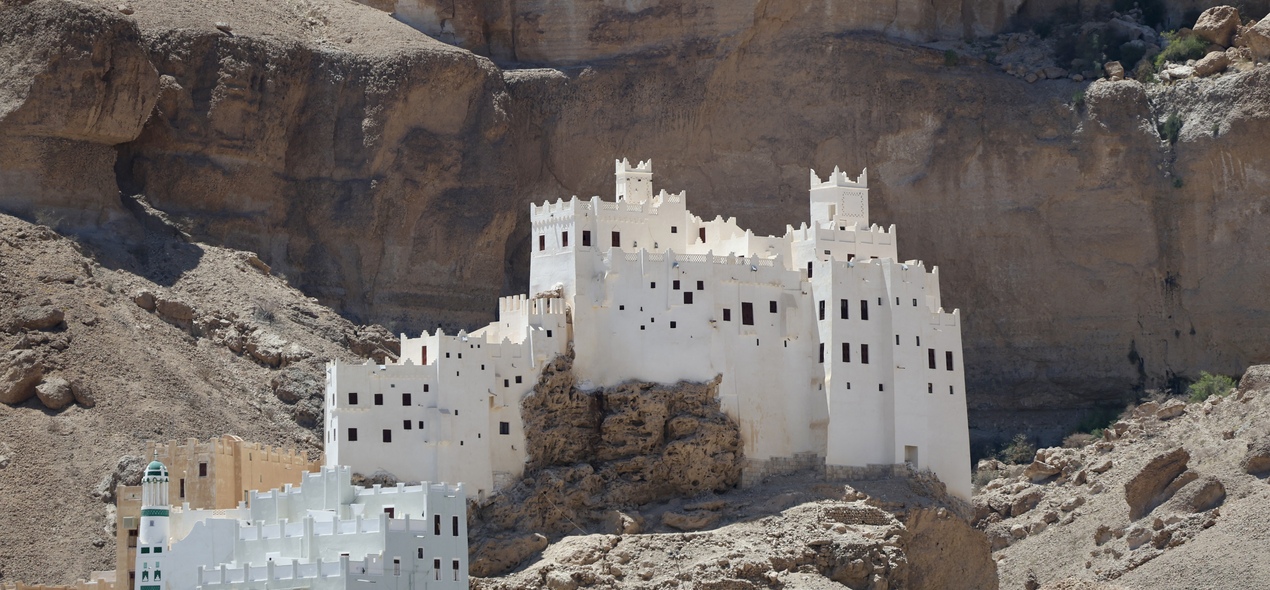
The primary area accessible to tourist groups is the Hadhramaut, the ancient valley in eastern Yemen that contains some of the most extraordinary desert architecture in the Arab world. Shibam, the walled city of mud-brick towers that the user's draft describes as the Manhattan of the Desert, sits at the valley's heart and delivers on the description in an almost unreasonable way. The surrounding Hadhramaut landscape, with its dramatic wadis, hilltop villages and date-palm valleys, reinforces the sense that you are somewhere the world has not entirely caught up with yet.
Access to the Old City of Sana'a requires entirely separate arrangements. Sana'a is in Houthi-controlled territory and the practical and security considerations are fundamentally different from those in Hadhramaut. It is currently not possible as a tourist to visit Sana'a.
The broader practical realities of travelling in Yemen's accessible areas are these. You cannot travel independently. All groups move with a licensed local operator, government-issued permits and tourist police escort. Checkpoints are frequent. Itineraries are fixed in advance and are not easily changed once you are in the country. Payment is entirely in cash, and US Dollars are your best starting point.
Accommodation is in local hotels that are functional rather than comfortable in the conventional sense - but often incredibly gorgeous. And the food is good. Yemen has a distinct culinary tradition of grilled and slow-cooked meats, flatbreads, honey (some of the finest in the world) and strong, cardamom-spiced tea that becomes a genuine pleasure over the course of a week.
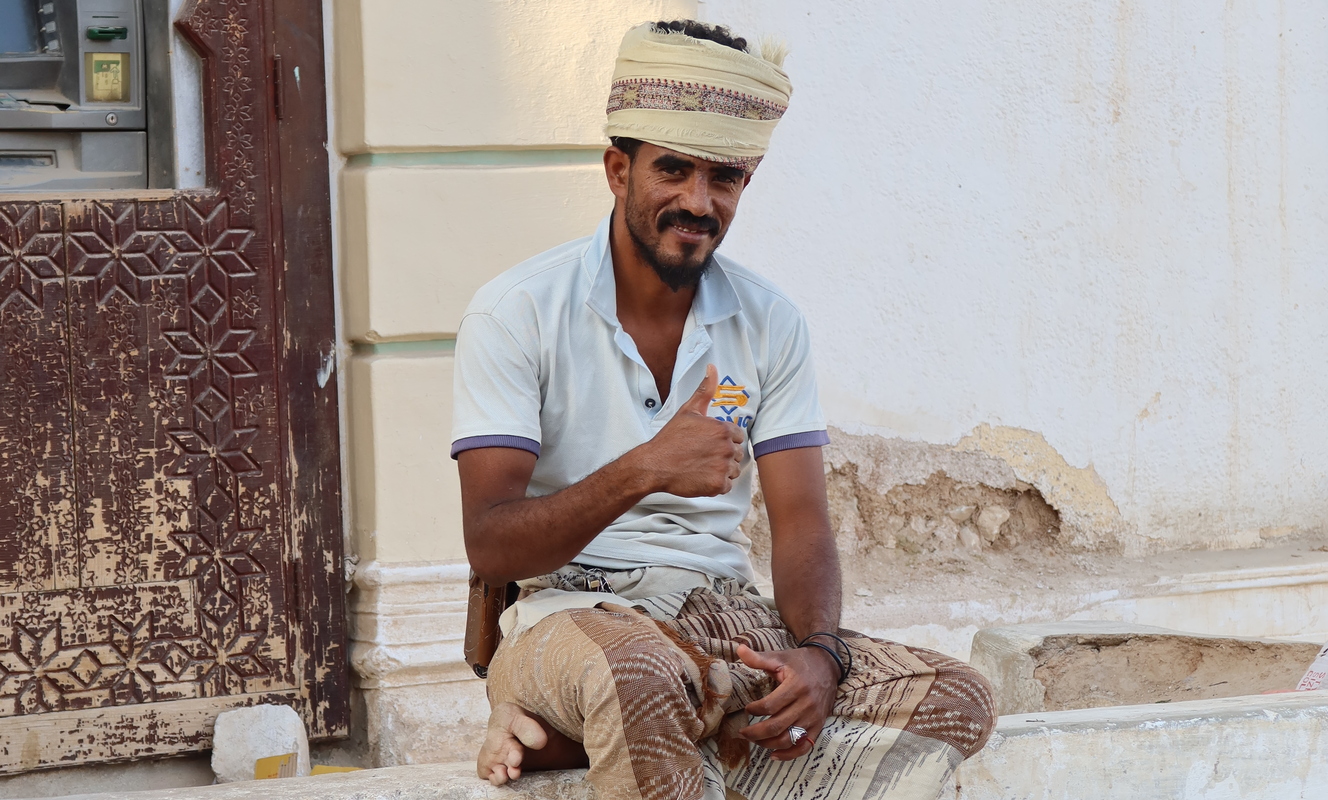
It may sound like a lot, but what you'll get in return is access to one of the most culturally distinct and architecturally unique countries in the Arab world, experienced in a state of near-total tranquillity from the perspective of other tourists. The Hadhramaut Valley has almost none. The Yemeni people are warm and happy to have you as their guest.
Yemen is not a destination for everyone. We do not take people there lightly. But for travellers who are experienced in complex destinations, comfortable with structured itineraries and genuinely curious about a country with a historical and cultural depth that is almost without parallel in the Arab world, it belongs on a very short list.
Socotra is not difficult to describe. It is extremely difficult to convey.
The standard shorthand is the Galapagos of the Indian Ocean, which gives you a sense of the biological uniqueness without really preparing you for what it looks like to arrive somewhere where roughly 37% of the plants around you exist nowhere else on earth. The dragon blood tree, with its flat-topped umbrella canopy spreading over a trunk that bleeds bright crimson sap when cut, looks like something a concept artist designed for a science fiction film. The desert rose grows like an enormous bottle upended and planted in gravel, storing water in its swollen trunk through the brutal summer months and producing pink flowers at the top like an afterthought. The landscape has a quality that is hard to name precisely: somewhere between alien and ancient, simultaneously strange and deeply calm.
The practical realities are these. Socotra is accessible only between roughly October and April, when the Indian Ocean monsoon has passed. Outside those months, powerful winds make the island difficult and sometimes impossible to reach. Even within the season, access depends on a small number of weekly flights (currently operating via Jeddah, Saudi Arabia, following the disruption to the Abu Dhabi route in late 2025) and visas that must be arranged in advance through a licensed local operator.
Independent movement on the island is not permitted. And entirely not possible anyway, due to infrastructure - or lack thereof. Groups travel with local guides and drivers in 4WD vehicles, and for much of the island, camping is the accommodation of choice. Not the budget option. The only option. There are limited hotels in Hadibo, and also glamping options. There are no ATMs anywhere on Socotra. Bring US Dollars.
What those constraints produce is an island that, right now, is experienced almost exclusively by people who genuinely wanted to be there. The crowds that have altered so many of the world's other extraordinary natural environments have not found their way to Socotra in significant numbers yet. Whether they ever do depends on infrastructure investment, Yemen's political trajectory and continued access to flights.
For now, you consistently have remarkable things to yourself - dragon blood tree forests, empty white beaches, freshwater mountain pools and a night sky that rewards sitting still in.
It is worth addressing the events of late 2025 and early 2026 directly.
The UAE withdrawal from Socotra triggered a suspension of flights in December 2025 that left several hundred tourists stranded on the island for days. The island itself remained calm throughout - the problem was purely logistical. The situation has stabilised, and flights via Jeddah are operating on a weekly basis. But the episode is a useful reminder of what Socotra is. Extraordinary, genuinely worth the journey, and genuinely contingent on regional factors that no operator can entirely control.
Is it safe to travel to Yemen mainland?
Is Socotra safe to visit?
Do I need a visa for Yemen and Socotra?
How do I get to mainland Yemen?
How do I get to Socotra?
Tell people you're going to Yemen and they ask the same question: what do you actually do there? A week in the southern Hadhramaut answers that comprehensively. Mud-brick skyscrapers, desert pilgrimage shrines, canyon villages, world-class honey and a fish market on the Arabian Sea. Here is the full day-by-day breakdown.
Read full storyThere is a moment on the road from Seiyun when Shibam appears out of the valley floor and everyone in the vehicle reaches for their camera. Five hundred mud-brick towers, up to ten storeys tall, still lived in, still maintained by the same families who built them five centuries ago. Here is what it is actually like to visit.
Read full storyThe Yemen you see on the news is not the Yemen you visit, and tours operate exclusively in the Hadhramaut, a vast valley region in the southeast that has remained largely stable for years. Here is an honest answer from someone who has been there and runs tours there regularly.
Read full story
[email protected] | + 86 10 6416 7544
WhatsApp (message only): +44 7822 014058