It's the first question anyone asks about Libya, and it deserves a straight answer.
It is the first question you’ll hear anyone ask when travelling Libya comes up in conversation.
Before the Roman ruins, before the UNESCO oasis, before anything else… is it safe?
It is a fair question.
And it deserves a straight answer rather than some false reassurance.
Except, there’s no real straight answer. Safety is relative, after all. And something very personal. But here we’ll outline the facts so you can inform yourself and come to your own conclusion of if Libya is safe to travel in 2026.
(Spoilet alert - we think so. But, there are some things to watch out for).
Our guide on safe travel to Libya addresses Libya's safety situation directly: what the risks are, how they are managed (by responsible operators), who is currently visiting and why, and when the best time to go is for both safety and experience.
Just Tell Me! Is Libya Safe to Travel?
The short answer is…
Organised, structured tourism to specific sites in Libya is currently operating safely, and a small number of specialist tour operators are running group tours without incident. After all, companies won’t run tours to places unless they genuinely perceive them as “safe enough” to run tours in.
Koryo Tours have spent over 3 decades taking groups to ‘unusual destinations’ and setting up tours in Libya is not something we take lightly. Safety is the number 1 priority.
The longer answer…
This involves understanding what Libya actually is in 2026, understanding the wider context, what the conditions on the ground look like, and what a responsible approach to visiting the country requires.
We wrote this guide for people who are genuinely considering a Libya trip and want honest information.
Understanding the Current Situation in Libya
Who Is Currently Travelling to Libya?
What the Logistics Actually Look Like
The Places in Libya You Will Visit
What Travel Insurance Do You Need?
How Does Libya Compare to Other "Complex" Destinations?
The Honest Risk of Travelling in Libya
What Your Government Says About Libya Travel
How Koryo Tours Manage the Risk
What the Track Record of Tourism in Libya Shows
Should I Go to Libya?
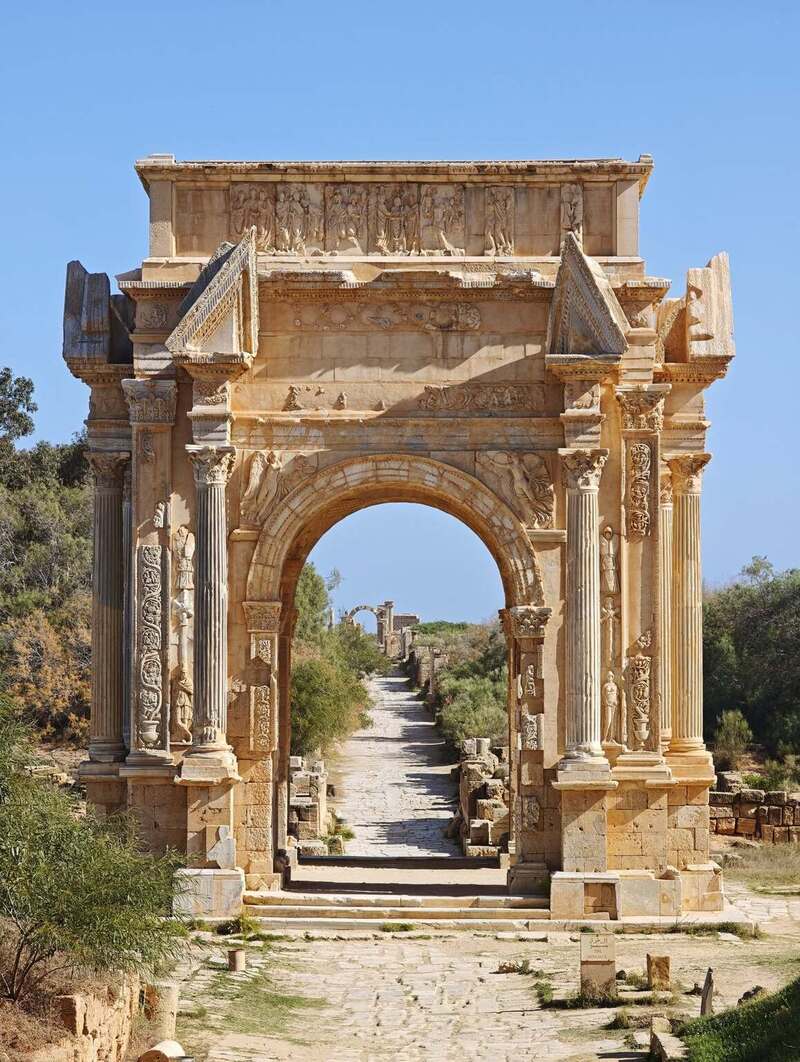
Understanding the Current Situation in Libya
Libya has experienced significant instability since the 2011 revolution that ended Muammar Gaddafi's 42-year rule.
The country went through a prolonged period of conflict, effectively stopping any tourism for most of the past decade and a half.
The situation in Libya in 2026 is more stable than it has been for some years.
This is particularly so in the west of the country around Tripoli, where tours have been running safely and smoothly for the past few years.
More recently, this also includes the east area around Benghazi and Cyrenaica.
Both of these regions are where the significant tourist infrastructure and heritage sites are located, and both are accessible to organised groups travelling with licensed local operators, security arrangements, and the appropriate travel permits.
This does not mean Libya is risk-free.
It is not.
You’ll be reminded of this throughout your trip, stopped constantly at check-points and accompanied by local security police.
The Foreign Office travel advice for Libya still reflects a country with ‘elevated risk’, and that assessment should be taken seriously.
What it does mean is that the risk can be managed to a level that responsible operators deem acceptable, and that the small number of tourists currently visiting are doing so without incident.
Libya is not a safe country in the way that France or Jordan is safe. It is a country with ‘elevated risk’, but risk that can be substantially mitigated through careful planning, professionalism, security arrangements, and routes that avoid the genuinely dangerous areas.
Important to note…
The reality - If you have no tolerance for any elevated risk in travel, Libya is not currently the right destination for you.
If you are an experienced traveller who understands how to assess and manage risk in complex destinations, Libya is one of the most rewarding travel experiences available anywhere.
(And you’ll be one of the select few doing it..!)
Who Is Currently Travelling to Libya?
Travellers going to Libya right now are sometimes the thrill-seeking type, country collectors or those just wanting adventure. But, more often than not, they are curious people wanting to see the world and misunderstood places for what they really are.
And of course those history lovers who have already been to Rome, Pompeii, Athens, Ephesus, and Jordan, and who are looking for the next layer of the ancient world's story.
Group tours to Libya are small, which plays into the safety element, too. Smaller groups are much more manageable, especially in case of any emergency situation.
With a Koryo Tours tour, our Libya groups travel with a tour leader who has experience in complex destinations, a licensed English-speaking local guide, and local police security.
Unfortunately, this means that a group tour to Libya is similar to one in North Korea.
Every movement is coordinated. Every site visit is planned.
Whilst this prioritises safety, as the itinerary is structured to avoid areas of ongoing concern and to keep the group within the parts of the country where organised tourism is operating, this of course limits movement severely.
So, something to be aware of for your Libya tour.
If structured group travel with limited freedom of movement is not your thing, Libya might not be for you.
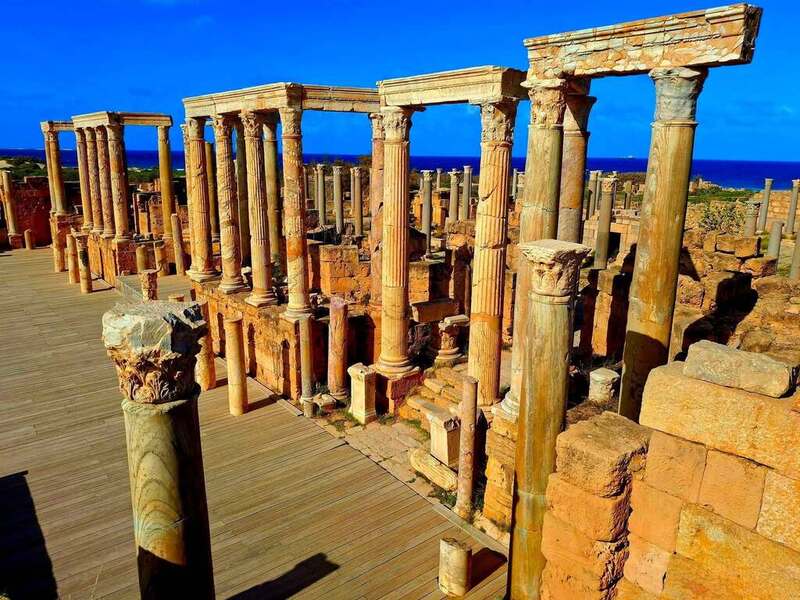
What the Logistics Actually Look Like
Here we help you understand the practical logistics of a Libya trip to demystify the safety question.
Visa and Entry
Libya requires a visa for most nationalities, and the process currently involves obtaining a support letter from a licensed local tour operator, which is then used to apply for an e-visa. Koryo Tours handles this process for you, hassle free.
Arrival
You land at Tripoli International Airport, where your guide and vehicle are waiting even before arrivals. In fact, you can’t pass through immigration without your local guide ready and waiting for you.
From that point, you are in the care of the local team for the duration of the trip. There is no moment where you are navigating an unfamiliar city alone.
Transportation
All transportation is handled by the local tour operator who use their own vehicles and drivers. You do not have to (or actually, cannot) use public transport or hire your own car.
The vehicles are reliable, and the drivers know the routes - even when sometimes the road seems to disappear completely!
Security
A security guard or two will most likely be included in your tour package. Either that, or you will find you have to pay for it later. They are a necessity and travel with the group throughout the trip.
This is standard practice for organised tourism in Libya. It provides an additional layer of reassurance at sites and in transit, but you’ll often find yourself asking… why are they really here?
The country will feel very safe on the ground. And, indeed it is.
But two important things to remember.
Firstly, when things go wrong in a place like Libya, they go really wrong. And having this level of security is paramount.
Secondly, you’ll find they don’t let you go anywhere alone. Anywhere. They’re always watching. It gives a sense that they’re not just there to protect you from the outside world but also perhaps vice versa…
Permits
All travel permits and entry fees to tourist sites are generally handled by the operator of your Libya tour.
Note that the Benghazi entry permit fee is currently USD 600 and is often not included in the tour price.
At Koryo Tours, on a tour to Libya including the eastern areas, the Benghazi entry permit is included in the price.
Accommodation
Hotels in Tripoli and Benghazi are city hotels with the facilities you would expect. In fact, sometimes more.
Accommodation in more remote areas such as Ghadames is in local guesthouses that are simple but comfortable.
The Places in Libya You Will Visit
Part of the safety assessment for Libya involves understanding where specifically you are going.
At Koryo Tours, we assess each location. Our tour itineraries concentrate on two main areas. The northwest (Tripoli, the coast, Ghadames, and the Jebel Nafusa mountains) and the northeast (Benghazi and the Cyrenaica coast).
Both of these are in the more stable parts of the country.
The east has recently opened up to tourism whilst the areas in the west are long-established tourist routes that have been open for some years.
When you join a group tour to Libya, you are not going near the areas of Libya that have seen ongoing conflict. These areas are primarily in the south and in specific zones that organised tourism routes avoid entirely.
The heritage sites that make Libya worth visiting are, by nothing but fortunate coincidence, located in the parts of the country that are accessible to managed tourism.
What Travel Insurance Do You Need?
Travel insurance is mandatory for Libya, and it needs to be the right kind.
Standard holiday insurance is not sufficient. Rather, you need a policy that specifically covers travel to high-risk destinations, includes medical evacuation, and covers the full cost of emergency repatriation.
Several specialist insurers offer policies for destinations like Libya.
We recommend IMG Global.
Insurance is mandatory on a Koryo Tours trip to Libya.
How Does Libya Compare to Other "Complex" Destinations?
For context, many of the most rewarding travel destinations in the world carry elevated risk ratings that do not prevent responsible tourism…
So we certainly don’t stop at Libya.
In fact, we have over 30 years of experience operating in ‘complex’, or rather unusual destinations.
You can now visit Iraq's historic sites, including Ur and Babylon, for example. Syria has incredible Roman sites you can visit and don’t get me started on the amazing places you can visit in Afghanistan.
Plus, you get the added bonus of, most likely, being the only tourist there.
Libya in 2026 sits in a similar category.
A country with genuine risks that can be substantially mitigated by travelling with the right operator, following professional advice, and maintaining realistic expectations about what visiting involves.
It is not a destination for independent backpackers. It is a destination for structured, organised group travel with experienced operators who have already established the relationships and systems that make it work.
It’s also not the place to skimp out on a budget. Make sure you go with a reputable company prioritising safety, and get yourself some good insurance..!
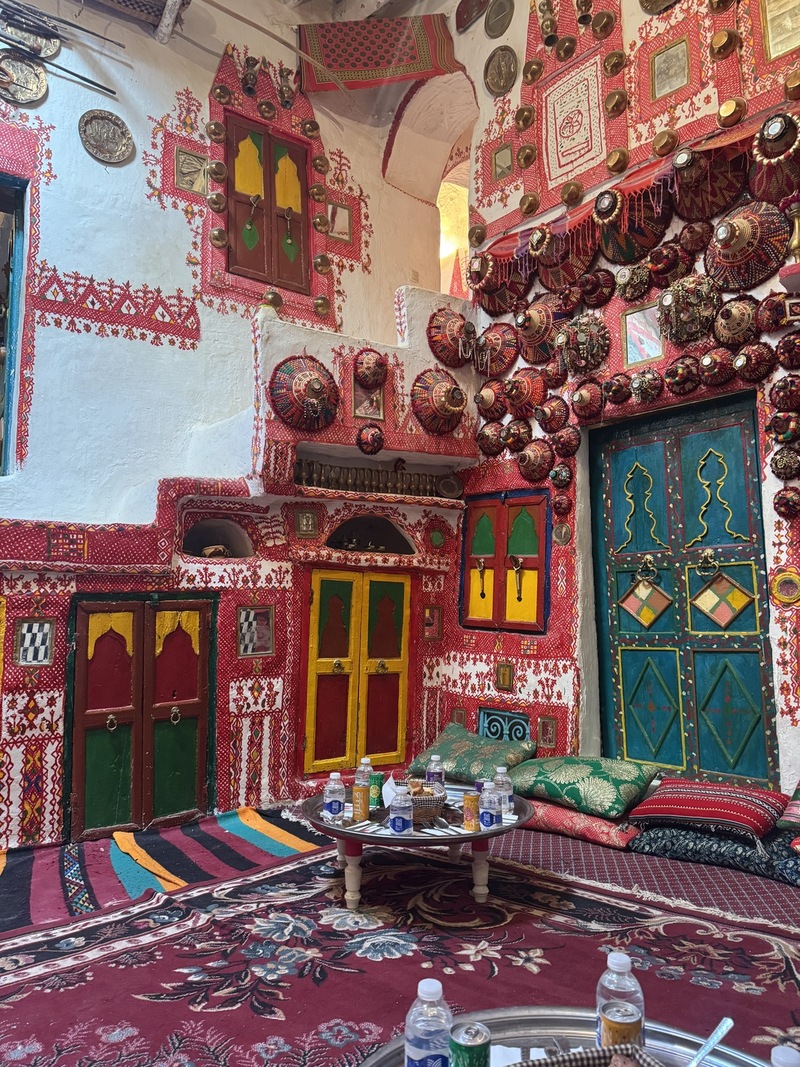
The Honest Risk of Travelling in Libya
Let's be direct about what you are accepting when you book a Libya trip.
Political Instability
There is elevated political risk. The country's political situation can change, and itineraries may need to be adapted or, in extreme scenarios, curtailed.
Koryo Tours don’t shy away from changing or adapting if and when it’s needed. We’ve done it before. We’ll happily do it again. We make this clear when you sign up for a trip and if flexibility is not for you, it’s not for you.
It’s important to have contingency plans and clear policies about what happens in various scenarios.
Infrastructure Risk
There is a degree of infrastructure limitation, too. Medical facilities in Libya are not at the standard of Western Europe. This is why medical evacuation insurance matters. If you have a serious pre-existing medical condition, discuss it honestly with your operator before booking.
Bureaucratic Instability
Whilst generally a smooth process, there is bureaucratic unpredictability. Permits, border arrangements, and site access can change with limited notice.
Road safety
Road conditions in Libya vary, and driving standards differ from Western Europe. Be prepared for some interesting roads, and even more interesting driving…
Civil unrest
While the areas visited by organised tourism are in the more stable parts of Libya, the possibility of civil unrest that affects the programme exist.
But on the other side of things… there is also, honestly, a meaningful degree of genuine safety.
Hundreds of tourists have now visited Libya without incident. Local guides, companies, and security arrangements are professional, sincere, and also prioritise safety. The communities in the areas you visit are welcoming to tourists, not hostile. The ancient sites are simply there, open, extraordinary, and unguarded in the way that sites in heavily touristed countries never are.
What Your Government Says About Libya Travel
Your government advice towards Libya travel is likely not very optimistic. Whilst governments often are over-cautious in the advice they give as, by nature, they have to be the most precautious, it’s not advice to be ignored completely.
The UK Foreign Office advice for Libya currently advises against all travel to much of the country, with more nuanced guidance for specific areas. It is worth reading carefully because the guidance is not a blanket prohibition on all travel to all parts of Libya.
The US State Department similarly places Libya in its highest risk categories, advising Americans to reconsider or avoid travel. Again, the specific guidance is more nuanced than the headline.
Travelling against your government's travel advice also typically invalidates standard travel insurance. Something to be aware of and is one of the reasons why specialist insurance with explicit high-risk destination coverage is mandatory for Libya - not optional.
If you want to follow government advice, you should try really understanding it, in all contexts, not simply being deterred by it. Educating yourself and understanding the safety context plays a big role in keeping you safe.
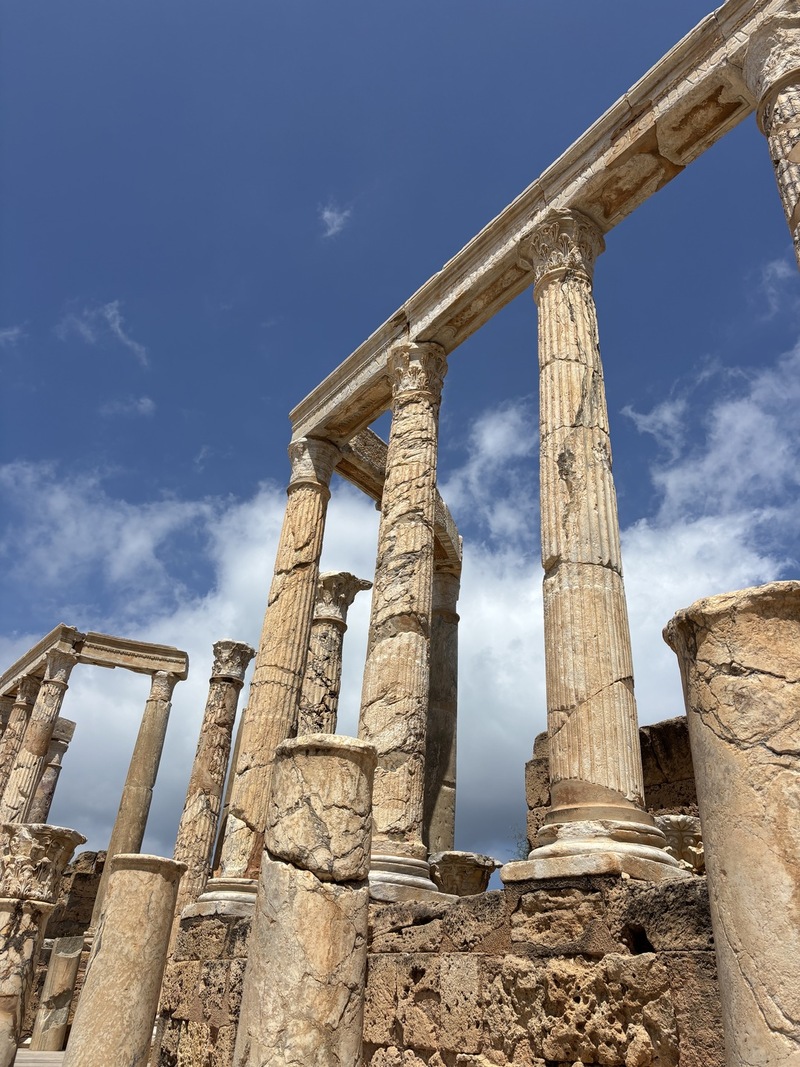
How Koryo Tours Manage the Risk
As with all of our trips to rather unusual destinations, we manage risk through a combination of professional on-the-ground relationships, established protocols, and practical arrangements.
Licensed local operator partnership
All legal tourist activity in Libya requires working through a licensed Libyan tourism company. These companies have existing relationships with local authorities, security services, and the communities the itinerary passes through.
Koryo Tours keep a close relationship with all of our local partners. Often, they become like family or friends.
Our local partners are the key to on-the-ground safety. When it calls for it, we have briefings leading up to the trip as well as two briefings every day on the tour - one in the morning, one in the evening.
Security guards
A security guard travels with the group throughout the itinerary.
This is standard practice for organised tourism in Libya.
Route planning
Itineraries in Libya are designed to keep groups within the parts of the country where tourism is operating. They’re far from the areas where ongoing risk is concentrated.
We review and adjust routes reguarly or as and when is needed in response to current conditions.
Contingency planning
In case anything goes wrong or we need to change something. Or, if we are in need of emergency evacuation. We have plans for various scenarios as well as a full list of on-the-ground and remote emergency contacts. These methods are tried and tested!
What the Track Record of Tourism in Libya Shows
The most practical evidence for Libya's viability as a managed tourist destination is the track record of operators who have been running itineraries there - without serious incident.
This shows evidence of a real-world test of whether the risk management works - and whether Libya is a safe place to travel or not. Of course, each group, each area visited brings with it its own risks.
So, you can look at previous groups and previous travellers as evidence that safe travel is possible - but not guaranteeing future safety.
Should I Go to Libya?
You’ll hate this answer but… whether you should go to Libya or not entirely depends on you.
After you’ve read this guide, hopefully you have some moer context upon which to build your own informed opinion.
If you have a low tolerance for uncertainty, a pre-existing medical condition that complicates evacuation scenarios or extremely difficult diertary requirements difficult to adhere to even in your home country, or a strong aversion to risk in travel, Libya is probably not the right destination for you right now.
If you are an experienced traveller with a high tolerance for complexity, a genuine passion for the ancient world, and the flexibility to accept that some things may not go exactly to plan, Libya in 2026 is one of the most extraordinary travel experiences available anywhere on earth.
Leptis Magna alone justifies the journey. The combination of Leptis, Sabratha, Ghadames, and the Greek ruins of Cyrenaica, experienced in near-total solitude, is something that simply cannot be replicated anywhere else.
Truly.
The window for this kind of experience is not unlimited.
As Libya stabilises and more operators enter the market, the infrastructure will improve, and naturally, the crowds will follow. The particular quality of visiting these places as they are now, open and silent and largely unknown, will be gone.
Those currently going are the ones who will be able to say they were there first.
Koryo Tours
Group Tours to Libya
Share
Zoe Stephens
Zoe is the marketing manager and a tour leader at Koryo Tours.
Her love of meeting new people and exploring new cultures has led her to study several languages including German, Japanese, and Chinese. Having lived in several different countries across 4 continents, she often writes about languages and culture in her blogs and is very active on social media. During the COVID-19 pandemic, she was 'stuck' in Tonga for 1.5 years after a weekend away. Ask her for some stories!
🎥 Vlogs on North Korea
🎙 Discover North Korea Podcast
➤ Instagram | Facebook | TikTok | Twitter/X