One of the youngest countries on earth, with a big story and almost no tourists. Is it an unusual destination for travellers? Naturally, Koryo Tours is on its way to Timor-Leste.
For more than three decades, Koryo Tours has been taking travellers to places most tour companies wouldn’t dream of.
It all started in 1993 with North Korea, and since then our map has grown across Central Asia, the Middle East and Africa, along with a few places most people need to look up before they book.
Now we’re heading somewhere new.
We’re very excited to announce our move into Southeast Asia, and we couldn’t think of a better place to start than Timor-Leste, better known as East Timor.
If your first reaction is “Where on earth is Timor-Leste?”, you’re in good company, and that’s exactly why we love it.
Where Is Timor-Leste?
How One Island Ended Up as Two Countries
Same Family, Different Houses
Why Travel to Timor-Leste With Koryo Tours?
Koryo Tours: Timor-Leste (Long and Short) Tours
Why Visit Timor-Leste Now?
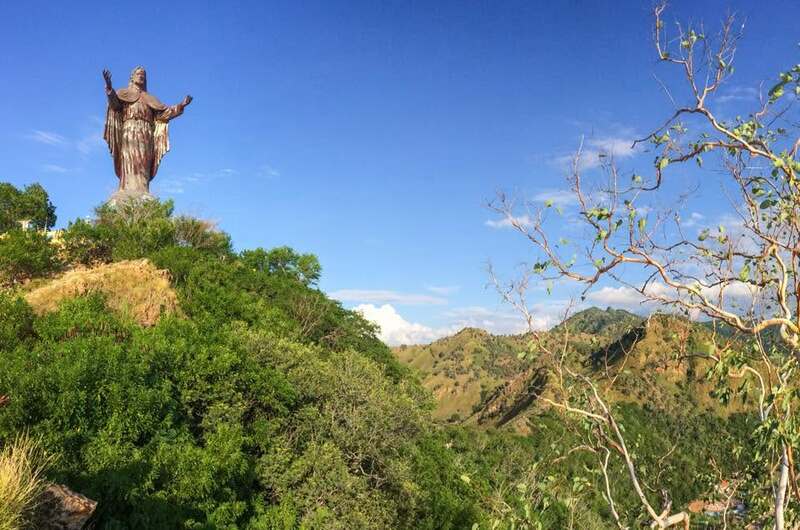
Cristo Rei Statue in Dili
Where Is Timor-Leste?
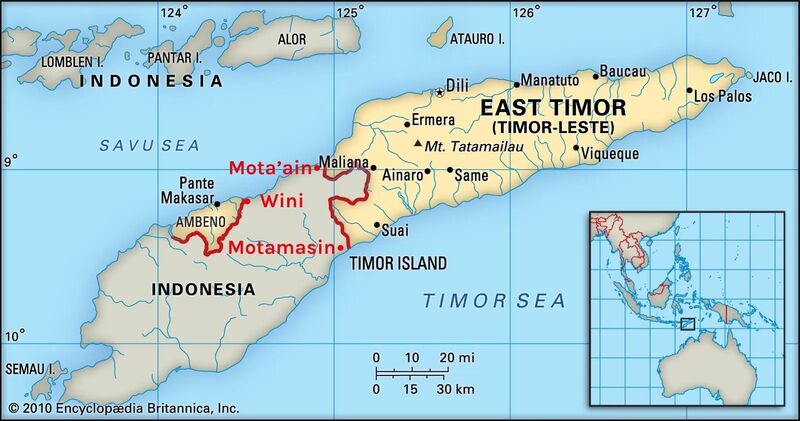
Timor-Leste, also known as East Timor (officially Democratic Republic of Timor-Leste, in Portuguese República Democrática de Timor-Leste), takes up the eastern half of the island of Timor, at the far end of the Malay Archipelago between Indonesia and Australia.
The western half of the island, West Timor, is part of Indonesia.
To make the map even more interesting, Timor-Leste also includes Oecusse Enclave, a small piece of the country on the north coast of West Timor that is completely surrounded by Indonesia.
Fun fact about the (East/Timor-Leste) name: Timor-Leste literally means “East East”. Timor comes from timur, the Malay/Indonesian word for east, while leste is Portuguese for east, so the country’s official name says the same thing twice in two different languages.
The English version, East Timor, manages exactly the same trick, and in Tetum the country is called Timor Lorosa’e, with lorosa’e meaning “where the sun rises”, or, you guessed it, the east.
Three languages, one very clear sense of direction (now you can officially answer the question of 'so where is it located ...?')
Read more on The Country That Accidentally Named Itself East East?
The nation capital is Dili, a laid-back seaside city of slow afternoons at the harbour, sipping some strong coffee with locals and NGO expats, and some very good sunsets over the bay.
Beyond the city, Timor-Leste is the kind of tropical island setting most people only see on screensavers, with white sand beaches, swaying palm trees and turquoise water, all set against a backdrop of rugged green mountains.
A handful of beautiful islands, too, such as Jaco Island and Atauro Island.
It’s easily one of the most beautiful corners of Southeast Asia, and you’ll often have it almost entirely to yourself.
How One Island Ended Up as Two Countries
Long before any Europeans showed up, Timor was split into lots of small local kingdoms, with similar languages, customs and beliefs right across the island.
Then the Portuguese arrived in the 1500s, landing first at Lifau (in what’s now Oecusse Enclave). They were after Timor’s sandalwood, a valuable item back then.
The Dutch weren’t far behind, and by the 1600s they’d set up shop in Kupang, on the western tip of the island.
For the next couple of hundred years, the two sides argued over who got what. In the end, the Portuguese kept the east, the Dutch kept the west, and a few treaties later the border was drawn more or less where it is today.
Oecusse stayed Portuguese, which is why it’s still part of Timor-Leste, even though it’s stuck on the Indonesian side of the island.
When Indonesia took over from the Dutch in 1945 (or 1949 from the colonists' perspective), West Timor came along with it.
Portuguese Timor, on the other hand, stayed a colony until 1975. That year, Timor-Leste declared independence, but only got to enjoy it for nine days before Indonesia invaded.
What followed was 24 years of occupation and a long fight for freedom, often credited to the Fretilin group.
After a determining referendum in 1999, East Timor Independence finally re-declared on 20 May 2002, making Timor-Leste the first new country of the 21st century.
And in October 2025, it joined ASEAN (Association of Southeast Asian Nations), so it’s been a busy few decades.
Same Family, Different Houses
The funny thing about Timor is that the people on both sides of the border have a lot in common, but their history went in very different directions.
Cross from Oecusse into West Timor and you’ll hear similar languages, see the same hand-woven tais, and find many of the same old beliefs and customs.
The big difference is who was in charge for the last few hundred years, with the Portuguese ran the east, so Timor-Leste ended up mostly Catholic, Tetum and Portuguese as its official languages and plenty of old colonial churches dotted around.
The Dutch ran the west, which later became part of Indonesia, so over there people speak Indonesian and most churches are Protestant rather than Catholic.
It’s basically the same family, raised in two different houses. And seeing both sides on one trip is a great way to spot the similarities and the differences for yourself.
Why Travel to Timor-Leste With Koryo Tours?
Timor-Leste is exactly the kind of place we’ve always loved: a young country with an incredible story that most of the world has somehow overlooked, and hardly any tourists.
Our tours here are built the way we build every Koryo trip, around real people, real history and experiences you won’t find on a standard beach holiday.
We’ll sit down with a survivor of the resistance to hear what life was like under occupation, visit the places where the struggle for independence played out, and meet the women’s cooperatives and local organisations working to shape the country’s future.
And, of course, we’ve timed it so that you’ll be in Dili for one of the biggest celebrations in the country’s history.
As always, our groups are small, led by a Koryo Tours leader with local guides who know the island inside out, and full of like-minded travellers who would much rather explore somewhere new than follow the crowds.
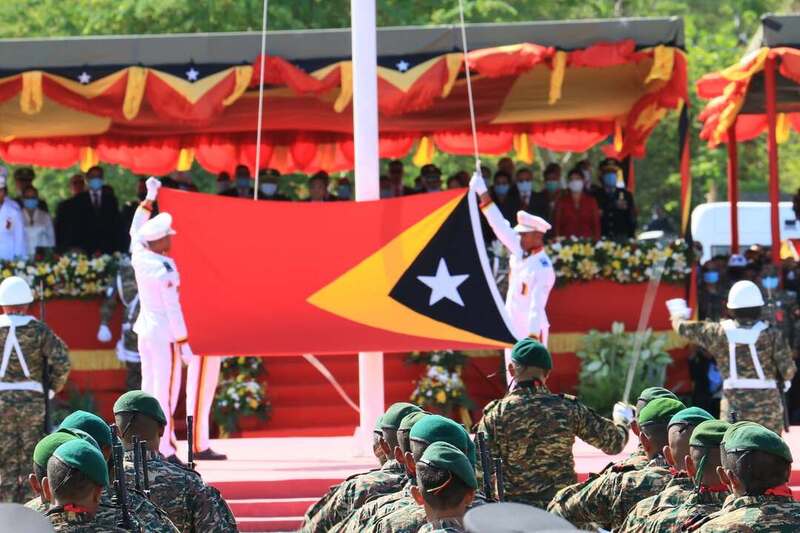
Independence Day in Timor-Leste capital
Koryo Tours: Timor-Leste (Long and Short) Tours
The Short Tour: Independence Day in East Timor (15 to 21 May 2027)
This one’s a week in Timor-Leste, and it’s all about the big 25th birthday on 20 May 2027.
We’ll go to the Independence Eve mass, then watch the flag-raising and the military parade in Dili the next day.
Before all that, we’ll climb the 570 steps up to the giant Cristo Rei statue for sunrise (worth it, we promise), visit the Chega! exhibition and Santa Cruz Cemetery to learn about the fight for independence, and spend a night on Atauro Island.
Atauro’s reefs once set a world record for the most types of reef fish found in one spot, so don’t forget your snorkel.
The Long Tour: East Timor and West Timor (15 to 26 May 2027)
This one does everything on the short tour, then keeps going for another week to see the other half of the island.
After the party in Dili, we’ll hop on a small plane to Oecusse Enclave and visit Lifau, where the Portuguese first came ashore in 1515. Then we’ll cross the border into Indonesian West Timor.
The big highlight over there is a night in Boti Village, often called the last kingdom on Timor. It still has its own king, and people here follow Halaika, an old belief built around the spirits of nature. They’ve kept their traditions going through the Dutch, through Indonesia and everything since.
Staying overnight and meeting the king is probably the closest you’ll get to seeing what life on Timor was like before any Europeans turned up.
We’ll finish in Kupang, where the Dutch set up shop back in the 1600s, with a wander around Fort Concordia and the night market on the waterfront, and a farewell dinner.
So we’ll have started where the Portuguese landed and ended where the Dutch did, which feels like a pretty good way to see the whole story.
Check out our Timor-Leste Tour page here
Why Visit Timor-Leste Now?
Right now, Timor-Leste is one of the quietest corners of Southeast Asia. You can snorkel on Atauro without bumping into another tour group, wander around Dili without a single souvenir hawker following you, and have a beach more or less to yourself.
That’s pretty rare in this part of the world.
But it probably won’t stay this way for long.
Timor-Leste has been peaceful and stable for many years, and things are starting to move. In October 2025 it joined ASEAN, which usually means more flights, more investment and a lot more attention from the rest of the region.
Then in May 2027 it celebrates 25 years of independence, which is bound to put it on a few more travellers’ radars.
We’ve seen it happen elsewhere. A place goes from “Where?” to “Everyone’s going” in just a few years, and the quiet, slightly rough-around-the-edges charm starts to fade.
Timor-Leste isn’t there yet, so this is a good moment to see it while it still feels like a real discovery.
The good news is that getting there is easier than you might think. Most nationalities can get a 30-day visa on arrival in Dili for USD 30 in cash, and EU citizens and several other nationalities don’t need a visa at all.
Read more on the Timor-Leste Visa Travel Guide here
Timor-Leste is just the beginning of our adventures in Southeast Asia, and we can’t wait to see where the region takes us next. In the meantime, places on both tours are limited, so if you’d like to be in Dili for the 25th birthday celebrations, we’d recommend booking early.
So, will we see you at the party?
Koryo Tours
Group Tours to Timor-Leste
Share