Santa Cruz Cemetery is one of the most significant sites in Timor-Leste's history, and one of the hardest to visit. Here's what happened here, and what to know before you go.
Santa Cruz Cemetery is an active burial ground in the south of Dili, and it is one of the most important sites related to Timor-Leste's independence history.
The massacre that happened here in 1991 is one of the darkest moments in the country's history, and today the site stands as an important reminder that Timor-Leste's struggle for independence did not come easily.
Let's take a look at what to know before visiting Santa Cruz Cemetery.
Introduction to Santa Cruz Cemetery
What Happened Here
What to See at Santa Cruz Cemetery
Getting to Santa Cruz Cemetery
Visiting Respectfully
Nearby Sites Worth Combining
Frequently Asked Questions (FAQs)
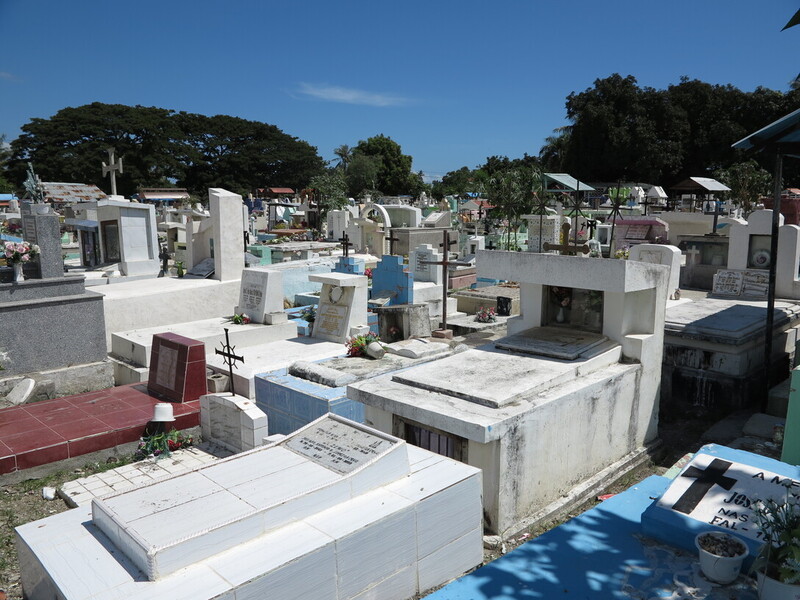
Santa Cruz Cemetery Intro
Santa Cruz Cemetery is located on Rua Santa Cruz, about 1.5 kilometres south of Dili's waterfront and the Government Palace.
It's an active cemetery, still used by the local community as a burial ground.
The cemetery is ranked among Dili's most visited sites, since it's essential to understanding Timor-Leste's path to independence.
What Happened Here
On 28 October 1991, a young man named Sebastião Gomes was shot dead by Indonesian troops near Motael Church.
Two weeks later, on 12 November 1991, a memorial procession for Gomes turned into a peaceful show of pro-independence sentiment for East Timor.
By the time they reached Santa Cruz Cemetery, waiting Indonesian troops opened fire on the crowd, chasing people down and shooting them as they scattered through the graves trying to get away.
How many people died that day? Nobody knows for certain. Indonesia's official toll at the time was under twenty, while independent investigations have put the number at around 250.
Among the dead was a foreign student activist as well as Timorese demonstrators.
Two journalists and a cameraman, Max Stahl, documented the massacre and managed to smuggle the footage out of the country. The documentary that followed is widely credited with turning international opinion against the occupation for good.
A hidden camera in 1991 probably did more for Timor-Leste's independence than a decade of diplomacy managed on its own.
What to See at Santa Cruz Cemetery
Once you arrive at the entrance of Santa Cruz Cemetery, you're surrounded by hundreds of headstones in a dense arrangement, colourful, painted white and pale blue among other shades.
Specific graves and memorial markers connected to the 1991 massacre are scattered throughout the grounds, so having a guide who can walk you through the cemetery with the background history is highly recommended.
The grave of Sebastião Gomes, whose death set the events of 12 November in motion, is one of the more commonly visited spots.
Nearby is the Taman Makam Pahlawan Seroja, the Indonesian Military Cemetery, which offers a direct contrast to the storytelling found at Santa Cruz.
Getting to Santa Cruz Cemetery
Santa Cruz Cemetery is a short driving distance from most accommodation in central Dili.
It's also within reasonable walking distance of several other major historical sites in the city.
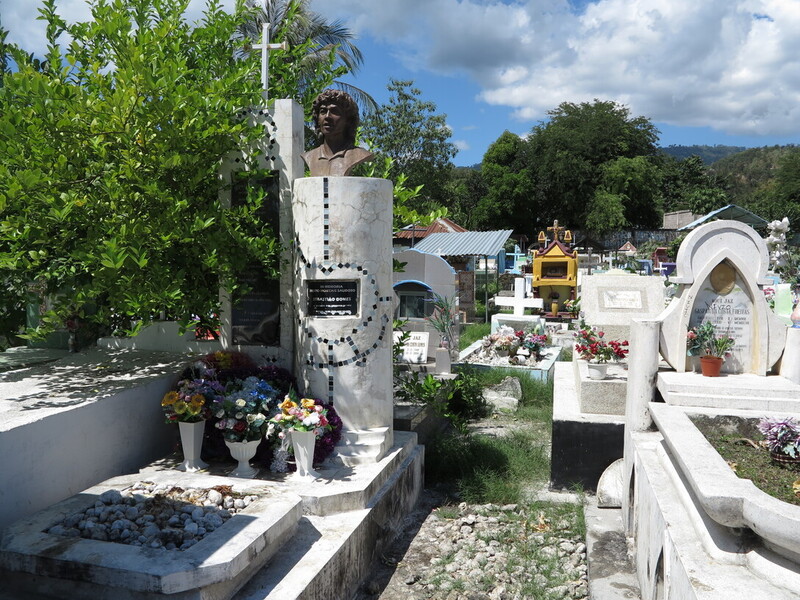
Sebastião Gomes grave
Visiting Santa Cruz Cemetery Respectfully
A few things worth keeping in mind -
- Anybody can visit Santa Cruz Cemetery and wander around alone, but going with a guide who can point out significant graves and give you the background is well worth it.
- This is an active cemetery, so keep noise and movement respectful throughout.
- Photography is generally fine, but be mindful, particularly around specific memorial graves or when a family is present.
- Early morning or late afternoon visit tends to be quieter and cooler, since the cemetery doesn't offer much shade from the sun.
- 12 November marks the annual memorial service held at the cemetery, with prayers, speeches, and wreaths laid at the sites connected to the massacre.
Nearby Sites Worth Combining
For a deeper understanding of this dark history of Timor-Leste, some other relevant sites around Santa Cruz Cemetery is worth visiting:
- The Resistência Timorense Arquivo e Museu (Resistance Museum), which covers the wider 24-year resistance movement.
- The Chega! Exhibition, housed in the former Comarca Balide prison, covering the occupation in far greater depth.
- The Centro Audiovisual Max Stahl, a free archive holding the original footage from 1991 and other material from the occupation era.
- Motael Church, where the 12 November procession began, and where a memorial monument to the massacre now stands.
- Seroja Military Cemetery (Indonesian: Taman Makam Pahlawan Seroja), an Indonesian military cemetery is where sometimes got confused to be the Santa Cruz Cemetery. This is where estimated 700 fallen Indonesian soldiers (1977-1999) are buried.
Frequently Asked Questions (FAQs)
- Is Santa Cruz Cemetery worth visiting? Yes, keep in mind that this is not a typical sightseeing stop but necessary. Most visitors describe it as essential to understanding Timor-Leste's history.
- How many people died at Santa Cruz? Estimates vary, depends on the source: Indonesia's official count at the time was under twenty; independent investigations put the toll at 250 or more.
- Is there an entry fee? No, it's a public cemetery, though a small donation to a local guide is appreciated.
- Do I need a guide? It's strongly recommended since it would be very helpful to hear the story and to look at where it matters or relevant.
- How long should I plan for a visit? Around 30 to 45 minutes at the cemetery itself and longer if combining it with the Resistance Museum or Chega!, both close by.
- Is it appropriate to take photos? Generally yes, but be respectful as you are in a burial ground.
Koryo Tours
Group Tours to Timor-Leste
Share