Everything you need to plan a trip to Dili. The history, the tourist attractions, the best time to go, where to stay, what to eat, and how to get around Timor-Leste's small capital.
Dili is the capital and largest city of Timor-Leste.
It serves as the political, economic, and cultural centre of the world's newest nation since the 2002 Timor-Leste Independence.
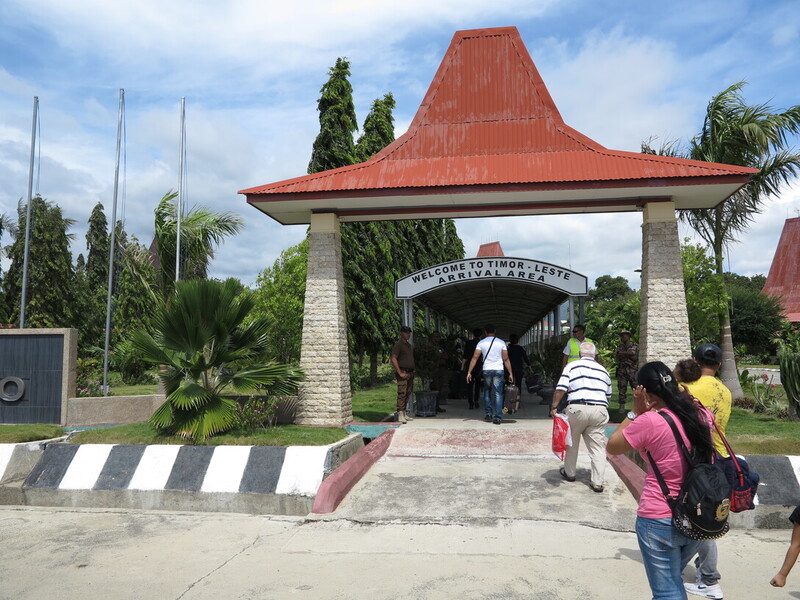
For most visitors, Dili International Airport is their main entry point to start their travel in Timor-Leste.
Let's take a deep dive into Dili, the capital city of Timor-Leste.
What's in a Name (of Dili)?
Dili Geography & Climate
Dili (Brief) History
Dili Demographics
Visiting Dili
Top Attractions in Dili
Getting to Dili
Getting Around Dili
Where to Stay in Dili
Best Time to Visit Dili
Food and Cuisine of Dili
Safety and Travel Tips
Frequently Asked Questions(FAQs)
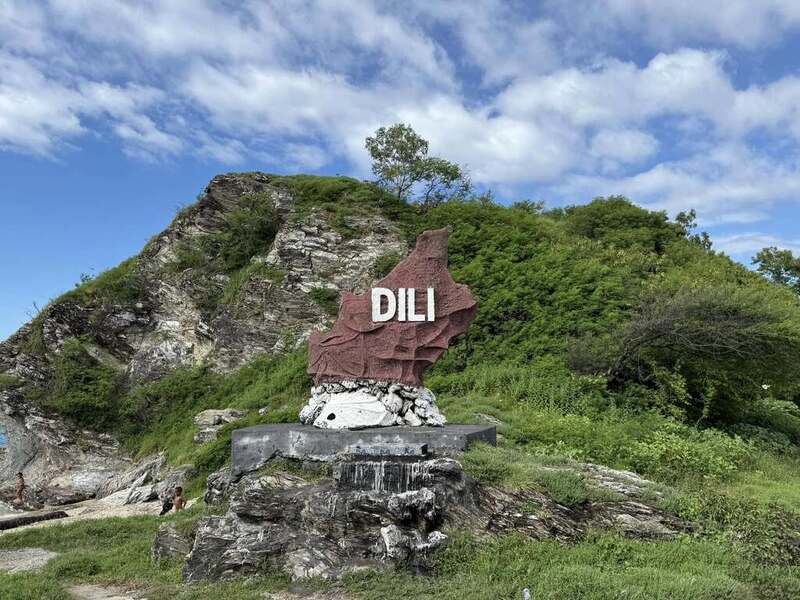
What's does Dili mean?
The exact origin name or the meaning of 'Dili' is unknown, unfortunately.
When the Portuguese traders arrived here in 1769, the name 'Dili' was already established by the local Tetum people.
The name of the country Timor-Leste itself, however, is a very intriguing one.
Timor comes from the Malay/Indonesian word Timur, meaning East.
Not knowing the local language, the Portuguese added the name of this area Leste, also meaning East.
So accidentally, the country’s name has technically meant East East for over 400 years!
Read more of 'East East' Country Name blog post here
Dili Geography & Climate
Timor-Leste is located on Timor Island, and the country shares the island with West Timor, which is an Indonesian territory.
Dili is located on the main part of Timor-Leste, and to the west, there's the Oecusse enclave, separated by a strip of Indonesian land of West Timor.
To the south of the Island, the Timor Sea separates the Island from Australia. Darwin is the closest major city to East Timor with some 700 kilometres (435 miles) from Dili.
As the capital of Timor-Leste, Dili sits on the northern coast of the country, along the Banda Sea to the north.
The city eastern edge is landmarked by the big statue of Cristo Rei on top of the hill.
Just like the rest of the Eastern Indonesian Archipelago, Dili experiences a tropical climate with two main seasons, with temperature between 25°C and 35°C (77f to 95f)
- Dry Season - May to October, a warm, sunny and dry season to make it the perfect time to visit.
- Wet Season - November to April, with (daily) heavy rain and high humidity.
The Brief History of Dili
People have been living on Timor Island for around 35,000 years, making it some of the earliest evidence of human settlement in Southeast Asia.
Here are some brief rundowns of Dili (and Timor-Leste) history.
Pre-Colonial Era (35,000 BC – 16th century)
The evidence of human settlement in Timor can be dated back to some 35,000 BC.
Over time, as the population and communities grew, Timor was divided into small kingdoms with their own languages and trade networks, of which over 30 of those languages are still spoken today.
Early Portuguese Contact (1500 – 1769)
Portuguese traders arrived in 1515 (they landed in Lifau, Oecusse enclave of Timor-Leste).
A few forts, trading routes and some Catholic missions were established all around Timor.
The Dutch also arrived on the island, and colonialism started to define the borders of Timorese land and people.
Dili itself wasn't established as a city until 1769.
Portuguese Colonial Era (1769 – 1942)
Under formal Portuguese rule, Dili served as the colonial capital and administrative centre.
The main export of Dili was coffee, which was introduced to the highlands.
Unfortunately the Portuguese didn't invest in their Timorese land and people, with lack of education amongst the population and minimal development in infrastructure.
As a result, by the end of the Portuguese Colonial Era in the 1970s, Timor-Leste was one of the least developed territories in Southeast Asia.
Japanese Occupation (1942 – 1945)
Japan occupied Timor-Leste in 1942.
Australian and Timorese guerrillas fought back across the mountain interior and an estimated 40,000 to 70,000 Timorese died.
The Portuguese resumed authority after the Japanese surrender in 1945, but the island never fully recovered from the destruction.
Indonesian Province (1975 – 1999)
Portugal withdrew from its worldwide colonies in 1975 and to fill the void, Indonesia invaded Timor-Leste soon after.
What followed was 24 years of occupation and an estimated 100,000–200,000 deaths.
In 1991, Indonesian troops opened fire on a peaceful procession at Santa Cruz Cemetery, killing several hundred people.
Some international journalists captured the footage of the brutality that sparked the independence movement, which caused a UN backed referendum in 1999.
The Road to Independence (1999 – 2002)
The result of the 1999 referendum yielded a 78.5% vote for independence for a new country.
The Indonesian government hastily accepted the result, and Indonesian-backed militias burned Dili (and Pante Macassar in Oecusse enclave) to the ground before withdrawing.
On 20 May 2002, the new Timor-Leste flag went up, and Xanana Gusmão became the country's first president.
What you see in Dili now was largely rebuilt from that point to today.
Post-Independence (2002 – 2012) to today
The first decade was rocky, with a serious political crisis in 2006 that displaced 155,000 people that required UN peacekeepers to operate until 2012.
In October 2025, Timor-Leste was formally admitted as ASEAN's 11th member.
Dili Demographics
Dili is the largest city in Timor-Leste, with a population of approximately 300,000 people, or about a third of the country’s total population.
Tetum speakers are the largest group of the population, and others are Mambai, Bunak and Kemak to name a few. The expat community (of NGO workers, diplomats and development professionals) has grown especially since the Independence in 2002.
The two official languages of Timor-Leste are Tetum and Portuguese. Bahasa Indonesia and English are widely used as working languages, especially amongst the younger population and anyone in the tourism and NGO sectors.
Thanks to the Portuguese colonisation, about 97% of Timorese are Roman Catholic (only the Vatican City has a higher number for this!).
Visiting Dili
Most of the main attractions are within walking distance from the waterfront, but a taxi or motorbike can be useful to reach further places.
The weather can be hot and dusty, especially during the peak of the day, so plan on exploring the city mostly during the early morning or late afternoon to avoid the heat.
Top Attractions in Dili
Cristo Rei de Dili
A 27-metre statue of Christ on a headland east of the city, located on top of a hill on the east side of the city.
You can reach the observation platform where the statue is located by climbing up some 598 steps through coastal forest to view Dili’s best vantage point. Ocean view on three sides, and the whole Dili City view spread out behind.
It is recommended to visit early in the morning as the experience could be very hot by mid-morning and day time. Takes about 20–30 minutes to climb at a relaxed pace.
Timorese Resistance Museum (Arquivo e Museu da Resistência Timorense)
A museum where you can learn about Timor-Leste's full independence struggle from the Portuguese Colonial Period through the Indonesian occupation. Exhibits in Tetum, Portuguese, and English.
Chega! Exhibition
“Chega!” is the Portuguese word for 'enough', 'no more', ‘stop’. Similar to the Timorese Resistance Museum, the exhibition highlights the dark era of Timor Leste under occupation by Indonesia and its struggle for independence.
The exhibition is located in the former Comarca prison used for political detainees during the Indonesian occupation.
Santa Cruz Cemetery
It is an active burial ground and the largest in Dili, and the site of the November 1991 Massacre where Indonesian troops fired and killed over 200 people during a peaceful procession.
There is a small memorial inside to mark the event inside the cemetery complex.
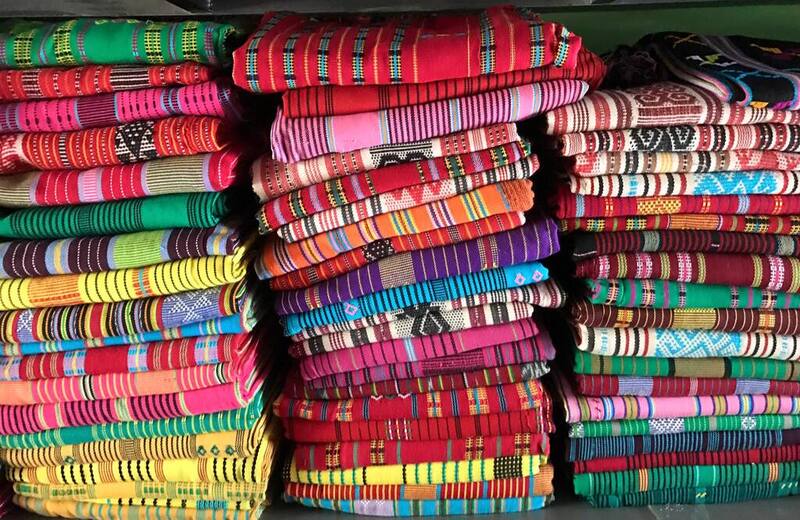
Tais Market
Tais Market is the main cultural market in Dili, with traditional hand-woven tais textiles, sold directly by the women who make them.
There are also working weavers in the market, where you can learn that each region of Timor Leste has its own patterns where designs predate any colonial presence.
Palácio do Governo
This active government office is a landmark of Dili: a Portuguese colonial-era Government Palace on the waterfront, one of the better-preserved colonial buildings in the city.
The Waterfront Promenade
The main public promenade running the length of the city along the harbour with giant shade trees, benches, and coconut sellers.
This is best experienced at sunrise and around sunset when families are out in the evenings.
Getting to Dili
By Air
Presidente Nicolau Lobato International Airport is just west of the city centre. Always make sure to book ahead, and to confirm the flights as this is subject to change.
Direct flights from:
Bali (Denpasar)
1.5 hours, most frequent route
Darwin, Australia
1 hour
Kuala Lumpur
Aero Dili and Batik Air
Singapore
Aero Dili
By Land
Overland from West Timor (Indonesia) via the Batugade border crossing is possible.
Expect a long and slow journey across the land, but at least you can enjoy the beautiful countryside along the road to Dili.
Getting Around Dili
Central Dili is walkable before 9am or after 4pm (due to heat and humidity during the mid day).
For anything further, consider these options:
- Taxis - agree a price before getting in, since they don't operate on meters, but it is pretty cheap within the city.
- Mikrolets - shared minibuses, local and cheap, and routes take some working out (ask local for directions/suggestions)
- Motorbike rental - is roughly $15–25 USD per day that gives you freedom to roam around with your own time.
Where to Stay in Dili
Dili is not cheap to sleep in relative to the rest of Southeast Asia, with limited supply and years of NGO presence kept prices high. With that said, some budget accommodation options exist but are thin.
- Timor Backpackers - best budget option with reliable WiFi, air conditioning, pool. They offer dorm setting and private rooms.
- Hotel Timor - solid mid-range on the waterfront with harbour views and pool.
- Castaway Hotel: - popular with expats with good restaurant and bar attached.
- Novo Turismo Resort & Spa - one of the top accommodation (and price!) in the city, with sea view pool and 'proper' facilities.
Best Time to Visit Dili
Dry Season: May to October
This is the best time to visit with warm, sunny, reliable roads, good diving visibility offshore. Plus, each year on 20 May, Timor-Leste celebrates its Independence Restoration Day, with its biggest annual celebration, full of ceremonies and parades around the city.
Wet Season: November to April
The region enters the mansoon season with heavy rain and high humidity, with the high possibilities of some roads out of the city get difficult.
Food and Cuisine of Dili
Just like its Southeast Asian neighbours (especially Indonesia), food and cuisine in Timor Leste is an important part of the society.
Timorese food is a mix of Portuguese grilled fish (fresh seafood in Dili is easy to find, and it's cheap!), Indonesian rice dishes, and indigenous ingredients (corn, cassava, pumpkin, black-eyed peas).
Timorese coffee is exceptional and grown and produced locally in the highlands.
Dishes to Try in East Timor
Batar da’an
An indigenous staple dish, made of corn, pumpkin, and black-eyed peas, slow-cooked together.
Ikan saboko
Fish baked in banana leaves with fennel.
Grilled fish
At a warung food stall - charcoal-grilled, eaten at a plastic table by the water.
Timorese coffee (of course)
From the Ermera highlands, best if enjoyed black.
Safety and Travel Tips
First thing first - Is Dili (Timor-Leste) Safe?
The short answer is, yes. Dili is very calm and welcoming, and considered as one of the safest capital cities in (Southeast) Asia.
Just like everywhere else, standard safety common sense applies in Dili. Watch your belongings in markets, be aware of your surroundings and don't leave valuables in your rental cars.
Some other useful travelling tips in Dili to know:
- Everything runs on US dollars, cash. Debit/credit cards are not widely accepted outside bigger establishments.
- Bring small bills, especially $5s and $10s. There are ATMs at the airport and in central Dili if you need some cash.
- Do start the day sightseeing in the early morning, by 7am to avoid the day heat and humidity. Rest noon–3pm, just like locals.
- Timor-Leste is a deeply Catholic country, so modest dress especially in churches is expected.
Frequently Asked Questions (FAQs)
1. Is Dili worth visiting?
Absolutely, especially for history, off-the-beaten-path travel, or diving Atauro Island. Dili (Timor-Leste) is still off from usual travellers radar, so visit it soon before it's catching up with the main stream travel trend.
2. How many days do you need in Dili?
Two to three days covers the main attractions and extra days for exploring more to Atauro Island or a drive into the highlands.
3. Do I need a visa for Timor-Leste?
Most nationalities get a visa on arrival at the airport: $30 USD cash, valid 30 days, so check your specific nationality before travelling.
4. What language do people speak in Dili?
Tetum and Portuguese are the two official languages of Timor-Leste. English and Indonesian are widely spoken in the city, especially by the younger people. A simple bondia (good morning) and obrigadu (thank you) in Tetum would impress the locals.
5. Best day trip from Dili?
Atauro Island, for the world-class reef diving and a completely different pace. To get there, catch a 1.5hr ferry ride from Dili port.
Koryo Tours
Group Tour to Timor-Leste
Share