For most visitors, Kupang, West Timor is a transit city on the way to Timor-Leste. But it has good seafood, friendly people and just enough to keep you busy for a night or two. Here is what to know before you arrive.
If you somehow ended up in the City of Kupang (that is in West Timor of Indonesia), the chance is that you don't originally plan to linger.
For the international traveling community, Kupang is a transit city en route to or from Timor-Leste.
But Kupang has a lot of things to offer: great seafood, underrated tourist sites, welcoming locals, and interesting setting as an important Indonesian port city.
Let's take a look of what Kupang has to offer.
Introduction to Kupang
What to See and Do in Kupang
What to Eat in Kupang
Getting to Kupang
Where to Stay in Kupang
Practical Tips
Frequently Asked Questions (FAQs)
Kupang Intro
Kupang is the capital of East Nusa Tenggara province (in Bahasa Indonesia: Nusa Tenggara Timur or often shortened as NTT).
It is the largest city on the island of Timor (exceeding Dili), with a population of around 400,000.
The Island of Timor itself, as you probably can guess it, is shared with the country of Timor-Leste on the eastern part of the island.
Human inhabitation here can be traced back to some 44,000 years ago, before the Dutch and Portuguese colonisations took place that divided West and East Timor.
Then after a brief Japanese occupation in the 1940s, Indonesia claimed Timor as part of its integral country (including East Timor until its independence in 2002).
Visit Kupang in November and December to view its festive blooming red Sepe (Flamboyant) trees across streets of Kupang.
A Brief History of Kupang
Timor was first settled by seafaring humans around 44,000 years ago.
A second wave of Austronesian migrants arrived around 3000 BC, bringing agriculture skills and new languages onto the island.
The 13th century (before the Europeans arrival)
Competing small kingdoms ruled the island when the Chinese and Javanvese traders arrived for the abundance of sandalwood in Timor.
Sandalwood was one of the most valuable trade goods in Asia and Europe at the time.
The Portuguese and the Missionaries
The Portuguese traders and Dominican missionaries arrived in the 1520s, turning Timor into lucrative trading posts.
Christianity (Catholicism) left its mark in Timor (Kupang) of which legacy still visible in Kupang today (it is a majority-Christian city in a majority-Muslim country).
The Dutch Take Over
The Dutch East India Company arrived in 1613, and built Fort Concordia to counter the Portuguese power on the island.
Treaty of Lisbon in 1859 between the two colonists divided Timor along roughly the lines it still follows today into West Timor (the Dutch) and East Timor (the Portuguese).
Bligh and the Bounty
It is worth mentioning that the famous William Bligh (cast adrift after the mutiny on the Bounty) navigated an open boat nearly 7,000 km and made landfall here in Kupang in 1789.
The 20th Century
In the early 20th century Kupang airport became a refuelling stop for long-distance flights between Europe and Australia, making its airport quite significant to this date.
1942-1945 saw the Japanese power took over Kupang, which subsequently resulted Allied bombing destroyed much of the old town before passing into the newly independent Indonesia after the war.
What to See and Do
Kupang is a quite underrated destination, with some of the amazing spots to check out (without many tourists!):
- Gua Kristal (Crystal Cave): a subterranean cave with a crystalline freshwater pool at the bottom. It is a popular local hangout place, about 30 minutes from the Kupang city centre.
- Oenesu Waterfall: is a multi-tiered waterfall where you can swim in the pools. To get there an hour drive through surrounding jungle and rice paddies fields.
- For sunsets, the coastal stretch of Pantai Tedis and the broader Pasir Panjang Beach area are where locals gather in the evenings, with street vendors selling local delicacies such as grilled corn with sambal hot sauce and grilled banana.
- The World Peace Gong in Nostalgia Park: is a quirky monument in the city centre to commemorate Indonesia's multi-ethnic identity that doubles as a pleasant place to hang out.
What to Eat in Kupang
The food here is one of the most underrated things about Kupang, especially if compare it with the rest of Indonesia.
Here are a few things to try in Kupang:
- Se'i: a traditional smoked (pork or beef) meat, thinly sliced and smoked over Kusambi wood, which gives it a distinctive reddish hue and a flavour unlike anything else in Indonesian cuisine. It's almost always served with sautéed papaya leaves and Sambal Lu'at, a tangy fermented chili paste with orange peel and basil. Try it at Depot Bambu Kuning or Se'i Babi Aroma.
- Jagung Bose is a hearty corn and kidney bean porridge cooked in coconut milk, eaten as a substitute for rice. You'll find it sold from carts along Jalan El Tari in front of the Governor's office.
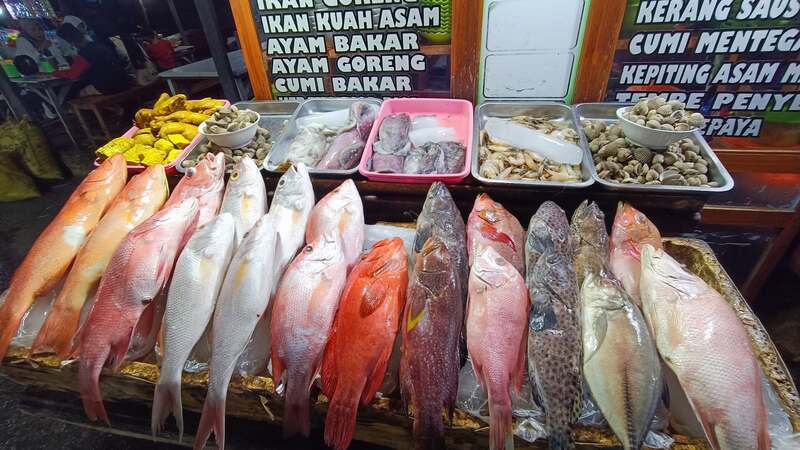
- For the authentic dining experience, check out the Pasar Malam (Night Market) near Jalan Kosasih in the evening. Here, you can find fresh seafood to grill to order with extremely reasonable prices. Who doesn't like a US$5 lobster?
- For a sit-down meal with atmosphere, Taman Laut Handayani on the seafront has spectacular sunset views from the upper terrace and does excellent honey-grilled shrimp, crispy fried morning glory, and rica rica grilled fish.
Getting to Kupang
Flights into El Tari Airport (KOE) connect Kupang daily with Bali (DPS), Jakarta (CGK), and Surabaya (SUB). The airport is about 15 minutes from the city centre by taxi.
Where to Stay in Kupang
There are a handful accommodation options to choose from in Kupang:
- Neo Eltari Kupang by ASTON is probably the best option in town: comfortable, reliable, good breakfast.
- Swiss-Belinn Kristal Kupang is a decent alternative with sea-facing rooms.
- Hotel on the Rock is popular with travellers passing through for its pool overlooking the ocean sunset.
- Budget guesthouses are available throughout the city and are easily found on Agoda, most cater more to domestic Indonesian travellers.
Practical Tips
Here are a few things to know for visiting Kupang:
- Cash is king in Kupang. ATMs exist but can be unreliable (so bring some Indonesian Rupiahs with you, or other currency for exchange). Once you cross into Timor-Leste, however, the currency switches to US dollars.
- How to get around Kupang? Central Kupang is easy to explore on foot, or riding the local bemo minibuses with its interesting decor, loud music (ask locals for the routes). You can also rent a scooter (USD 7-10 daily rate) to get places outside the city centre, ask the hotel staff for assistance.
- Modest dress is expected, especially if you're visiting any religious sites. Kupang is a mix of Christian and Muslim communities, which is quite unusual for Indonesia.
- There is no reliable public Wi-Fi. Pick up a local Telkomsel SIM card on arrival at the airport, and hotels may offer a complimentary (but limited) Wi-Fi.
Frequently Asked Questions (FAQs)
- Is Kupang worth visiting or is it just a transit stop? It's worth a night or two rather than treating it as pure transit. Try the local food (delicious!) and Gua Kristal and the surrounding countryside are super underrated.
- Do I need a visa for Indonesia? Many nationalities can enter Indonesia visa-free for up to 30 days (Check current requirements for your passport before travel).
- Can I get my Timor-Leste visa in Kupang? Yes, the Timor-Leste Consulate in Kupang issues Visa Application Authorizations for the overland border crossing. Apply in person for the fastest result.
- How long does the overland journey from Kupang to Dili take? Around 12 hours by minibus, including the border crossing at Batugade.
- What currency does Kupang use? Indonesian Rupiah (IDR), but once you enter Timor-Leste, everything switches to US dollars so bring USD cash before crossing.
- Is Kupang safe? Yes, it's a safe and friendly city, and standard travel common sense applies here as well.
Koryo Tours
Group Tours to Timor-Leste
Share