Yemen is the birthplace of coffee culture, home to a honey that sells for more than perfume, and the keeper of a feast tradition that turns every lunch into an event. Here is what to expect.
Would you travel to try Yemen food?
People travel for all sorts of reasons. The history, the culture, and, - of course - the food.
A quick confession - I’m not one of those people.
I’m not a massive foodie who travels to find the best pizza (definitely not in Yemen) or best pastries (also not in Yemen).
For me, my travel ‘why’ is the people. And second up would be the culture.
However, I do know a good dish when I smell one.
And after visiting over 100 countries, I can definitely poinpoint some of the countries that stood out in terms of food.
So, when I first went Yemen, the food, as always, was an afterthought.
Yemen food isn’t a wildly popular cuisine and afterall, I was going primarily for mud-brick skyscrapers and canyon villages, and Yemeni hospitality I’d heard so much about.
I was expecting a pretty rough ride, I’m not going to lie. I figured I'd eat whatever appeared in front of me and be grateful. Although I am a fan of general Middle Eastern cuisine so there was a little anticipation there.
Well, I think anyone who goes to Yemen and tries Yemeni food will be able to tell you to be prepared… to put on some weight.
And of course we’re not just talking food food here, but Yemeni coffee - we can’t forget about that, but we’ll get to it later.
Yemen is the birthplace of coffee culture, home to honey that sells for more than perfume, and the keeper of a feast tradition that turns every lunch into an event.
Here's your complete guide to eating and drinking your way through a Yemen tour.
The Yemeni Food Feast
How to eat food in Yemen
Yemen food and what to expect
The Yemeni Food Feast: Lunch on the Floor?
Let's start with the format, because in Yemen, how you eat matters as much as what you eat.
I’m no stranger to eating on the floor with my hands and Yemen is also no exception to this.
I learnt very quickly a few years ago that you either have to fully - I mean fully - embrace this culture. Otherwise, you’re going to be really uncomfortable. And really hungry.
You won’t always be eating on the floor in Yemen but it’s worth it at least once, in a more rural location and where there may indeed be no other option.
Your dining experience will then further depend on two things; what you’re eating, and who you’re eating with.
In terms of what you’re eating, it’s most likely some meat and rice. Vegetarians, there is something for you but I won’t lie, it’ll be a tad tricky. We’ll get more into actual food shortly.
Firstly, let’s cover how to eat food in Yemen.
How to eat food in Yemen
For who you’re eating with, this will drastically change your Yemen dining on the floor experience.
And let me preface this by noting this as merely an observation - not passing judgement either way.
We pulled up at a local restaurant, took off our shoes, (pro tip - bring shoes that you can slip on and off easily, you’ll be doing that a lot) and the group slowly started to sit down cross-legged on the floor around a long plastic mat.
Let me set the scene - I’m in Yemen running a group tour. We have different dining sections - usually these would seperate families, women, and men - with high walls.
In the end, there’s no space for me to sit with the group of foreigners so I sit with the drivers and guides. Hands race to the rice as soon as the large sharing plate is put down, the meat eagerly torn into, sauce dipped into eagerly. I don’t hold back - I didn’t want to go hungry.
Then the dishes started landing, and they did not stop.
Great platters of fragrant rice. Whole roasted chicken and slow-cooked lamb that surrendered at the touch. Flatbreads straight from the oven, blistered and torn by hand. Bowls of spiced broth, fiery sahawiq salsa bright with chilli and tomato, and fasolia beans for scooping. Everything is shared, everything is eaten with the right hand, and everything moves fast.
No one said a word - just focusing on what was in front of them. A short 10 minutes later and the aftermath leaves me almost unable to stand up to get out to wash my hands - rice, sauce, meat and bones all over the mat upon which the plates were set. Not to mention my full tummy weighing me down.
I tiptoed out and after giving my hands a good scrub and getting final remnants of food out from under my fingernails, I peered over the walls to the other sections the group were eating in. I was surprised to see an entirely different scene emerge.
Everyone had individual plates they were piling their rice and meat onto before tucking in with spoons they’d requested. The mat, spotless. Most of the food was still leftover. I’d had to fight for the last piece of chicken; here, they were arguing over who would help finish.
They were chatting amongst themselves in hushed tones so as to not disturb the group next door; futile, considering the shouting going in strong Yemeni Arabic across the restaurant on above the small walls separating this small square of serenity from the otherwise chaos that is the Yemen restaurant and dining experience.
The moral of the story? You might want to choose your dining partners wisely.
(I know who I would still sit with at least…).
Yemen food and what to expect
What will you be eating?
Seafood in Yemen
Just when you settle into a rhythm of rice, lamb, honey and qishr, and think that’s all Yemeni food has to offer - think again. If your Yemen trip includes a trip to the sea at Al-Mukalla, you’re in for a trea.
A port city of white buildings and elaborate minarets on the Arabian Sea.
And the menu transforms.
Whole fish pulled from the Arabian Sea that morning, rubbed with spice and roasted in a tandoor-style oven until the skin crackled, served on rice with lime and fresh salsa.
After days of desert cuisine, it can make you emotional.
If you have time, make sure to visit Mukalla's famous fish market, where the daily catch arrives in a vivid spectacle of boats, buyers and fish of every kind. Tuna the size of toddlers. Crates of glittering sardines. Auctioneers in full voice. Cats positioned with tactical brilliance. If you want to understand a coastal city in fifteen minutes, stand in its fish market at opening time.
Dates
The Hadhramaut is date country, and Seiyun itself is nicknamed the City of a Million Palms. You'll see the groves carpeting the wadi floors everywhere you go, and the dates in the Al-Handal souk are plump, sticky and dangerously snackable. They make the second-best edible souvenir after the honey, and unlike the honey, nobody at airport security raises an eyebrow at a kilo of them.
One more tip: pace yourself. Yemeni hospitality interprets an empty plate as a request for more. I learned this the delicious, painful way.
Yemeni Coffee
Here's a fact that should be shouted from rooftops: Yemen is where coffee culture as we know it began. The port of Mocha, the word itself now stamped on every café menu on earth, is Yemeni.
Coffee beans were cultivated and traded from these highlands centuries before espresso machines existed.
So drinking coffee in Yemen is not a snack break. It's a pilgrimage.
Or at least that’s the excuse you can give yourself if you’re visiting Yemen purely for the coffee.
But if that’s the case, I’m also here to disappoint you - a bit. Yemeni coffee is very famous. And for good reason, it’s incredible.
But firstly, the version of Yemeni coffee you'll meet most often might surprise you. Qishr, the everyday brew of the Hadhramaut, is made not from the roasted bean but from the dried husk of the coffee cherry, simmered with ginger and spices. It's light, golden, warming and faintly fruity, somewhere between coffee and tea, and it's served in small cups that get refilled.
A visit to a local home in Yemen will provide you with the Yemen coffee and coffee culture you’re looking for.
And to be honest it’s the only real, authentic way to drink it.
Forget a trip to a local Starbucks-style coffee shop or cafe. That culture hasn’t reached Yemen (yet).
Secondly, culture in Yemen is still local, traditional, and focused on sitting back and spending time to drink. You don’t often get this on a tour which moves quickly; so you have to add this into your itinerary. A relaxed stop for locally-brewed coffee.
Otherwise, you might have to just pick up a bag of Yemeni coffee to take home (your friends and family will thank you).
Sidr Honey in Yemen: Liquid Gold of Wadi Doan
Now for the superstar.
If Yemen has a single legendary export beyond coffee, it's Sidr honey, and the Hadhramaut, especially Wadi Doan, is its heartland.
And this will in no way, shape or form disappoint you.
Actually, your only disappointment may be not being able to bring enough back home with you due to luggage space - or lack thereof.
Sidr honey comes from bees that feed on the blossoms of the Sidr tree, and it is considered among the finest honey in the world, prized across the Arab world for its medicinal qualities.
People take it for everything from sore throats to general vitality, gift it at weddings, and pay prices that make Manuka honey look like a supermarket deal.
Look it up - I’m not exaggerating. This stuff goes for a lot.
If you can find a tour to Yemen that includes a tasting sessino of Sidr honey with a local beekeeper in Wadi Doan, it will instantly become a trip highlight.
The honey is dark amber, almost molasses-thick, with a depth of flavour that rolls through caramel, dried fruit and something faintly woody.
The beekeepers explain the seasons, the hives and the harvest, with the quiet confidence of a man who knows his product needs no marketing.
Buy some. Buy more than you think you need. I bought one jar, finished it within a month of getting home, and have been mourning ever since. They make the best souvenirs and plsu - it’s healthy?!
Sidr honey is the single best edible souvenir in Yemen, and probably in the entire region.
Koryo Tours
Group Tours to Yemen
Share
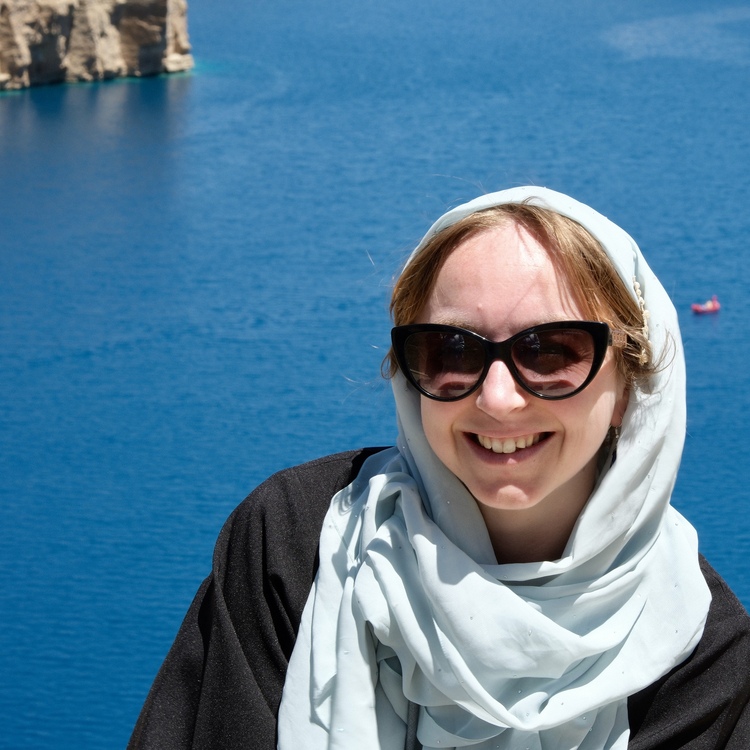
Zoe Stephens
Zoe is the marketing manager and a tour leader at Koryo Tours.
Her love of meeting new people and exploring new cultures has led her to study several languages including German, Japanese, and Chinese. Having lived in several different countries across 4 continents, she often writes about languages and culture in her blogs and is very active on social media. During the COVID-19 pandemic, she was 'stuck' in Tonga for 1.5 years after a weekend away. Ask her for some stories!
🎥 Vlogs on North Korea
🎙 Discover North Korea Podcast
➤ Instagram | Facebook | TikTok | Twitter/X