I first visited Moldova and Transnistria in January 2006, as part of a wider trip that took me through Ukraine and across the Caspian on a freight ship. My most recent visit was rather different, with a wife and two small children in tow and considerably better weather. Here is what twenty years of change actually looks like on the ground.
Written by Koryo Tours General Manager Simon Cockerell
I first visited Moldova and Transnistria in January 2006, as part of a trip that took me from there through to Ukraine, on to the Caucasus and across the Caspian Sea on a freight ship to Turkmenistan.
It was cold and snowy almost all the time, but fuelled by the exuberance of youth and the excitement of a first visit to many of these areas this was a mere irritant rather than a setback.
My most recent visit to Moldova and the PMR was quite different, with wife and two small children in tow, with the weather significantly better, days longer, and with more time to explore this remarkable area.
I was very interested to see how things had changed and what may have remained the same – what experiences from the first trip I could apply to this one, and what signs of change and stasis I could point out to a pair of disinterested toddlers.
First Stop, Chisinau
Chisinau was the first stop each time, in 2006 I stayed at the Hotel Turist, which I sought out and found had since turned into apartments with some shops on the ground floor.
Instead of going full nostalgia and camping out in the foyer we opted for a half-decent hotel instead, which was probably the right choice.

2006 / 2026
Many places visited while walking and taking trolleybuses around the city were the same each time.
The Triumphal Arch, the various government buildings lining the main streets, Stephen the Great Park, which was significantly more pleasant in the late spring of 2026 than the deep winter of 2006, although less starkly pretty without being covered in snow.

2006 / 2026
Of course, the most recent visit also included some visits that a lone man in his 20s rightly skipped. A lot of playgrounds, and a dino park (which was very much a bouncy castle park that also had some dinosaur models).
In terms of food it was good to re-experience some of the traditional dishes first sampled in 2006. Lots of polenta-based dishes in particular, with this grain product being something I had never had before my first dinner in Moldova and have had little of since.
Good stuff though, especially when tried with various roast meats, peppers, and tastier-than-I-recall Moldovan wine.
Train to Tiraspol
In 2006 I left Chisinau by train for Tiraspol, paid a ‘fee’ to a cheeky customs officer who checked documents in the carriage, and arrived in the Transnistrian capital not really aware of what it would be like.
With train service suspended since the start of the war in Ukraine, this is no longer an option. So, this time it was the luxury of getting a private driver to take our family after attending a friend’s birthday party at a villa designed by Alexey Shchusev, the architect of Lenin’s tomb, on the 90-minute drive between the two capitals.
This time it was a simple and ‘fee’-free stop at the PMR customs point to gain entry to this breakaway territory, no more-recognised or less real than it was more than 20 years earlier when I first set foot here.
We had opted for the same hotel as before, so I was ready for a basic and cold experience with floor attendants sitting at the end of the corridor, handing in the pendulous key whenever I left the building, and so on... Only to find that the Russia Hotel is very much not what it used to be.
Russia Hotel
The structure remains the same, it still has a casino, and some of the soviet era features such as tiny elevators, towering ceilings, and corridors wide enough o drive a bus down are still there. But the general upgrade has been significant with quality rooms, comfy furniture, and all mod cons such as Wi-Fi, Netflix, and a fine buffet for breakfast.
A fine choice, and still with a balcony view of the House of the Soviets and the same large bust of Lenin looking down the street towards this building.

2006 / 2026
Transnistria Then and Now
When I first visited Transnistria it was even less known than it is today.
Far from a cool destination, it was a curiosity to me as someone with a deep interest in the Soviet Union and its relics, and yet still something largely unknowable due to the lack of literature or reliable information flowing from within.
I had been in Russia a number of times before, so this was not my first time seeing a Lada, or using some form of Rubles, but I found it thrilling and exciting to me somewhere so different from where I had been just that short train ride away is Chisinau.
Soviet iconography and symbols, statuary and monuments, all present and correct and there for a reason: because they still spoke to the ethos of the state.
This is unchanged, with all the same sites extant in 2026, and the government still the same as before, although the personnel have changed, not being an actual life-dictatorship for former President Igor Smirnoff, which is surprising to many who assume it would simply be ‘that kind’ of place.
What else was familiar?
The presence of Russian military in the territory (not wandering around so much, but with bases and guard posts, mostly in Beder rather than Tiraspol, visible) is one constant, but this time it was notable, and curious to me, that there were Russian flags alongside PMR’s own on government buildings.

2006 / 2026
Odd, as Transnistria may rely on Russia, but it is by no standards part of the country.
However, perhaps this was related to the presence of EU flags now on a lot of government buildings in Chisinau (Moldova is not part of the EU), a sign that a side is being explicitly taken in the conflict going on very close to this area.
Tiraspol had changed in many ways though. The place was more bustling, had plenty of new buildings sat alongside the unchanging pre-fab apartment buildings ubiquitous in the USSR. It was nice to see the public parks maintain their tree-lined and playground-friendly vibe, but with upgrades including some new kiosks, a funfair near the Suvorov statue, and an impressive collection of coffee shops and decent restaurants.
The locally-made cognac still tasted the same, and nostalgia based eateries and souvenir shops help to scratch that USSR itch, and the trolleybuses seem to be the exact same ones as I rode decades before, with the pittance charged for a ride probably being about the same too.
It may seem odd to take children to such a place, but I was glad that they loved it.
There are plenty of soft play options, toyshops, and parks to visit, and when you’re too young to know or care about what country is recognised by whom, or the history or geopolitical context of where you are then the idea of being somewhere a little quirky and odd is not really a factor.
Plus, people everywhere like friendly kids, so as conversation starters with local parents and children they are invaluable (I had certainly not spoken to many local toddlers while there alone in winter as a solo man).

2006 / 2026
Ending in Odessa
My trip in 2006 ended here with a marshrutka ride to Odessa.
This road between Transnistria and Ukraine still exists, although is less used these days, for sad reasons of course, but this time it was back to Chisinau by road for me and my delegation.
Back through the city of Bender (where the remarkable fortress was much better equipped for visitors this time than the first time, renovations having happened in the meantime).
Past the various supermarkets and sports complexes owned by the Sheriff conglomerate – another familiar name from the first visit, when it was almost immediately clear that while there is government in the PMR there is also a single powerful company that has outsized influence in the territory, and I still have my, now-vintage, Tiraspol FC scarf of course.
I can say, subjectively of course, that both Moldova and Transnistria have become even more attractive as places to visit in between these first and most recent trips. With development taking place but still both states avoiding the kind of generic globalisation that such progress often brings with it.
The experience was different, but it was stimulating, exciting, and left a hunger to return soon.
To see more changes, more stasis, and to have a bit more polenta and wine too, for the full experience of course!

2006 / 2026
Koryo Tours
Group Tours to Moldova & Transnistria
Share
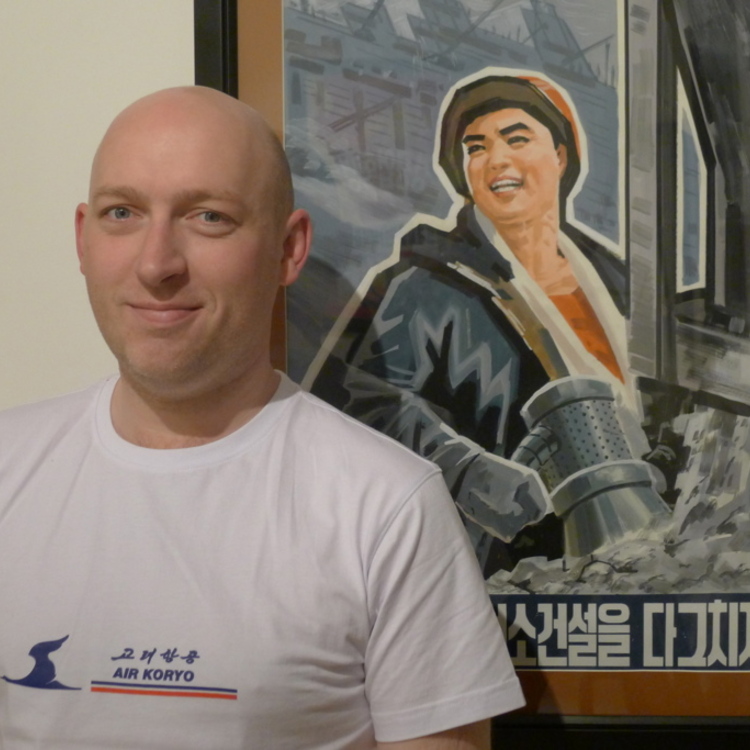
Simon Cockerell
Simon has been Koryo’s General Manager since 2002. He has travelled to North Korea more than 175 times and has probably been to the country more than any other Westerner. He is a respected speaker on the country and appears regularly in international media. He is also a tour specialist in Kazakhstan, Turkmenistan, and the Russian Far East where he has personally designed and led multiple tours over the years.