I took the bus for 3 days across Mongolia to the far western city of Olgii, in search of the Kazakh eagle hunters people kept telling me I needed to meet. Here is what happened when I found them.
I’m often asked on tour how I meet and come into contact with many of our local contacts.
My interest in the Kazakh eagle hunters began many years ago, probably after my sixth or seventh visit to beautiful Mongolia.
It quickly proved to be, as many of its taglines suggest, the “Land of the Blue Sky” thanks to its incredible number of sunny days each year, and truly a home of adventure travel.
I had previously travelled through Kazakhstan and Kyrgyzstan, where I met eagle hunters and falconers. Although fascinating, some of those interactions felt a little polished and, at times, slightly contrived. It wasn’t until I was in Mongolia that friends and fellow travellers began mentioning the fabled Kazakh eagle hunters.
As I travelled more widely around the country, people kept asking, “Have you seen the eagle hunters yet?”
It became one of those questions that made me feel I hadn’t truly experienced Mongolia without meeting them for myself.
Years passed, and it wasn’t until I started working for Koryo Tours that the opportunity finally arose.
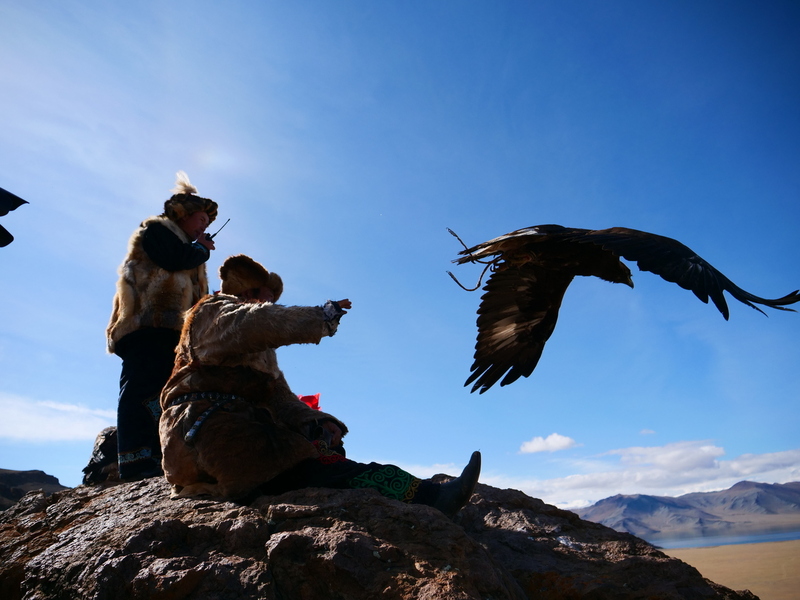
The Eagle Hunter Adventure is Born
We discussed building a new tour, and I immediately knew I wanted to include the Kazakh eagle hunters. Not only would I travel to their remote region, but I also wanted the chance to spend time with them, interact properly, and learn a little more about their traditions and way of life.
So, with this in mind, I set off with a good friend and guide, Bahu.
Those who have travelled on tour with me will know him well, along with the many members of his family that we work with across western Mongolia.
Travelling to the Far West (For 3 Days)
The plan was simple. Fly across the country, meet Bahu in the city of Ölgii, then travel through the vast Altai Tavan Bogd National Park to help plan what I hoped would become an incredible new tour.
Most importantly, it would finally give me the chance to properly meet and spend time with the Kazakh eagle hunters themselves.
As with many things in Mongolia, however, a major stumbling block soon appeared. Just before departure, I was told my flight had been cancelled due to bad weather. I was hugely disappointed, but my wife who is from Mongolia suggested another option... take the local bus instead.
I still had two days to spare, so we bought a ticket, stocked up on snacks, and I boarded what felt like the beginning of a real adventure.
With “Made in Korea” splashed across almost every surface of the bus, and working for Koryo Tours, I somehow felt I was in safe hands.
So, I set out on the 3-day-long bus journey to reach the far-flung city of Olgii, capital of the Bayan-Olgii Aimag (Province).
Now, in this day and age, one might expect a few precious luxuries from a long-distance bus journey like this. A toilet perhaps. But no, not in Mongolia!
At every stop, there was a chance to get some food, or pop into the toilet. But not both. I learnt this the hard way when I tried to get myself some lunch after a quick toilet stop.
I was greeted by an angry bus driver beeping his horn, and a lovely local lady who came to get me, threw my food in a carrier bag, and then threw me in turn back onto the bus.
I later learnt that it’s not uncommon for buses to simply leave latecomers behind!
Searching for the Eagle Hunters
So, finally I arrived in the distant Kazakh city of Olgii.
Whilst this region may be Mongolian politically, ethnically it’s almost entirely Kazakh. With its own language, culture, traditions, and cuisine, as much as I felt I knew Mongolia, this was a stark change.
Picking up our local fixer/friend
Upon my arrival, I met Bahu, our local guide who has since become a dear friend and fixer. We set off into the countryside in search of Eagle Hunters.
Our trusty steed for this trip was an old Russian UAZ-452, incredibly reliable, incredibly uncomfortable. But no matter!
This trip wasn’t about comfort. It was about a real adventure to meet some of the most remote people on earth.
Riding in the Russian Bread truck
After a few hours being thrown around the back of a Russian bread truck, we arrived in a stunning valley that I’ve since come to nickname ‘The Valley of the Children’.
The surroundings of the valley can’t be described as anything less than overwhelmingly beautiful, although that is what the province is known for.
Local Mongolians often consider Olgii the jewel in the crown of their natural environments, and it’s easy to see why.
We planned to carry on to Khar-us Lake, or ‘The Black Lake’, but the weather turned. As we drove, we probably stopped one too many times for cigarettes, which meant the weather hit too early, and by the time we reached an old rickety bridge over the river, it was washed out completely.
Camping in Gers / Yurts
We continued trundling along until, in the middle distance, a flash of white on the otherwise green and gloomy horizon. Local Mongolians would call these traditional tented dwellings ‘gers’, however, since the region is Kazakh, they’re known as ‘yurts’ here.
My trusty friend and guide Bahu instantly knew these were eagle hunters, although not any family he’d encountered before. This was odd to me; Bahu seems to know everyone in Olgii, so to meet some locals he isn’t aware of is quite the feat!
Since it was already late in the evening, we wouldn’t have time for a typical visit, meeting the eagles, and all the typical hustle and bustle that goes with meeting a nomadic eagle family. Either way, cold, hungry, and tired, we went to say hello.
What happened next was a true testament to Mongolian/Kazakh hospitality.
True Kazakh Hospitality
A man from a neighbouring yurt came to greet us as we rolled up, welcoming us into his home, introducing us to his whole family.
Not only his wife and children, but also his two magnificent hunting birds, which stood by his yurt. At the time, he had two eagles, which is more or less typical for a Kazakh Eagle Hunter.
Generally, they keep the birds for a few years, releasing them whilst they’re still sexually mature and able to mate; this limits the impact of the practice on the bird population itself, and the local ecology.
We spent the evening with the family, drinking local drinks, enjoying their homemade food, and telling stories late into the night – often, these nomadic families are just as intrigued about us as we may be about them.
Keeping in Contact
Since that trip, I’ve done all I can to visit that eagle hunter every year, keeping up with news about him and his family through Bahu and other friends I’ve come to know in Olgii in the years since.
In recent times, they’ve moved closer to Olgii city after his wife was involved in a car accident and needs to be a bit closer to a hospital. They still live semi-nomadically, but much closer to the urban centre of Olgii than in a distant valley.
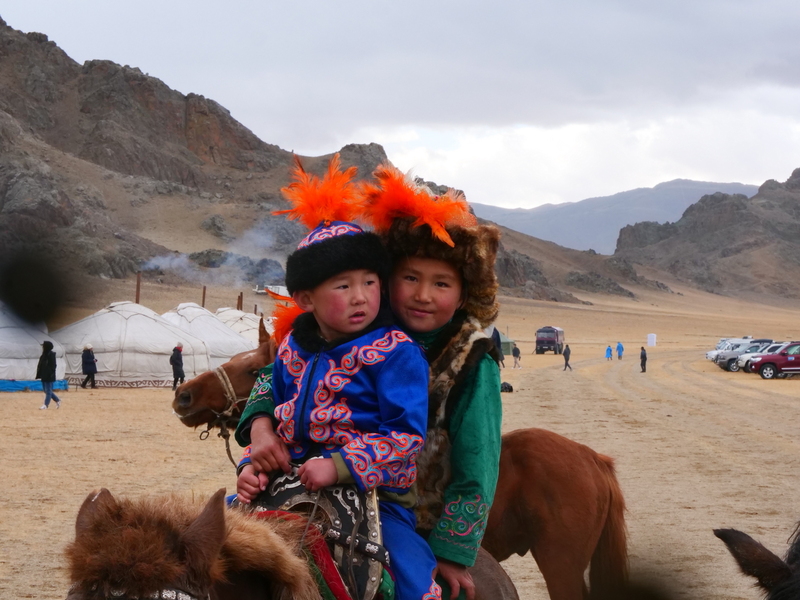
He’s still involved in the local Eagle Festival, which sees local hunters pit their hunting birds against each other in a thrilling 2-day contest. In fact, at the end of Covid I took a group to meet him in the countryside and, unfortunately, forgot to bring any cash to thank him for his hospitality.
“Never mind,” he told me, “Next Year”.
Well, the next year rolled around, and we visited the Eagle Festival as normal, when the hunter spotted my group and me whilst parading alongside his fellow hunters on horseback. So, naturally, he broke rank to ride straight up to me and remind me to pay him! Needless to say, I paid him back with interest!
I think that’s why I’ve held this story in such high regard, since I feel it encapsulates much of what is great about Mongolia.
Not just the stunning landscapes and sense of adventure, but the sweet, kind, and warm people that make this a country I feel happy to call home!
Koryo Tours
Group Tour to Mongolia
Share
Rich Beal
Rich Beal is our International Tours Manager.
Rich is one of our most experienced tour leaders. He has led tours worldwide since 2004, specialising in Mongolia, Tajikistan, Turkmenistan, and the surrounding area. Currently living in Mongolia, he leads multiple specialised trips annually and has over 20 years of experience running and designing tours of the region.