An Ancient City with 3,000 years of history - that no one visits.
Have you heard of the Ancient City of Bost?
When most people visit Afghanistan, they visit the main spots. Kabul, Bamiyan, Band-e-Amir and other big cities like Mazar and Herat. The more I visit Afghanistan, though, the more I find the most interesting areas to be the ones not really on the map, but still incredible.
In fact, that's largely why they're so interesting and bizarre. Hundreds or thousands of years of history that in any other country would be signposted and protected by metal fencing; in Afghanistan often just lies off the side of the main road, easy to pass by unless you know a local.
Many times, driving through remote areas, I've noticed something that looks mildly interesting and relatively old and significant; only to look it up on Google Maps for nothing to be there.
Perhaps it really was nothing. Or maybe it was. I guess only with time will we be able to uncover more of Afghanistan's fruitful ancient history.
Why the Ancient City of Bost?
The Ancient City of Bost isn't quite one of those. Actually, it's incredibly well-known within Afghanistan.
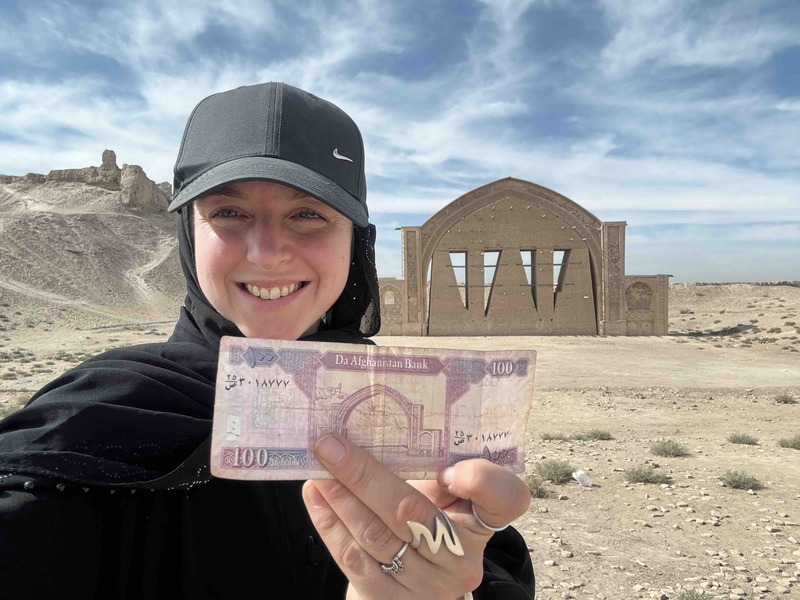
Indeed, its famous archway is the logo for the Ministry of Information and Culture - the ministry looking after tourism in Afghanistan. However, outside of Afghanistan it's barely known, and I've never seen a single other tourist in Bost.
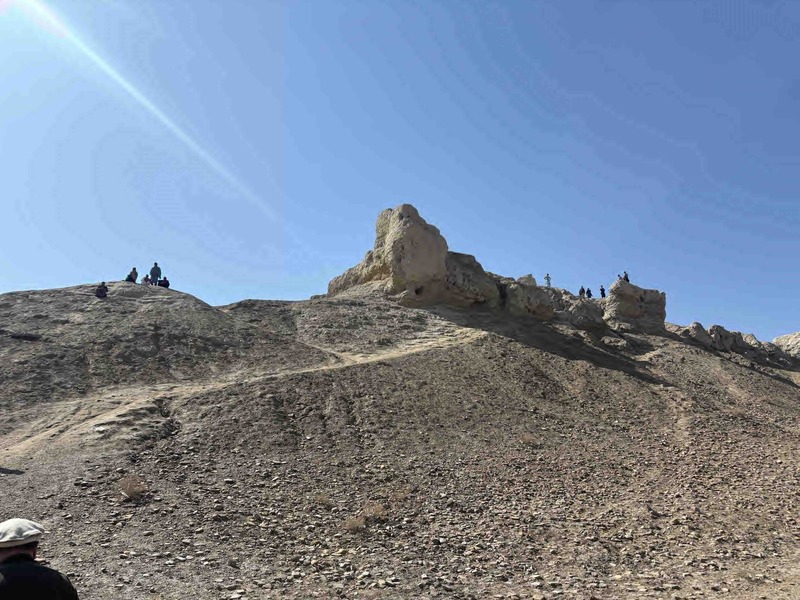
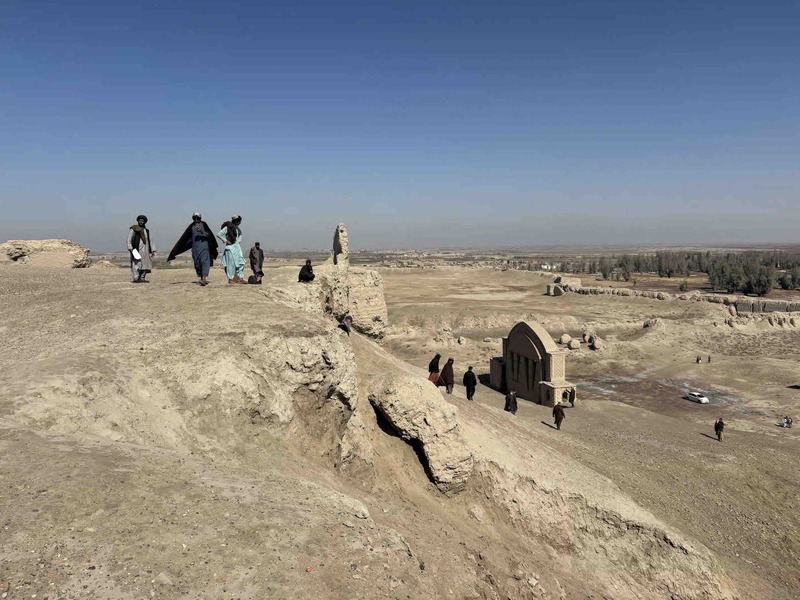
The archway of Bost itself may be an iconic symbol, but visiting the site, it's clear that it's another great piece of history lost to time, and wars. The bumpy drive up to the main centre of the city that stretches over several kilometres will have you pass through the leftovers of ancient buildings and structures that are now the home to sheep and cows.
Nevertheless, despite the unvisited nature of this ancient city, it's one of my favourite places to visit in Afghanistan.
Why?
It's kind of the whole package.
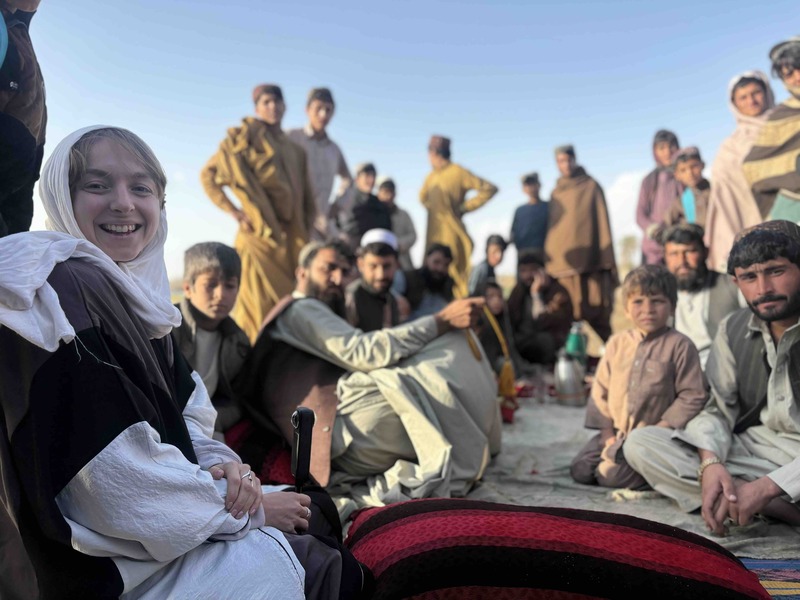
Bost is incredibly remote. 2-3 hours on a dirt road from the closest city, which is more like a small town, which is another 3-5 hours away from the closest big city - Kandahar. The town closest to Bost is called Lashkah-Gah, and it's fabulous. The people are just wonderful. And the exploration of the Ancient City of Bost itself is great fun, as you not only can walk around the site but also go deep underground into the site.
So, let me introduce you to the Ancient City of Bost in Afghanistan.
Ancient City of Bost Introduction
Getting to Bost, Afghanistan
History of the Ancient City of Bost
The Lashkari Bazar - A Medieval City
The Palace of Mas'ud I
The Lost Paintings of Bost
Qala-e-Bost Famous Archway
Rise & Fall of Bost
Visiting Bost Today
Is it Worth Visiting Bost?
Ancient City of Bost Introduction
Hidden away in southern Afghanistan, the ancient city of Bost is a remarkable archaeological site of medieval palaces, monumental brickwork and centuries of history. From a 199-shop bazaar to the remains of a Ghaznavid royal residence, this is one of Afghanistan's most fascinating and least-visited historical destinations.
Located in Helmand Province, close to the modern city of Lashkar Gah, Bost was once an important centre of commerce, political power and royal life. Today, much of its former grandeur survives only as archaeological remains scattered across an enormous landscape along the Helmand River.
But what remains is fascinating. There are monumental arches, the ruins of royal palaces, the remains of a medieval bazaar and evidence of a city that once connected some of the most important cultural and commercial worlds of Asia.
Getting here isn't necessarily straightforward, but if you're interested in Afghanistan's history beyond the usual destinations, Bost is well worth discovering.
Getting to Bost, Afghanistan
Reaching Bost is an adventure in itself.
You can visit from Kandahar, although the journey takes several hours by road. Alternatively, you can travel south from Herat towards Kandahar, stopping overnight in Lashkar Gah, the main city of Helmand Province.
This is the option we chose, and it makes for a particularly interesting journey through a part of Afghanistan that sees very few international visitors.
The route also passes the former sites of Camp Leatherneck and Camp Bastion, the enormous US and British military installations established during the war in Afghanistan. You cannot simply enter these former bases as a visitor, but seeing the sites from the surrounding area is a striking reminder of the more recent history of Helmand.
Helmand
Helmand is honestly one of my favourite places to visit in Afghanistan. There are very few tourists, accommodation options are limited, and the local routine is refreshingly simple. Actually, when I was first there, I met a group who told us we were the first foreigners they'd seen since the US military was there.
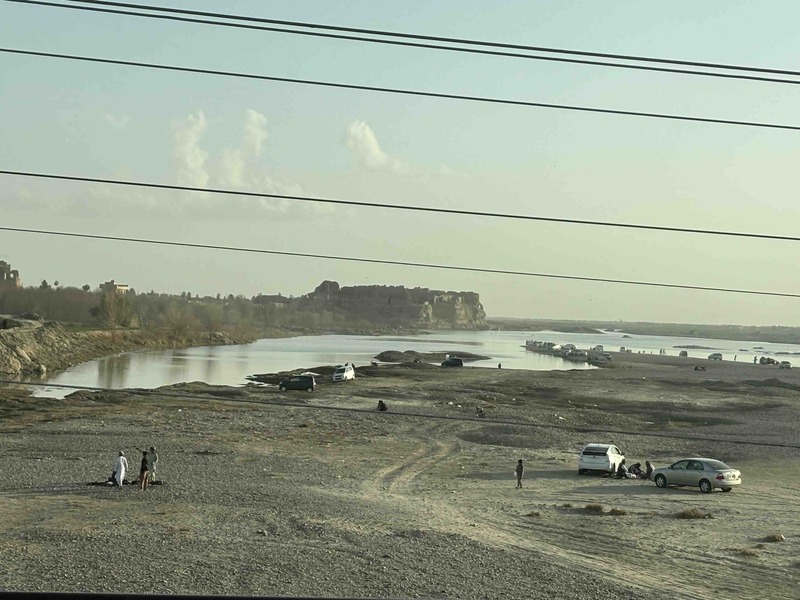
We eat breakfast, lunch and dinner at the same restaurant, spend time by the river with local people, and generally enjoy the slower pace of life.
There isn't an endless list of attractions to tick off here. But that's part of the appeal.
And, of course, there's Bost...
From Lashkar Gah to the Archaeological Site
Even getting from Lashkar Gah to the archaeological site takes time, with some pretty bumpy roads along the way. As you get closer, the landscape becomes increasingly rural, with small villages scattered around the remains of the ancient settlement.
In places, historic structures have become part of everyday life, used for things such as farming and storage.
It's a familiar sight in parts of Afghanistan, where extraordinary historical remains can sit almost unnoticed alongside the routines of modern life.
Eventually, you reach the entrance to the site. There is a Taliban checkpoint nearby, and filming around security installations is restricted, so it's important to be discreet and follow local instructions.
Once inside, however, there's an enormous amount to explore. Allow at least an hour or two if you want to appreciate the different structures and understand the scale of the place.
History of the Ancient City of Bost
Bost has a history stretching back into antiquity, although its precise foundation date is not firmly established.
Claims that the site is more than 3,000 years old are sometimes repeated, but it's important to distinguish between ancient settlement in the area and the age of the surviving buildings. Archaeological evidence indicates activity in different periods of antiquity, while the monumental architecture most visitors see today is largely medieval.
The location helps explain why people settled here in the first place.
Helmand and Arghandab Rivers
Bost lies close to the confluence of the Helmand and Arghandab rivers, in a region where water and irrigation made agriculture possible despite the surrounding arid landscape.
The Helmand basin also connected eastern Iran, southern Afghanistan, Central Asia and routes leading towards the Indian subcontinent. That combination of fertile land and strategic geography made the area valuable to successive rulers.
Empires of Bost
Over the centuries, the wider region was influenced by the Achaemenid Persian Empire, Hellenistic and Greco-Bactrian traditions, Parthian and Sasanian Iran, the Kushans and other Central Asian powers, as well as the Hephthalites, sometimes called the White Huns.
These weren't neatly separated civilisations taking turns to occupy a clearly defined modern country. They were overlapping political and cultural worlds, connected through migration, warfare, trade and religious exchange.
Evidence from the wider region also points to a diverse religious history, including Buddhist, Zoroastrian and Christian communities, before and alongside the spread of Islam.
Bost is a fascinating place to consider these connections because it sits at the intersection of so many of them.
A prosperous city built around rivers and trade
Bost's success wasn't simply down to its position on a map. Its surrounding agricultural land was essential to its prosperity.
The Helmand and Arghandab rivers supported irrigation, orchards, cultivated fields and a productive rural economy. This helped sustain the people who lived and worked in the city, including merchants, artisans, soldiers, officials and members of the royal establishment.
The city also occupied a strategic position on routes linking Iran and India. Control of Bost meant influence over movement through the region, making it attractive to successive political and military powers.
It was both a commercial centre and a place of government.
And nowhere is that more apparent than in the archaeological remains of Lashkari Bazar.
The Lashkari Bazar - A Medieval City
One of the most important parts of the archaeological landscape is Lashkari Bazar, an extensive complex of royal palaces, religious buildings, commercial structures and other remains stretching for more than 10 kilometres along the Helmand River.
The name is closely associated with the same historical landscape as Lashkar Gah, whose name is generally understood to mean something like 'army camp' or 'military encampment'.
The medieval city flourished particularly under the Ghaznavids, a dynasty that ruled from Ghazni and extended its influence across parts of Afghanistan, eastern Iran and northern India.
The Ghaznavids are remembered for their military campaigns, but also for their patronage of Persian literature, architecture and court culture.
Their rulers maintained more than one royal residence, and Bost's fertile surroundings and warmer climate made it a suitable location for a seasonal court.
The remains at Lashkari Bazar give us an unusually detailed glimpse into this world. Archaeologists have identified multiple palace complexes, a mosque, baths, gardens, defensive structures and a substantial commercial district.
This wasn't simply a royal retreat in the countryside. It was an organised urban settlement supporting the needs of the court and the wider population.
A bazaar with 199 shops
One of the most fascinating details about Bost is its medieval bazaar.
Archaeologists recorded 199 shop units in the market, although only 31 were excavated. The shops were arranged in two facing rows, with a collonaded portico in front.
Just imagine the activity that once filled this space.
Merchants and artisans would have supplied goods and services to the city, while officials, soldiers, travellers and the royal establishment created demand for all sorts of products. We cannot reconstruct exactly what every shop sold, but the scale of the market demonstrates that Bost was far more than a collection of palaces.
It was a functioning commercial centre, supported by the agricultural wealth of the surrounding region and its connections to long-distance trade routes.
Today, the remains are scattered across the landscape, and the scale of the original settlement can be difficult to appreciate until you understand just how extensive the archaeological site is.
The Palace of Mas'ud I
Among the most important structures at Lashkari Bazar is the palace associated with Mas'ud I, a Ghaznavid ruler who reigned from 1030 to 1040.
French archaeologists date the palace to approximately 1031–1041.
This was much more than a royal house. It was a substantial complex containing private residential apartments, baths and service rooms, a small mosque, accommodation and working spaces for officials, and reception areas for formal business and ceremonial occasions.
Its layout separated the ruler's private spaces from the more public functions of the court.
That distinction is important. A medieval palace was not simply somewhere for a ruler to sleep. It was also a place where political decisions were made, officials worked, guests were received and authority was displayed.
The surviving remains offer a glimpse into the organisation of royal life during one of the most influential periods in Bost's history.
The Lost Paintings of Bost
The palaces were once considerably more impressive than the ruins visible today.
Archaeological excavations uncovered painted wall decorations depicting court figures and military attendants, including representations associated with the Ghaznavid military establishment.
These paintings were particularly valuable because they offered visual evidence of clothing, appearance and courtly presentation during the medieval period.
Sadly, according to the French archaeological authorities, the paintings were subsequently destroyed in a fire at the Kabul Museum during the 1990s.
Their loss is a reminder that archaeological discovery is only part of the story. Preserving the objects and images recovered from historical sites is just as important as excavating them in the first place.
Qala-e-Bost Famous Archway
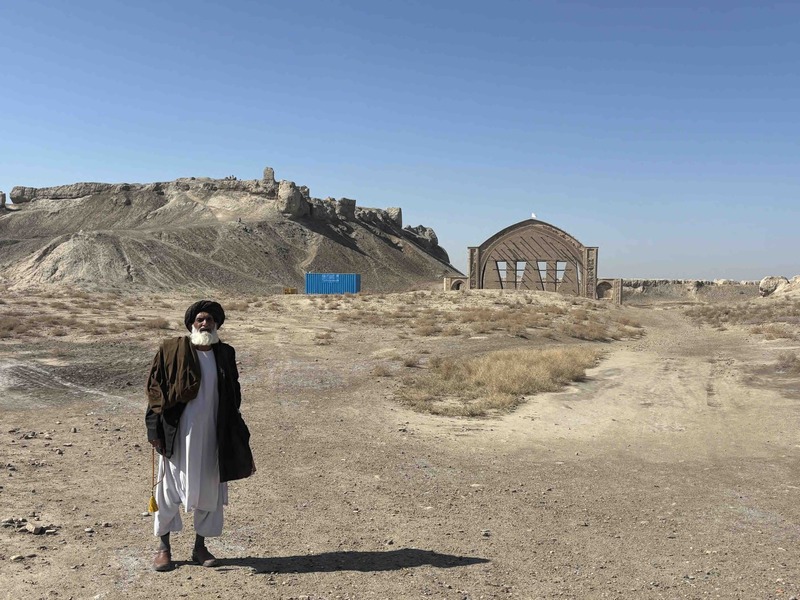
If you've seen photographs of Bost, there's a good chance you'll recognise its most famous monument: the enormous brick arch at Qala-e-Bost.
Located in the fortress area associated with the historic city, the arch is one of southern Afghanistan's most recognisable examples of medieval Islamic architecture.
Its scale is impressive, but the detail is what really makes it special.
Look closely at the brickwork, and you'll notice intricate geometric patterns formed by the arrangement of the bricks themselves. Interlocking lozenge shapes, recessed niches and layered arches create a decorative façade that demonstrates how much could be achieved with relatively simple building materials.
Rather than relying entirely on carved stone or colourful glazed tiles, the builders used brick as both a structural and decorative material.
The exact date and original patronage of the arch are not entirely settled in the historical literature. It is commonly described as an 11th-century monument, although some scholarship discusses alternative attributions connected with later medieval rulers.
What is clear is that it belongs to the remarkable architectural history of medieval Afghanistan.
The arch has also appeared on Afghan banknotes, including the 100 Afghani note, reflecting its importance as a national historical symbol.
Standing in front of it, it's easy to understand why this monument has become so closely associated with Bost.
Rise & Fall of Bost
From the Ghaznavids to the Mongols.
Bost's prosperity made it valuable, but it also made the city a target.
Ghurids
In the 12th century, the Ghurids rose to power in the Afghan highlands and challenged the Ghaznavids for control of the region.
The Ghurid ruler Ala al-Din Husayn, known by the nickname 'Jahansuz', or approximately 'world-burner', attacked Ghazni in 1150–1151 and caused extensive destruction. Bost was also sacked during this period.
The city was subsequently restored and continued to play a role in the region's political landscape.
Mongols
However, the Mongol invasions of the 13th century brought another major turning point. The medieval palace complex at Lashkari Bazar was eventually abandoned.
The end of occupation helped preserve parts of the archaeological landscape, but it also marked the decline of a once-important urban centre.
Over the following centuries, the wider region continued to experience political upheaval. Bost remained strategically significant because of its position between Iran, Afghanistan and the Indian subcontinent, and its fortifications were used and modified during later conflicts.
Iran
In 1738, the Iranian ruler Nader Shah invaded the region, and Bost suffered extensive destruction. Its city walls were dismantled, contributing to the decline of the old settlement.
The fortunes of the city were also tied to the environment. Maintaining a large urban population in this landscape depended on irrigation, agricultural production and the political organisation needed to sustain them. As these systems weakened, the economic foundations of the old city became increasingly difficult to maintain.
The result is the archaeological landscape we see today: fragments of a once-prosperous city, preserved in a region that has undergone enormous political, economic and environmental changes.
Visiting Bost Today
One of the striking things about visiting Bost is the contrast between its historical importance and how little developed the site is for tourism.
There are no elaborate visitor facilities or extensive museum displays guiding you through the ruins. Much of the experience comes from exploring the landscape itself, looking at the surviving structures and imagining how the city once functioned.
The archaeological remains are spread across a large area, so allow time to move between them. The monumental arch is an obvious highlight, but the wider palace complex is just as important for understanding the scale and significance of the site.
You can see the remains of buildings that once served rulers and their courts, but also the spaces that supported everyday urban life: markets, religious buildings and other infrastructure.
The site also highlights the challenges of preserving Afghanistan's heritage. Archaeological remains have been affected by weathering, conflict, urban expansion and other pressures. Much of the architecture is built from earth and mud brick, materials that require careful conservation when exposed to the elements.
Access and security conditions can change, so anyone planning a visit should seek current local advice and follow the instructions of the authorities on the ground.
But if you have the opportunity to visit, Bost offers something rather different from Afghanistan's more famous historical destinations.
We visit Bost on our longer Afghanistan group tours in February and November. Read more about our Afghanistan tours here.
Is Bost Worth Visiting?
Bost may be a bit of a pain to get to, but if you have time, and patience, I would say yes. Absolutely, it is worth visiting the Ancient City of Bost.
Bost is a reminder of just how much history is contained within Afghanistan's borders.
Its story stretches from ancient settlement networks to the medieval Islamic world, connecting Iranian empires, Central Asian powers, the Ghaznavids, the Ghurids and the wider commercial routes leading towards India.
Its palaces reveal the sophistication of a royal court. Its bazaar demonstrates the importance of trade and urban life. Its monumental arch preserves an extraordinary example of medieval brick architecture.
And its decline tells another story yet again. That of a city whose fortunes depended on political power, military security, agricultural production and the ability to maintain the infrastructure that sustained its population.
In southern Afghanistan, far from the usual tourist trail, it remains one of the country's most compelling historical places to discover.
Koryo Tours
Afghanistan Group Tours
Share
Zoe Stephens
Zoe is the marketing manager and a tour leader at Koryo Tours.
Her love of meeting new people and exploring new cultures has led her to study several languages including German, Japanese, and Chinese. Having lived in several different countries across 4 continents, she often writes about languages and culture in her blogs and is very active on social media. During the COVID-19 pandemic, she was 'stuck' in Tonga for 1.5 years after a weekend away. Ask her for some stories!
🎥 Vlogs on North Korea
🎙 Discover North Korea Podcast
➤ Instagram | Facebook | TikTok | Twitter/X