They are neighbours, and looking at a map you might assume the food would be much the same across all three. But is it, though? Here is what actually arrives on the plate as you travel from Baku through Tbilisi to Yerevan.
I've spent a fair bit of time travelling around the Caucasus over the years, and one thing I've always enjoyed is the food in the Caucasus.
On our tours, we travel from Azerbaijan through Georgia and finish in Armenia.
They're neighbours, and looking at a map you might think the food in the Caucasus would be much the same across all three. It isn't.
There is plenty they share, of course. Lamb, bread, herbs, grilled meat and stuffed vegetables crop up everywhere. And there are certain dishes whose origins are probably best not debated over dinner unless you've got a few hours to spare.
But the more you travel around, the more you notice how different the food in the Caucasus actually is.
The quick answer on the different foods in the Caucasus?
Azerbaijan = rice & tea, Georgia = walnuts & dumplings, Armenia = fruits & meats.
But food in the Caucasus is obviously so much more than that.
Azerbaijan = rice & tea, Georgia = walnuts & dumplings, Armenia = fruits & meats.
But food in the Caucasus is obviously so much more than that.
If I had to pick one? Georgian food probably wins for me. Not because every Georgian dish is better. But because of everything that goes with sitting down for a meal there... We explore more of that shortly. Let's first have a dive into the different food of the Caucasus.
Food in Azerbaijan, Tea, Rice and a Taste of the East
Food in Georgia, Come Hungry
Food in Armenia, Fire, Bread and Barbecue
So Which Caucasus Has the Best Food?
Azerbaijan Food - Tea, Rice and a Taste of the East
We start in Azerbaijan, where the Persian and Central Asian influences on the food are easy to spot.
There are still familiar Caucasian ingredients, but there's much more of a Persian and Central Asian feel to the cooking.
Rice is key in Azerbaijan
Rice becomes far more important, along with saffron, lamb, dried fruits and chestnuts.
Plov is probably the obvious example.
Unlike some Central Asian versions, Azerbaijani plov often keeps the rice separate from the meat and other ingredients. The rice itself can be wonderfully light and fragrant, with the meat, fruit and other accompaniments added alongside.
Shah plov is the one that tends to get everyone's attention when it arrives. Rice, meat and dried fruit are enclosed in lavash and baked, then the whole thing is cut open at the table.
It looks impressive, but fortunately it also tastes good.
Kebabs & Vegetables
There are plenty of kebabs, soups and stuffed vegetables too, but if there's one thing you'll have more of than anything else in Azerbaijan, it's tea.
Tea in Azerbaijan seems to accompany everything. It comes in those distinctive little pear-shaped glasses, usually with sugar, lemon, jam or sweets.
You drink it after meals, during meetings, when visiting somebody and quite often for no obvious reason whatsoever.
I've had plenty of occasions where we've stopped somewhere supposedly for five minutes, tea has appeared, and suddenly half an hour has disappeared.
That's just dinner in Azerbaijan.
Georgian Food - Come Hungry
A Georgian table can get a bit out of hand.
You sit down expecting a fairly normal lunch. Half an hour later, there's no space left on the table, and just when you think they can't possibly bring out anything else, another three plates appear.
Famous foods of Georgia - Khachapuri & Khinkali
Khachapuri is probably the Georgian food most visitors recognise. It's essentially bread and cheese, although that description really doesn't do it justice. There are numerous regional versions, from fairly simple cheese-filled breads to the famous Adjarian version shaped like a boat and filled with cheese, butter and egg.
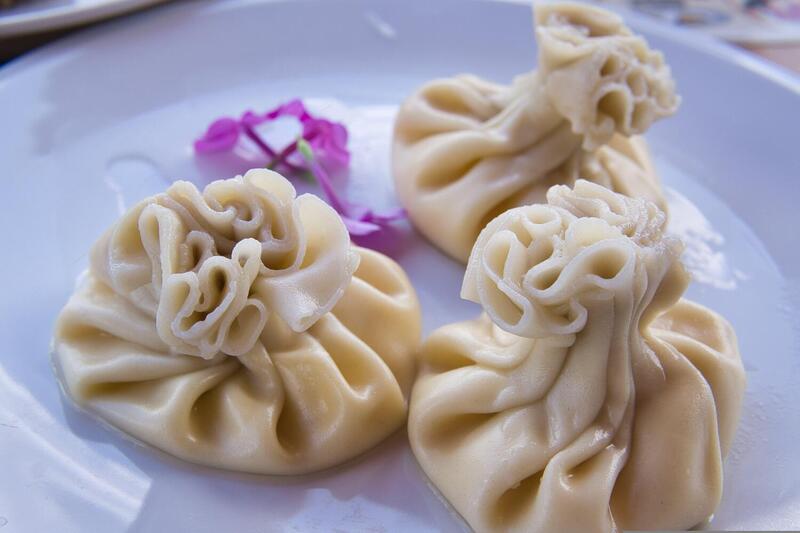
Then you have khinkali, the big Georgian dumplings filled with meat and broth.
There is a technique to eating them.
You pick one up by the top, bite into the side, drink the juice and then eat the rest. It sounds easy until somebody tries it for the first time and ends up wearing half the contents.
Walnuts also seem to find their way into almost everything. Aubergine with walnut paste is one of my favourites, but you'll find walnuts used in sauces and all sorts of vegetable dishes. There's plenty of garlic, herbs and pomegranate as well.
A Georgian Dinner
For me, though, the best thing about eating in Georgia isn't any one dish. It's the whole business of sitting down together.
If you get the opportunity to eat with a Georgian family, take it. I've spent many hours sitting around Georgian tables where lunch has somehow turned into dinner. Food keeps arriving, bottles keep opening and nobody appears particularly concerned about what time it is.
I've even seen guests beginning to doze off at the table while their hosts are still happily producing food.
Georgian Wine
Wine is inevitably part of this. Georgia has a wine-making history stretching back thousands of years, and the traditional qvevri method is still used, with large earthenware vessels buried in the ground for fermentation and storage.
Then there is the supra, the traditional Georgian feast, and the tamada or toastmaster. The toasts can go on for some time. Family, friendship, ancestors, peace and whatever else seems appropriate as the evening progresses.
My advice is simple: if a Georgian tells you that you're just popping in for a quick meal, don't necessarily believe them...
Georgian Khinkali
Armenian Food - Fire, Bread and Barbecue
From Georgia we head into Armenia, and the food takes on a different character.
Armenian food feels a bit simpler and more rustic to me, and I mean that in a good way. Some of the best meals I've had there have been nothing more complicated than grilled meat, vegetables, herbs and fresh bread. When the ingredients are good, you don't need much else.
Lavash is everywhere.
It's the traditional thin Armenian bread, normally baked against the inside wall of a clay oven. If you get the chance to see it being made, it's well worth stopping. Fresh from the oven it's fantastic, particularly wrapped around cheese, herbs or grilled meat.
Meat in Armenia
And Armenians certainly know how to grill meat.
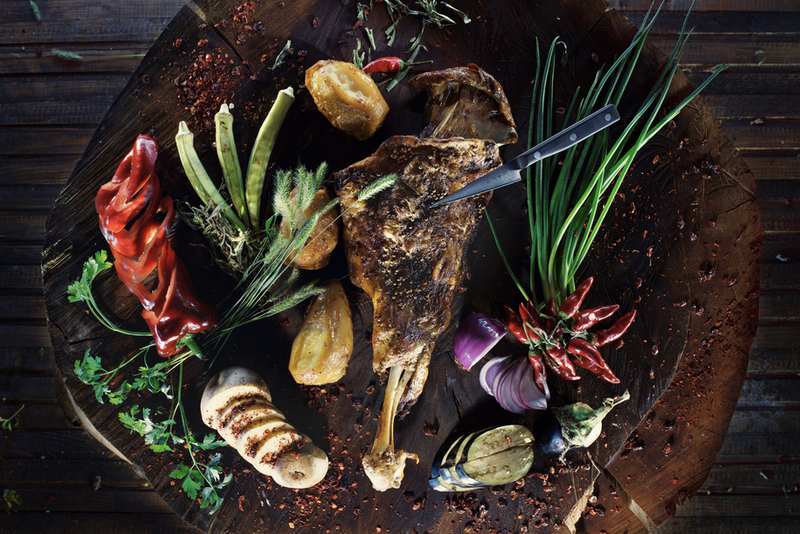
Khorovats is Armenian barbecue and can be pork, lamb or other meats cooked over charcoal. Often there isn't much seasoning involved. Good meat, smoke and fire do most of the work. Tomatoes, peppers and aubergines are commonly cooked alongside it.
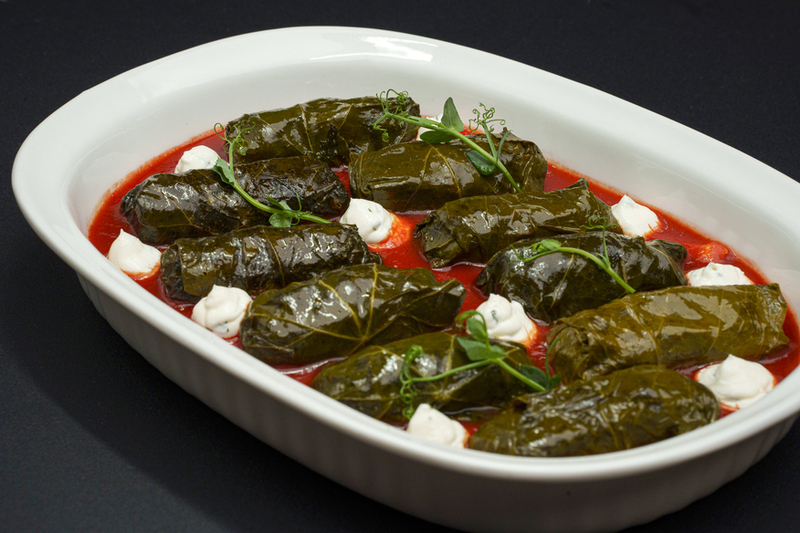
Dolma appears regularly too, although claiming that dolma belongs exclusively to Armenia, or indeed to any one country in this part of the world, is probably asking for an argument.
Fruit & Drinks in Armenia
Fruit is another thing I associate strongly with Armenia. Depending on the season, you'll find apricots, cherries, peaches, grapes and pomegranates piled up in markets and sold along the roadside.
And eventually somebody may produce the Armenian brandy.
I've never been a huge brandy drinker, but somehow it seems to taste considerably better after a large Armenian dinner than it does anywhere else.
Armenian Khorovats
So Which Caucasus Has the Best Food?
People sometimes ask me which of the three has the best food. It's a difficult one, and I'm not sure there is a right answer.
Personally, I probably enjoy the whole eating experience in Georgia the most.
There's something about a Georgian table, the wine, the endless plates and the social side of it that is difficult to beat.
Azerbaijan brings fragrant rice, saffron, lamb and dried fruit, while Armenia is all about excellent grilled meat, fresh bread, vegetables and fruit.
That's one of the things I enjoy about travelling through the Caucasus. The countries are close together, but each has its own way of doing things, especially when it comes to food.
You can travel from Baku through Tbilisi to Yerevan without covering enormous distances, but what arrives on your plate changes far more than you might expect.
There are dishes that cross borders, arguments about where they originated and plenty of shared history. I'm certainly not brave enough to tell an Armenian, Georgian or Azerbaijani who invented what.
I'd rather just eat it.
If you're travelling through all three countries, there's really only one piece of advice I can give.
One thing is certain - if you're planning to travel through all three, don't expect to come home any lighter. And make sure you come hungry.
Koryo Tours
Group Tours to The Caucasus
Share

Rich Beal
Rich Beal is our International Tours Manager.
Rich is one of our most experienced tour leaders. He has led tours worldwide since 2004, specialising in Mongolia, Tajikistan, Turkmenistan, and the surrounding area. Currently living in Mongolia, he leads multiple specialised trips annually and has over 20 years of experience running and designing tours of the region.