From the empty streets to towering Soviet monuments, Minsk reminded me of Pyongyang, North Korea. Here's why.
I recently spent a week in Minsk, the capital of Belarus, and while exploring the city, I kept thinking:
I’ve seen this somewhere before.
What if I told you that Minsk reminds me of Pyongyang, the capital of North Korea?
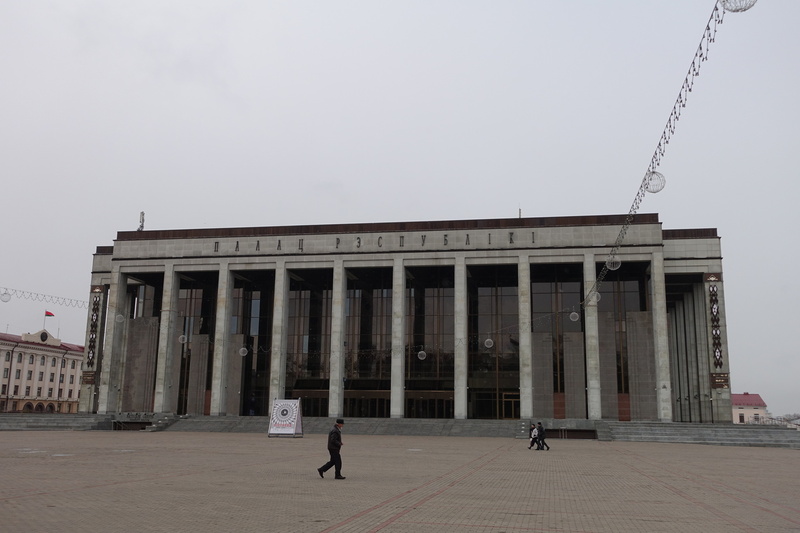
Wide, open streets with just a few people walking around.
Excellent and abundant public transportation.
Towering, block buildings rising into empty skies.
Very orderly, rule-abiding locals...
...And most importantly, not many (or no?) foreign tourists in sight.
It all felt unexpectedly familiar. And, strangely enough, you can find all of these same elements in both Minsk and Pyongyang...
Why Compare Minsk and Pyongyang?
You might assume Europe is where you can find democracy in full force. (It is, after all - Athens is the de facto birthplace of democracy.)
But Belarus is quite different.
I won’t dive deep into Belarusian or North Korean history here. But what I've seen in Minsk made it quite obvious that the Belarusian capital city is similar, in many of its elements, to the North Korean capital.
Let’s take a look at how these two cities compare.
Architecture and Urban Planning of Minsk & Pyongyang
The most striking similarity is the architecture and city layout.
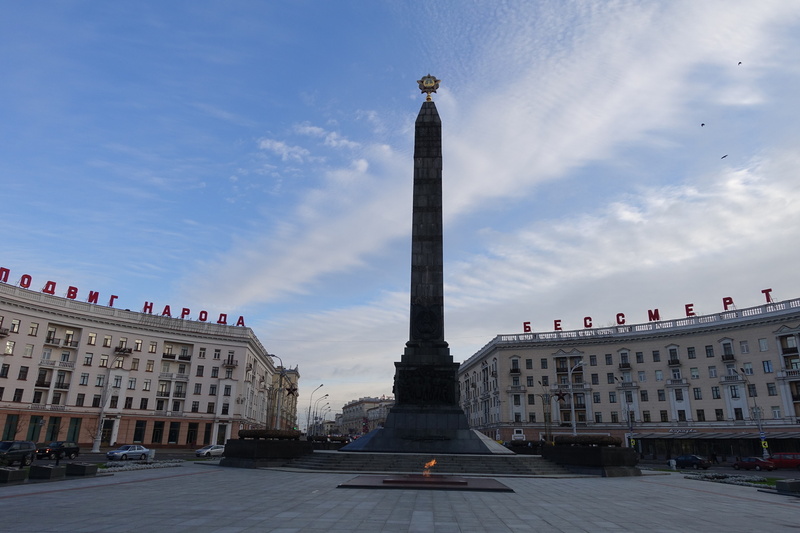
In Minsk, you’ll find massive (government and public) buildings, enormous communal squares, and imposing monuments, complete with heroic statues celebrating past collective achievement.
Sound familiar?
It should.
Pyongyang is laid out similarly, with similarly grand architecture and a clear narrative of national unity, built into the city’s structure.
Minsk’s Victory Square obelisk?
It immediately brought to mind Pyongyang’s Juche Tower.
Soviet Stalinist architecture dominates both capitals, and both cities wear their ideological messaging in stone.
Minsk & Pyongyang Culture and Social Norms
In both societies, the daily life of the citizens is shaped by national pride and rule-abiding discipline.
What we might call propaganda is simply part of the landscape. Murals and posters in Pyongyang, statues and monuments in Minsk.
Public behaviour is generally orderly, quiet and rule-bound.
No jaywalking, no littering. No one raises their voice.
There’s a shared, unspoken sense in both cities. Everything is in order, and that order is maintained by strict regulation.
Isolation (and Hospitality)
Both Belarus and North Korea are closed off in their own ways. Belarus due to sanctions and strained political relations, North Korea for more obvious reasons...
And yet, what surprised me most in both countries was the warmth of the local people.
In Minsk, restaurant staff smiled warmly. A group of kids waved at me.
In Pyongyang, marathon spectators high-fived runners and cheered with genuine excitement (and curiosity).
Despite the political isolation, the instinct to greet and welcome still shines through. It is a refreshing reminder that people are usually not a reflection of their governments' (policy).
Travel Experience for Foreign Visitors
Neither country is an obvious tourist hotspot.
In both places, the travel experiences seem to follow a strict narrative. The one that the government wants you to see.
In North Korea, well, it's quite enforced, since everyone has to be guided by a local tour guide.
In Belarus, it is more subtle since logistically, culturally and language barriers provide many challenges.
Most likely, the travel experiences are not going to be independent. But that doesn’t mean it’s inauthentic.
There’s a lot to discover beyond: quiet neighbourhoods, children playing, commuters biking home, and warm nods from strangers.
And yes, even a half-finished hotel or two.
Have you visited either Minsk or Pyongyang, or perhaps both?
Koryo Tours
International Tours
Share

Halef Gunawan
Halef is Marketing Specialist and Tour Leader at Koryo Tours
Born and raised in Indonesia, he moved to the U.S. for college and later pursued full-time travel in 2019. Stranded in Sabah, Malaysia, during COVID, he and his partner, along with their German Shepherd, Kana, embraced van life and have been exploring North America since 2020.
📷 Instagram | 🇮🇩 Instagram (Bahasa Indonesia)
My First Koryo Tours Adventure in Syria During Ramadan (and the Iran War)