Thinking about getting some North Korean stamps for your collection? Here's all you need to know about the basics of collecting the DPRK Postage Stamps
North Korean stamps are intriguing for dedicated philatelists (that is, the hobby of stamp collecting)... And also as souvenirs if you happen to pick up one or two on your journey to Pyongyang (and beyond).
These North Korean stamps are known for their bold colours and overtly political designs.
Or, depending on your perspective and definition - propaganda.
Flipping through my childhood stamp collection, while still fascinating to me as an adult, I came across a section that now feels more personal and significant.
One part of the collection focuses on stamps from North Korea, specifically a series featuring the DPRK trains.
So I decided to take a closer look and decided to create a guide to collecting North Korean stamps. For beginners!
Let’s begin with a basic question...
What are North Korean stamps?

A mint set of "Opening of Pyongyang Metro", 1974
What are North Korean Stamps?
Postage stamps are traditionally used to send mail or postcards to domestic and international destinations.
This is the same for North Korean stamps.
In general, international postage is usually more expensive than domestic postage, but the principle is the same. Stamps are affixed to envelopes or parcels and then cancelled by postal officials as proof that the required fee has been paid, before being sent off to the recipients.
This same system exists in North Korea.
North Korean stamps are used for mailing. Although, due to the country’s isolation, it is unclear how much mail is sent abroad each year, or even how much is handled domestically.
But generally, it is quite safe to assume that statistically, the mailing of letters or packages within North Korea is a pretty low occurrence. And even fewer - international correspondence from North Korea.
Can you send a postcard or letter from North Korea?
The simple answer is: Yes.
When visiting North Korea, it is possible to purchase postcards and stamps and send them to destinations around the world.
Whether those items will ultimately be delivered, or end up getting lost in the process is all possible. How long the delivery might take place, if any, is another matter of discussion, and there is no guarantee that they are on their way, sadly.
That said, I have personally received at least one postcard from Pyongyang sent by American friends who visited the country.
That alone makes the experience feel surprisingly tangible.
Where Can you Buy North Korean stamps?
Many people are surprised to learn that North Korean stamps are easy to find. Both inside North Korea and internationally.
In North Korea, especially in Pyongyang, gift shops at major attractions almost always include a North Korean postage stamp souvenir section.
There is even a dedicated North Korean stamp museum in Pyongyang, which visitors can tour and where a wide range of stamps (for collection) is available for purchase.
Outside the country, DPRK stamps are also widely accessible.
Stamp dealers, eBay, and other online auction sites frequently offer them. In general, they are inexpensive, readily available, and plentiful.
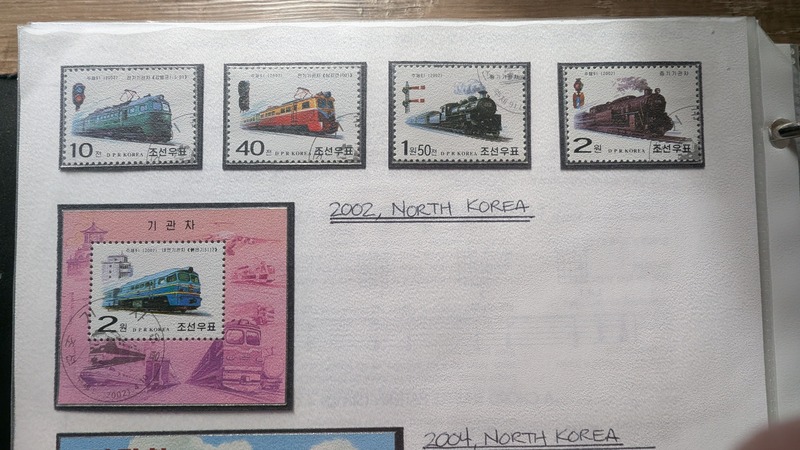
DPRK Stamps with Cancelled to Order - CTO condition
What are the Differences in North Korean Collector's Stamps?
Before going deeper, it helps to understand the main categories of collectable stamps in a general sense for both DPRK Stamps and the rest of the world’s.
Mint Stamps
The first category is mint stamps.
These are unused stamps in the same condition in which they were originally sold in the post office or other authorised outlets. They are typically crisp, free of cancellation marks, and often still have their original adhesive intact. They are ready to use for the intended function of sending letters or packages.
Used Stamps
The second category is used stamps.
These have been affixed to mail and show signs of postal cancellation, such as ink marks or date stamps.
They may have scuff marks, or in other words, normal wear and tear as they have gone through multiple processes to send a mail.
Think of the mailbox, the reading processing machines, loaded inside a huge sack, sent through the flight service, mailman’s stack and your mailbox...
Cancelled to Order Stamp
The third category is Cancelled to Order, in philately terms commonly referred to as CTO.
These stamps were never used for mailing but were intentionally cancelled to appear used.
In many cases, the adhesive on the back is still present. The cancellation marks are usually legibly neat and precisely placed, since the stamps were never attached to envelopes and processed through normal postal handling.
How Valuable are North Korean stamps?
For most stamp collectors, rarity is the primary factor in determining value.
Particularly in the case of North Korean postage stamps, genuinely used examples (those actually sent on envelopes or postcards) are considered quite rare.
As a result, they are highly valued by collectors.
Many collectors seek DPRK stamps that are still attached to their original envelopes, complete with addresses and postal dates.
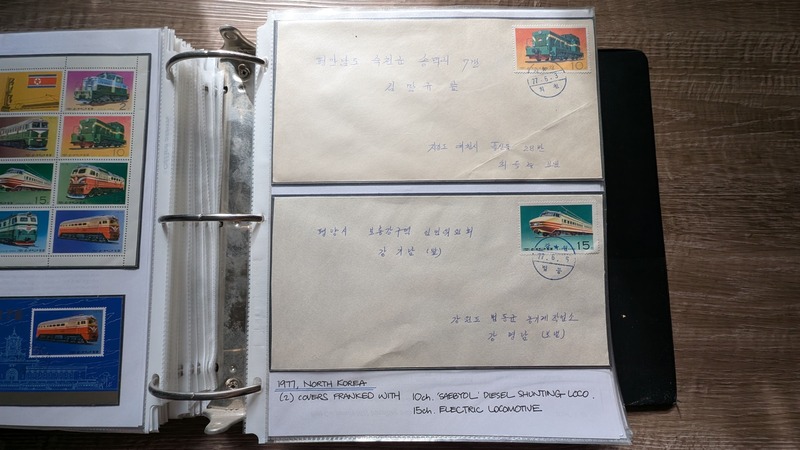
Used North Korean Stamps on envelopes, 1977
Because demand for genuinely used stamps is high, the production of CTO stamps became common.
The majority of DPRK stamps found both inside and outside the country fall into this category.
While plentiful, CTO stamps generally hold the lowest value among North Korean stamp types.
Mint stamps occupy the next tier. Because CTO stamps dominate the market, true mint DPRK stamps are becoming more scarce and desirable over time.
I would consider them the second most valuable category for collectors.
Are North Korean Stamps Easy to Find Outside the Country?
1950 - 1970s
North Korean postage stamps from the 1950s through the 1970s are particularly sought after.
They are rare, and many were printed on low-quality materials, meaning fewer examples have survived (in good condition) some seventy years later.
1980s
By the 1980s, North Korea recognised that stamp collecting could generate foreign currency.
This offered a way to sell a product internationally at a time when many other exports were restricted by sanctions.
As a result, the DPRK began mass-producing stamps specifically for collectors abroad. Most of these were issued as CTO stamps.
Because of this, stamps from the 1980s onward are often very easy to find.
Today
Today, complete annual stamp sets from this era can be purchased cheaply. During this period, North Korea produced stamp set after stamp set, largely to bring in hard currency.
But, in the end, many collectors and tourists to North Korea just want to enjoy their own North Korean postage stamps.
For many, the bold colours and statement of these small pieces of paper are enough to purchase and to keep as souvenirs that remind them of their journey to the DPRK.
That’s what matters the most, after all.
Koryo Tours
Experts
in North Korea Travel
Since 1993
Share

Halef Gunawan
Halef is Marketing Specialist and Tour Leader at Koryo Tours
Born and raised in Indonesia, he moved to the U.S. for college and later pursued full-time travel in 2019. Stranded in Sabah, Malaysia, during COVID, he and his partner, along with their German Shepherd, Kana, embraced van life and have been exploring North America since 2020.
📷 Instagram | 🇮🇩 Instagram (Bahasa Indonesia)
My First Koryo Tours Adventure in Syria During Ramadan (and the Iran War)