There is no way to make the iron ore train comfortable, but there are ways to make it a little less uncomfortable. Here is how it works, what it is like, and how to prepare.
Riding the Iron Ore train in Mauritania is not for the faint-hearted. But, it might not be entirely out of your reach, either.
What started as a simple and cheap way for locals to get to one remote part of the country to the other quickly turned into an adventure-travellers rite of passage. And, fair enough.
Speaking from experience, it’s pretty hardcore. And pretty damn adventurous.
But can you still ride the Iron Ore train in Mauritania today? Or, more importantly, just how do you ride the iron ore train in Mauritania?
We take a look at the Iron Ore train history in Mauritania as well as a guide on what it is really like to ride the train. And, of course, how you can prepare.
There’s no way to make the iron ore train comfortable. Get that out of your mind right away. But there are ways to make it less uncomfortable.
Let’s take a look.
Introduction to the Iron Ore Train Mauritania
Can you Still Ride the Iron Ore Train Mauritania?
How to Ride the Iron Ore Train Mauritania
What’s it like Riding the Iron Ore Train?
Preparing for the Iron Ore Train Mauritania
Iron Ore Train Packing List
Visiting Mauritania - Worth it?
Introduction to the Iron Ore Train Mauritania
What Exactly Is the Mauritania Iron Ore Train?
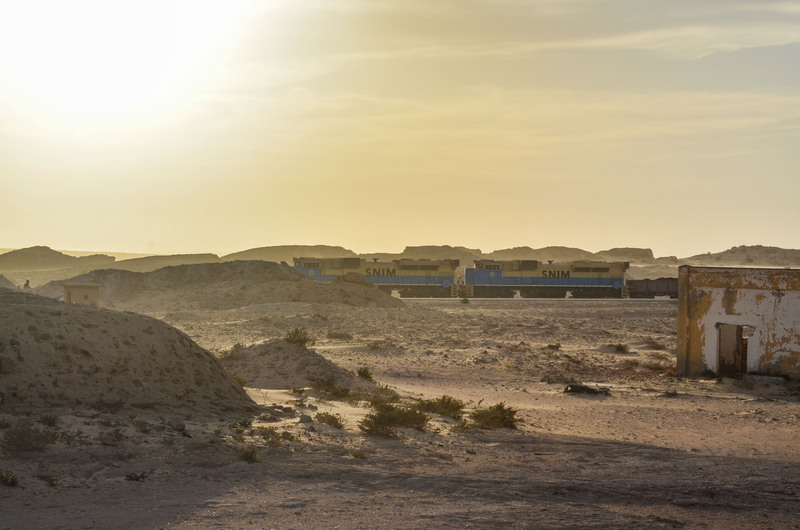
The Mauritania Iron Ore Train runs for 704 kilometres across the Sahara, from the iron mines around Zouérat to the port of Nouadhibou on the Atlantic coast. With around 200 wagons and a length of up to 3 kilometres, it’s one of the longest and heaviest trains in the world, so if you’re waiting at a level crossing, you might want to bring a snack.
Its main job is hauling iron ore, but for decades locals, traders and the odd adventurous traveller have also hopped on top of the empty wagons heading back into the desert and ridden along for free.
It’s dusty, hot by day, cold by night and takes the best part of a day, but watching the sun set over the Sahara from the top of a 3-kilometre train is hard to beat.
History of the Iron Ore Train
The railway was built by the French mining company MIFERMA to get iron ore from the middle of the desert to the sea, and it opened in 1963, just a few years after Mauritania’s independence.
The easiest route ran through a corner of Spanish Sahara, but rather than agree to Spain’s conditions, French engineers dug a 2-kilometre tunnel through solid granite near Choum to keep the line on their side of the border.
Mauritania nationalised the railway in 1974, and it’s still run by the state company SNIM.
During the war with the Polisario Front over Western Sahara in the late 1970s, attacks put the line out of action for long periods, but it was back up and running by the early 1980s.
The Choum tunnel was eventually abandoned for a diversion that runs through a short stretch of Western Sahara after all, which makes all that tunnelling feel like a bit of a waste of granite.
Can you Still Ride the Iron Ore Train Mauritania?
There are always rumours going around of the authorities cracking down on those riding the Iron Ore Train.
They come and go, over the years.
The truth is, that it has never formally been permitted to sit on the iron ore carriages of the train.
This is no normal passenger train; it’s a freight train. And it does indeed have one carriage with seats meant for passengers.
But if you’re after riding the famous iron ore train, you’re certainly not looking for those seats. You’re wanting to sit on top of the iron ore, like a local.
This has never been permitted formally. Indeed, riding any train without a ticket in any country in the world is not permitted.
It’s illegal, generally.
Locals Riding the Iron Ore Train
For locals, this provides a possibility to travel for free between cities and some of the most remote parts of the country in the central desert areas.
They’ve been doing it for years, and the authorities overlook it.
Tourists Riding the Iron Ore Train
This is a whole different ball-game. The authorities don’t generally overlook tourists riding the iron ore train for fear of some accident happening.
Which has happened in the past, from tourists not being careful.
It’s pretty bad press for the country and honestly largely a disaster waiting to happen if you don’t prepare correctly.
So, tourists riding the train will be kicked off or not permitted to board if caught.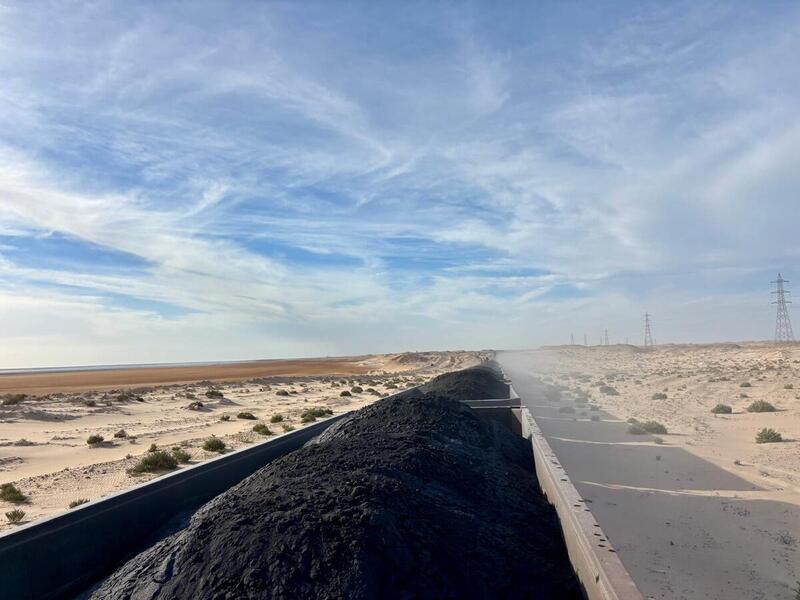
How to Ride the Iron Ore Train Mauritania
So you may be wondering if it’s not really permitted, how do you get to ride the iron ore train?
Well, it’s not easy.
The train goes from Zouérat to Nouadhibou, but the best way to get on is not at the starting points. It’s easy to get caught there.
Most people board at Choum. You’ll first make your way to this small city before then basically… waiting around.
You then have to have some kind of contact or ability to know when the train is coming; there’s no timetable. It could arrive at 5pm, 9pm or 5am. You just have to be ready.
Then, once you get wind of the train coming nearby, you need to head to the train station - although it’s best not to go directly to the station but just further along the tracks. I mean, the train is supposedly over kilometres long - so there’s plenty of space along the tracks to pick apart from at the actual station itself.
You then basically find a carriage that isn’t too full that you’re able to sit inside of comfortably and then…
…You climb on in.
Group Tour to Ride the Iron Ore Train?
Over the years this train has gained a lot of attention and now several travel companies lead group tours including riding the train. The benefits of joining these group trips is that you don’t have to keep your wits about you waiting near a random train stop looking out for trains. You don’t have to worry about getting caught.
And, most importantly, you can ensure you have a safe experience.
The guides all communicate with networks around the country, so they’re told whereabouts the train is and can track it.
You can simply wait at a rest stop nearby until they get the go ahead, before you drive closer to the stop and can board the train safely.
They’ve risen it 100s of times themselves so they’ll be able to tell you the best practices, how to prepare, how to sleep kind of comfortably, and how to make a toilet in the corners.
Most importantly, a guide will help you to move all of your big bags to the next hotel whilst you’re riding by train. So, you don’t have to worry about all of your stuff getting damaged - you can take a small bag for the train filled with old clothes and any other train necessities (see below) and then wash up ready at the hotel when you’re fresh off the train.
Top tip - iron ore comes in two forms; refined, the powdery stuff, and as rocks.
Although the fine powder stuff gets everywhere and it’s truly horrific and you’ll end up looking like a chimney sweep by the end of it, it’s way nicer and softer to sit or lie on especially for a long period than the hard rocks.
So, choose your battle carefully.
What’s it Like Riding the Iron Ore Train?
A really big question. Well, riding the iron ore train is as auxilirating as it is uncomfortable.
If you board the train after dark, like I did, it’s a pretty bizarre experience because, well, you can’t see anything. It’s entirely pitch black and you move quickly through the dark using head torches that you quickly have to turn off so you don’t get caught.
You’ll then find a space inside the carriage - which are massive, by the way, to lie down on. Ideally you’ll have some kind of large mat that you can then put your sleeping back onto. Once you get “comfy”, that’s pretty much it.
You just kind of… stay put.
The train moves so quickly and the wind is so high that trying to move is honestly pretty perilous. Especially when it’s dark.
Hopefully you’ll also have established some kind of bathroom rule, too, in one of the corners - and hopefully have some waters and food in the opposite corner.
And once you’re settled - that’s it. It’s hard to even talk to the person next to you because the wind is so loud let alone anyone else on the carriage and if you’re on there in the night, it’s time to get some sleep. You may want to huddle close to any travel buddies as it gets pretty darn cold during the night.
During the day time it’s impossible to get any rest as the sun is so strong and it’s generally so hot. This is your chance to take some photos - if you dare to get your phone out - and watch the view. And hope for a quick arrival time.
That’s really all there is to it.
Sat on iron ore. For a long time.
You’ll sometimes hear the shouts of your local guide telling you to duck down as there are guards up ahead and you have to remain completely still and quiet as you notice torch lights searching up and down the carriages.
All, of course, emphasised with the constant fear of getting caught as you go.
The journey, depending on where you get on and off, can take hours. Or even days. There’s no real set time and a lot of factors at play. The train may stop randomly in the middle of the desert for hours.
Preparing for the Iron Ore Train Mauritania
Riding the iron ore train is not a comfortable experience. Indeed, the adventure behind it is the reason many like to challenge themselves.
Both physical and mental preparation is important.
Mental Preparation
Probably the biggest area of preparation is the mental preparation.
You have to be willing to sit on a train for 16+ hours in the desert heat during the day and freezing desert cold at night.
Aside from being uncomfortable during this entire time physically as you’re sat on the iron ore that’s also getting into your hair, eyes, under your fingernails, it’s also really hot - or really cold, depending on the time of day.
You won’t be able to talk to your friends much - the train and wind is often too loud for that. But you also won’t be able to listen to music or podcasts, because the iron ore gets into all of your electronics so you can’t keep them out.
Oh, so you can’t be on your phone, either.
You also can’t sit and enjoy the view the whole time, either, because the view is the exact same throughout the entire trip. Desert. Maybe a camel or two. And a snaking train cutting right through it.
The sunrise or sunset is certainly something not to miss, but they come only once or twice - depending on when you board. And are often followed by either intense heat or intense cool.
You also have to be alert at literally all times in case train guards catch you. So, if you do decide to sit up and enjoy the view - be mindful to duck below the carts at any time.
Physical Preparation
One thing that some don’t consider is that you do need a fairly decent degree of fitness level in order to ride this train. Both because it is so physically uncomfortable and also due to some physical exertion. For example, in order to get up and into the carts you will need to climb a pretty small but high up ladder.
You’ll then need to be pretty sturdy on your feet as you make your way around up and over the iron ore so as to not fall out. Plus, you will need to have a pretty strong bladder or have to be willing to face the “train toilet” (i.e. a corner in the carriage).
Top Tip: It’s important to note that the train goes both ways; obviously. From the centre of the country delivering iron ore to the coast, and vice versa as it goes back with empty carts. You should note that, whilst it may sound more appealing to travel in an empty cart with loads of space - this couldn’t be further from the truth. The carts are massive and incredibly uncomfortable.
The train moves a lot during it’s journey; if you don’t have the softness of the iron ore to sit and lie on, you’ll be incredibly sore when you arrive at your destination.
Iron Ore Train Packing List
- Water
- Snacks
- Head torch
- Small bag for all your items
- Waterproof bags / ziplock bags for electronics
- Sleeping bag
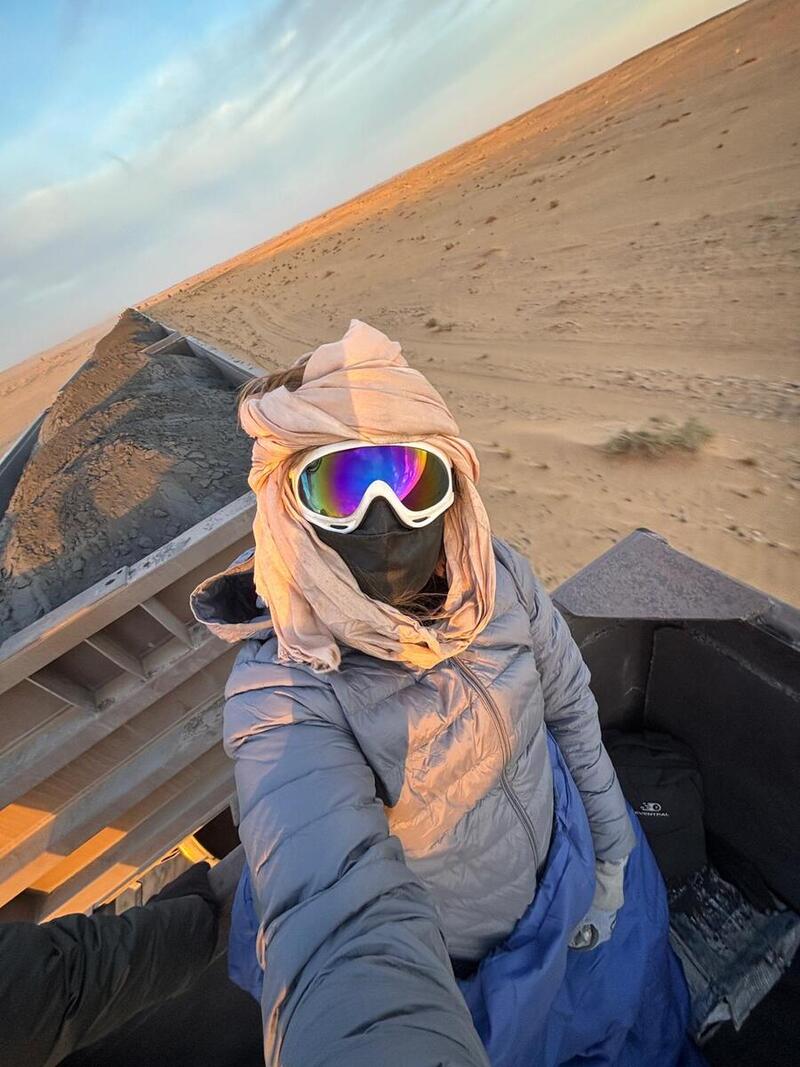
- Jacket (that you’re prepared to throw away)
- More layers (that you’re prepared to throw away)
- Ski mask / goggles
- Face mask / scarf
Oh, and any of the things you bring? Be prepared to throw them away.
Iron ore is incredibly hard to get out of anything and you’ll be finding bits of iron ore in anything magnetic or any of your devices for days after - not matter how hard you tried to keep them away safe.
Pro tip: If you’ve forgotten any key essential items such as coats and sleeping bags, the guesthouses along the way such as at Choum usually sell these for very cheap. They may be used and terrible quality; but they’re better than nothing, if you have nothing.
Visiting Mauritania - Worth it?
If you like exploring the desert and a couple of important Islamic sites, then Mauritania may interest you.
It certainly has a lot more going for it than just the train.
I wouldn’t visit Mauritania just for the train. But, that being said, it’s probably not a country that will be nominated for Lonely Planet’s country of the year any time soon.
It’s a slow pace, spending a lot of the time deep in the desert in 4x4s. Local guides can vary a lot in terms of experience and knowledge so it’s always wise to go with a reputable tour company.
It’s not in my personal top 5, that’s for sure.
Koryo Tours
Group Tours International
Share
Zoe Stephens
Zoe is the marketing manager and a tour leader at Koryo Tours.
Her love of meeting new people and exploring new cultures has led her to study several languages including German, Japanese, and Chinese. Having lived in several different countries across 4 continents, she often writes about languages and culture in her blogs and is very active on social media. During the COVID-19 pandemic, she was 'stuck' in Tonga for 1.5 years after a weekend away. Ask her for some stories!
🎥 Vlogs on North Korea
🎙 Discover North Korea Podcast
➤ Instagram | Facebook | TikTok | Twitter/X