You already know the statistics. What is harder to prepare for is the scale of the thing when you actually stand in front of it.
You probably already know this, since the Great Pyramids of Giza are among the most famous landmarks in the world.
They are the only surviving Wonder of the Ancient World. Built roughly 4,500 years ago, they remained the tallest structures on Earth for over 3,800 years.
Most visitors to Cairo come here, and many spend a couple of hours taking photos before leaving.
Let’s get into what to know before you go.
Introduction
The Three Pyramids
The Great Sphinx
The Grand Egyptian Museum
History of the Pyramids
Tickets & Entry Fees
Getting There
Best Time to Visit
Where to Stay
What to Eat Nearby
Practical Tips
Frequently Asked Questions
Introduction
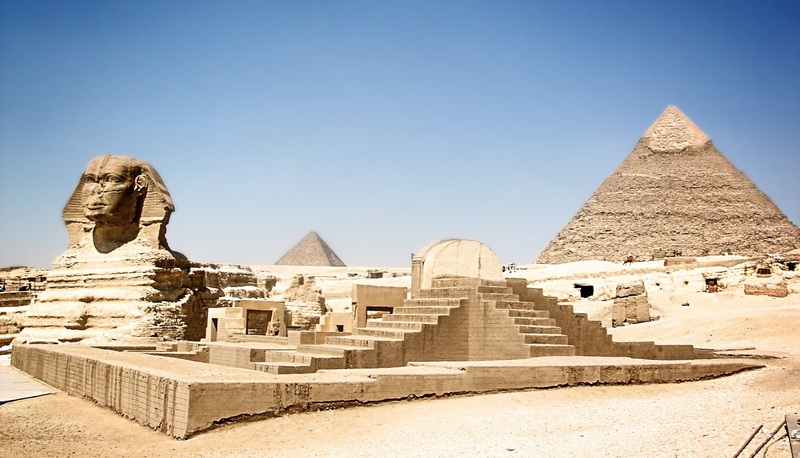
Many people assume the Pyramids are in Cairo, but they actually stand in Giza, a suburb of the modern city. The Giza Plateau sits on the edge of the Western Desert, about 13 km southwest of central Cairo.
The plateau holds a remarkable concentration of important structures, enough to feel overwhelming: the three main Great Pyramids, three smaller queens’ pyramids, the Great Sphinx, a solar boat (relocated inside the Grand Egyptian Museum), several temples, and other tombs.
The recently (November 2025) opened Grand Egyptian Museum aka GEM is just two kilometers down the road.
A visitor can easily spend several days exploring the area without feeling rushed.
The Three Pyramids
Let's start with the most obvious ones: the three Great Pyramids of Giza.
The Great Pyramid of Khufu
It is undoubtedly the largest, the oldest, and the one every tourist comes to see.
Built for Pharaoh Khufu around 2560 BCE, during the Fourth Dynasty, it originally stood 146.6 metres tall and remained the tallest human-made structure on Earth for nearly four millennia. Today, having lost its outer limestone casing and pyramidion, it stands at around 138.5 metres, which is still very impressive. The base covers 5.3 hectares, and each side is approximately 230 metres long.
It was built from an estimated 2.3 million limestone and granite blocks. The heaviest weigh up to 80 metric tons, though most average around 2.5 metric tons each. Its four sides are aligned to the cardinal points of the compass with an accuracy that experts and modern engineers are still trying to fully explain.
Inside is a series of passages and chambers, with a steep passageway leading up through the Grand Gallery to the King’s Chamber: a room lined entirely with red Aswan granite that holds Khufu’s empty sarcophagus.
It is hot and narrow, and you have to crouch in places, but if you have the time and are physically capable (and not claustrophobic), it’s highly recommended.
Entry is capped at around 150 people per day.
The Pyramid of Khafre
The middle pyramid was built for Khufu’s son Khafre around 2530 BCE. It originally stood 143.5 metres tall, slightly shorter than Khufu’s.
From some angles, it can look taller than the Great Pyramid, thanks to its higher position on the plateau and the white limestone casing still clinging to its upper section.
Inside, the burial chamber is simpler than Khufu’s but considerably easier to navigate, and the entry fee is a fraction of the Great Pyramid’s.
The Pyramid of Menkaure
The smallest of the three, which is a more human-scale, built for Menkaure around 2510 BCE, and stands 65 metres.
The interior is occasionally closed for conservation work, so check current status before planning your visit around it.
The Great Sphinx
The Sphinx is probably the other structure in the complex that most visitors recognise instantly.
It sits at the eastern edge of the plateau, carved directly from the limestone bedrock during Khafre’s reign, measures 73 metres long and 20 metres high, and its claim to fame is that it is the largest monolith statue in the world.
The plateau entry ticket covers the Sphinx viewing area, and it’s a 10 to 15 minute walk from the Great Pyramid.
Look closely and you’ll notice a chunk of its nose is missing, another of its most distinctive features.
The Grand Egyptian Museum
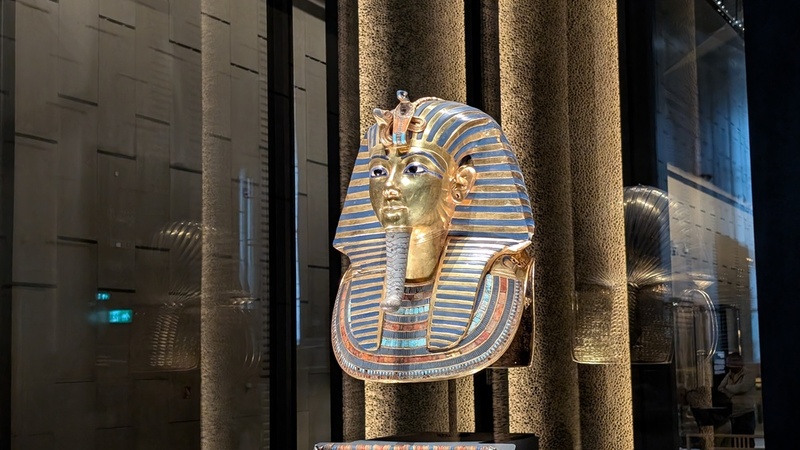
The Grand Egyptian Museum (GEM) opened fully in November 2025 and is now the largest archaeological museum in the world, as well as the largest museum devoted to a single civilisation. It is without doubt one of the most fascinating antiquities museums anywhere.
It houses over 100,000 artefacts, including the complete Tutankhamun collection, which was moved here from the old Egyptian Museum in Tahrir Square. Khufu’s 4,500-year-old Solar Boat is also here, displayed in its own building beside the museum.
At the time of writing in October 2026, a ticket costs around 1,450 EGP (about 28 USD) for foreign visitors, though prices keep changing. You need a pre-booked timed slot through the museum’s official website, and tickets cannot be bought at the gate (verify this as the rules keep changing), so book before you fly if you plan to visit.
The museum is only two kilometres north of the plateau entrance, so a morning at the pyramids followed by an afternoon at the GEM makes a full and logical day.
Pro tip: Arrive at opening time to beat the crowds and head straight to the Tutankhamun collection. That way, you can enjoy it without many tourists around you.
History of the Pyramids
Disclaimer: This section is intentionally brief. There is still a lot we don’t know, and we want to keep the history section of our lovely travel guide simple. This is what we know so far!
Why Were They Built?
The Giza pyramids were royal tombs, built to house the mummified remains of three Fourth Dynasty pharaohs and to serve as the centrepiece of elaborate funerary complexes including temples, causeways, and subsidiary tombs for family members and court officials.
Who Built Them?
For centuries, the popular assumption was that the pyramids were built by enslaved people.
However, over the past three decades, archaeologists have uncovered the workers’ village at Giza, and the evidence points to a skilled, organised workforce. These workers received medical care, were buried with honour near the plateau, and ate well enough that beef bones appear regularly in the excavation record.
Even so, the logistics required to move some 2.3 million stone blocks over roughly 20 years to build the Great Pyramid remain one of the most remarkable achievements in human history.
What Happened After?
Over centuries, the pyramids' white limestone casings were stripped to use in medieval Cairo's construction.
Khufu's granite sarcophagus was found empty, and we simply don't know whether the burial was ever disturbed in antiquity or whether the mummy was moved for protection elsewhere.
No royal mummy has ever been definitively linked to the Giza pyramids.
Tickets & Entry Fees (2026)
Tickets are sold in tiers, and almost all payments on the plateau are now card-only. Going inside any pyramid costs extra on top of the general plateau entry.
Ticket Prices in 2026:
- Plateau entry (adult) EGP 700 ~ $14
- Plateau entry (student) EGP 350 ~ $7
- Great Pyramid interior EGP 1,500 ~ $30
- Pyramid of Khafre interior EGP 280 ~ $5.50
- Pyramid of Menkaure interior EGP 280 ~ $5.50
- Grand Egyptian Museum EGP 1,450 ~ $29
Several important notes:
- The plateau ticket covers exterior access to all three pyramids and the Sphinx. It does not include entry to the interior of any pyramid.
- The Great Pyramid interior is capped at around 150 visitors per day and sells out early in peak season. If you want to go inside, arrive at opening time.
- The Grand Egyptian Museum has its own separate ticketing system and must be pre-booked online. It is not bundled with any plateau ticket.
Getting There
The plateau is around 13 km southwest of central Cairo, roughly 30 to 45 minutes by taxi or ride-share depending on traffic: Uber and Careem both operate reliably to Giza.
The official entrance is on the eastern side of the plateau. Make sure your driver takes you to the main gate rather than one of several unofficial approach roads where persistent camel and horse vendors operate.
From the Mena House hotel, which sits immediately adjacent to the plateau boundary, you can walk to the entrance in under five minutes.
Best Time to Visit
October to April is the window for comfortable visiting. July and August are brutal, with temperatures on the exposed plateau regularly exceeding 40°C and very little shade anywhere.
Arrive at opening time (7 AM) regardless of season. The light in the early morning is noticeably better for photography, the plateau is significantly quieter before the tour buses arrive around 9 AM, and if you want a Great Pyramid interior ticket, you need to be near the front of the queue.
Where to Stay
Mena House is the obvious answer if you want to be as close as possible. The hotel sits directly beside the plateau boundary and several rooms have unobstructed pyramid views from the balcony. It's a historic property, built in the 19th century as a royal hunting lodge, and it hosted the 1943 Cairo Conference. At the breakfast table on the right side of the hotel, you look out at the Great Pyramid.
For more central Cairo accommodation at a lower price point, staying in Zamalek or downtown and making the 30-minute taxi journey each morning is perfectly practical.
What to Eat Nearby
Sadly, the Giza plateau has very limited food options and what exists is overpriced, so it's worth bringing water and snacks from Cairo.
- The Mena House operates a restaurant that is comfortable and serves good food with a direct view of the Pyramids.
- The Grand Egyptian Museum has a café (also a Starbucks!) on site for visitors combining the two in one day.
- For lunch after the pyramids, the area around the Mena House has a cluster of local restaurants along the road toward Nazlet el-Semman village, where you can eat grilled chicken, kofta, and ful at local prices.
Practical Tips
A few helpful tips for a visit to the Pyramids:
- Arrive at 7 AM. The plateau opens at 7 AM, and those first two hours before the tour groups arrive are significantly more pleasant than anything that comes after. A must-do before the midday heat as well.
- Book the Grand Egyptian Museum in advance. Do it online: it sells out on popular days, and there is no on-site purchase option.
- Interior pyramid tickets for Khufu sell out. If going inside is your priority, it needs to be the first thing you do on arrival.
- Dress for the interior. It is hot, cramped, and involves steep climbing in narrow passages. Loose, comfortable clothes and flat shoes are the practical choice.
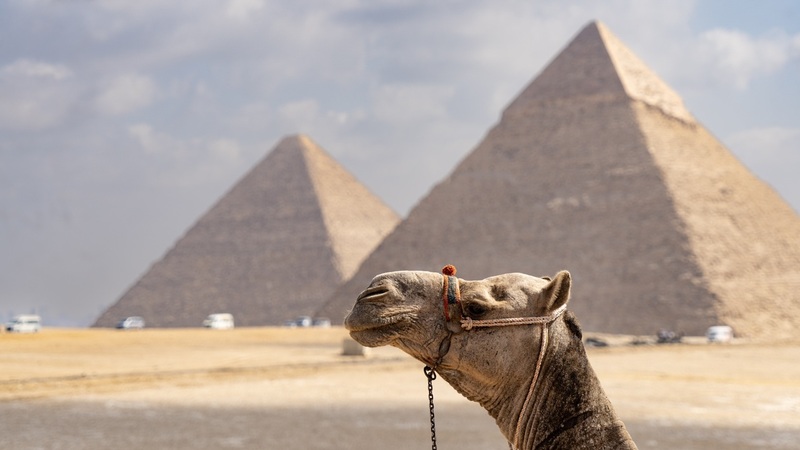
- The camel and horse offers start at the parking area and don't stop. A polite firm no is all that's needed. Prices, if you do want a ride, should be agreed in full before you mount.
- Photography inside the Great Pyramid is not permitted. Cameras and phones are to be left outside.
- The Solar Boat is no longer at the plateau. It has been relocated permanently to the Grand Egyptian Museum.
- All plateau payments are card-only. Bring a card that works internationally.
- Carry water. A lot of it. There is very little shade on the plateau and the sun is serious even in October.
Frequently Asked Questions
- Is going inside the Great Pyramid worth it? Yes, if you have any tolerance for enclosed spaces. The Grand Gallery and the King's Chamber are experiences that photographs don't convey. At 1,500 EGP it is not cheap, but most people who do it don't regret it.
- How long do I need at the Giza Plateau? Three to four hours covers the plateau comfortably, including the Sphinx and time around all three pyramids. Add two to three hours for the Grand Egyptian Museum if you're combining both in a day.
- Can I visit the pyramids and the Grand Egyptian Museum on the same day? Yes. Pyramids in the morning, museum in the afternoon. It is a full day but a logical one. Pre-book your museum slot with enough buffer time after the plateau visit.
- Is the Sphinx included in the plateau ticket? Yes. The standard plateau entry ticket covers the Sphinx viewing area.
- What is the best photo spot? The Panorama Point viewpoint on higher ground behind the pyramids gives the classic view of all three in alignment against the desert.
- Are there scams to watch out for? The most common are unofficial guides who approach at the gate offering to take you inside restricted areas for a fee, vendors who hand you something and then demand payment, and camel rides where the price is agreed in one direction and renegotiated when you want to dismount. All of these are easily avoided with a bit of awareness.
- Can I combine a visit with Saqqara? Yes. Saqqara, which includes the Step Pyramid of Djoser, Egypt's oldest pyramid, is about 25 km south of Giza and makes a natural full-day combination for anyone with a serious interest in pyramid architecture and the evolution of the form.
Koryo Tours
Group Tours to Egypt
Share