Cairo can be loud, hot and overwhelming at first. Give it a few days and it tends to win people over. Here is everything you need to know before you arrive.
Cairo is the capital of Egypt and, with more than 20 million people in its greater metropolitan area, the largest city in the Arab world and in Africa.
Most visitors arrive with one thing on their mind, the Pyramids of Giza, and they are every bit as impressive as you've been told.
But Cairo is much more than a base for the pyramids.
It's a city of medieval mosques and bazaars, Coptic churches older than most European cathedrals, grand colonial-era boulevards, and a Nile riverside that comes alive every evening.
It can be loud, hot and overwhelming at first, but give it a few days and you'll enjoy Cairo a lot better.
Cairo Introduction
A Brief History of Cairo
What to See and Do in Cairo
What to Eat in Cairo
Getting to Cairo
Getting Around Cairo
Where to Stay in Cairo
Practical Tips
Frequently Asked Questions (FAQs)
Cairo Introduction
Cairo sits on both banks of the Nile, just south of where the river spreads out into the Delta on its way to the Mediterranean.
The city is often described as several cities in one. Downtown Cairo, built in the 19th century around Tahrir Square, has grand European-style buildings. Islamic Cairo to the east is a maze of medieval mosques, madrasas and markets. Coptic Cairo to the south is the oldest part of the city, and Giza, on the west bank, is home to the pyramids and the new Grand Egyptian Museum.
In the middle of the Nile is the island of Zamalek, a leafy neighbourhood of embassies, cafes and galleries, and one of the most pleasant places to stay.
The city's Arabic name, Al-Qahira, means "the Victorious", and locals often simply call it Masr, the same word they use for Egypt itself.
A Brief History of Cairo
Well, this is probably one of the most complex and long history for our travel guide, but let's at least give it a try for a brief history of Cairo!
Ancient Memphis and Giza (c. 3100 BCE - 30 BCE)
Long before Cairo existed, the area was the heart of ancient Egypt.
The capital of the Old Kingdom, Memphis, stood just south of today's city, and the pharaohs built their pyramids along the desert edge at Giza, Saqqara and Dahshur, all of which can be visited today.
Roman Babylon and Coptic Christianity (30 BCE - 641 CE)
Under Roman rule, a fortress called Babylon was built on the Nile, in what is now Coptic Cairo.
Egypt became one of the early centres of Christianity, and the Coptic Church remains an important part of Egyptian life today.
Fustat and the Founding of Cairo (641 - 1250)
After the Arab conquest in 641, the new capital of Fustat grew up next to the old Roman fortress.
In 969, the Fatimid dynasty founded a new royal city to the north and named it Al-Qahira, the start of the city we know today.
Later, Saladin built the Citadel on the hill overlooking the city in the 1170s.
Mamluks and Ottomans (1250 - 1805)
Under the Mamluk sultans, Cairo became one of the greatest cities in the world, and many of the grandest mosques and madrasas in Islamic Cairo date from this period.
Egypt became part of the Ottoman Empire in 1517.
Muhammad Ali and the Khedives (1805 - 1952)
Muhammad Ali Pasha and his descendants modernised Egypt, and in the 1860s Khedive Ismail built a new downtown modelled on Paris, around the same time as the opening of the Suez Canal.
Britain occupied Egypt from 1882, and the country remained under strong British influence until the 1950s.
Modern Cairo (1952 - Today)
The 1952 revolution ended the monarchy, and Cairo became the political and cultural capital of the Arab world under Gamal Abdel Nasser.
In 2011, Tahrir Square was at the centre of the protests that ended Hosni Mubarak's thirty years in power.
Today, a new administrative capital is being built in the desert east of the city, but Cairo remains very much the heart of the country.
What to See and Do in Cairo
There's far more to see in Cairo than any one trip allows, but here are the highlights:
The Pyramids of Giza and the Sphinx
The only one of the Seven Wonders of the Ancient World still standing, so naturally is the number one destination to see in Cairo (Giza).
The Great Pyramid of Khufu was the tallest man-made structure on earth for nearly 4,000 years.
Go early in the morning to beat the heat and the crowds, and buy the extra ticket if you want to go inside one of the pyramids.
Check out our travel guide to the Great Pyramids of Giza and the Sphinx.
The Grand Egyptian Museum
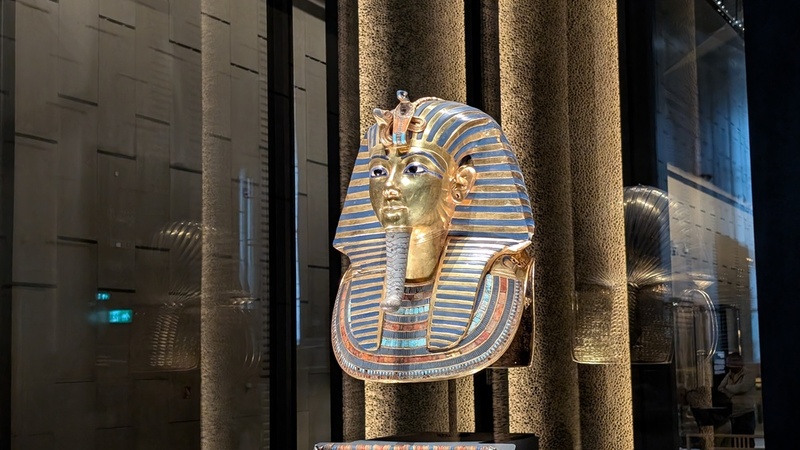
The new home of the Tutankhamun collection, just 2 kilometres from the pyramids and opened in full in November 2025. Allow at least three to four hours.
See our separate travel guide to the Grand Egyptian Museum.
The Egyptian Museum, Tahrir Square
The original Egyptian Museum, opened in 1902 in its famous pink building.
Tutankhamun has moved to Giza, but the museum is still open, much quieter than before, and still home to treasures such as the gold and silver funerary objects of the pharaoh Psusennes I.
The National Museum of Egyptian Civilization
In Fustat, this museum is now home to the Royal Mummies, including Ramesses II, which were moved here from Tahrir in 2021 in a spectacular televised procession known as the Pharaohs' Golden Parade.
Islamic Cairo and Khan el-Khalili
Wander through the old Fatimid city along Al-Muizz Street, lined with medieval mosques, madrasas and grand houses, and get lost in the Khan el-Khalili bazaar, which has been trading since the 14th century.
Stop for mint tea at El Fishawy, one of Cairo's most famous cafes, said to have been serving customers for more than 200 years.
Al-Azhar Mosque
Founded in 970, Al-Azhar is one of the oldest mosques in Cairo and home to one of the world's oldest universities, still one of the most important centres of Islamic learning today.
The Citadel and the Mosque of Muhammad Ali
Saladin's hilltop fortress, crowned by the Ottoman-style Mosque of Muhammad Ali with its tall, pencil-thin minarets.
On a clear day, the views stretch across the city all the way to the pyramids.
Coptic Cairo
The oldest part of the city, home to the Hanging Church, built over the gatehouse of the old Roman fortress, the Ben Ezra Synagogue, and the Coptic Museum.
According to tradition, the Holy Family sheltered here during their flight into Egypt.
Al-Azhar Park
A large green park built on what was once a rubbish dump, with some of the best sunset views over Islamic Cairo and the Citadel. It's a welcome break from the noise of the city.
A Felucca on the Nile
Hire a traditional felucca sailboat for an hour around sunset. It's one of the most relaxing things to do in Cairo, and one of the cheapest.
Saqqara and Dahshur
A half-day or day trip south of the city. Saqqara is home to the Step Pyramid of Djoser, the oldest pyramid in Egypt, and Dahshur has the Bent Pyramid and the Red Pyramid, with a fraction of the crowds you'll find at Giza.
The 6th of October Panorama
A circular museum in Heliopolis commemorating Egypt's crossing of the Suez Canal in 1973, built with the help of North Korean artists and architects.
Visitors sit on a rotating platform in front of a vast painted battle scene, in the same style as the panorama in Pyongyang's Victorious Fatherland Liberation War Museum.
What to Eat in Cairo
Egyptian food is hearty, cheap and largely vegetarian-friendly:
- Koshari is Egypt's national dish, a mix of rice, lentils, macaroni and chickpeas topped with tomato sauce and crispy fried onions. Abou Tarek downtown is the most famous place to try it.
- Ful medames, slow-cooked fava beans with oil, lemon and cumin, is the classic Egyptian breakfast.
- Ta'ameya, the Egyptian version of falafel, is made with fava beans rather than chickpeas, which makes it greener inside and lighter.
- Molokhia is a green, slightly slippery soup made from jute leaves, usually served with rice and chicken or rabbit.
- Feteer is a flaky layered pastry, served sweet with honey or savoury with cheese and meat.
- Om Ali, a warm bread pudding with milk, nuts and raisins, is the dessert to try.
- Fresh juice stalls are everywhere. Try sugarcane juice (asab) or mango juice in season.
Getting to Cairo
Most international visitors arrive at Cairo International Airport (CAI), around 20 kilometres northeast of downtown. The national airline is EgyptAir, and the airport has direct flights from across Europe, the Middle East, Africa and Asia.
On the west side of the city, the smaller Sphinx International Airport (SPX) near Giza is increasingly used by budget airlines such as easyJet, Wizz Air and Air Arabia. It's much closer to the pyramids and the Grand Egyptian Museum.
From the airport, the easiest way into the city is by Uber or Careem Ride share, or with a transfer arranged by your hotel or tour operator.
Getting Around Cairo
A few things to know:
- Uber and Careem (Ride Share) are cheap, widely used and the easiest way for visitors to get around, with prices agreed in advance.
- The Cairo Metro has three lines and is very cheap and the fastest way to avoid traffic for some journeys, such as reaching Coptic Cairo. The first two carriages of each train are reserved for women.
Traffic in Cairo is legendary, so always allow more time than the map suggests, especially for journeys between downtown and Giza.
Where to Stay in Cairo
Where you stay in Cairo makes a big difference to your trip:
- Zamalek is leafy, relatively calm and full of cafes and restaurants, and makes a good central base.
- Downtown Cairo is lively and close to Tahrir Square and the Egyptian Museum, with plenty of budget hotels and hostels, often in grand old buildings.
- Garden City and the Nile Corniche are home to many of the big international hotels, often with Nile views.
- Giza is the best base if your main focus is the pyramids and the Grand Egyptian Museum. The historic Mena House hotel sits right at the foot of the pyramids, and is where Roosevelt, Churchill and Chiang Kai-shek met in 1943 to agree the Cairo Declaration.
Practical Tips
A few things worth knowing before visiting Cairo:
- Visas. Most nationalities can get a visa on arrival or apply online for an e-visa in advance. At the time of writing, a single-entry tourist visa costs USD 30. Check the official portal, visa2egypt.gov.eg, before you travel.
- Cash is king. The local currency is the Egyptian pound (EGP). Cards are accepted in hotels, malls and larger restaurants, but you'll need cash for taxis, markets, tips and smaller places. Carry small notes.
- Tipping. Tipping, known as baksheesh, is part of everyday life in Egypt, from restaurant staff to bathroom attendants and guards at historic sites. Keeping a supply of small notes makes life much easier.
- Haggling. Prices in markets like Khan el-Khalili are rarely fixed, so be ready to bargain with a smile.
- Dress respectfully. Cairo is fairly conservative: shoulders and knees should be covered when visiting mosques, and women will need a headscarf in most mosques.
- Fridays. Friday is the main day of prayer and the weekend in Egypt, so some places open later, and mosques may be closed to visitors during midday prayers.
- At the pyramids. Expect persistent offers of camel rides, horse rides and souvenirs. Agree any price clearly before you start, and a firm but polite "no, thank you" goes a long way.
- Drink bottled water. Tap water isn't recommended for visitors.
- Best time to visit. October to April, when temperatures are comfortable. Summers are very hot, often well above 35°C (95°F).
- Ramadan. During Ramadan, opening hours change and many restaurants close during the day, but the evenings after iftar are lively and a great time to experience the city.
Frequently Asked Questions (FAQs)
- How many days do I need in Cairo? At least three days to see the pyramids, the Grand Egyptian Museum, Islamic Cairo and Coptic Cairo, and four or five days if you want to add Saqqara and Dahshur.
- Is Cairo safe for tourists? Cairo is generally safe for visitors, and the main tourist sites have a strong security presence. The biggest day-to-day challenges are traffic, touts and petty scams rather than serious crime. Check your government's latest travel advice before you go.
- Do I need a visa to visit Egypt? Most visitors need a visa, which can be bought on arrival at the airport or applied for online as an e-visa before you travel.
- Is Tutankhamun's mask still in the Egyptian Museum in Tahrir Square? No, it moved to the Grand Egyptian Museum in Giza with the rest of the Tutankhamun collection.
- Can I use Uber in Cairo? Yes, Uber and Careem are widely available and are the easiest way for visitors to get around.
- What's the best time of year to visit Cairo? October to April, when the weather is warm but not too hot for sightseeing.
Koryo Tours
Group Tours to Egypt
Share