Wadi Doan in southern Yemen is a deep canyon splitting the desert plateau, date palms carpeting the floor, and mud-brick villages stacked on every ridge and boulder above.
Every traveller has a short list of places that broke their brain a little. Or a hotel or overnight stay that will stick with them for a long time to come.
Mine got a new entry the moment our vehicle crested the rim of Wadi Doan and the whole canyon opened up below. Sheer rock walls dropping to a green river of date palms, and villages, actual lived-in villages, stacked on ledges and ridgelines and boulders at every level of the gorge, like someone had been playing a very ambitious game of Jenga with civilisation.
And the kicker?
I was enjoying this view down the canyon from the infinity pool of the hotel / resort I had the pleasure of staying at for two nights during my trip in southern Yemen.
So, here's everything you need to know about the most spectacular valley you've never heard of.
What Is Wadi Doan?
Haid Al-Jazil, The Village on a Boulder
The Villages and Palaces of Wadi Doan
The Hike, the Coffee and the Best Honey on Earth
Practical Tips for Visiting Wadi Doan
Why Wadi Doan Belongs on Your List
What Is Wadi Doan?
Wadi Doan is a canyon system in the Hadhramaut region of southern Yemen, and it's one of the most dramatic landscapes in the entire Arabian Peninsula.
Picture a desert plateau split open by a deep gorge. The floor of the gorge is improbably lush, carpeted with date palm plantations fed by seasonal floods. The walls are layered rock, hundreds of metres of it. And clinging to those walls, perched on every defensible ridge and rock, are mud-brick villages that have been there for centuries.
The genius of the wadi's builders was the same everywhere - never waste the fertile valley floor on houses. Build on the rock, farm the green. The result is a landscape where architecture and geology have fully merged.
From a distance, you genuinely cannot tell where the cliff ends and the village begins, because the houses are made of the same earth they stand on.
Haid Al-Jazil, The Village on a Boulder
One of the headlights of Wadi Doan.
Haid Al-Jazil is a village built on top of a massive boulder that stands 150 metres above the wadi floor. No exaggeration here - It is a giant rock, and there is a village on it, and the village has been converted in part into a cliff-top resort, and that resort has an infinity pool.
Spending two nights at Haid Al-Jazil Resort I would describe as one of those 5* hotels that you actively travel to in order to stay there. The rooms may be basic, the WiFi may cut in and out. But the experience is unforgettable.
You wake up, walk out, and the entire canyon is laid at your feet: palm groves far below, villages dotting the opposite wall, light moving across the rock all day like a slow tide.
The pool hangs over the panorama. Floating in an infinity pool while looking at a medieval canyon village? My kind of pool.
Plus, this is not forgetting that Yemen is a highly restrictive country in terms of, well, whipping your bikini out as a woman. But within the constraints of this resort, a relative freedom is allowed meaning I could even go for a short run in the morning
The Villages and Palaces of Wadi Doan
Al-Hajjrain.
A medieval village perched on a mountain ridge above the wadi floor, and your first proper "how is that real" moment on the drive in.
The houses rise straight from the ridgeline like the rock decided to grow windows.
Seef and Fort Al-Amoudi.
Seef is the administrative heart of the wadi and the place to see its distinctive painted architecture, where mud-brick buildings get dressed up in colour and pattern.
Buqshan Palace.
The showstopper. Built in 1798, this is the most colourful building in Wadi Doan, a mud-brick palace covered in vividly painted windows of turquoise, yellow and green, with stained glass catching the canyon light. The style reflects the influence of the Hadhrami diaspora, families who made fortunes in Southeast Asia and brought those aesthetics home.
It looks like a gingerbread house designed by someone with excellent taste and zero restraint. I loved it completely.
Husn Fort at Qarn Majed.
A 19th-century mud-brick fort planted exactly where the wadi splits into its two branches, which tells you everything about why it's there.
Whoever held this fort held the valley.
Budha Village.
A hilltop village with a panoramic view across the canyon. This is the fantasy-film viewpoint.
Bring your camera and a spare twenty minutes for staring.
Al-Khuraiba.
A village with a small traditional market that once served as a vital trading hub for the wadi communities.
Quieter now, but you can still feel the old rhythm of the place.
Ar-Ribat.
A village with an unexpected historical footnote - it's the ancestral home of Muhammad bin Laden, who emigrated to Saudi Arabia and built one of the largest construction companies in the Arab world.
The family house still stands, a curious reminder of how far Hadhrami emigrants travelled and how large some of their stories became.
The Hike, the Coffee and the Best Honey on Earth
Two experiences in Wadi Doan deserve their own section, because they were the moments the landscape turned into something personal.
The first was the morning hike.
Hiking in Wadi Doan
From Haid Al-Jazil, a trail winds about an hour down the canyon to Hawfah village on the valley floor. The descent gives you constantly shifting views of the boulder village above and the palms below.
It’s not a very difficult hike, but you do need some basic fitness and the a ility and willing ness to walk in the sun for 1-2 hours over some pretty rocky and uneven terrain.
Honey in Wadi Doan
The second was the honey. Wadi Doan and the wider Hadhramaut produce Sidr honey, harvested from bees that feed on the Sidr tree, and it's considered among the finest honey in the world, prized across the Arab world for its medicinal qualities.
Doing a tasting with a local beekeeper, and I'm here to report that the hype is legitimate.
It's dark, thick, almost caramel in depth, and it costs accordingly. I bought a jar. It's gone. I have regrets about not buying three.
This honey is pricey outside of Yemen. Like, really pricey.
Practical Tips for Visiting Wadi Doan
- You'll come as part of an organised tour. Wadi Doan sits within the southern Hadhramaut, which has remained largely stable, and visits run with local partners, arranged visas and security clearance, and a police escort during ground transport. Most itineraries reach the wadi by road from Seiyun, typically after a couple of days exploring Seiyun, Tarim and Shibam.
- Stay two nights if you possibly can. One night at Haid Al-Jazil means arriving, sleeping and leaving. Two nights buys you the hike, the villages, the honey, the music and the slow appreciation this landscape demands.
- Pack layers. Canyon mornings are cool, midday is hot, and evenings on the terrace turn fresh. Your provided traditional Yemeni outfit handles the daytime brilliantly.
- Bring cash for honey and crafts. Trust me on the honey quantity question.
- Mind your knees on the Hawfah trail. The hike down is moderate but rocky. Decent shoes make it a joy rather than a chore.
- Photographers, plan your light. The canyon runs deep, so the sun reaches the valley floor late and leaves it early. Mornings give you soft light on the eastern walls, late afternoon ignites the west, and the blue hour from the Haid Al-Jazil terrace, when the villages below switch on their scattered lights, is the shot of the trip. Ask people before photographing them; a smile and a gesture nearly always earns a yes, and frequently an invitation for tea.
Why Wadi Doan Belongs on Your List
The Grand Canyon has scale. Petra has drama. Cappadocia has whimsy.
Wadi Doan has all three, plus something none of those places can offer anymore: the feeling of arriving somewhere genuinely before the crowd.
There are no ticket queues, no tour bus convoys, no influencer scrums at the viewpoints.
There's a canyon, its villages, its bees, its coffee, and you.
Koryo Tours
Group Tours to Yemen
Share
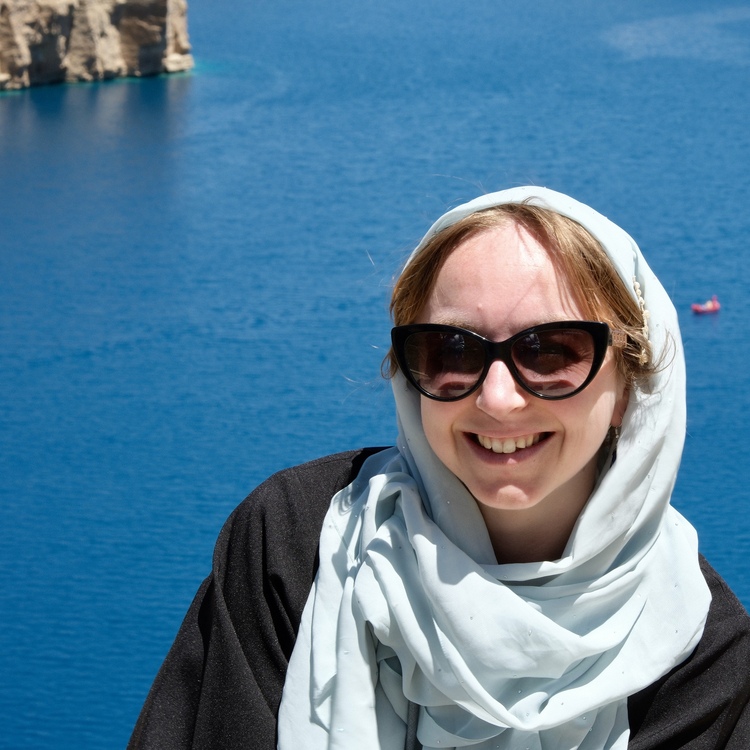
Zoe Stephens
Zoe is the marketing manager and a tour leader at Koryo Tours.
Her love of meeting new people and exploring new cultures has led her to study several languages including German, Japanese, and Chinese. Having lived in several different countries across 4 continents, she often writes about languages and culture in her blogs and is very active on social media. During the COVID-19 pandemic, she was 'stuck' in Tonga for 1.5 years after a weekend away. Ask her for some stories!
🎥 Vlogs on North Korea
🎙 Discover North Korea Podcast
➤ Instagram | Facebook | TikTok | Twitter/X