Baucau is Timor-Leste's second city. It is small, faded Portuguese old town on a breezy limestone plateau and a coastline of deserted white sand beaches below with not much tourist infrastructure. Here is everything you need to know before you go.
Most international visitors arrived in Dili, and spend a few days exploring the Timor-Leste capital, which is the largest city in the country.
Have you ever wonder about Timor-Leste's second city?
That would be the City of Baucau, significantly smaller than Dili, but still has the leftover colonial Portuguese charm throughout the city.
It is arguably the country's most atmospheric stop outside the capital.
Let's dive deeper into what Baucau is all about.
Introduction to Baucau
What’s in a Name?
Geography & Climate
History of Baucau
Visiting Baucau
Top Attractions
Getting to Baucau
Where to Stay
Food & Cuisine
Best Time to Visit
Practical Tips
Frequently Asked Questions
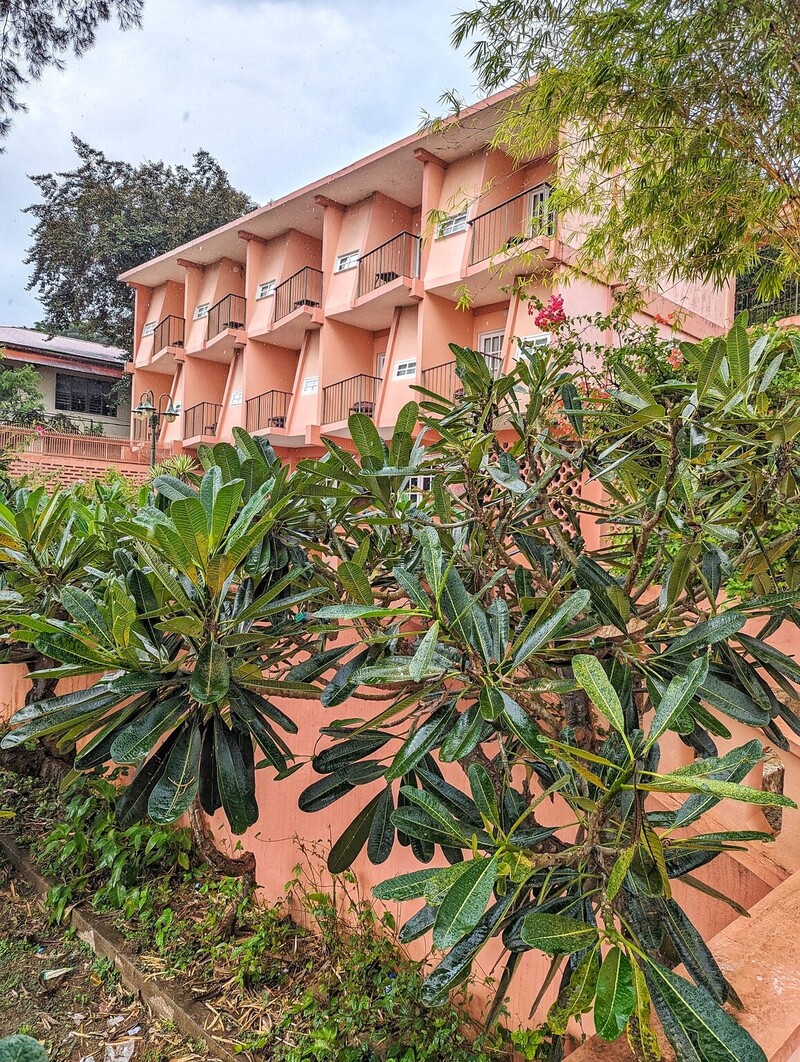
Pousada de Baucau
Introduction to Baucau
Baucau is Timor-Leste’s second-largest city (calling it a city at all requires a certain generosity; it's more a bigger town).
It is small, slow, and split between a colonial old town perched on a breezy limestone plateau and a newer section further up the hill.
Within its city limits, there are no shopping malls, no fast food, no tourist infrastructure to speak of.
What there is is a well-preserved old town with faded Portuguese architecture throughout, some of the most beautiful and deserted beaches in the country, and views across the Banda Sea.
Baucau is also a natural stopping point for anyone travelling east from Dili toward Jaco Island, Com, or Lospalos.
What’s in a Name?
The name Baucau comes from the local Makasae language.
The city is the capital of Baucau Municipality and the seat of the Diocese of Baucau (one of three Catholic dioceses in the country).
The Portuguese built Baucau during the colonical era as a weekend getaway from Dili, and it was a destination for a much cooler, quieter and with a Pousada built for that purpose.
(A pousada is a Portuguese word that translates to an inn, lodging, or resting place, derived from the verb pousar (to rest or land).)
Geography & Climate
Baucau sits on a limestone plateau on the northern coast of Timor-Leste, around 130 kilometres (80 miles) east of Dili.
- To the coastal, a winding road descends to white sand coves and beaches stretching in both directions.
- To the interior (south and east), rolling agricultural plains rising sharply towards the sacred peak of Mount Matebian (2,315 metres).
The climate follows the national pattern -
- Dry Season (May to October): clear skies and good conditions for the coast and the hills, which is the best time to visit.
- Wet Season (November to April): heavy rain and high humidity, and the (unpaved) road can become difficult to travel anywhere in Timor-Leste.
The plateau location gives Baucau a slightly cooler microclimate than Dili, noticeably more comfortable in the middle of the day.
History of Baucau
Pre-Colonial & Portuguese Era
The Makasae and Waima’a peoples have long inhabited the Baucau region.
Under Portuguese colonial, Baucau developed as an administrative outpost and, in time, a retreat destination as the Pousada was built for colonial officials seeking respite from Dili.
Japanese Occupation (1942 – 1945)
The Japanese Occupation used the area extensively, and the remnants of that period are still visible: tunnels excavated into the hillsides around Venilale, south of the city, were used for storage and shelter during the occupation.
Thousands of Timorese died resisting the occupation across the country.
Indonesian Occupation (1975-1999) & Independence (2002 - )
Like the rest of Timor-Leste, Baucau endured 24 years of Indonesian occupation from 1975.
The Pousada de Baucau, now a guesthouse for travellers, was used as an interrogation facility by the Indonesian military during those years.
The road from Dili was repaved in 2022 (which is a big deal for anyone!)
Visiting Baucau
The old town is compact enough to cover on foot, though the distance between it and the new town centre, and especially the coast below, requires transport.
See below for How to Get Around section.
Top Attractions
Pousada de Baucau
The most recognisable building in town with a pinkish-orange Portuguese colonial guesthouse that has stood at the centre of Baucau’s old town since the colonial era.
It served as the retreat of Portuguese administrators, and later as an interrogation facility under Indonesian occupation.
Today it operates as a guesthouse with a restaurant, traditional garden huts, well-kept grounds, and views of the old town.
Catedral de Santo António de Baucau
Built in Portuguese architectural style, its façade is tiled in white and blue, the cathedral at the heart of the old town is the headquarters of the Diocese of Baucau.
As one of the 'most Catholic' countries in the world, this is one of the three dioceses of Timor-Leste, so you can say that this is the second most important church in the country.
Old Town Market Square
Across from the Pousada, the old town’s market is a good place to find fresh fruit, vegetables, and fish. A perfect place to view a local's way to shop.
The Municipal Swimming Pool
The Baucau Municipal Swimming Pool was built during the Portuguese era, and still operating (and a popular hangout spot!) till today.
On a hot afternoon it is one of the more pleasant places in Baucau, with pool fed by a clear freshwater spring and set among coconut palms on the edge of the old town.
Definitely a vibe to experience!
The Coast Below Baucau
After passing the small village of Osolata, you'll be rewarded with one of the more beautiful stretches of shoreline in Timor-Leste, which is largely unknown outside the country.
White sand coves, clear water, and almost nobody else. Keep in mind that this is a remote destination with minimal infrastructure, which is exactly why these beaches are largely unknown.
Mount Matebian
Mount Matebian (The Mountain of Spirits) at 2,315 metres (7,595 feet), is sacred to the Timorese and one of the most significant peaks in the country.
It is a strenuous hike to climb to the top, and requires a guide that can be hired from the village of Baguia or other communities around the mountain.
Near the summit, a wind-sculpted rock pinnacles and views that take in much of eastern Timor-Leste.
Venilale & the Japanese Tunnels
This would require a half-day trip from Baucau.
South of Baucau, the Portuguese-era mountain retreat of Venilale has its own colonial architecture and good views toward Mount Matebian.
Nearby, the Japanese tunnels excavated during the Japanese occupation of 1942 to 1945 can still be explored.
The Vaicana natural hot springs are also in this area.
Baucau Caves (Cavernas de Baucau)
A network of limestone caves covering around 2,000 square metres near the city, with stalactite formations and an underground river. A guide is advisable for exploring beyond the main chamber.
Getting to Baucau
By Road from Dili
The most common route.
Since the road was repaved in 2022, the drive from Dili takes around two and a half hours by private vehicle through a coastal route for the most part, passing fishing villages, jungle hills, and the occasional revolutionary mural. Very enjoyable way to view the lush Timorese countryside.
- Public buses depart from Dili’s Becora Bus Station for around $4 to $5 USD and take five to six hours.
- A 4WD rental from Dili ($100 to $145 per day plus insurance) is the most comfortable option and gives the flexibility to explore beyond Baucau.
By Air
Timor-Leste has a small domestic air network, with charter flights can be arranged to Baucau through operators in Dili, though scheduled services are limited. Make sure to confirm availability before planning around this option.
Getting Around
- Mikrolet #1 connects the old town to the new town centre and bus station for 25 cents.
- Taxis are available for short trips around the city (agree a price before getting in!).
- Motorbike rental is available locally for those wanting to reach the coast or surrounding villages independently.
- For Mount Matebian and the Venilale area, a 4WD and a local guide are strongly recommended.
Where to Stay
Accommodation in Baucau is limited and none of it is listed on international online booking platforms, so better arrive and ask for a room, which are rarely full.
- Pousada de Baucau is the standout option with its colonial architecture, garden huts, restaurant with a balcony, the most atmospheric stay in the city.
- Melita Guesthouse is a friendly family-run budget option, with breakfast included.
Several other small guesthouses in and around the old and new town, ask locally or check Google Maps on arrival.
Food & Cuisine
Baucau’s food scene is simple and local, with the old town market is the place for fresh produce and warungs (small food stalls) around the city serve fried rice, grilled fish, and nasi campur at very low prices.
Fresh seafood is easy to find, and the roadside stalls on the plateau sell excellent local fruit and vegetables.
The Pousada de Baucau has the best restaurant in town, with balcony views over the old town. Can't go wrong with dishes of Timorese and Portuguese flares in the menu.
For coffee drinkers, most local cafes serve Timorese coffee grown in the highlands around Ermera and Maubisse, and it is worth drinking!
Best Time to Visit
Dry Season - May to October
The best conditions for the coast, the hills, and the mountain roads (and travelling in Timor-Leste in general). Visibility on the plateau is clear and the drive from Dili is at its best. June to September is the peak of the dry season.
Wet Season - November to April
Heavy rain makes roads beyond the old town difficult and Mount Matebian inaccessible, especially along the unpaved roads.
Practical Tips
- Carry US dollars in small bills. ATMs are available in Baucau but can be unreliable so withdraw some USD in Dili before travelling.
- None of the accommodation is bookable online, so just show up.
- A 4WD is strongly recommended for anything beyond the old town.
- The Pousada restaurant prices are negotiable, especially for longer stays.
- Modest dress, especially near churches is expected, Baucau is more conservative than Dili as the seat of a Catholic diocese.
- Baucau makes an excellent overnight stop on the way east to Jaco Island, Com, or Lospalos.
Frequently Asked Questions
- Is Baucau worth visiting?
Yes, particularly if you are travelling east through Timor-Leste. It could serve as an overnight stop between Dili and Jaco Island, and as a destination for a deep colonial history and deserted beaches. - How long should I spend in Baucau?
One night covers the old town well. Two nights allows for a trip down to the coast and out toward Venilale or the Japanese tunnels. Three or more days if you plan to attempt a hike to Mount Matebian. - Is the road from Dili good now?
Yes. The road was repaved in 2022 and the drive is now a comfortable two and a half hours by private vehicle along a largely coastal route. - Can I visit Baucau as a day trip from Dili?
Technically yes, but it could feel rushed with three to four hours driving each way and little time in between to explore. An overnight stay is recommended instead of a day trip. - What is the Pousada de Baucau?
The landmark of Baucau, it was the former Portuguese colonial guesthouse at the centre of the old town, now operating as a hotel and restaurant. It was a retreat for colonial administrators (and later an interrogation facility under Indonesian rule).
Koryo Tours
Group Tours to Timor-Leste
Share