Sign up to the mailing list to be the first to hear about new Algeria Tours, or email [email protected] to be put on the waitling list.
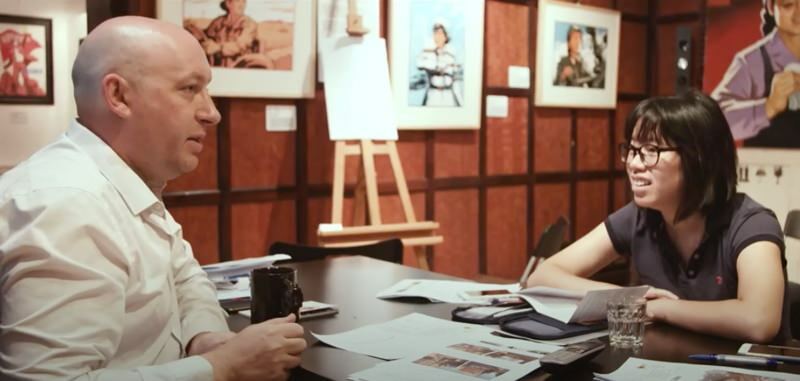
Why should you choose Koryo Tours?
Choosing to travel to unusual destinations such as North Korea is a big decision, and choosing the right people to take you is an incredibly important part of that. Learn about how we facilitate tourism responsibly in some of the most interesting and unique destinations on our planet, and at the same time ensure you get the most out of your once-in-a-lifetime experience.
View the videoWe currently have no future tours planned. Please check back soon.
Most Western nationalities require a visa obtained in advance from an Algerian embassy. The application process requires supporting documentation, can take several weeks and should not be left to the last minute. The Algerian government has been working to streamline the visa process in recent years and some nationalities have improved arrangements, but this remains one of the more involved visa applications for North Africa. Koryo Tours provides full documentation support and guidance as part of the booking process.
Northern Algeria, including Algiers, Oran, Constantine and the main tourist sites, is generally safe for organised group travel.
The deep Sahara desert requires permits and should only be visited with experienced guides who know the terrain. Algiers has a tourist police unit and the main tourist sites are patrolled.
Travellers who go with a reputable operator and stay within the established tourist areas have a consistently positive experience. Algeria is not a high-crime country; the main risk factors are in specific regions, not across the country as a whole.
October to April for the north - temperatures are mild, skies are clear and the Roman sites are beautiful in winter light. April to May and October to November are particularly good for the desert.
The Saharan summer is brutally hot and should be avoided, temperatures in the deep south regularly exceed 45 degrees Celsius from June to September.
November to February is the classic desert travel season, when cool nights and clear days make Tassili n'Ajjer and the surrounding landscapes most accessible.
Algiers's Houari Boumediene International Airport is the main entry point, with connections to multiple European cities including Paris, Madrid, London and several others.
Air Algérie operates a large number of domestic routes connecting Algiers to Oran, Constantine, Tamanrasset and other regional airports, which are essential for accessing the south efficiently. Some travellers enter overland from Tunisia (the most practical land border) or Morocco, though the Algerian-Moroccan border has been officially closed since 1994 and crossings are not reliable.
The Algerian Dinar (DZD) is the official currency. Card payments are unreliable outside major international hotels in Algiers. Bring sufficient Euros or US Dollars to exchange at official banks or exchange offices (not from unofficial sources, as the black market exchange, while common, is technically illegal).
Algeria is very affordable for visitors - accommodation, food and transport are cheap by regional standards, and a well-funded budget goes further here than almost anywhere else in the Maghreb.
In Algiers, Oran and Constantine there are comfortable hotels ranging from international chains to good locally run establishments. At the Roman sites and in the Kabylie mountains, accommodation is more modest but functional.
In the Sahara around Tamanrasset and Tassili n'Ajjer, accommodation is in desert camps, ranging from simple bivouac tents to more comfortable fixed camps with proper bedding and meals. Staying in a Saharan camp, with dinner around a fire under one of the clearest skies on earth, is one of the defining experiences of the trip.
Arabic (Darija, the Algerian dialect) is the everyday language. Tamazight (Berber languages) are spoken in the Kabylie region and other Berber communities.
French is widely spoken throughout the country, particularly in cities and in professional and commercial settings, and is genuinely useful for navigating daily life.
English is much less common than in Morocco or Tunisia. Even a few words of French will make a significant difference to the experience.
Algeria is a predominantly Muslim country and modest dress is expected throughout. In Algiers and the cities, the dress code is relatively relaxed by regional standards, particularly for women in professional or commercial areas, but covering shoulders and legs remains respectful and strongly advisable.
In more conservative areas and smaller towns, and particularly in the Casbah of Algiers, traditional modest dress for both men and women is important. In the desert, practical, loose-fitting clothing for the heat is combined with a need for modesty in the communities you pass through. Bring a layer for cold desert nights.
My next tour will be to:
[email protected] | + 86 10 6416 7544
WhatsApp (message only): +44 7822 014058