Country Intro
Known for many as the co-host of the Earth’s highest mountain, Mount Everest (Sagarmatha in Nepalese), and as a trekking paradise, Nepal deserves to be known for much more and has way more to offer than the Himalayas.
Nepal has the second largest elevation difference of any country just behind China, but this elevation gain of 8,789 meters is achieved within ca. 150-200 kilometres, and has over 120 ethnic and language groups.
It has never been colonised, and it was the last Hindu kingdom – even declared as such in its 1975 constitution – till the end of the monarchy in 2008, and it still has the largest percentage of Hindus relative to its population.
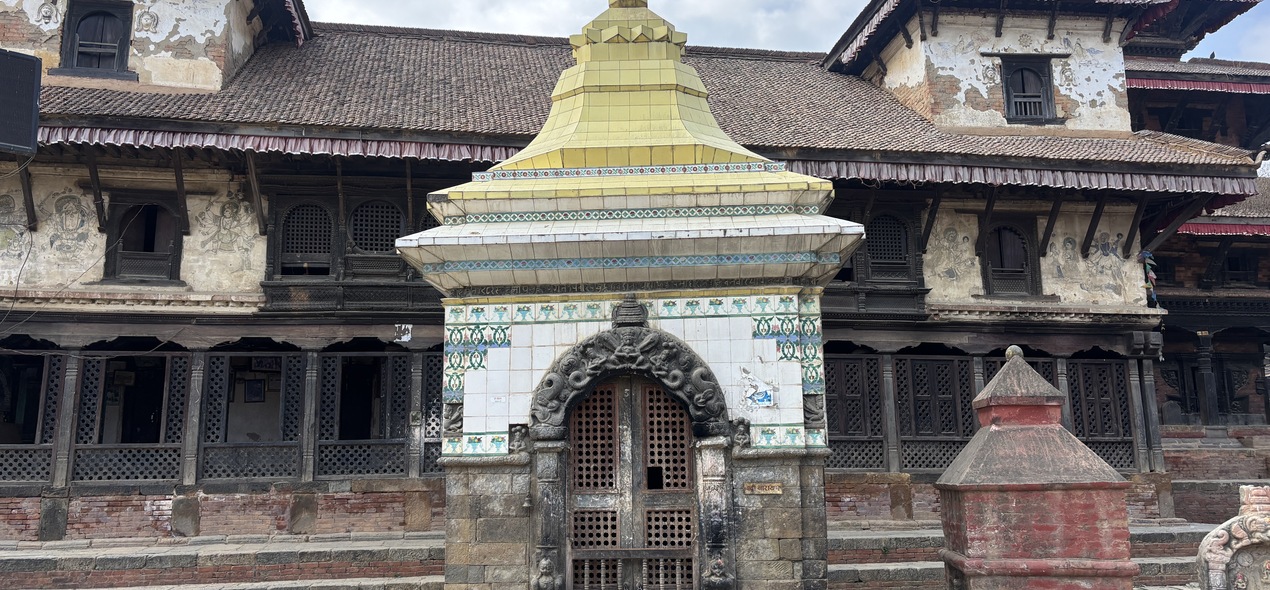
Nepal is also home to the birthplace of Buddha, and Hinduism and Buddhism heavily overlap in everyday life in Nepal, seen in the network of UNESCO World Heritage Sites in the Kathmandu Valley. A mix of Buddhist and Hindu temples, and public plazas in front of Newari royal palaces, known as Durbar Square.
The Newari people are the indigenous people of the Kathmandu Valley known for their religious syncretism of Hinduism and Buddhism.
Nepal was unified in 1768 and was once a tributary of the Qing Dynasty for almost a century but successfully prevented colonisation by the British East India Company. Its founding dynasty ruled the country for 240 years, although for over 100 years was dominated by a hereditary line of prime ministers who had the actual powers.
The country also experienced Maoist insurgency and Civil War for ten years between 1996 and 2006 that ended in a truce but eventually led to the overthrow of the monarchy.
Nepal is also among a handful of countries where a Communist party (Maoist, even!) won free and fair elections, three times since 2008. However, the last government was ousted by the Gen Z protests in 2025, and a new party came into power in 2026 that identifies with pluralistic democracy and social democracy.
Situated in the West, Pokhara, next to Phewa Lake, is the tourism capital and second lagest city of Nepal and serves as the starting point for trekking expeditions to the Annapurna Range.
In the Northeast lies the Sherpa homeland where Lukla – home to the World’s allegedly most dangerous airport – is the starting point for the Everest Base Camp treks and Everest Expeditions.
The southern region bordering India is a tropical flatland home to national parks where tigers and rhinos can be spotted. This is also where Buddha’s birthplace, Lumbini, can be found.
In the northernmost trans-Himalayan region, both the landscape and the culture is closer to Tibetan than Nepalese and mostly restricted for foreign visitors.
Country history
Before the unification of Nepal, the territory that is known today as Nepal was fragmented into over fifty principalities and tribal kingdoms. Siddharta Gautama, the Buddha, was born in the territory of modern Nepal (6th or 5th century BCE) and the unifier of India, Ashoka (ca. 268-232 BCE) also left his architectural footprint in Nepal.
Ca. 400-750
The Kathmandu Valley emerges as a unified territory under the Licchavi dynasty laying down the foundations of its Hindu-Buddhist culture.
12th-18th century
During the Malla period the Kathmandu Valley splits into rival city-kingdoms resulting in a golden age of arts and culture. Many temples, palaces, and Durbar Squares are built during this period.
1786
Gorkha ruler Prithvi Narayan Shah unifies Nepal and makes Kathmandu the capital of the newly founded Kingdom of Nepal. As a unifier of Nepal, Prithvi Narayan Shah becomes the first king of Nepal and the founder of the Shah dynasty that rule Nepal until 2008.
The Sino-Nepalese War (1788-1792) over Tibet ends with the Treaty of Betrawati making Nepal a tributary state of Qing China. The last tribute was paid to the Qing court in 1865.
The Anglo-Nepalese War (a.k.a. the Gorkha War) is fought between Nepal and the British East India Company between 1814 and 1816, ending with the signing of the Treaty of Sugauli that more or less establishes the current boundaries of Nepal. Although the British are allowed to send a Resident to the royal court in Kathmandu, they also guarantee the sovereignty of Nepal.
1846
In the Kot massacre important figures of the government and other officials are killed. Jung Bahadur Rana becomes prime minister and establishes the Rana dynasty, establishing an autocratic rule of hereditary prime ministers reducing the Shah kings to a figurehead.
1951
The 1950-1951 Nepalese revolution brings an end to Rana rule, restoring the powers of the Shah kings. A constitutional monarchy is established in Nepal for a brief period of time.
On 29 May 1953, Nepalese Sherpa Tenzing Norgay and Edmund Hillary climb Sagarmatha (Mount Everest), the highest mountain on Earth. They are the first confirmed climbers to do so.
1960
In a coup d’état, King Mahendra dismisses the government and introduces a partyless political system, called Panchayat, in which the king rules via absolute power.
1990
The 1990 People’s Movement (1990 Nepalese revolution) in which parties across the ideology spectrum managed to work together, brings the absolute monarchy to an end, and Nepal becomes a constitutional monarchy. In 1991, the first multi-party elections are held in 32 years.
1996-2006
Nepalese Civil War between Maoist insurgents and the Government of Nepal. The Civil War ends with the signing of the Comprehensive Peace Accord between the Government of Nepal and the Communist Party of Nepal (Maoist).
2001
Crown Prince Dipendra massacres nine members of the royal family, including the king and the queen, after which he shoots himself. The deceased king’s brother becomes the King of Nepal.
2005
In a coup d’état, King Gyanendra assumes absolute power and declares a state of national emergency. International pressure and the 2006 Nepalese revolution force the king to restore the parliament and to cede power.
2008
The Maoist Centre faction of the Communist Party of Nepal wins the elections in April. In May, the Constituent Assembly abolishes the monarchy, and Nepal becomes a Federal Republic and in July the first president of Nepal is elected.
2015
In April, the Nepali Earthquake claims the lives of at least 8,000 people, the worst natural disaster in Nepal in the past 80 years.
In September, the Constitution of Nepal is adopted, replacing the interim constitution that was adopted at the time of the abolishment of the monarchy.
2025-2026
The “Gen Z Protests” fueled by government corruption and the ban of social media platforms, result in the resignation of the government. Sushila Karki becomes interim prime minister, the first female to hold this position in Nepal. After the March 2026 elections, 36-year-old Balen Shah becomes prime minister, instituting reforms in Nepal.