A short distance from central Thimphu, tucked into a quiet corner away from traffic and crowds, the Jungshi Handmade Paper Factory offers a simple introduction to one of Bhutan’s oldest everyday crafts.
The ‘factory’ in the Jungshi Handmade Paper Factory is a working space where Deh-sho paper (the traditional Bhutanese specialised paper) is made.
You can expect it is made by ancient methods: slowly, by hand, and it hasn't changed over centuries in the making.
Let's take a look of what this factory is all about!
The Tradition of Bhutanese Paper
Inside the Paper-Making Process
The Visit Experience
The Shop and Finished Products
Visiting the Jungshi Handmade Paper Factory
Why It’s Worth Visiting
Frequently Asked Questions (FAQs)
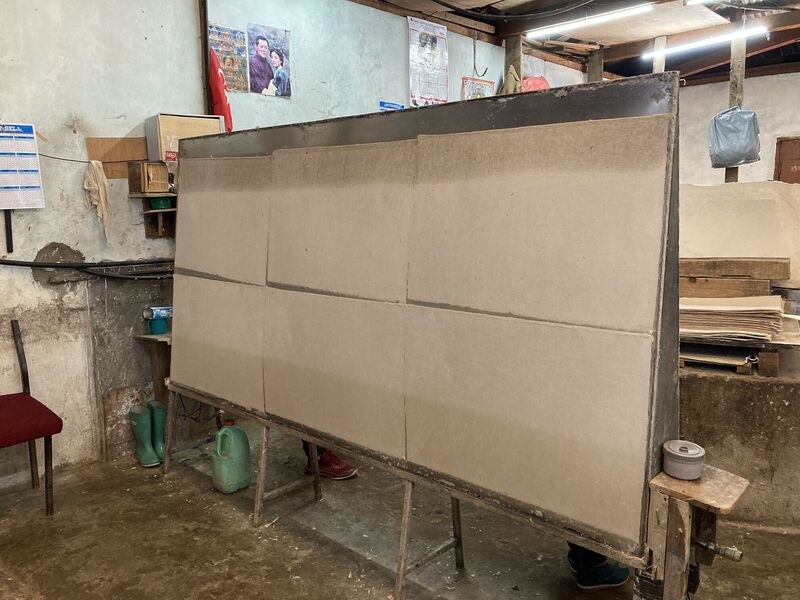
The Tradition of Bhutanese Paper
Deh-sho, or the traditional Bhutanese paper has been produced for generations using the bark of the daphne plant.
It is still widely used to the modern world, and historically, Deh-sho was used for religious texts (many ancient manuscripts preserved in monasteries across Bhutan remain preserved using this paper), official documents, and even to everyday writing by citizens.
Deh-sho.is strong, fibrous, and has a unique texture that no other type of (modern) paper has. It is naturally resistant to insects.
The Jungshi factory is one of the places where this paper-making tradition still being practiced, as it has always been done for hundreds of years in Bhutan.
Inside the Paper Making Process
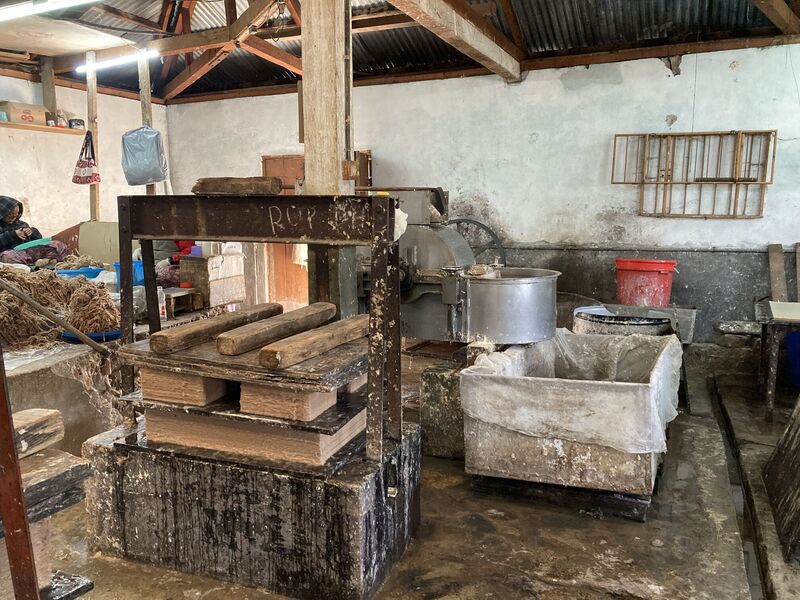
This is how the Jungshi factory traditionally processes the Deh-sho paper, from raw material to finished sheet. You will be able to view it here.
- The daphne plant bark is soaked, boiled, and beaten into pulp before being mixed with water.
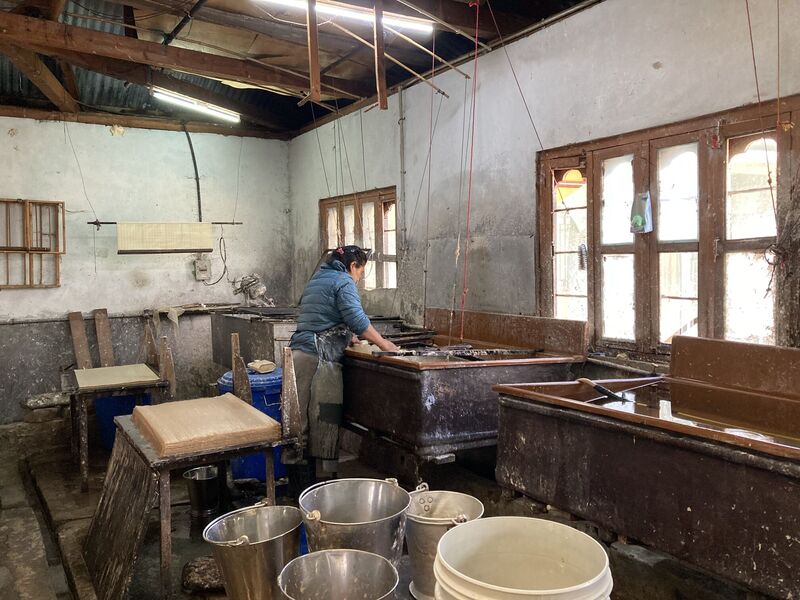
- Artisans then use wooden frames to lift thin layers of pulp, forming individual sheets by hand.
- These are pressed, dried, and smoothed without the aid of modern machinery.
The papermaking process is very calm, unhurried and repetitive, and reflects the meditation practice in the Bhutan tradition.
In short, the patience of the production is part of what gives the paper its rich character.
The Visit Experience
It is a small, but functional factory that makes paper products.
You'll find workers working (and demonstrating) how paper is traditionally made, and the factory doesn't have formal explanation or signage, so your local tour guides will be available to explain and answer any questions you may have.
You will be able to purchase any items they make on site.
The Shop and Finished Products
There is a small shop offering finished paper products on site.
You can find loose sheets, notebooks, envelopes, and simple stationery items for purchase (who doesn't want to write their Bhutan Travel Journal in a piece of authentic Deh-sho!)
All of the profit directly supports the continuation of this traditional paper-making production.
Visiting the Jungshi Handmade Paper Factory
The factory is located near Thimphu and is easily reached by car. It is often included as a short stop on guided itineraries, including with Koryo Tours.
It is a small place, so the visit is typically fairly brief, to learn the process of paper-making.
Photography/video is generally permitted, and ask for permission when photographing other people/locals.
As elsewhere in Bhutan, respectful behaviour and modest dress are expected.
Why It’s Worth Visiting
Bhutan is rich in history and tradition, and the paper-making process is one of those ways of life that hasn't changed for generations.
The knowledge of how these are made adds depth to the books, prayer flags, documents and other souvenirs that you find in the country.
Frequently Asked Questions (FAQs)
1. What is Deh-sho paper? Deh-sho is traditional Bhutanese handmade paper made from the bark of the daphne plant.
2. Is the paper still used today? Yes. It is used for religious texts, art, stationery, and ceremonial purposes.
3. Can visitors participate in the paper-making? Typically no. Visitors observe the process rather than take part.
4. How long does a visit take? Around 20 to 30 minutes is usually sufficient.
5. Can I buy paper products there? Yes. There is a small shop selling handmade paper items at the factory.
Koryo Tours
Bhutan Travel Guide
Share