Everything you need to plan a visit to Boti, the traditional Dawan village in the hills of West Timor that is still ruled by its own king. Where it is, how to get there, where to stay and what to bring.
Boti Village sits in the highlands south of Soe (sometimes written/pronouced as So'e), in Indonesia’s West Timor, and it’s one of the most traditional communities left on the island of Timor.
In Bahasa Indonesia language, it is called Desa Boti.
Boti still has its own king, its own faith and its own customary law, and for centuries it managed to keep colonisers, missionaries and, to a large extent, the modern world at a distance.
Getting there takes some effort, but for anyone interested in indigenous culture and places well off the beaten track, it’s well worth it.
Where Is Boti
A Brief History of Boti
Visiting Boti
Getting to Boti
Getting Around
Where to Stay
Best Time to Visit
Practical Tips
Frequently Asked Questions (FAQs)
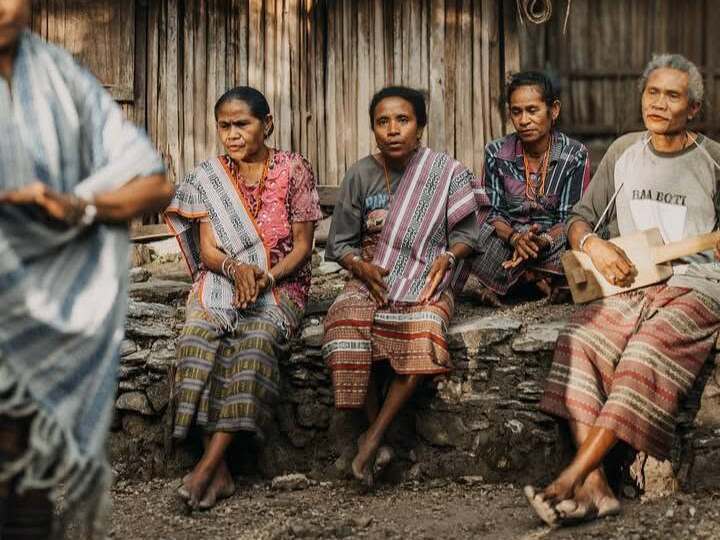
Where is Boti?
Boti is roughly 40 to 50 kilometres from So'e, the main town of South Central Timor Regency (Timor Tengah Selatan), in the mountainous interior of West Timor, Indonesia.
The village sits along an isolated ridge, reached via the small junction town of Oinlasi, which lies on the road between the larger town of Niki Niki and Boti.
The Inner community of Boti is made up of around 76 families, roughly 316 people in total, all part of the Dawan, also called Atoni Meto, who are generally considered the original inhabitants of Timor.
A Brief History of Boti
We have no clear record of the Dutch ever reaching Boti during their roughly 300 years in control of West Timor, and the same goes for the missionaries who converted most of the surrounding area to Christianity.
Thanks to its remote location (and lack of Christianisation during colonisation), Boti kept its own faith, known as Halaika, and its own way of life.
Since Indonesian independence in 1945, the village has also turned down many of the government’s attempts to modernise it, including offers of electricity, modern housing and formal schooling.
Boti is still led by its own king, the Usif. The current Usif, Namah Benu, took over after his father passed away in 2005.
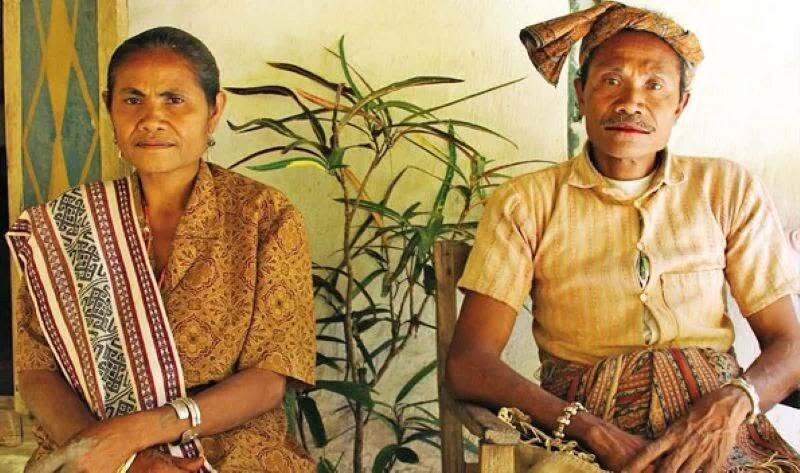
The King and Queen of Boti
Visiting Boti
Boti is split into two parts:
- Inner Boti (Boti Dalam) is home to the royal family and the most traditional residents, who live by strict customary law, known as adat, in round thatched huts called ume kbubu, alongside open-sided shelters called lopo. This is the part most visitors come to see.
- Outer Boti (Boti Luar) is larger and more connected to the outside world, with a small school, and most people here are Protestant Christians.
Visits usually start on the porch of the king’s house, where guests offer a traditional gift, sign the guest book, and are often served coffee or tea with fried banana.
With your guide translating, it’s a chance to chat with the king or a member of his family about life in Boti.
After that, you’re free to walk around the village, watch the women weaving ikat cloth with natural dyes, and buy handicrafts directly from the people who made them.
Getting to Boti
By Road from Kupang
From Kupang, the provincial capital, it’s about two to three hours by road inland to Soe, followed by another two to three hours to Boti, depending on road conditions.
The Final Segment to Boti Village
The last section of road narrows along the mountain ridge, with rough dirt and gravel tracks and at least one dry riverbed to cross.
After heavy rain, the last few kilometres from Oinlasi can become impassable by car, and you may need to switch to a motorbike, or in really bad conditions, walk.
A 4WD vehicle and a local guide are essential. Boti doesn’t allow visitors onto its land without a guide, and the king expects guests to be properly introduced by someone who speaks the local language.
Getting Around
There’s no public transport in or around Boti, so visitors arrive by car or motorbike as part of an arranged trip and explore the village on foot.
The nearby town of Oinlasi holds a lively traditional market every Tuesday, which is well worth timing your visit around if you can.
Where to Stay
- In Boti: There is a very basic guest house in the village, with shared bathrooms and few comforts. Staying overnight is the best way to experience village life, but don’t expect hot showers, phone signal or much (if any) electricity.
- In Soe: A handful of basic hotels make Soe the usual base for anyone visiting Boti as a day trip.
Guides and drivers are best arranged in advance in Kupang or Soe, usually including fuel and expenses.
Best Time to Visit
Boti can be visited year-round, but road conditions on the final stretch worsen considerably during the wet season (roughly November to April).
The dry season (May to October) offers far more reliable access, particularly if travelling by car rather than motorbike.
Practical Tips
- Arrange everything in advance. Tourism around Boti is still very limited, so book your guide and transport in Kupang or Soe before you go.
- Bring a gift for the king. The traditional gift is sirih pinang (betel leaf and areca nut). Your guide can help you buy some on the way.
- Bring cash. There’s no card payment or ATM anywhere near the village, so bring Indonesian rupiah in small notes for entry fees, the guest house and handicrafts.
- Ask before taking photos. Always ask before photographing people, especially the king and his family. Photos of the king’s house aren’t allowed.
- Pack something warm. Boti is up in the hills, so evenings can be cooler than you’d expect. Layering is always a good approach to add on/take off as needed.
- Expect to be offline. There’s little or no mobile signal, so download anything you need beforehand.
- Buy directly from the weavers. It puts money straight into the community, with no middleman.
- Respect local customs. Boti has its own rules, so dress modestly, follow your guide’s lead, and remember you’re a guest.
Frequently Asked Questions (FAQs)
- Is Boti Village worth visiting? Yes, particularly for travellers with a genuine interest in indigenous culture and off-the-beaten-path destinations. It is widely regarded as one of the most authentic traditional communities left on the island of Timor.
- Do I need a guide to visit Boti? Yes. Visitors are not permitted onto the village's land without one, and a guide is also essential for navigating the final stretch of road.
- Can I stay overnight in Boti? Yes, in a very basic village guest house. Many visitors stay in Soe and visit as a day trip instead, but a night in the village is much more memorable.
- How long should I plan for a visit? At least half a day once you factor in the drive from Soe, although a full day or an overnight stay allows a much more relaxed visit.
- What gift should I bring? Sirih pinang (betel leaf and areca nut), offered to the king as a sign of respect.
- Is Boti in Timor-Leste? No. Boti is in West Timor, which is part of Indonesia, on the same island as Timor-Leste.
Koryo Tours
Group Tours to Timor-Leste
Share