Bishkek still looks much as it did in the Soviet period, with low-rise streets, tree-lined squares and a centre that rewards anyone happy to explore on foot. Just watch out for the manhole covers.
Most people arrive in Bishkek on their way to somewhere else, usually the mountains, the lakes or the long road south to Osh.
That’s fair enough, because Kyrgyzstan’s nature is spectacular. But Bishkek is worth a day or two of its own. It’s a green, easy-going city full of Soviet buildings, leafy parks and busy bazaars, with snowy mountains looking down on it from the edge of town. It has also had three revolutions in the last twenty years, which is more than most capitals can say.
Where is Bishkek?
A Brief History of Bishkek
What to See and Do in Bishkek
What to Eat in Bishkek
Beyond Bishkek
Getting to Bishkek
Getting Around
Where to Stay
Best Time to Visit
Practical Tips
Frequently Asked Questions (FAQs)
Where is Bishkek?
Bishkek is in the far north of Kyrgyzstan, in the Chüy Valley, just a few kilometres from the border with Kazakhstan.
Behind the city rise the Kyrgyz Ala-Too mountains, part of the Tian Shan range, which stay snow-capped for much of the year and make a pretty good backdrop for a capital city.
It’s the country’s biggest city, home to over a million people, and its business and financial centre. A lot of that business happens at the Dordoy Bazaar, one of the biggest markets in Central Asia, on the outskirts of town.
A Brief History of Bishkek
Pishpek (1820s to 1926)
Bishkek started life as Pishpek, a small fortress built in the 1820s by the Khanate of Kokand to control the caravan routes through the valley.
Russian forces captured it in the 1860s, and a Russian town slowly grew up around the site.
Frunze (1926 to 1991)
In 1926 the town was renamed Frunze, after Mikhail Frunze, a Red Army commander who had been born there.
Not long after, it became the capital of Soviet Kyrgyzstan. Most of the city you see today was built during the Soviet years, which is why it has wide, tree-lined streets laid out in a neat grid.
Bishkek (1991 to Today)
In February 1991, a few months before Kyrgyzstan became independent that August, the city took the name Bishkek.
Since then, life in the capital has been anything but boring. Bishkek has been at the centre of three revolutions, in 2005, 2010 and 2020, each one ending with protesters storming the government buildings on or near Ala-Too Square and a change of leadership. It’s a lot of political drama for such a relaxed-feeling city.
What to See and Do in Bishkek
There is an old feel still apparent in Bishkek as the soviet grid system and housing still exist, although now punctuated with more modern construction in places as modern housing begins to grow, shopping malls spring up and hotels rise.
The centre of the city is still a pleasure for the relaxed explorer as the criss-cross of streets is home to low-rise restaurants, cafes and bars.
Although the city is changing, the roads and pavements remain the same and even the most erstwhile traveller should take care.
Open manhole covers and potholes mean one should tread carefully, especially on a rainy day.
Large gardens, tree-lined streets, and open squares also remain intact and offer Bishkek as another city perfect for exploring on foot.
Streets and sidewalks have fallen into disrepair since the 1990s.
At the same time, Bishkek still preserves its former Soviet feel with Soviet-period buildings and gardens prevailing over newer structures.
Bishkek remains the country's financial hub. It’s home to its entire banking headquarters.
During the Soviet period, the city was home to many factories. Unfortunately, since 1991, many of these have closed down.
Nowadays, many of Bishkek’s residents are employed within the Dordoy Bazaar open market, a huge imported and export market located on the outskirts of the city.
Ala-Too Square
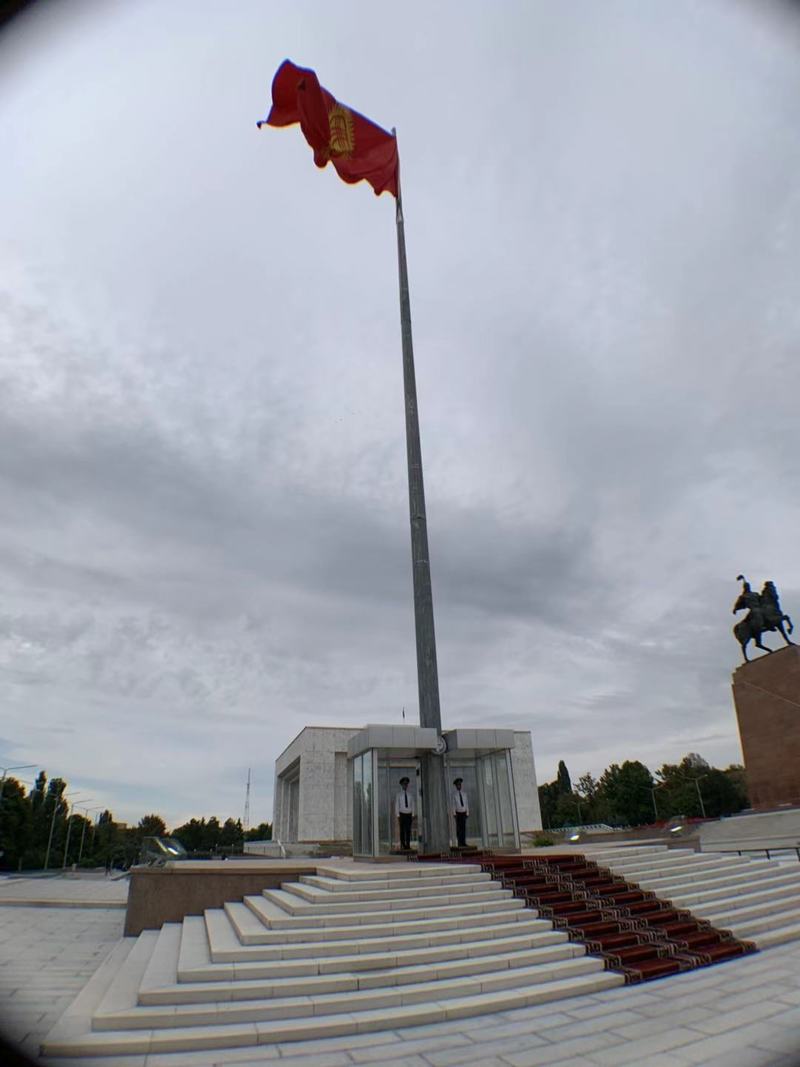
Bishkek’s main square, once called Lenin Square, is where it all happens, from national celebrations to the 2005 Tulip Revolution, when two people were killed in clashes here. Today a big statue of Manas, Kyrgyzstan’s legendary hero, stands where Lenin used to be. Stick around for the changing of the guard, which happens roughly every hour at the foot of the 45-metre flagpole.
The Lenin Statue (Round the Back)
Lenin didn’t disappear when he was moved off Ala-Too Square in 2003. He was simply moved round the back of the State Historical Museum, to the Old Square, where he still stands with his arm out. It’s one of the best-known Lenin statues left in Central Asia, and a favourite photo stop.
State Historical Museum
The big Soviet-modernist building facing Ala-Too Square. After years of renovation, it reopened in November 2021, and it’s a good place to get to grips with Kyrgyz history, from nomadic life to the Soviet years.
The White House
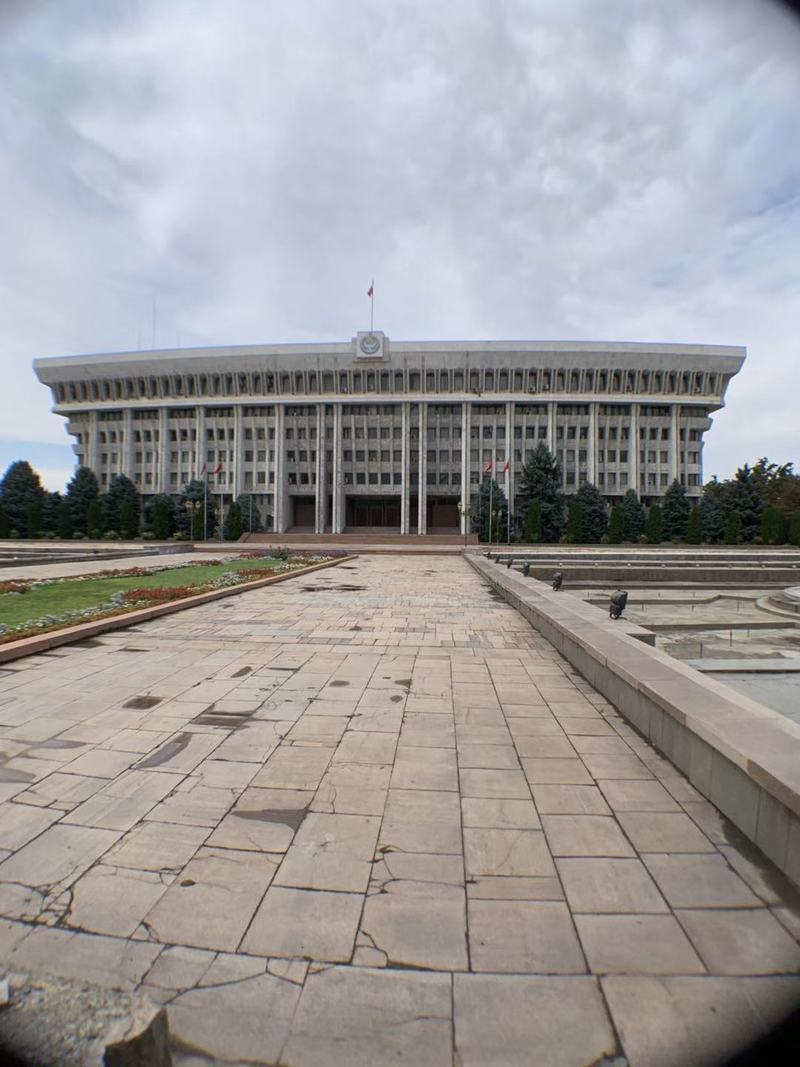
The president’s office, a big white marble building in the Stalinist style. It’s been the focus of all three of the country’s revolutions, and in 2010 and 2020 protesters actually got inside. These days it’s just a very calm-looking government building. Photos from a distance are generally fine, but don’t hang around too long.
Osh Bazaar
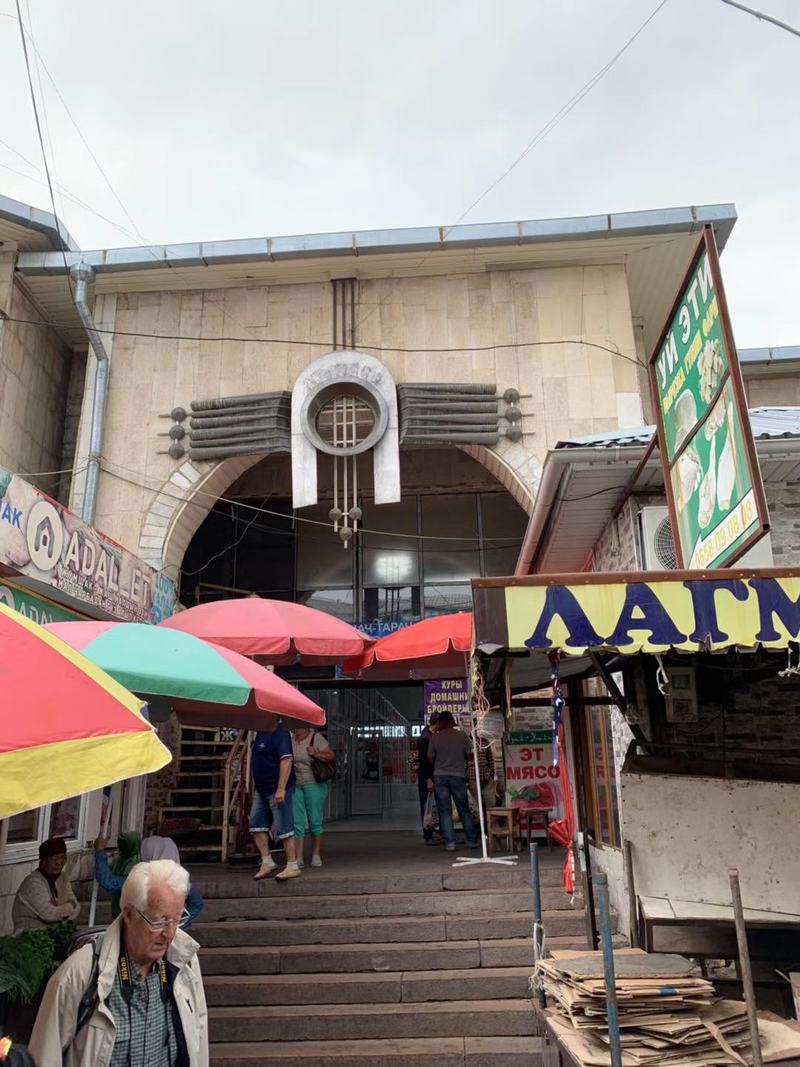
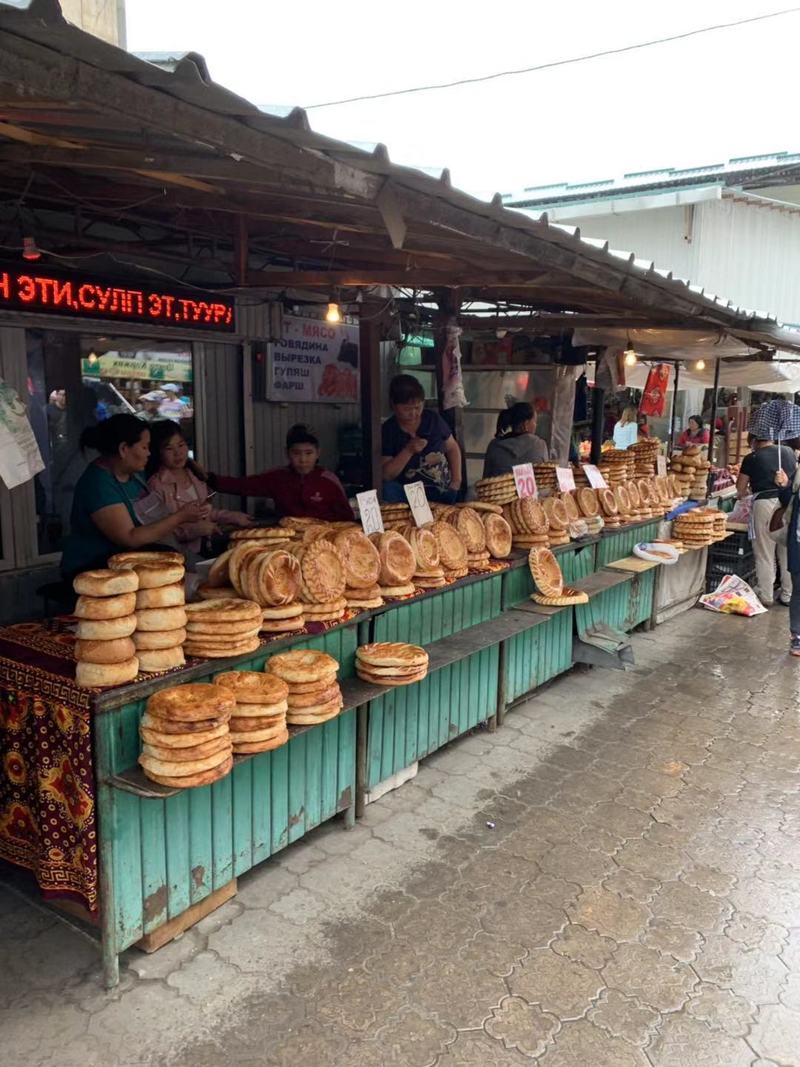
A huge, lively market selling everything from dried fruit and spices to felt slippers, traditional kalpak hats and Soviet odds and ends. It’s great for souvenirs, snacks and people-watching. Just keep an eye on your bag.
Panfilov Park and Oak Park
Bishkek is one of the greenest capitals in Central Asia. Panfilov Park has an old-school Soviet funfair, with rides that look like they haven’t changed since the 1970s. Oak Park is full of sculptures and is a nice shady place for a walk.
Victory Square
A striking Soviet war memorial built for the 40th anniversary of the end of the Second World War, with an eternal flame at its centre. Newlyweds often stop here for photos.
Kyrgyz National Philharmonic
A big Brutalist building that’s a landmark in its own right, with a statue of Manas and his companions out front.
Bishkek-2 Railway Station
The city’s main railway station, a handsome Soviet building with trains to Russia and Kazakhstan. Local stories link its construction to German prisoners of war after the Second World War. Records date the station to the late 1930s, but it’s still a nice spot for a look at Soviet railway architecture.
What to Eat in Bishkek
Kyrgyz food is hearty, meaty and designed for people who spend a lot of time outdoors in the mountains:
- Beshbarmak, the national dish of boiled meat (usually mutton or horse) on flat noodles. The name means “five fingers”, because it’s traditionally eaten by hand.
- Plov, rice cooked with meat, carrots and onions, found all over Central Asia.
- Lagman, thick hand-pulled noodles with meat and vegetables, a favourite from the Uyghur and Dungan communities.
- Samsa, flaky pastries filled with meat, baked in a clay oven.
- Kymyz, fermented mare’s milk. It’s an acquired taste, so maybe try a small glass first.
Where to eat
Chaikhana Navat serves traditional Kyrgyz and Central Asian food in a nice setting, with vegetarian and vegan options. It’s a bit pricier than similar places, but the plov is great, and horse meat is on the menu if you’re feeling brave.
Arzu has a big menu of Central Asian and local dishes at reasonable prices. Note that alcohol may not be served during some religious holidays.
Beyond Bishkek
Bishkek is a great base for day trips and the start of some much longer journeys:
- Ala Archa National Park, about 40 km south of the city, has alpine valleys, glaciers and hiking trails, and is the easiest way to get into the mountains for a day.
- The Burana Tower, about 80 km east, is an 11th-century minaret, the last remains of the ancient Silk Road city of Balasagun, with a field of old stone grave markers called balbals.
- Lake Issyk-Kul, one of the largest mountain lakes in the world, is a few hours’ drive east, and is best for an overnight trip.
- Osh, Kyrgyzstan’s second city, is about 670 km away by road, a long 10 to 14 hour drive through the mountains, or about an hour by plane. It’s also the starting point for the Pamir Highway into Tajikistan.
- Almaty, Kazakhstan’s biggest city, is about 240 km away, around four to five hours by road including the border crossing.
- Tashkent, Uzbekistan’s capital, is around 600 km away by road through Kazakhstan, roughly a full day of driving.
Getting to Bishkek
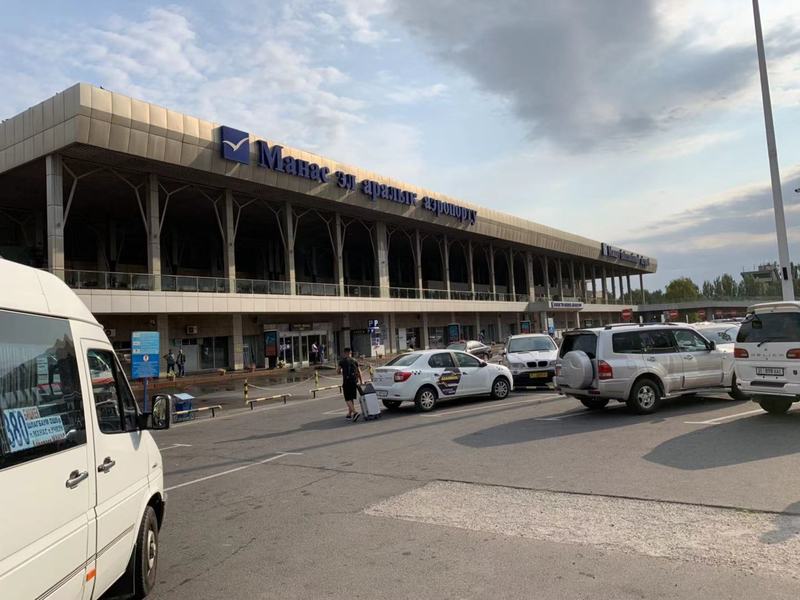
Most visitors fly into Manas International Airport, about 25 km northwest of the city, which has flights from Istanbul, Dubai, Moscow, Almaty and several other cities in the region.
A taxi into town takes around 30 to 40 minutes.
You can also get to Bishkek by road from Almaty in Kazakhstan, which is one of the most popular ways to combine the two countries.
Getting Around
The easiest way for visitors to get around is with a taxi app like Yandex Go, which is cheap and saves you from having to haggle.
Bishkek also has city buses and marshrutkas (minibuses) going pretty much everywhere for very little money, although working out the routes can take some practice.
The city centre is quite walkable, but watch where you step, as pavements can be uneven and the odd manhole cover goes missing, especially after rain.
Where to Stay
Most visitors stay in the city centre, around Ala-Too Square, Chuy Avenue and the parks, where you’ll find everything from simple guesthouses and hostels to modern international hotels within walking distance of the main sights.
Best Time to Visit
May to October is the best time to visit, especially if you want to head into the mountains.
Summers can get hot in the city, but the mountains are only an hour away.
Winters are long and cold, often well below freezing, and snow can close some mountain roads, although Bishkek itself is open all year round.
Practical Tips
A few things worth knowing before visiting Bishkek:
- Visas. Since 31 December 2025, citizens of 55 visa-free countries, including the US, UK and all EU countries, can stay up to 30 days in any 60-day period without a visa. If you want to stay longer, you’ll need to apply for an e-visa in advance. Check the latest rules before you travel.
- Money. The local currency is the Kyrgyz som. Cards work in many hotels and restaurants, but cash is still needed at bazaars, in taxis and outside the city, and ATMs are easy to find in Bishkek.
- Get a local SIM card. They’re cheap, easy to buy with your passport, and very handy for taxi apps and maps.
- Watch your step. Uneven pavements and open manholes are a real thing in Bishkek, so look down every now and then, especially at night or in the rain.
- Learn a few words of Russian. Kyrgyz is the national language, but Russian is very widely spoken in Bishkek and will help a lot with taxis, menus and markets.
- Be careful taking photos near government buildings and military sites, and always ask before photographing people.
Frequently Asked Questions (FAQs)
- Is Bishkek worth visiting? Yes. It’s a relaxed, green city with lots of Soviet history, good food, and mountains right on its doorstep. One or two days is enough to see the highlights.
- Do I need a visa for Kyrgyzstan? Many nationalities, including the US, UK and EU, can visit visa-free for up to 30 days in any 60-day period. Longer stays need an e-visa.
- How far is Bishkek from Osh? About 670 km by road, which takes 10 to 14 hours, or about an hour by plane.
- Can I travel from Bishkek to Almaty? Yes, it’s about 240 km and around four to five hours by road, including the border crossing.
- What’s the best day trip from Bishkek? Ala Archa National Park, only about 40 km away, is the easiest way to get into the mountains for a day.
- Is the Lenin statue still in Bishkek? Yes, it was moved from Ala-Too Square to the Old Square behind the State Historical Museum in 2003, where it still stands.
Koryo Tours
Group Tours to Kyrgyzstan
Share