Granite islands, Nubian villages, felucca sails and the gateway to Abu Simbel. Here's what to know before visiting Aswan, Egypt's most relaxed city on the Nile.
Aswan is Egypt's southernmost city, sitting on the Nile about 900 kilometres south of Cairo, close to the old border between ancient Egypt and Nubia.
After the noise of Cairo or the busy temples of Luxor, most visitors find Aswan a welcome change of pace.
The Nile is at its most beautiful here, flowing between golden desert dunes and granite boulders, dotted with palm-covered islands and the white sails of feluccas.
It's also the starting point for some of Egypt's most famous sights, from the island temple of Philae to the giant rock-cut temples of Abu Simbel, and the usual start or end point for a Nile cruise to Luxor.
Aswan Introduction
A Brief History of Aswan
What to See and Do in Aswan
What to Eat in Aswan
Getting to Aswan
Getting Around Aswan
Where to Stay in Aswan
Practical Tips
Frequently Asked Questions (FAQs)
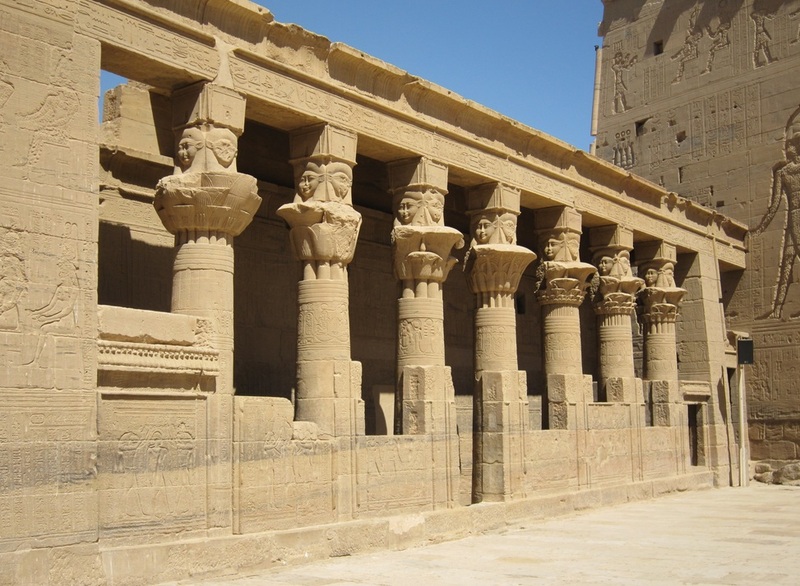
Philae Temple
Aswan Introduction
Aswan lies at the First Cataract of the Nile, a stretch of rocks and rapids that for thousands of years marked the southern edge of Egypt and the start of Nubia.
The city itself is fairly compact, stretching along the east bank of the river, with the Corniche waterfront as its main street. Across the water on the west bank, desert hills rise behind ancient tombs, a monastery and Nubian villages.
Just south of the city are the two Aswan dams, which hold back Lake Nasser, one of the largest man-made lakes in the world.
Aswan is also the heartland of Egypt's Nubian community, whose language, music, architecture and food give the city a character quite different from the rest of the country.
A Brief History of Aswan
Ancient Swenet (c. 3000 BCE - 30 BCE)
In ancient times Aswan was known as Swenet, a frontier town and trading post where goods from Africa, such as gold, ivory and ebony, passed north into Egypt.
Its quarries supplied the famous pink granite used in obelisks, statues and temples all over Egypt.
Elephantine Island
The island in the middle of the river, Elephantine, was the original settlement and the seat of the local governors, and its temples, houses and Nilometer were in use for thousands of years.
Greek, Roman and Coptic Aswan (332 BCE - 641 CE)
Under the Greeks and Romans, Aswan was a garrison town on the empire's southern frontier, and the Greek geographer Eratosthenes famously used Aswan's position to estimate the circumference of the Earth.
Later, Christianity spread through the region, leaving monasteries such as St Simeon's on the west bank.
A Winter Resort (19th - early 20th century)
By the late 19th century, Aswan had become a fashionable winter resort for wealthy Europeans, who came for its dry, warm climate.
The famous Old Cataract Hotel opened in 1899 and welcomed guests from royalty to Agatha Christie, who set part of Death on the Nile here.
The High Dam (1960 - 1970)
The British built the first Aswan Dam in 1902, but the biggest change came with the Aswan High Dam.
When the United States and Britain withdrew their offer to fund it in 1956, President Nasser turned to the Soviet Union, which paid for much of the project and sent thousands of engineers to help build it.
Completed in 1970, the dam ended the Nile's annual flood and created Lake Nasser, but it also flooded much of historic Nubia.
Around 100,000 Nubians were moved from their villages, and a huge international rescue campaign led by UNESCO moved temples including Philae and Abu Simbel to higher ground.
What to See and Do in Aswan
Aswan is small, but there's enough here to fill several days:
Philae Temple
The beautiful Temple of Isis sits on an island just south of the city and is reached by a short boat ride.
It originally stood on a nearby island that was being flooded by the old dam, and between the 1970s and 1980 it was taken apart block by block and rebuilt on higher ground on Agilkia Island.
You can wait till it's dark to view the evening sound and light show, obviously an interesting combination to view an ancient art and architecture.
Abu Simbel
The two massive rock-cut temples of Ramesses II and his queen Nefertari, about 280 kilometres south of Aswan near the Sudanese border.
Like Philae, they were cut into pieces and moved in the 1960s to save them from Lake Nasser.
Twice a year, on 22 February and 22 October, the rising sun shines all the way into the inner sanctuary and lights up the statues of the gods.
The Aswan High Dam
The dam itself is a strange but interesting sight, a 111-metre-high wall of rock and clay with Lake Nasser stretching away to the south.
On the western end stands the 70-metre-tall Egyptian-Soviet Friendship Monument, shaped like a lotus flower and built to celebrate the Soviet role in building the dam, a reminder of the Cold War era when Egypt was one of Moscow's closest allies.
The Unfinished Obelisk
In the ancient granite quarries lies the largest obelisk ever attempted, which would have been around 42 metres tall.
Unfortunately (or fortunately for us, modern historians!) it cracked while being carved and was abandoned where it lay, which gives us a better understanding at how the ancient Egyptians cut these giant stones.
Elephantine Island
Take the local ferry across to the island to see the ruins of ancient Swenet, the Aswan Museum and one of the oldest Nilometers in Egypt, used for measuring the height of the river's flood.
You can also find colourful Nubian villages across the rest of the island.
The Nubian Museum
One of the best museums in Egypt, telling the story of Nubia from prehistoric times to the present day, including the history of the villages lost under Lake Nasser.
A Felucca on the Nile
Sailing around the islands of Aswan in a felucca, especially at sunset, is one of the highlights of any trip to Egypt.
Most trips pass Kitchener's Island, home to the Aswan Botanical Garden, and the Mausoleum of the Aga Khan on the west bank hills.
Tombs of the Nobles
Rock-cut tombs of local governors and officials, high in the hillside of Qubbet el-Hawa on the west bank. The climb up is steep, but the views over Aswan and the river are some of the best in the city.
The Monastery of St Simeon
A large, ruined Coptic monastery in the desert on the west bank, dating back to the 7th century. It's usually reached on foot or by camel from the riverbank.
Nubian Villages
The villages of the west bank, such as Gharb Soheil, are known for their brightly painted houses. You can visit a Nubian home, drink tea, and try Nubian food. Some families even keep pet crocodiles.
Kom Ombo and Edfu
Two of Egypt's best-preserved temples, both on the way north to Luxor and usually visited on a Nile cruise.
Kom Ombo is dedicated to the crocodile god Sobek and has a small museum of mummified crocodiles, and Edfu is the best-preserved temple in Egypt.
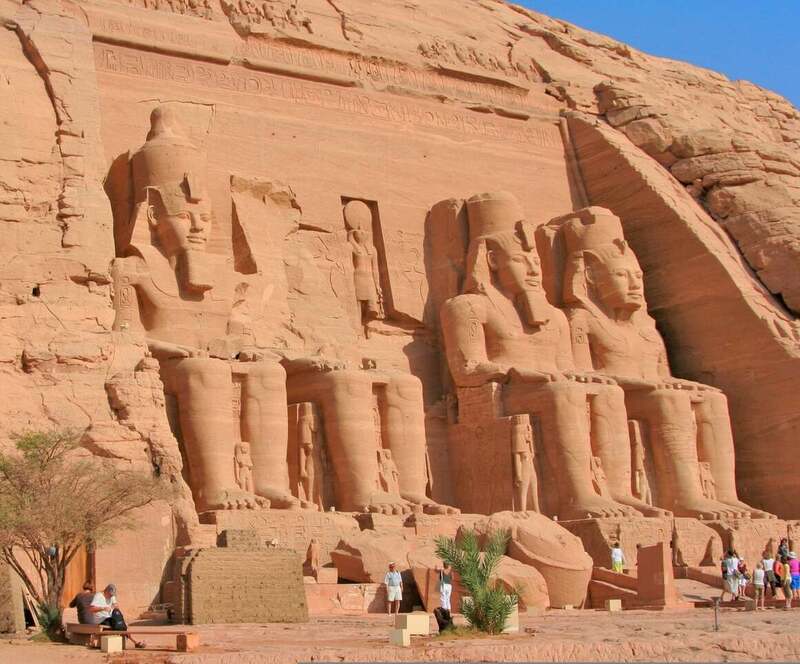
Abu Simbel Temples
What to Eat in Aswan
Food in Aswan is similar to the rest of Egypt, with a few Nubian twists:
- Nubian food is the local speciality, from slow-cooked stews in clay pots to fresh Nile fish. Several Nubian restaurants along the Corniche and on the west bank serve it.
- Karkadeh, a hibiscus tea served hot or iced, is drunk all over Egypt, but Aswan is famous for growing the hibiscus. Look for bags of dried flowers in the market.
- Spices are sold everywhere in the Aswan souk, so it's a good place to pick some up to take home.
- Fresh dates from the local palm groves, especially in late summer and autumn.
- The usual Egyptian favourites, such as koshari, ful and ta'ameya, are easy to find around the city too.
Getting to Aswan
- By air: Aswan International Airport has regular flights from Cairo, taking around 90 minutes, as well as some international flights. The airport is around 25 kilometres southwest of the city.
- By train: Overnight sleeper trains run daily from Cairo to Aswan, passing Luxor in the early morning. The journey takes around 13 to 14 hours, and the cabins include dinner and breakfast. Daytime trains also run between Luxor and Aswan, taking around three hours.
- By Nile cruise: Many visitors arrive or leave on a Nile cruise between Luxor and Aswan, usually lasting three or four nights and stopping at Edfu and Kom Ombo along the way. Travelling on a traditional dahabiya sailing boat is a slower and quieter alternative.
- By road: Aswan is around three hours by road from Luxor.
Getting Around Aswan
The city centre and Corniche are easy to walk around, especially in the cooler mornings and evenings.
To get across the river, take the cheap public ferries or hire a motorboat or felucca from the Corniche.
For sights further out, such as Philae and the High Dam, hire a taxi or driver for half a day, or join a tour. Uber also operates in Aswan.
Getting to Abu Simbel
There are two ways to visit Abu Simbel from Aswan:
- By road, around three and a half hours each way across the desert. Most trips leave Aswan very early, around 4am, to arrive in the cooler morning before the crowds.
- By air, a 30-minute flight with EgyptAir, which saves time but costs a lot more.
Some visitors prefer to stay overnight in Abu Simbel to see the temples at sunrise or after the day-trippers have left.
Where to Stay in Aswan
Aswan has a good range of places to stay, from historic hotels to Nubian guesthouses:
- The Old Cataract Hotel, opened in 1899, is one of the most famous hotels in Egypt, with grand terraces overlooking the Nile and Elephantine Island. Even if you're not staying, a drink on the terrace at sunset is a classic Aswan experience.
- Elephantine Island has a large resort hotel as well as small Nubian guesthouses.
- Nubian guesthouses on the west bank offer simple, colourful rooms with wonderful views, and are a great way to experience Nubian hospitality.
- The Corniche has plenty of mid-range and budget hotels within walking distance of the souk and ferry landings.
Practical Tips
A few things worth knowing before visiting Aswan:
- The heat is serious. From May to September, temperatures regularly reach 40°C (104°F) or more. October to April is the best time to visit, and even then, do your sightseeing early in the morning or late in the afternoon.
- Early starts for Abu Simbel. The road trip usually means leaving before dawn, so plan an early night beforehand.
- Agree prices first. For felucca rides, motorboats and taxis, always agree the price and duration before setting off.
- Cash and small notes. Bring Egyptian pounds in small notes for ferries, tips and markets. ATMs are easy to find in town, but not at most sights.
- Sun festival crowds. Visiting Abu Simbel on 22 February or 22 October is spectacular but extremely busy, and ticket prices are higher on those days.
- Respect Nubian homes. When visiting Nubian villages, ask before taking photos of people and their homes.
- Photography at the High Dam. Photos are fine at the viewpoints, but there may be restrictions on the dam itself for security reasons. Drones are not allowed.
Frequently Asked Questions (FAQs)
- How many days do I need in Aswan? Two to three days is enough to see Philae, the High Dam, the Nubian Museum, the islands and a felucca ride, plus an extra day for Abu Simbel.
- Is Abu Simbel worth the trip from Aswan? Yes. It's a long journey, but the temples are among the most impressive sights in Egypt.
- Do I still need to travel to Abu Simbel in a police convoy? The compulsory convoy was dropped some years ago, but there are still security checkpoints along the road, and most visitors travel with a tour or private driver.
- What's the best time of year to visit Aswan? October to April. Summers in Aswan are among the hottest in Egypt.
- Should I do a Nile cruise from Aswan to Luxor? A cruise is one of the most relaxing ways to travel between the two cities and see Kom Ombo and Edfu on the way, usually over three or four nights.
- Can I swim in the Nile in Aswan? Some visitors do swim around the islands near the west bank with local guides, but currents can be strong, so only swim where local boatmen say it's safe.
Koryo Tours
Group Tours to Egypt
Share