At just 800 metres long, Arwad Island in Syria holds four thousand years of Phoenician, Crusader, Mamluk, and Ottoman history within its ancient walls. It was also the very last Crusader stronghold in the Holy Land.
You may think of Syria as an arid, vast desert landscape. But it actually has a stretch of its landscape along the Mediterranean Sea.
And in these miles of beautiful seascape lies Arwad Island, Syria's only inhabited island.
In fact, it is the only one along the entire Eastern Mediterranean, from Turkey to Egypt.
Arwad Island is a tiny outcrop of rock, just about 800m (0.49 miles) long and 500m (0.3 miles) wide. But it is so rich in history that it's worth adding to your Syrian bucket list.
This is Koryo Tours Arwad Island Syria Travel Guide for your future visit.
Where is Arwad Island?
Arwad Island History
What to see in Arwad Island?
Getting to Arwad Island
Frequently Asked Questions (FAQs)
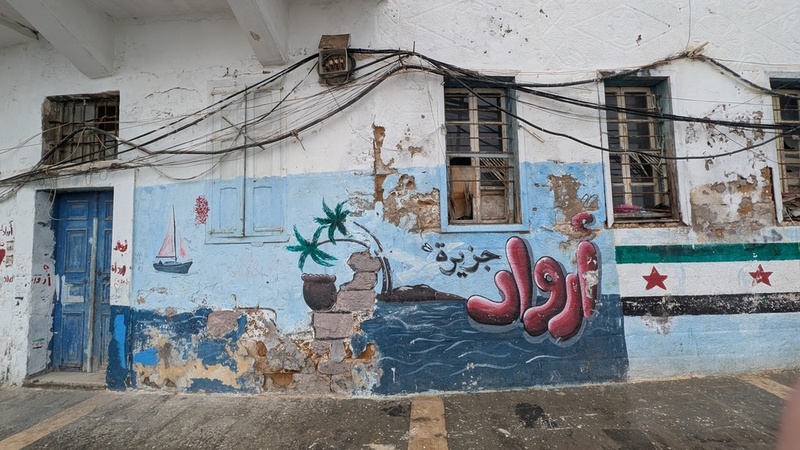
Where is Arwad Island?
The Mediterranean Coastline of Syria is approximately 180 kms (around 110 miles) long, and the City of Tartus is located along this stretch.
Tartus is located around 220 km (136 miles, or about 3-hr drive) from Damascus.
Arwad Island is located about 3 kms (1.8 miles) off the coast of Tartus in Syria.
Arwad Island History
Its history can be traced back to more than four millennia.
Phoenician Republic (early 2nd millennium BC)
The Phoenicians settled in Arwad Island in the early 2nd millennium BC, and Arwad’s strategic location turned the tiny island into one of the four leading city-states of Phoenicia (the other three were Tyre, Sidon and Byblos).
Arwad was the only city that was oriented culturally and economically toward Northern Syria.
Arwad was so significant that it has appeared in several historical records, such as hieroglyphics in the Amun-Ra Temple in Karnak, Egypt, as well as being mentioned in the Book of Genesis of the Bible.
The Crusader Outpost (12th and 13th centuries)
When the Crusaders took over the island, they turned Arwad into a major staging point for their forces, and it was among the final strongholds of the Templars in the Levant (the eastern Mediterranean shores; modern-day Syria, Lebanon, Israel, Jordan, and Palestine).
The Arwad outpost was finally abandoned in 1301, marking the last Crusader presence in the Holy Land.
Islamic Classical Period (14th-20th centuries)
The Island’s history continued under the Mamluk Control (1302–1516) then to the Ottoman Rule (1516–1915), which didn’t change much of the Island’s identity as a fishing, boatbuilding and trading hub.
French Occupation (1915-1946)
Arwad Island (followed by the whole Syrian State) was under the French Occupation at the beginning of the 20th century, and the island served as a key intelligence centre during WWI.
They utilised the Citadel as a prison.
Syrian Independence and Civil War (20th century)
Syria gained its independence from France, which included Arwad Island. It retained the small, densely populated island community with fishing and tourism as their main focus.
Syrian Civil War (2011–2024)
The nearby city of Tartus was part of the Assad government region, and as a result, Arwad Island experienced economic distress due to a drop in tourism revenue. It remained under government control and was spared from direct fighting.
New Syrian Government (2024-present)
Today, Arwad Island is a working fishing island with narrow car-free alleys, stone houses, a Crusader Citadel, a harbour with boat factories and a ferry dock to connect the island with mainland Syria.
It is a popular day-trip destination for many local visitors, as well as international tourists.
What to see in Arwad Island?
The Citadel of Arwad
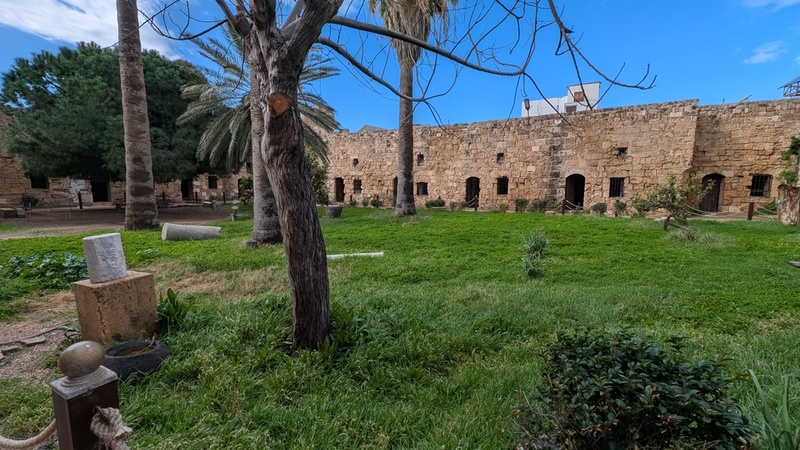
The focal point of Arwad Island is the Arwad Citadel, a 13th-century fortress in the middle of the island.
It was constructed on an ancient Phoenician palace from some two thousand years ago.
The current surviving architecture was mostly built by the Ottomans, although it retains Mamluk and Crusader features, the original builder of the citadel.
From the top of the citadel, you can view the Mediterranean Sea surrounding the island, as well as Tartus on the mainland.
The Ancient Walls
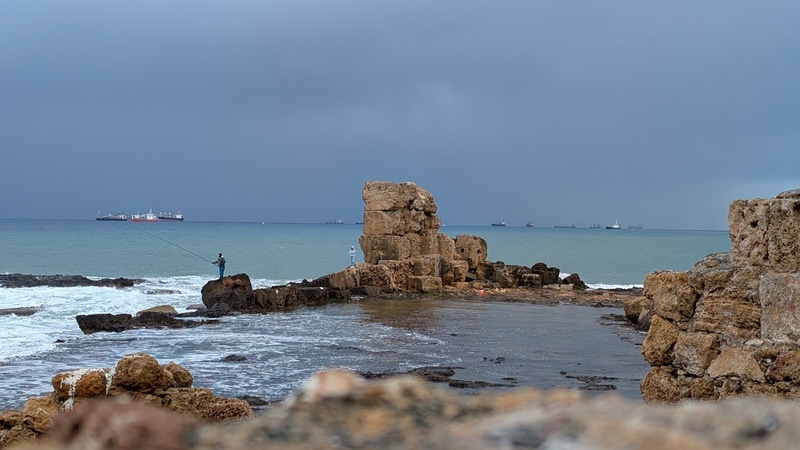
Once, ancient Phoenician era walls surrounded the circumference of the island.
The wall marked the outer defences of a Phoenician kingdom, and you can still walk the perimeter of Arwad to trace some remnants of this structure, which takes you no more than one hour.
The Arwad Island Harbour and Boatbuilding Workshops
Arwad’s identity has revolved around its maritime heritage since the Phoenician era, and today, there are small traditional workshops where locals still continue its boatbuilding tradition, by hand.
The Alleys
We simply have to add ‘wandering around the island’s alleys’ to the things to do in Arwad Island.
Why?
Arwad is a small island (800 by 500 metres), and it is quite enjoyable to ‘get lost’ in the meandering alleys of Arwad among its shops, friendly locals and soaking in the vibe.
The western side, where remnants of the original Phoenician fortifications survive, is particularly worth exploring.
Getting to Arwad Island
Ferry service is carried out by small motorboats that depart Tartus Port frequently (you won’t miss it).
The trip takes about 20–30 minutes.
Frequently Asked Questions (FAQs)
1. What is Arwad Island? Syria's only inhabited island. It is a tiny Phoenician city-state turned Crusader outpost turned fishing village, continuously occupied for over 4,000 years, sitting 3 km off the coast of Tartus.
2. How do I get to Arwad? By ferry from Tartus Port. Boats run regularly and the crossing takes around 20–30 minutes.
3. What's the most interesting thing about Arwad, historically? It was the last Crusader stronghold in the Holy Land until 1301, more than a decade after the fall of Acre. It also claims to be one of the first republics in the ancient Levant.
4. Can I stay overnight on the island? There is currently no hotel on the island, Tartus is the obvious choice for a base. The ferry crossing is cheap enough that staying on the mainland works well.
5. Is Arwad safe to visit in 2026? Yes. Arwad saw no conflict during the Syrian civil war. Always check current travel advisories before your trip.
6. How long do I need on the island? A half-day is comfortable for most visitors. The island is small enough to walk completely in under an hour, though the citadel and harbour are worth taking time over.
Koryo Tours
Syria Tours
Share